





Original Title: "AI Industry Gets a Well-Funded Player, Tether"
Original Author: Kuri, Deep Tide TechFlow
Tether earned $13 billion in 2024.
You might not have a clear sense of this number. Let me put it another way: OpenAI earned 3.7 billion in 2024, but lost 5 billion. Anthropic earned 1 billion, but also lost 5 billion.
The combined losses of two serious AI companies amount to less than what Tether earns in a single year.
Tether has a total of 150 employees, while OpenAI has more than 3,000 employees. The difference in output per person is approximately:
60 times.
How does Tether make money? When you buy 1 USDT, they take in $1 and use it to purchase U.S. Treasury bonds. The interest from these bonds goes to Tether, and has nothing to do with you.
The key point here is that Tether doesn't pay interest. Banks have to pay interest to attract deposits, but Tether doesn't. When you convert your money into USDT and hold it, you earn no interest at all. Meanwhile, Tether uses your money to buy U.S. Treasury bonds and earned as much as 7 billion dollars in interest alone in 2024.
150 people managing over $130 billion in national debt, doing nothing, and just receiving the interest payments automatically.
In this kind of business, anyone would want to just lie back and relax.
But when you have too much money, you have to spend it. Tether has chosen a direction:
AI.
And it's not just about randomly applying to a couple of projects to get it over with.
First, let's talk about computing power.
Running AI requires GPUs, and more is better, as is higher cost. Tether has provided a loan of over 600 million USD to a German company called Northern Data.
What does this company do?
The largest GPU cloud service provider in Europe. More than 10,000 NVIDIA H100 graphics cards—the same type OpenAI used to train GPT—each costing around $20,000 to $30,000.
This cluster of graphics cards ranks 26th in the global TOP500 supercomputers. The $600 million Tether invested is essentially...Bought an AI training base in Europe..
Let's talk about the data.
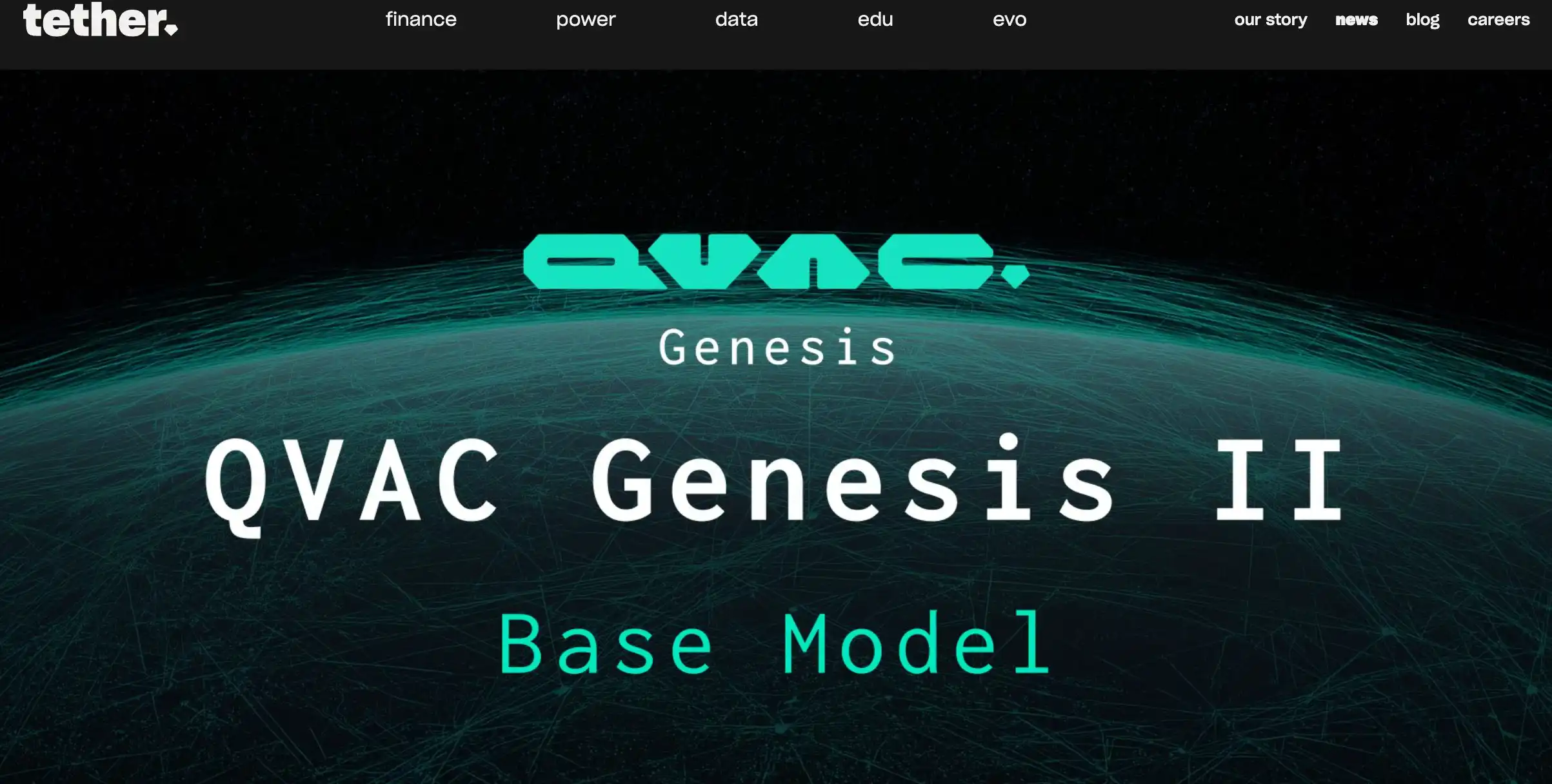
Training AI requires feeding it data. Last week, Tether released a dataset named QVAC Genesis, covering 19 disciplines including mathematics, physics, chemistry, and computer science. They claim this is the world's largest open-source AI training dataset.
You see, the training data of OpenAI and Anthropic are not publicly available, but Tether directly releases it for free, and anyone can use it.
Then comes the more science-fiction part.
In April 2024, Tether spent $200 million to acquire a company called Blackrock Neurotech. Although the name includes "Blackrock," it has no relation to BlackRock.
This company works on brain-computer interfaces. They implant chips into people's brains, allowing paralyzed individuals to type, control wheelchairs, and operate robotic arms with their thoughts. It sounds like a science fiction movie, but they've been working on it since 2008—eight years before Elon Musk's Neuralink.
How great is this company?
Globally, there are 35 people with brain-computer interface chips implanted in their brains, and 31 of them use Blackrock's technology. In 2016, a fully paralyzed patient used their device to control a robotic arm and fist-bumped with President Obama. The chip implanted in his sensory cortex allowed him to "feel" the president's hand.
Last year, this brain-computer interface company enabled an ALS patient to "speak" again. A chip in his brain translated his thoughts into speech at a rate of 62 words per minute.
Tether spent 200 million dollars and became a major shareholder of this company.
In total, Tether has poured nearly $1 billion into AI-related fields. It is also reportedly in talks to acquire a German robotics company, with an offer of $1.2 billion. If this deal goes through, the total investment will approach $2 billion.
What is this concept?
Anthropic raised $3.5 billion in funding throughout 2024. A single investment from Tether is nearly approaching half of the fundraising amount of a legitimate top-tier AI company.
OpenAI spent 6.7 billion USD on R&D in the first half of 2025. Tether could become a major investor in the AI industry with just a fraction of its profits.
A stablecoin company might explore or invest in AI for several strategic reasons, even though their primary focus is on stablecoins. Here are some possible motivations: 1. **Enhanced Risk Management**: AI can help analyze vast amounts of financial data in real
We think there are two possibilities.
The first one is anxiety. The Federal Reserve is cutting interest rates, and Treasury bond yields are falling. Earning 7 billion in interest in 2024 while doing nothing is a great deal, but such good fortune may not last beyond 2025. Even a printing press needs a new story.
The second is ambition. Everyone around the world is talking about AI—investors, media, and politicians. If you say you're a stablecoin company, no one pays you much attention. But if you say you're working on AI, brain-machine interfaces, and humanoid robots, then it's a different story:
Technology leader.
What's the most fun?
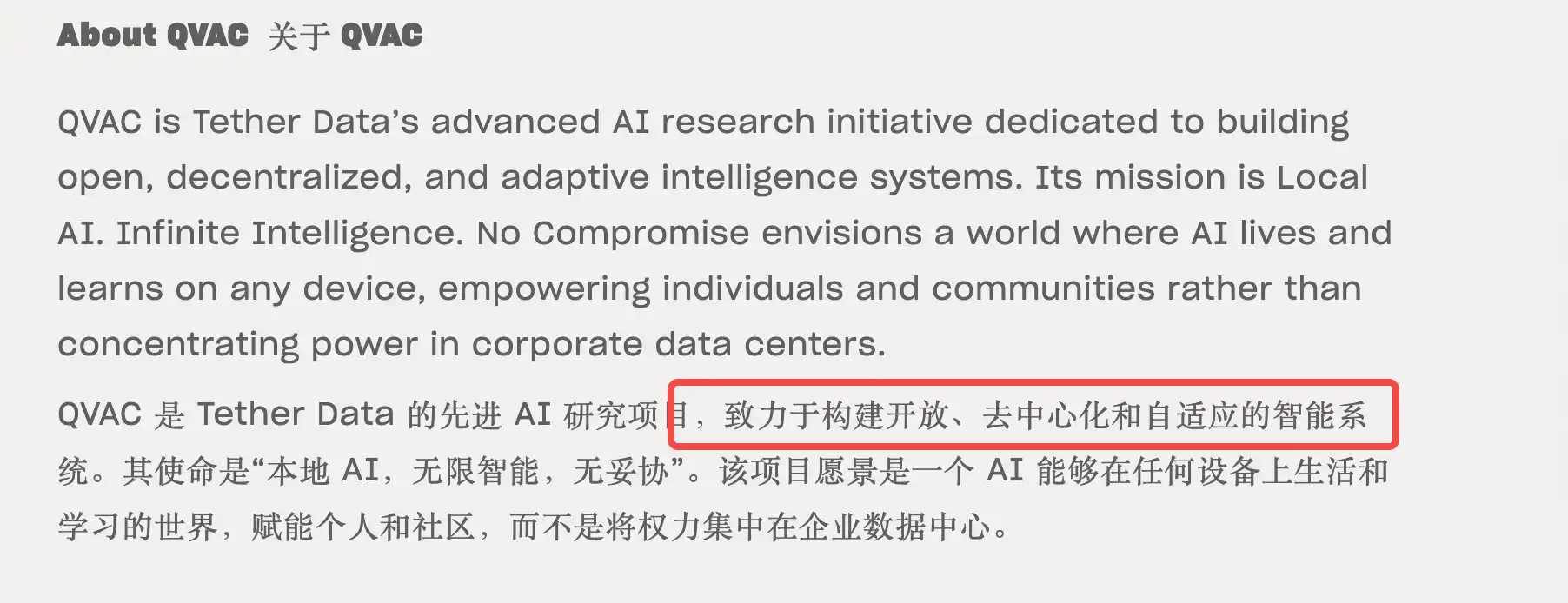
Tether is doing AI, with the slogan of "decentralization," "local execution," and "returning intelligence to individuals."
But Tether itself is the most centralized company in the cryptocurrency world.
He decides when to issue coins and how much reserve funds there are. In ten years of operation, there has been no audit. Where users' money is, only he himself knows.
Such a company is now going to show the world what "decentralized AI" truly means.
It's really a bit like a casino owner teaching people how to quit gambling.
It's not impossible either.
After all, OpenAI is still losing money and is expected to break even only by 2029. Anthropic is in a similar situation, with a break-even forecast for 2028. Sam Altman is raising funds everywhere, and Dario Amodei is doing the same. Together, the two companies have lost 10 billion and are still telling stories to investors.
No need to talk about Tether. The money is already in the pocket.
What is the biggest challenge in the entire AI industry? Business models.
How to make money? I don't know. When to make money? I don't know. Can I make money? I don't know.
Tether doesn't have this problem. Its business model is:
Do not use AI.
The money earned from stablecoins is being invested in AI. If the investment is successful, it's a sign of foresight; if it fails, it's just tuition. Either way, it doesn't affect the main business.
Those doing AI are losing money, while those not doing AI are making money. Those doing AI are raising funds, while those not doing AI are investing.
The best AI business model in 2026 might just be not doing AI at all.
First, get the printing press in order.
Click to learn about BlockBeats' job openings.
Welcome to join the official Lulin BlockBeats community:
Telegram Subscription Group:https://t.me/theblockbeats
Telegram discussion group:https://t.me/BlockBeats_App
Official Twitter account:https://twitter.com/BlockBeatsAsia