


Author: David, Shenchao TechFlow
On March 4, the stablecoin giant Tether announced an investment.
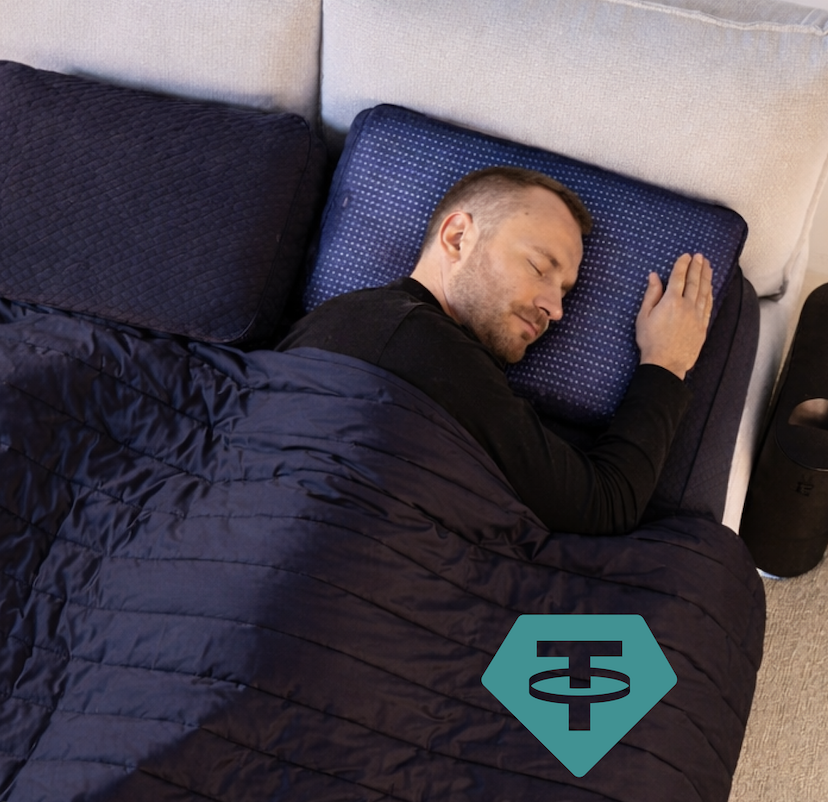
The invested company is Eight Sleep, which produces smart mattresses. Tether invested $50 million, valuing the company at $1.5 billion.
The company's mattresses are extremely premium, priced between $2,000 and $4,000 each, featuring built-in water-based cooling and heating systems that precisely regulate temperature, track sleep data, and automatically adjust...
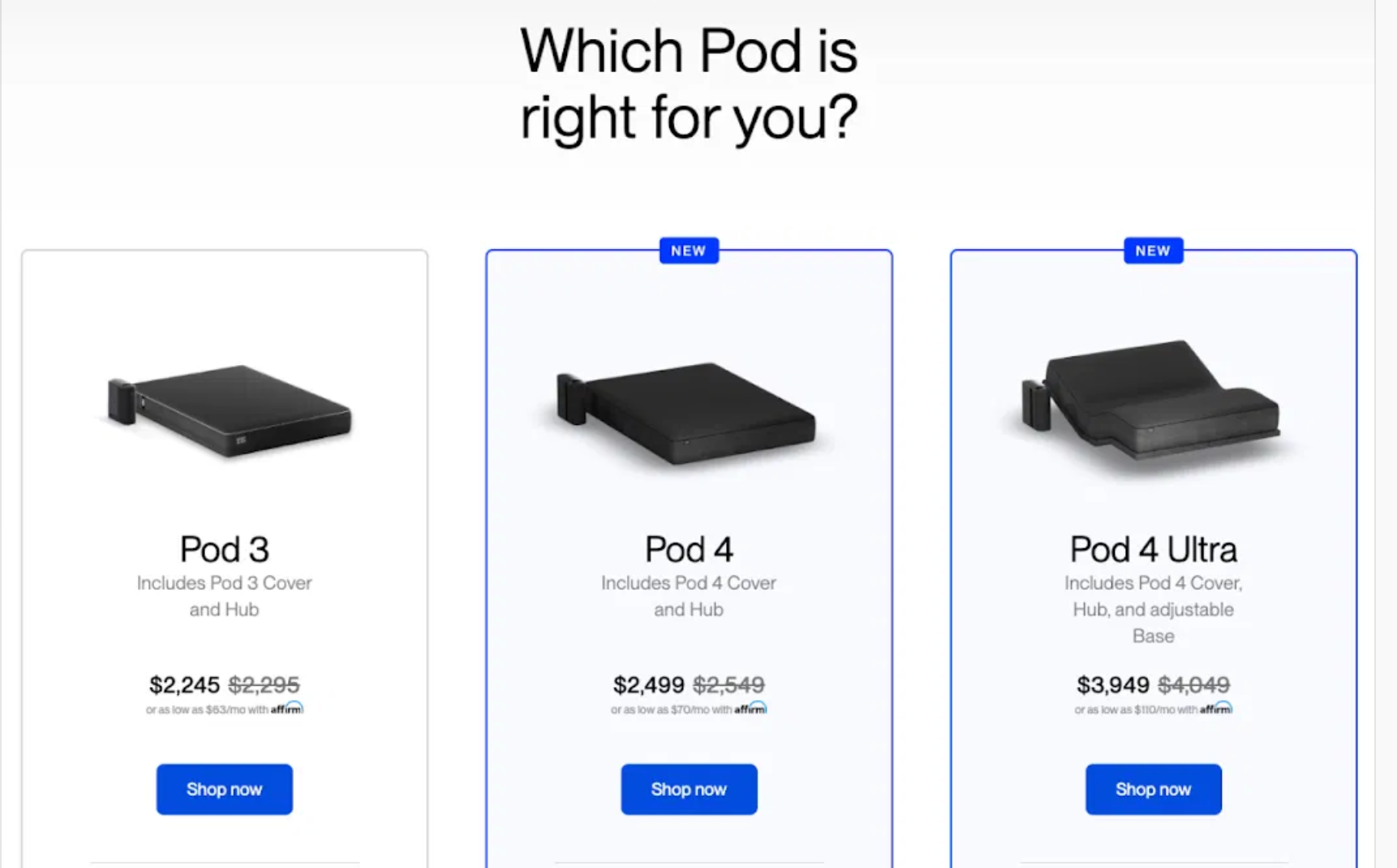
Famous NBA star James is one of the public users. Its primary audience consists of Silicon Valley executives, professional athletes, and a group of biohackers who enjoy treating themselves as experiments.
The issuer of the world's largest stablecoin, USDT, earned over $10 billion in net profit in 2025, operates with almost no external transparency, is not publicly listed, and does not need to account to any shareholders for its activities.
Then it invested $50 million in a mattress company?
Of course, this isn't the first strange transaction. Reviewing Tether's investment records over the years, a mattress might not even be the most puzzling one.
It all begins with the company's CEO.
The CEO's cart is filled with human sovereignty.
Paolo Ardoino, born in 1984, is from Genoa and began coding at the age of 8.
Studied computer science in university, stayed on campus for research in cryptography, working on projects for the military. Read the Bitcoin whitepaper in 2012, joined Bitfinex in 2014, became CTO of Tether in 2017, and was promoted to CEO in 2023.
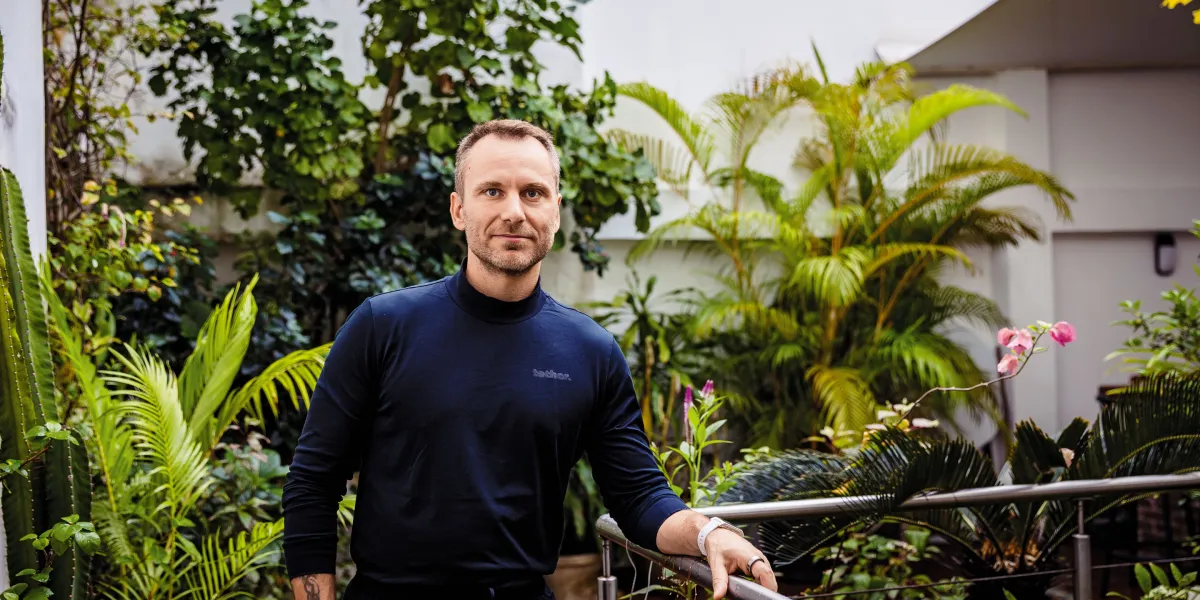
A journalist from Fortune magazine previously visited his office for an interview and noticed dumbbells and a gym bag beside his desk.
This person brings workout gear to work every day. He’s the type who treats his body like a system—tracking, optimizing, and maintaining full control over sleep, training, and vital metrics.
Then, he extended this logic to everything: money, communication, data, and even the body—he believed that individuals should have complete sovereignty over everything that belongs to them.
And he believes:
The U.S. government will eventually collapse.
This is not a joke. Paolo has publicly stated that he did all of this not to make money, but to provide people with an escape route after the system fails.
His exact words were:
I don’t believe the best solution is to fix the politics of every country. The best approach is to enable people to freely form communities through technology, where a sense of belonging comes from shared values rather than geographic location.
It sounds like a line from a science fiction novel. But Paolo is serious. His keynote speech at BTC Prague 2024 was titled:
Built for the apocalypse.
Understanding this makes Tether’s investment in the mattress company logical, as every item in the company’s cart reflects the CEO’s worldview—namely, bodily data sovereignty.
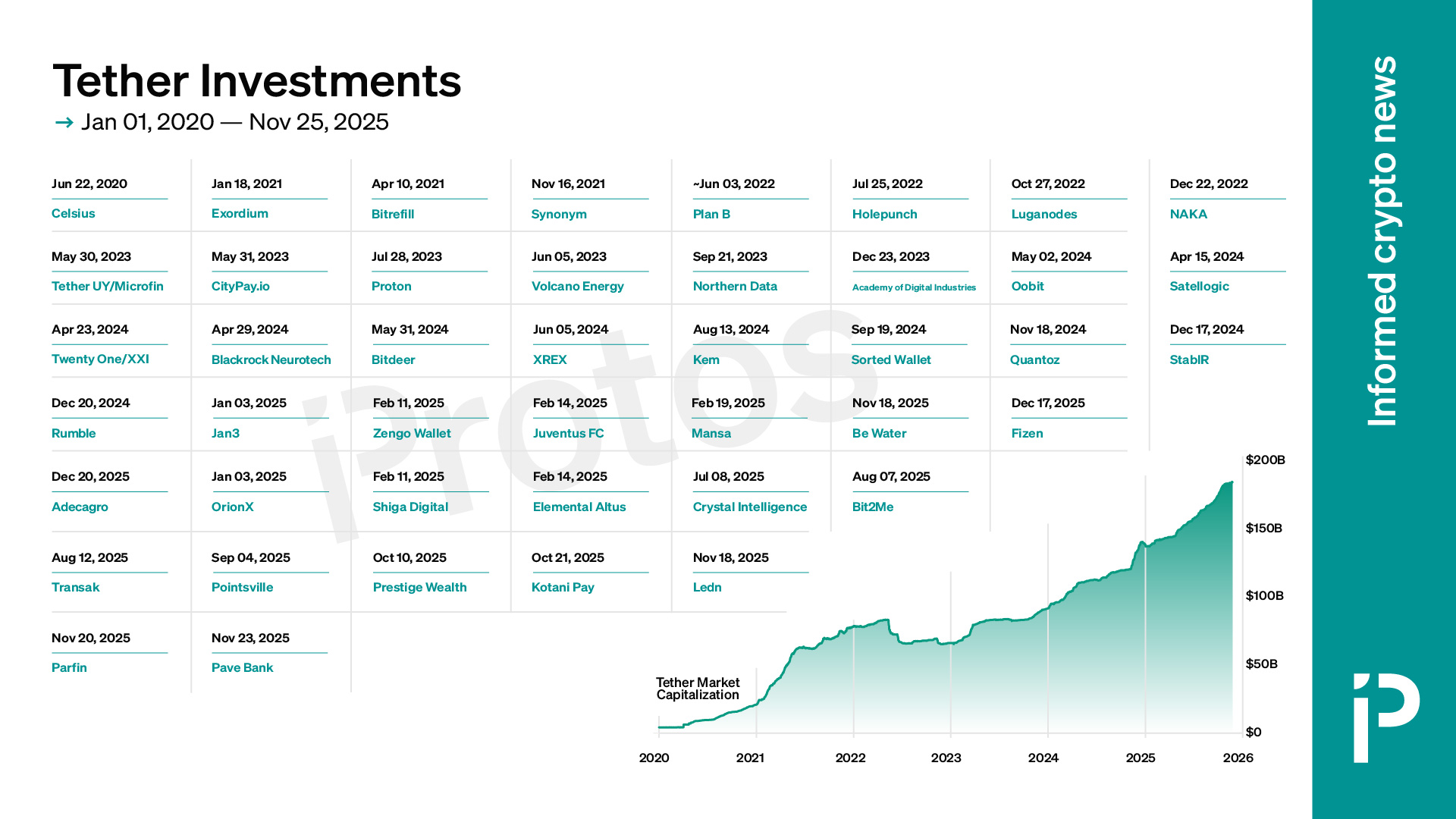
In 2022, he co-founded a platform called Holepunch, which does something simple: enables people to make calls, send messages, and transfer files—all without passing through any servers. It uses direct P2P connections, so signals travel straight from your device to the other person’s device.
You can think of it as sovereignty over communication.
Then there’s QVAC—a health platform launched by Tether at the end of 2025—that encrypts all your vital data—heart rate, sleep, exercise logs—directly on your device, with no uploads to the cloud.
Paolo explained this product by saying, “AI has today been politicized and centralized—we want to create AI that runs locally on your device, keeping everything about you in your own hands.”
This is about data sovereignty.
Thus, by acquiring Eight Sleep, this mattress, once connected to QVAC, becomes a node in the infrastructure for bodily data sovereignty. Your sleep data belongs to neither Apple, nor Google, nor any cloud platform.
It's up to you.
Additionally, Paolo’s $200 million acquisition of a majority stake in the brain-computer interface company Blackrock Neurotech may not be driven by his belief in the market potential of brain-computer interfaces, but rather by his desire to prevent others from controlling this technology.
As I write this, I recall another thing he said in the interview: “We’ve made more money than we could spend in hundreds of years. My greatest fear is wasting this once-in-a-century opportunity.”
It’s hard to evaluate this statement. One can simultaneously believe that civilization will collapse and believe it is their responsibility to use money to prevent it—or at least to leave behind a set of infrastructure that can be restarted after the collapse.
Of course, provided you are Tether with $10 billion in annual profits, turning investments into an extension of your worldview.
You must first trust Tether before you can distrust anyone else.
Paolo’s set of sovereign philosophy rests on an assumption he never voluntarily mentions.
USDT is the world's largest circulating stablecoin, with a market capitalization of $183 billion backed by an equivalent amount of U.S. dollar reserves, at least according to Tether.
Where these reserves are held, who holds them, and whether each one actually exists—Tether has never undergone a complete independent audit.
The company is not publicly traded and is not required to disclose information to shareholders, having operated in a regulatory vacuum for over a decade. How these funds are calculated and what the balance sheet looks like—outsiders can only see the reports published by Tether itself.
Holders of USDT must choose to believe that all of this is real. There is no other option.
This is the subtle part. The CEO has been investing in various companies building human data sovereignty, seemingly distracted by creating infrastructure to "control human data sovereignty";
But this infrastructure itself was built with money from a company that requires you to trust it unconditionally.
Paolo says "built for the apocalypse," but if the apocalypse really happens and the dollar system truly collapses, what will happen to the $183 billion in Tether's reserves, which are held in U.S. Treasuries?
He has never publicly answered this question.
When you have more money, investing becomes a form of autobiography.
When you have enough money, your portfolio becomes a memoir of your worldview.
Elon Musk bought Twitter because he believed free speech was being suppressed by tech platforms; he founded SpaceX because he believed Earth's civilization needed a backup. Peter Thiel invested in PayPal because he believed the government's monopoly on currency was wrong; he invested in Palantir because he believed the national security system needed to be rebuilt by Silicon Valley.
Bryan Johnson spends millions of dollars annually experimenting on himself with the goal of reversing his biological age to 18.
The assets these individuals invested in appear diverse, but their internal logic is consistent:
They are using their money to build the world they believe should exist. Returns are secondary, and sometimes not considered at all.
From this perspective, Tether’s CEO Paolo isn’t an outlier. However, there is one thing that sets him apart from the individuals mentioned above.
The real-world usage scenarios of USDT are far more complex than Paolo's speech.
Argentinians use it to combat peso depreciation, Nigerians use it for cross-border remittances, and Turks use it to preserve their savings during the lira’s collapse. These are real, valuable use cases—the very people Paolo refers to when talking about financial inclusion.
But USDT is also a tool for evading sanctions, a transit point for cross-border money laundering, a settlement currency for dark web transactions, and a ransomware payment address... and this is also true.
Tether addresses have appeared on the U.S. Department of the Treasury’s sanctions list, and UN reports have highlighted the scale of USDT usage in Southeast Asian scam operations. Tether has cooperated in freezing some assets, but the majority were transferred before any freeze could be enacted.
One reason this system can achieve a market cap of $183 billion and annual profits of $10 billion is precisely because it is sufficiently “neutral”—it doesn’t ask where the money comes from or where it’s going.
Then, these profits flowed into brain-computer interfaces, peer-to-peer communication, data sovereignty, and bodily sovereignty—toward an idealistic infrastructure built for the end times.
From infrastructure for gray-market circulation to infrastructure chasing utopia. The same system, the same CEO, the same funds.
When you have more money, investing truly becomes a form of autobiography.
However, Paolo did not finish writing this autobiography; several pages were turned over, making it difficult to delve deeper.