




Original Title: Tether retreats from $20bn funding ambitions after investor pushback
Original Author: Jill R Shah, Financial Times
Compiled by Peggy, BlockBeats
Editor's note: Against the backdrop of a cooling overall cryptocurrency market and pressure on valuation narratives, Tether is standing in a delicate position. On one hand, the scale of USDT continues to expand, making it an "emerging financial player" that cannot be ignored in the U.S. Treasury and gold markets; on the other hand, a valuation expectation as high as $500 billion, an incomplete comprehensive audit, and long-standing regulatory and compliance controversies still keep potential investors cautious.
Tether's next step may reflect not only its own choices, but also the real boundaries that the entire stablecoin industry is facing.
The following is the original text:
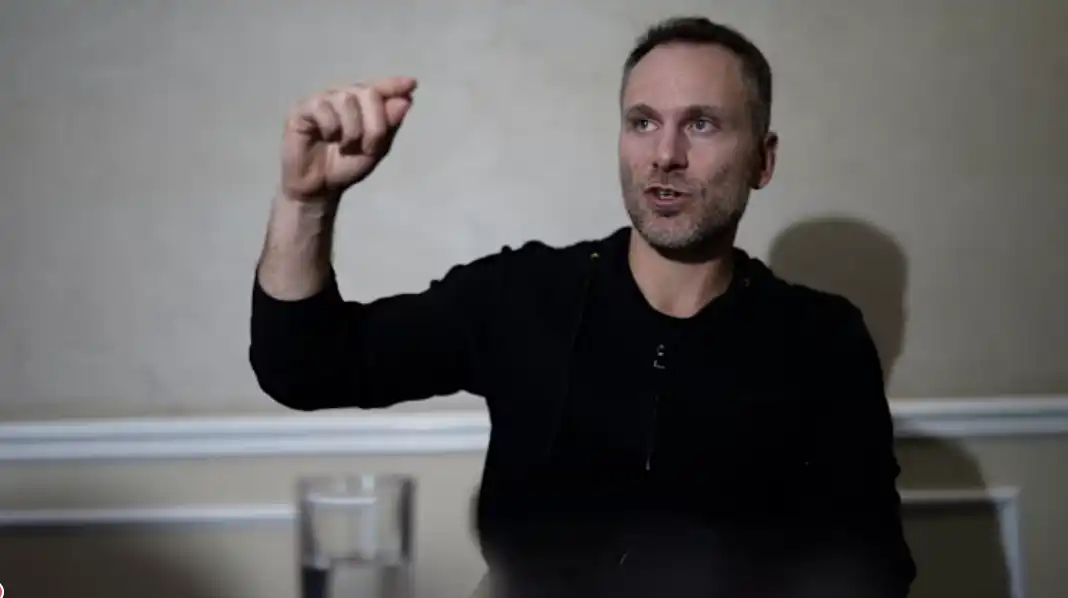
Tether CEO Paolo Ardoino said, "The amount of money these AI companies are making is about the same as ours, except there's a negative sign in front."
As investors expressed doubts about its $50 billion valuation target, the CEO of Tether, the world's largest stablecoin issuer, voluntarily reduced external expectations and attention regarding its fundraising scale.
This Salvadoran-registered crypto group initiated fundraising negotiations last year, aiming to raise between 15 and 20 billion U.S. dollars, which, if the deal is completed, would place it among the most valuable private companies in the world.
But according to informed sources, after encountering investor hesitation, Tether's advisors have begun discussing the possibility of raising only about 5 billion US dollars.
Tether's CEO Paolo Ardoino downgraded the potential financing scale, stating that the previously proposed target of 15 to 20 billion U.S. dollars was "a misunderstanding."
"That number isn't our target, just the upper limit of what we're willing to sell," he said in an interview. "We would feel just as satisfied even if we sold not a single penny."
Ardoino stated that Tether is highly profitable and has already received "significant interest" at a valuation level of 50 billion U.S. dollars. He added that the company has not yet decided how much equity to sell, partly because insiders are unwilling to reduce their shares.
The USD-linked stablecoin USDT issued by this company currently has a scale of about 185 billion US dollars and is regarded as the "reserve currency" of the digital asset market. The control of Tether is concentrated in the hands of a small group of long-tenured executives.
The market has been closely watching Tether's progress in bringing in prominent investors, viewing it as an important barometer of investors' interest in the crypto industry. It is widely believed that this move is more about strengthening Tether's credibility and network of contacts, as the company generates billions of dollars in profits annually and does not urgently need new capital.
After Trump was elected president, the market briefly boosted digital asset prices due to expectations of a more favorable U.S. regulatory environment; however, over the past six months, as traders withdrew from high-risk speculative assets, the crypto market has experienced a significant decline.
Some investors have privately expressed concerns about the $50 billion valuation, which would place Tether among the top private companies, alongside AI firms such as OpenAI and Anthropic, as well as Musk's SpaceX and TikTok's parent company ByteDance.
Ardoino stated that Tether—which disclosed approximately $10 billion in profits last year, mainly from returns on asset reserves used to support the value of USDT—should logically receive a valuation comparable to those AI model companies that are still incurring losses.
"These AI companies make money similar to ours, except there's a negative sign in front," he said, "If you're willing to believe that an AI company with a huge negative sign is worth 800 billion dollars, that's your freedom."
Tether and its investment advisor Cantor Fitzgerald both declined to comment on the scale of this round of financing. This investment bank is led by the children of U.S. Commerce Secretary Howard Lutnick and also holds shares in Tether.
Insiders reminded that the relevant negotiations are still ongoing, and the financing terms may still change; if the overall cryptocurrency market rebounds, investor sentiment may also reverse accordingly.
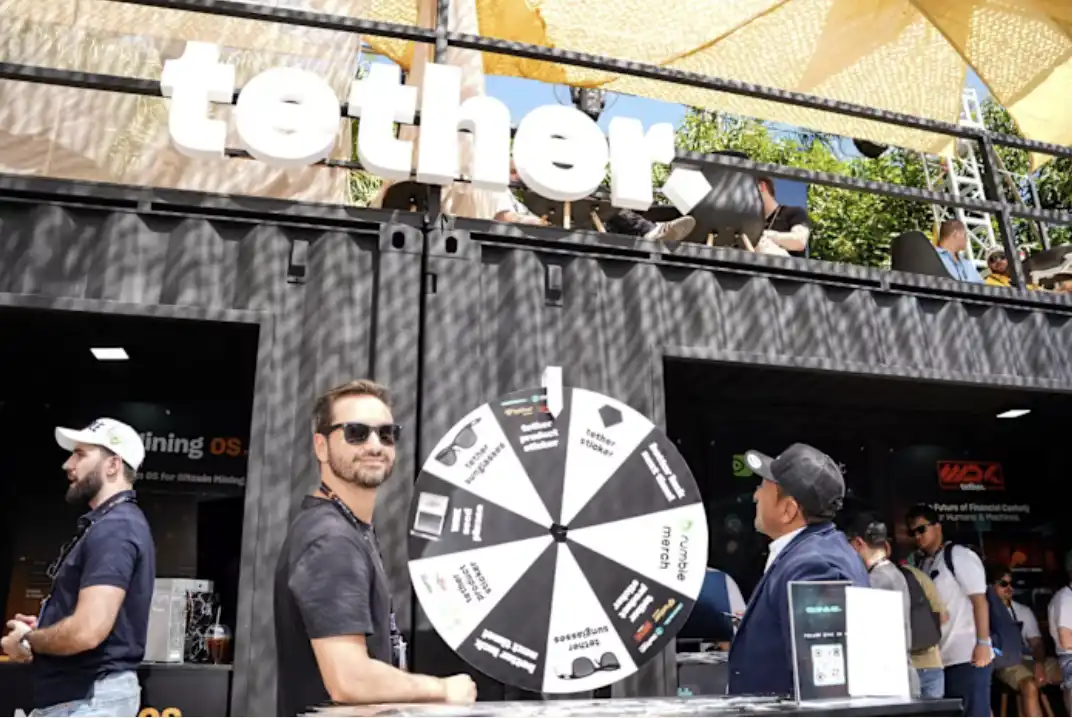
Tether's efforts to bring in heavyweight investors have always been regarded as an important signal of investors' interest in the cryptocurrency industry.
Ardoino said that the new U.S. stablecoin legislation signed into effect by Trump, as well as the IPO of the U.S.-based competitor Circle last year, have further increased market attention and momentum for Tether. Tether has recently also launched a new token in the U.S. that complies with this regulatory framework.
But insiders say some potential investors remain cautious about the regulatory risks surrounding Tether. Since its founding in 2014, the crypto group has long faced scrutiny, with controversies mainly focusing on whether its tokens are used for illegal activities, and the transparency and quality of its asset reserves.
In recent years, Tether has begun to have quarterly reserve attestations issued regularly by the accounting firm BDO Italia, but has never undergone a full independent audit.
Ardoino stated that the company has demonstrated to potential investors the depth of its technical tools in collaboration with law enforcement agencies in multiple countries, to prove its capabilities in compliance and cooperation with law enforcement.
S&P Global Ratings downgraded Tether's reserve rating to the lowest level in its system at the end of last year, citing the increasing exposure to high-risk assets such as Bitcoin and gold. In response, Ardoino said at the time, "We take pride in your aversion."
Since 2020, the growth of USDT has clearly accelerated, making Tether one of the largest buyers of U.S. Treasury bonds globally and propelling it to become a significant player in the gold market in recent months.
Such a large-scale asset allocation has made Tether one of the most critical connection nodes between the global financial system and the highly volatile cryptocurrency world.
Compared to the previous year, Tether's profits for 2025 declined by about a quarter. Ardoino attributed this change to the drop in the price of Bitcoin. He also added that, benefiting from the rise in the price of precious metals, the company earned approximately 8 to 10 billion U.S. dollars in profits from its gold holdings.
Click to learn about Lüdòng BlockBeats' open positions
Welcome to join the official community of Lvdong BlockBeats:
Telegram subscription group:https://t.me/theblockbeats
Telegram discussion group:https://t.me/BlockBeats_App
Official Twitter account:https://twitter.com/BlockBeatsAsia