








Author: BlockWeeks
Yesterday, the NEAR ecosystem protocol Rhea Finance was attacked, and Tether swiftly froze $3.29 million in stolen funds; CEO Paolo Ardoino garnered widespread online praise with just one phrase: “Tether Cares.” However, this celebration of efficiency has thrust Circle, another major stablecoin player, into the spotlight. In a similar incident involving the Drift Protocol attack, Circle’s inaction triggered a class-action lawsuit.
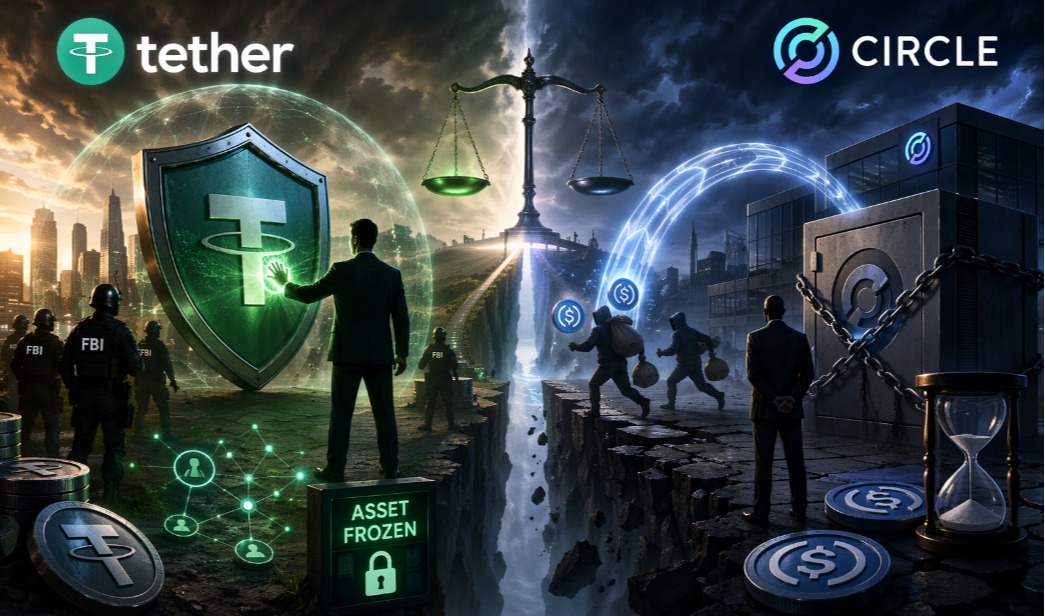
This is no longer just a cliché about centralization versus decentralization; it’s a philosophical struggle between CEO arbitration and due process.
I. Comparison of Two Battlefields: The Rescue of Rhea and the Collapse of Drift
To understand why the community so reveres Tether’s “hand of God,” we must compare it to another tragedy that occurred at the same time.

- Tether side (Rhea Finance): After the hacker stole 3.29 million USDT, Tether identified and blacklisted the funds within hours. Paolo’s tweet is not just public relations—it’s also a showcase of Tether’s rapid response time.
- Circle side (Drift Protocol): In early April this year, Drift, a Solana-based ecosystem project, was hacked, resulting in the theft of approximately $230 million in USDC. Over an 8-hour period, the hacker blatantly transferred the stolen funds from Solana to Ethereum using Circle’s own cross-chain transfer protocol (CCTP). Despite having the technical capability to do so, Circle chose not to freeze the assets.
As a result, victims including Joshua McCollum have filed a class-action lawsuit against Circle in Massachusetts, accusing it of “aiding conversion and negligence.” Circle has become the defendant, while Tether has become the hero.
II. Circle’s “Legal Obsession”: Why Does It Always Fail at Critical Moments?
You might wonder, doesn't Circle know that freezing the hacker could win back its reputation? In fact, Circle’s “slowness” is intentional.
- Priority of Court Orders: Circle executives have repeatedly emphasized that USDC is designed to be a "neutral financial infrastructure." Circle rarely initiates intervention unless it receives a sanctions order from OFAC (the U.S. Office of Foreign Assets Control) or a court injunction.
- Historical case comparison:
- The 2022 Nomad bridge heist: $190 million stolen, including $45 million in USDC. The hacker remained on-chain for nearly an hour, while Circle took no action.
- 2023 Ledger supply chain attack: Tether instantly froze addresses, while Circle is still waiting for "official procedures."
- 2024 Cetus Protocol attack: Circle blacklisted the hacker only a month after the cross-chain transfer was completed, by which time the funds had already been laundered.
Disagreement in logic: Tether operates a "private police system"—if I think you're a bad actor, I shoot; whereas Circle operates under a "constitutional framework"—it would rather let bad actors escape than violate "due process" without official law enforcement approval.
III. Power Is No Longer Secret: From "Centralization" to "Enforcement"
The centralization of USDT is a well-known "gray rhino" that no one finds truly alarming. But the real turning point is that this authority is evolving from "risk prevention" into "global enforcement."
- Tether's FBI takeover: Starting in 2024, Tether officially integrated the U.S. Secret Service and FBI into its platform. This means that the authority to freeze USDT has been partially transferred to sovereign nations.
- More than just hackers: By 2026, Tether has frozen over $3.3 billion in assets across more than 7,000 addresses, including pig butchering scams, money laundering, and even ordinary users who merely transacted with tainted addresses (collateral damage).
When users cheer “Tether forever,” they are in fact endorsing an “efficient centralized tyranny” over “on-chain chaotic freedom.” The widespread acceptance of this view marks a shift in the Web3 narrative from “resisting centralization” to “choosing better centralization.”
IV. Deep Thinking: The Pragmatism Trap of Web3
What this issue should most deeply make us consider is: Are we building a monster that is “more bank-like than traditional banks”?
- Efficiency vs. Justice: Tether offers exceptional operational efficiency, but this efficiency lacks transparency and an appeals process. If Tether mistakenly freezes your address, there is no court where you can file an appeal.
- Decentralized fallback: If the most dominant settlement currencies (USDT/USDC) are all controlled, does it even matter whether the underlying Ethereum or NEAR are decentralized? It’s like installing a remotely disableable engine (centralized stablecoin) inside a bulletproof armored vehicle (blockchain).
- The future watershed: The market is splitting. Funds seeking compliance and security will flow toward Tether, a “high-efficiency police system”; while true decentralization believers may accelerate their migration to native over-collateralized stablecoins like DAI or LUSD.
Conclusion
Tether’s “caring” did indeed help Rhea’s victims recover their losses, which is morally unquestionable. But BlockWeeks wants to remind readers: all security comes at a cost. When we grow accustomed to CEOs having the power to “erase assets with a single click,” we are moving further away from Web3’s original principle of being permissionless and open to all.
If you prioritize strict rule of law, you may support Circle’s restraint; if you seek to recover your hard-earned money, you’ll cheer for Tether.
There’s no right or wrong—only which risk you’re willing to pay for.