

Original | Odaily Planet Daily (@OdailyChina)
Author | Wenser (@wenser 2010 )
Early this morning, Strategy Q1 2026 Earnings Call officially concluded, and the Q1 earnings report was officially released. As a result, the true operational status of this "industry heart," holding 818,300 BTC, has once again been laid bare to the market—behind the $12.54 billion net loss are figures such as BTC’s price briefly falling to around $62,000, the continued accumulation of 63,400 BTC, and STRC’s scale growing to $8.5 billion.
Of course, the most intriguing part of the earnings report and Michael Saylor’s public statements concerns the mention of a “strategy to sell a portion of BTC to pay dividends.” Influenced by this news, despite Q1 performance falling short of market expectations, capital markets responded positively, with Strategy’s stock price rising slightly by 3%.
Odaily Planet Daily has summarized and organized the key highlights and future potential points from the Q1 financial report as follows.
Strategy's Q1 ledger: Net book loss of $12.5 billion; possibility of selling BTC to pay dividends not ruled out
Key point one: Selling BTC is no longer impossible—it's an option.
Upon closer examination of the Q1 earnings report and conference call details, Strategy repeatedly mentions in its forward-looking statements and KPI disclosures: “If the convertible bonds mature or are redeemed without being converted into common stock, the company may need to sell common stock or Bitcoin to generate sufficient cash to fulfill these obligations.”
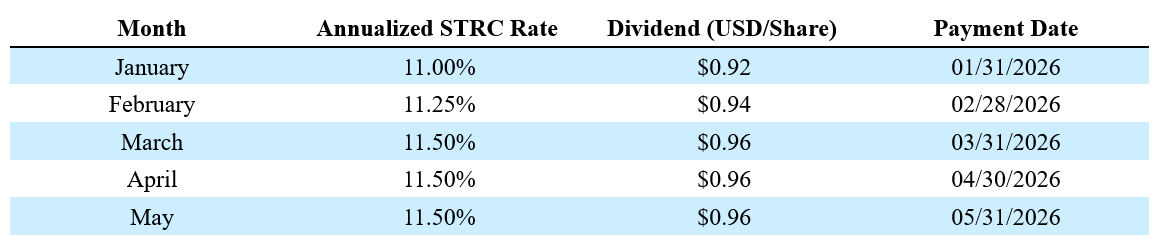
As of the end of Q1, Strategy's net long-term debt stood at $8.17 billion, the redemption value of preferred shares was $10 billion, and cash reserves were only $2.21 billion. The company is also required to make ongoing preferred dividend payments (currently at an annualized STRC rate of 11.5%) and has already begun financing these dividends through the issuance of common stock. If BTC prices remain under pressure, leading to constrained access to financing, selling assets to repay debt could shift from a theoretical possibility to a tangible reality, inevitably triggering broader market impacts.
Strategy founder Michael Saylor said, "This move is simply to send a message to the market that this model—referring to the ability to validate Bitcoin assets as supporting shareholder returns within corporate financial systems—has been achieved."
Notably, unlike traditional companies that use conventional KPIs, Strategy has created its own KPI framework, including: BPS (Bitcoin per Share), BTC Yield (9.4%), BTC Gain (63,410 BTC), and BTC$ Gain (BTC dollar gain of $4.97 billion) (Odaily Planet Daily note: Data as of May 3). However, its disclaimer also clarifies that these metrics do not account for debt, do not consider preferred stock liquidation preferences, do not represent investment returns, and do not reflect fair value gains—and “BTC dollar gains may be positive while the company records substantial fair value losses.” In fact, Strategy’s Q1 business performance confirms this mechanism: while the KPIs show $4.97 billion in BTC dollar gains, GAAP reporting reveals a $14.46 billion unrealized loss. The core function of this KPI system is to sustain a market narrative rather than reflect actual financial conditions. Put simply, Strategy routinely employs the practice of “turning a funeral into a celebration” or “reporting only the good news and omitting the bad” in capital markets.
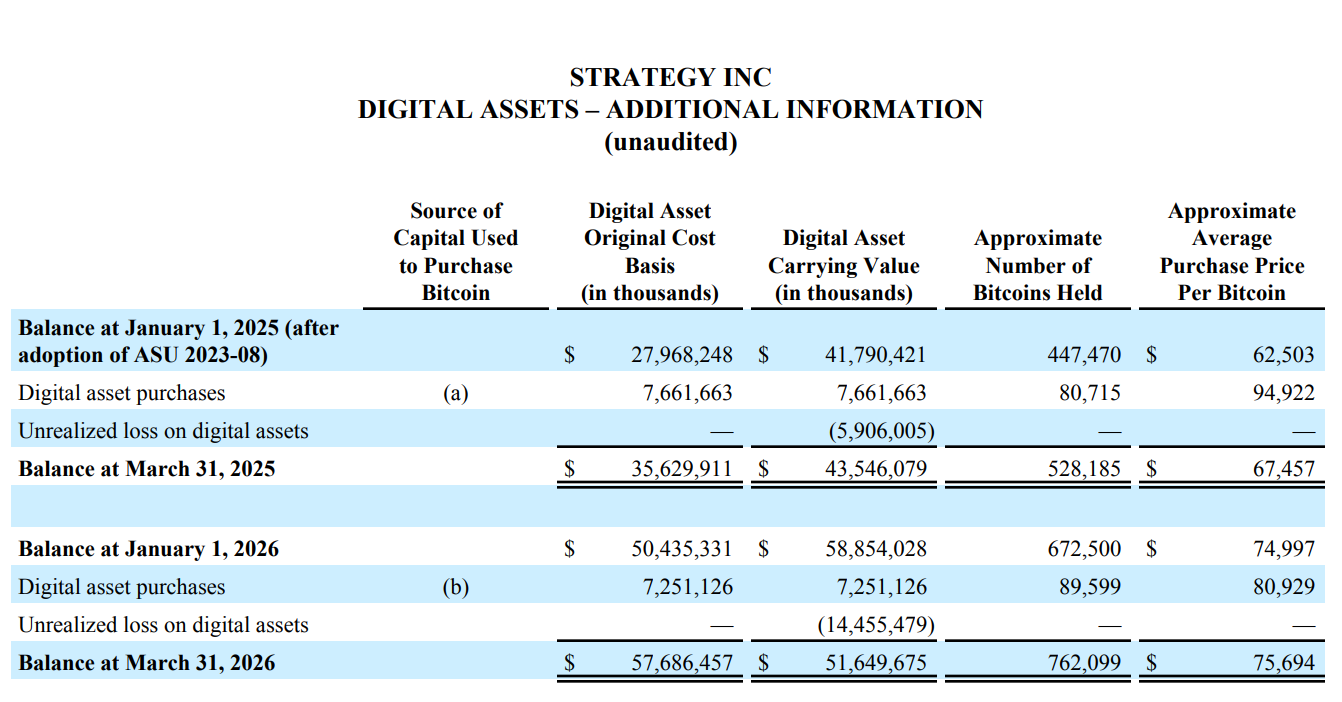
As of May 3, 2026, Strategy holds 818,334 bitcoins, a 22% increase year-to-date. However, the Q1 financial report recorded a net loss of $12.54 billion, almost entirely due to unrealized losses on digital assets ($14.46 billion); the total cost basis for the 818,334 BTC is $61.81 billion, corresponding to an average purchase price of approximately $75,537 per bitcoin. Notably, thanks to the recent market rebound, the Q2 unrealized gain stands at $8.3 billion.
Key point two: Spent $7.25 billion on BTC in Q1, but the book value of BTC shrank by $720 million at quarter-end.
Strictly speaking in terms of transaction volume, Strategy's Q1 invoice barely qualifies as "breaking even."
Financial statements show that Strategy Q1 purchased 89,599 BTC for $7.25 billion, at an average price of approximately $80,929. However, due to the decline in BTC, the book value of digital assets decreased from $58.85 billion at the beginning of the year to $51.65 billion, a net reduction of approximately $7.2 billion.
To be honest, the outcome has been quite good, continuously adding leverage (margin + dividends) to dollar-cost average into BTC during a bear market.
Key point three: The impact of AI on Strategy is objectively real, and software business revenue has been completely marginalized.
On the surface, Strategy continues to present itself as an "AI-driven enterprise analytics software company," as evidenced by its revenue streams including software subscription fees, licensing income, and product support revenue.
However, comparing the structure, Strategy Q1's total software revenue was only $124.3 million, with a gross profit of just $83.35 million; in contrast to the $64.1 billion market value of its BTC holdings, this more than 500-fold quarterly revenue gap clearly tells the market that in the era of major AI advancements, any software business even remotely related to AI has been completely marginalized.
Key Point 4: STRC became the most outstanding business, reaching a market cap of $8.5 billion in 9 months
As a financing tool for Strategy, STRC's market performance has been a lifeline amid the prolonged bear market.
Currently, STRC (Variable Rate Series A Perpetual Preferred Stock) has grown to $8.5 billion in assets under management within just nine months, becoming the world’s largest preferred stock by market value. Year-to-date, Strategy has raised $5.58 billion through STRC, representing a 189% growth rate.
In addition, the Strategy shows that STRC has a Sharpe ratio of 2.53, a volatility of only 3%, and an average daily trading volume of $375 million. This means that, with STRC—a low-volatility, high-yield, highly liquid fixed-income product—a new BTC-backed asset class has emerged in traditional financial markets.
Key Point 5: Major transformation in Q1 and Q2 financing structure, with STRC becoming the primary financing driver
In the earnings report, of the $7.37 billion in financing completed by Strategy in Q1, MSTR common stock ATM contributed $5.3 billion, while STRC contributed $2.07 billion, accounting for approximately 72% and 28% respectively; however, entering Q2 (April 1 to May 3), this structure reversed—STRC contributed $3.51 billion in financing, while MSTR contributed only $810 million.
This means the funding gap for common stock is shrinking, and Strategy is increasingly relying on preferred stock offering fixed income to maintain capital levels, thereby continuing to drive BTC accumulation.
Additionally, perhaps in recognition of STRC’s strong performance and its powerful appeal to capital, Strategy is also promoting this “income-oriented fixed-income product” in traditional financial markets. The company has recently initiated the STRC biweekly dividend payment voting proposal, aiming to shorten the dividend payment cycle and attract more capital participation.
Key Point 6: Strategy has recorded its first cumulative historical loss.
In traditional financial markets, retained earnings are a key indicator of a company’s financial health, representing the cumulative total of all net profits minus all dividends paid since the company’s inception. In other words, it is a company’s “piggy bank.”
From its founding in 1989 through the end of 2025, after more than three decades of operations, Strategy had accumulated $6.32 billion in profits on its books; however, by the end of this year’s first quarter, that figure had turned negative, resulting in an accumulated deficit of $6.47 billion.
This is a direct consequence of ASU 2023-08 (Odaily Planet Daily note: This standard requires public companies to measure BTC at fair value starting in 2025, with price changes directly recorded in the income statement). However, from the perspective of GAAP, commonly used in traditional financial markets, Strategy’s accumulated profits over more than thirty years have been entirely erased by a single quarter’s BTC price decline.
Of course, where there is decline, there is also growth—if BTC's price recovers, this figure can still turn from negative to positive. This metric again highlights the high risk and high volatility of crypto assets compared to traditional financial assets.
Key Point 7: A DeFi ecosystem centered around STRC is under development.
Strategy Q1 earnings report mentioned that DeFi protocols such as Apyx and Saturn absorbed over $270 million in STRC assets; $150 million in STRC assets were added to corporate asset reserves by publicly traded companies such as Prevalon, Strive, and Anchorage.
In other words, STRC is evolving from a single preferred stock financing instrument into a foundational collateral asset for the on-chain ecosystem of the cryptocurrency market. If STRC’s appeal to capital markets and the crypto ecosystem continues to grow (Odaily Planet Daily note: whether in traditional financial markets or crypto markets, fixed-income products are highly attractive in the wealth management space), STRC will gradually surpass MSTR (traditional preferred stock).
Of course, with increased weight of STRC, the dividend payment capacity requirements for Strategy become higher, and the scope of risk transmission in the market expands.
Key 8: A tax credit is available, but it won’t be usable for the next 10 years.
In addition to business-related data, Strategy Q1 earnings report also mentioned a significant change in deferred tax liabilities.
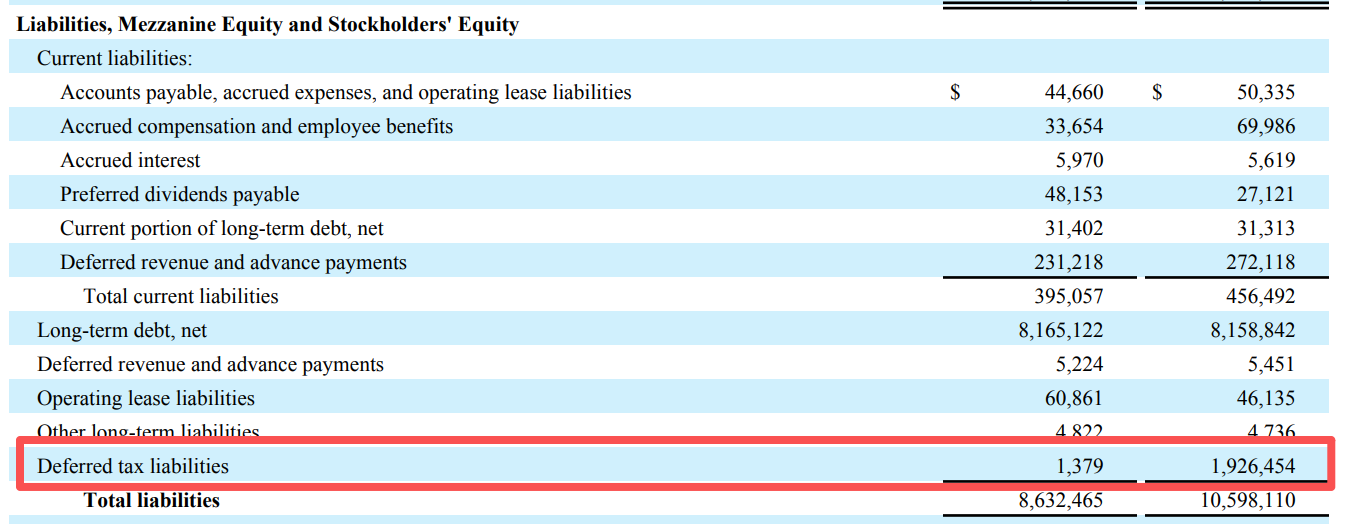
According to the table data, Strategy's deferred tax liabilities dropped sharply from nearly $1.93 billion at the beginning of the year to just $13.8 million by the end of Q1, nearly zeroed out.
In other words, Strategy previously had an estimated tax liability of approximately $1.93 billion due to unrealized gains from business profits; however, due to business losses triggered by the decline in BTC, the company recorded this unpaid tax as an "income tax benefit" on its income statement. Additionally, Strategy’s $14.46 billion in unrealized losses for Q1 would theoretically offset some taxes, meaning the company’s business losses reduced its taxable income, creating a "tax shield."
However, the issue is that this tax shield, which allows for tax deductions, is only beneficial if Strategy generates taxable profits in the future—but it also states that no taxable profits are expected for more than ten years. In other words, Strategy has gained a $1.9 billion “tax benefit” due to the decline in BTC, but since taxable profits are unlikely to materialize in the future, this benefit will most likely never be realized.
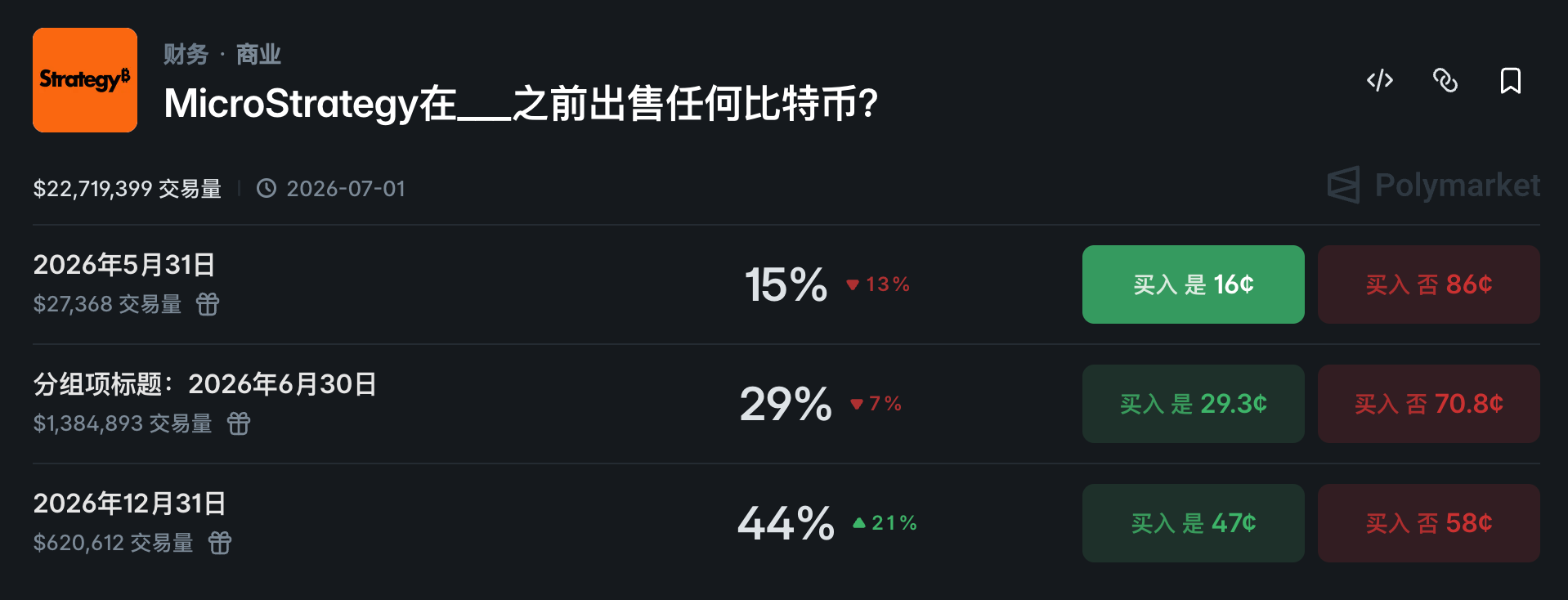
Finally, aside from purchasing stocks related to Strategy, the betting event on whether Strategy will sell Bitcoin before the end of the year has gone live, with the current probability of "yes" at 44%.