





Editor’s Note: As stock markets rapidly recover from wartime losses and approach historical highs, a narrative that “risk has been priced in” is regaining dominance. But this article reminds us that focusing solely on equity markets can easily lead to a misjudgment of the current reality.
Bonds and crude oil are sending conflicting signals: rising interest rates and high oil prices suggest that inflation remains persistent, the Fed’s policy space is constrained, and geopolitical tensions have not yet fully materialized. In contrast, the stock market is pricing in a highly idealized set of assumptions—low inflation, renewed rate cuts, controllable costs, and de-escalation of conflicts.
The author believes that this rally is driven more by momentum than by fundamentals. Driven by FOMO trading behavior, prices may deviate from reality in the short term, but will ultimately revert to ranges determined by macroeconomic variables.
When there is divergence between different asset classes, the real risk is not about who is right or wrong, but how this divergence is resolved. The current issue is not whether the market is optimistic, but whether this optimism has outpaced the data.
The following is the original text:
Rule Two: Excessive movement in one direction is often followed by an excessive reversal in the opposite direction. — Bob Farrell
The S&P 500 has fully recovered all of its losses during the U.S.-Iran conflict. As of yesterday, the index is 1% higher than it was on February 27—the day before the first strike against Iran—and just under 1% away from its all-time high.
In just 10 trading days, the market completed a full round trip.
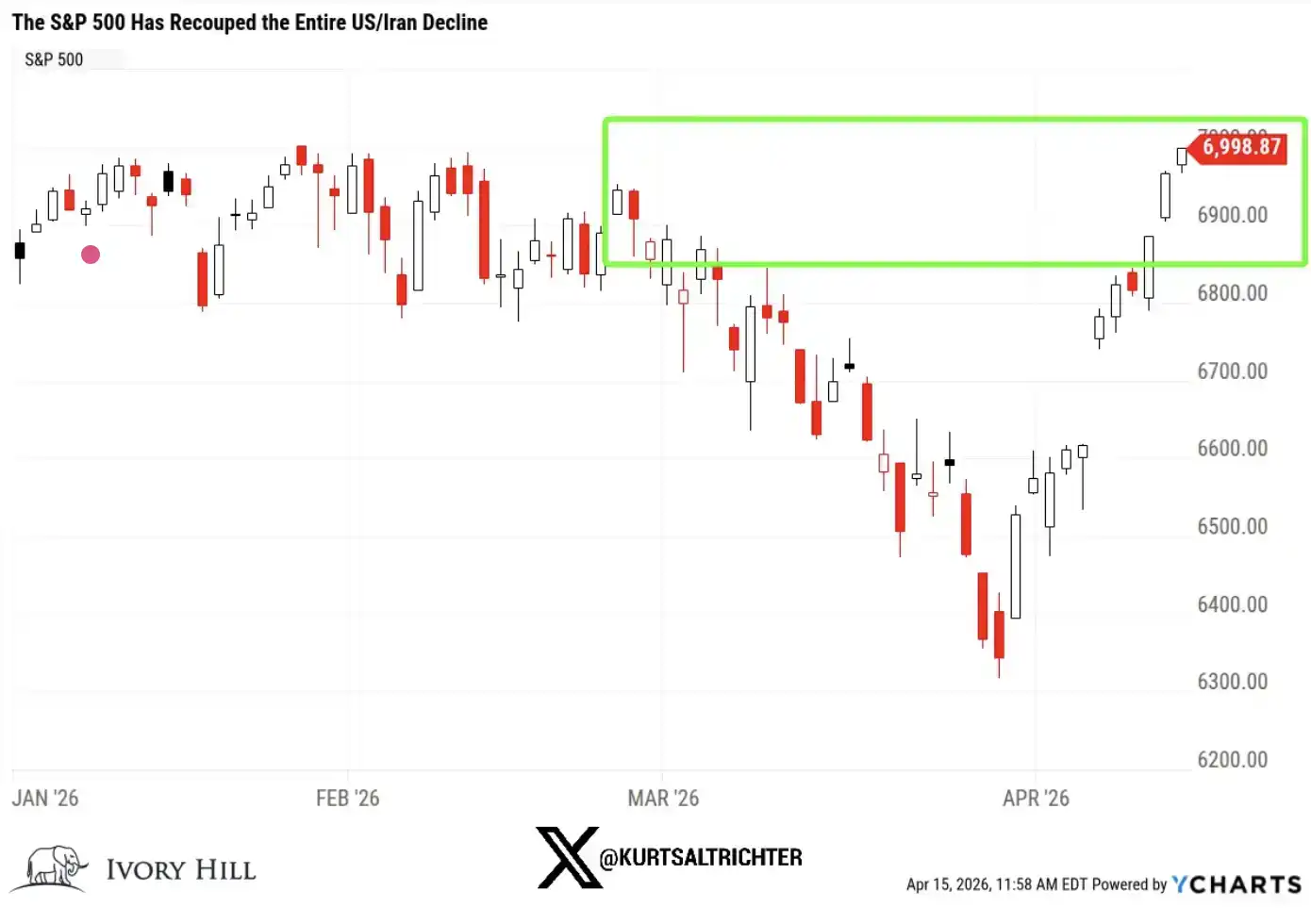
To be frank, if you're only looking at the stock market right now, everything seems to be “recovering nicely.” War breaks out, markets drop, then quickly rebound, and everything returns to normal as everyone moves forward.
But if you broaden your perspective, this is not what is actually happening.
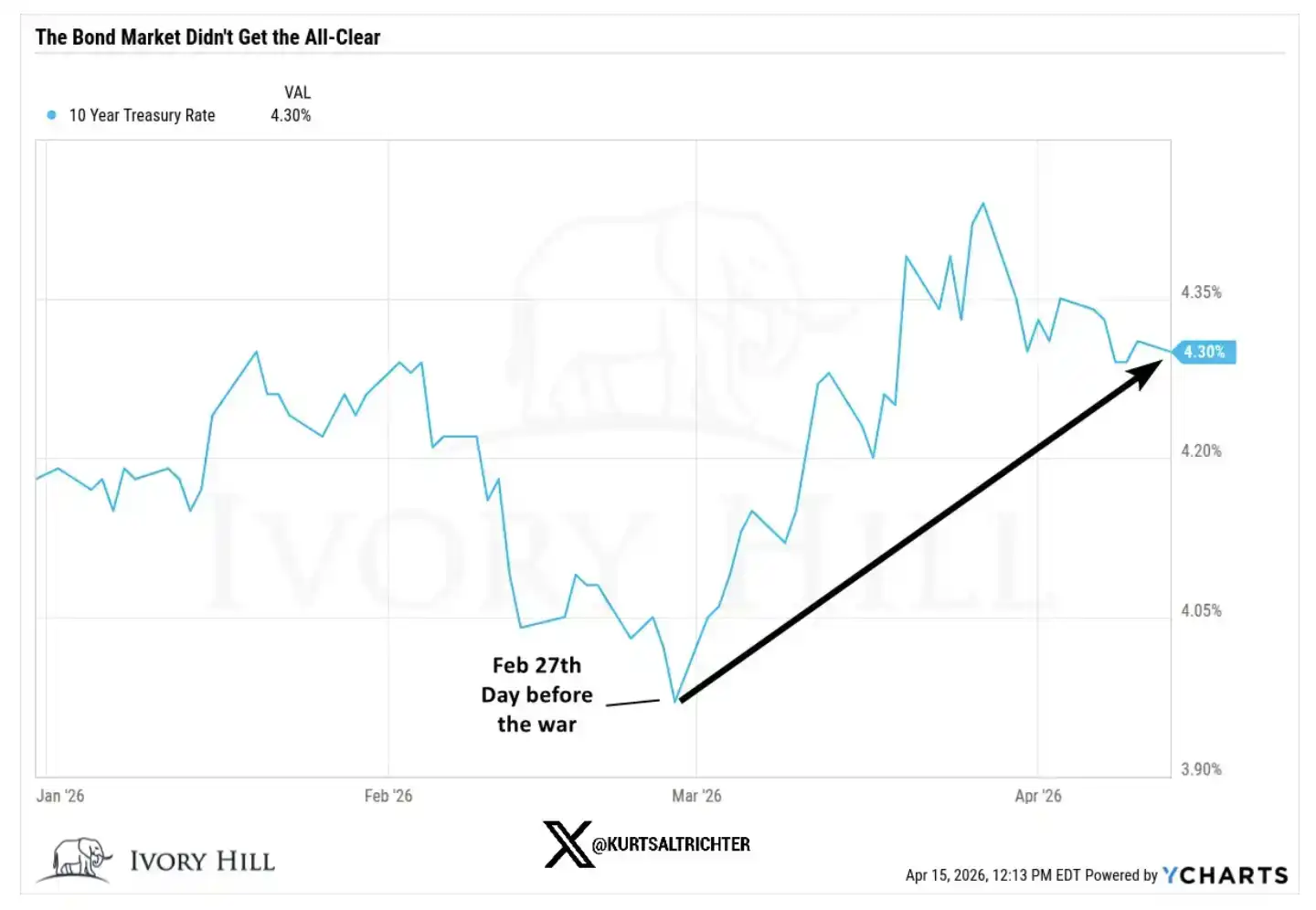
The bond market has not confirmed this rally.
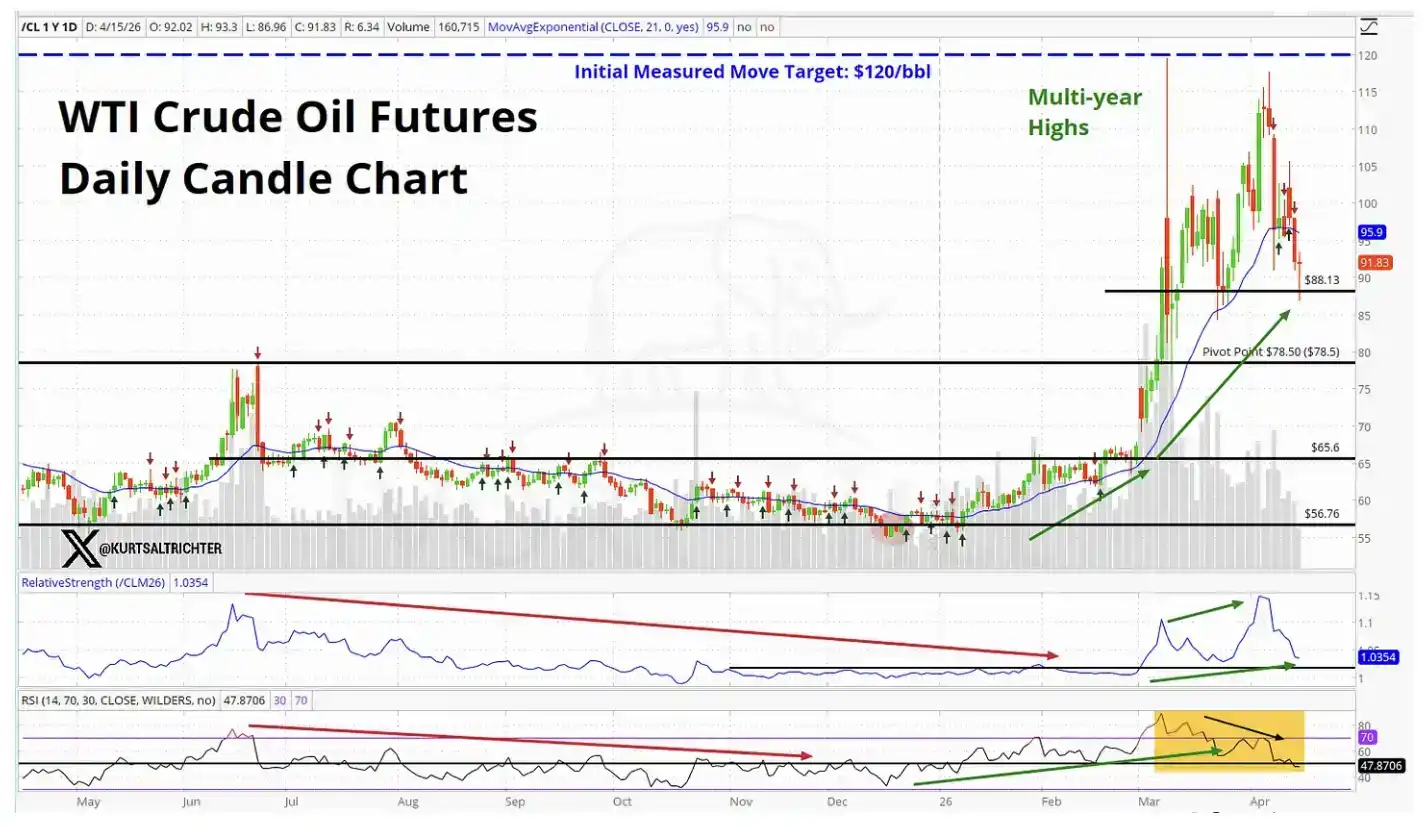
The oil market has also not confirmed this rally.
When the two most important markets in the world are telling a story different from the stock market, it is certainly a signal that cannot be ignored.
So, what is the current stock market pricing in?
For the S&P 500 to rise above pre-war levels, the market would actually need to simultaneously believe in the following:
Current oil prices are not sufficient to substantially suppress consumption.
The Federal Reserve will ignore hotter-than-expected inflation data and still choose to cut interest rates.
Higher raw material and transportation costs will not erode corporate profit margins.
The Middle East conflict will be sufficiently close to resolution within six months, no longer posing a risk.
Maybe things will indeed unfold this way. I’m not saying it’s impossible—but these are rather aggressive assumptions, and the current data from the bond and oil markets do not support them.
From a fundamental perspective, stock market pricing has approached a "perfect expectation."
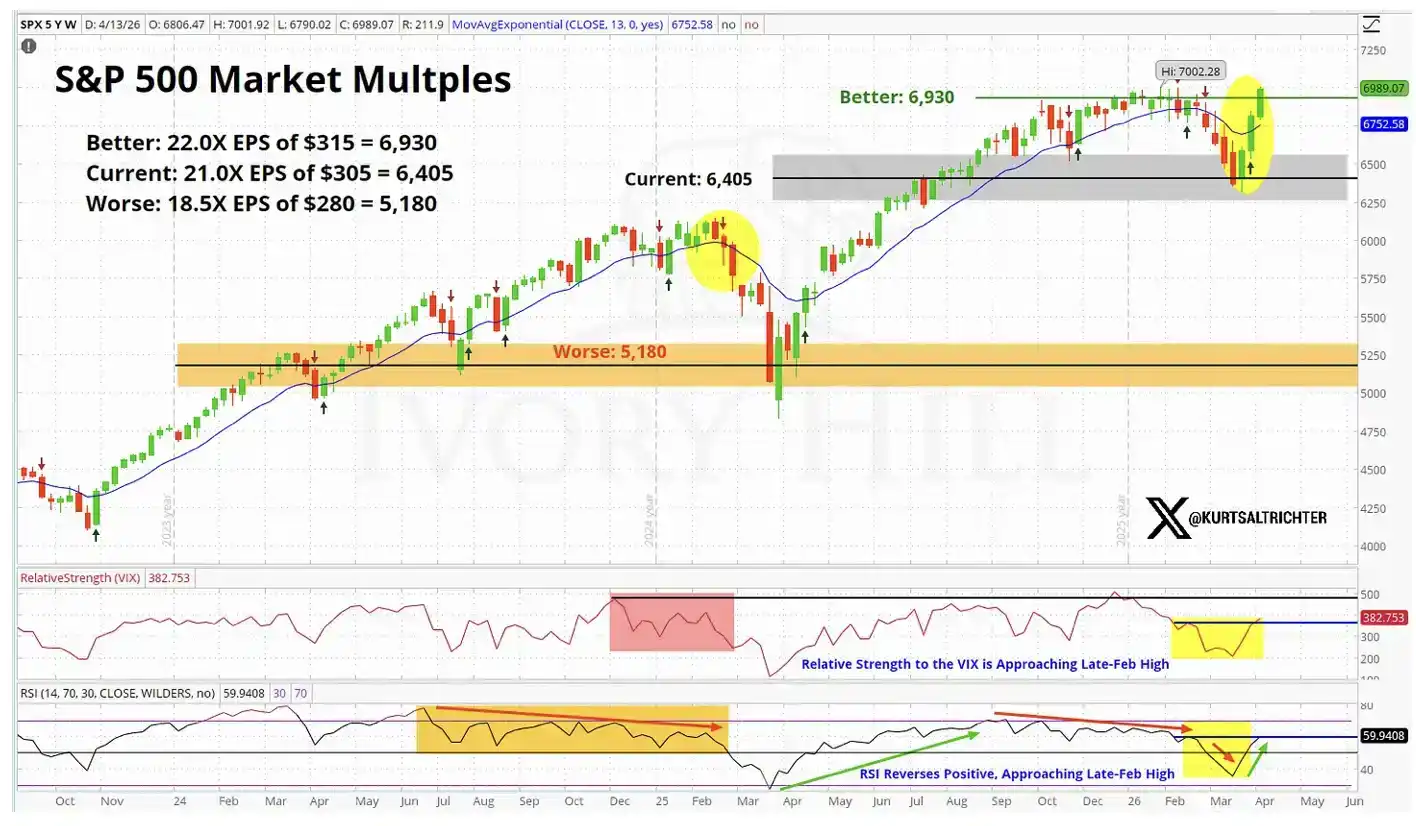
Let’s take a look at the more specific data.
On February 27, the day before the war began, the closing levels for key indicators were as follows:
10-year U.S. Treasury yield: 3.95%, compared to yesterday's close of 4.25%, up 30 basis points since before the war.
WTI Crude: $67.02, currently approximately 37% higher than the price at that time
2-year U.S. Treasury yield: 3.38%, down from yesterday's close of 3.75%, up nearly 40 basis points since before the war.
Now, let’s break down the implications behind these changes.
The 10-year yield rose 30 basis points after the outbreak of war, not because the bond market became more optimistic about economic growth. Current consumer sentiment is weakening, and confidence remains weak. This rise in rates essentially reflects the bond market quietly pricing in inflation.
The message is clear: higher oil prices are being transmitted throughout the price system, and the Federal Reserve’s future policy room may not be as accommodative as the stock market assumes.
Oil prices have risen 37% over six weeks, which is not what one would expect if the market believed a genuine and lasting agreement between the U.S. and Iran was imminent.
If traders were truly confident in a lasting ceasefire agreement, oil prices would have already fallen back to the $70 range and continued downward. But that’s not what’s happening. Oil prices remain elevated, indicating that the crude market is not pricing in the same expectation of “conflict resolution” as the stock market is.
Meanwhile, the 2-year U.S. Treasury yield remains 40 basis points higher than pre-war levels, directly challenging the narrative that the Fed is about to cut rates.
The 2-year yield is our most sensitive indicator of interest rate expectations, reflecting the Fed’s policy path more directly than any other asset. Right now, it signals that the Fed’s policy space is smaller than markets have assumed—a factor that impacts nearly all valuation logic underpinning this rally in equities.
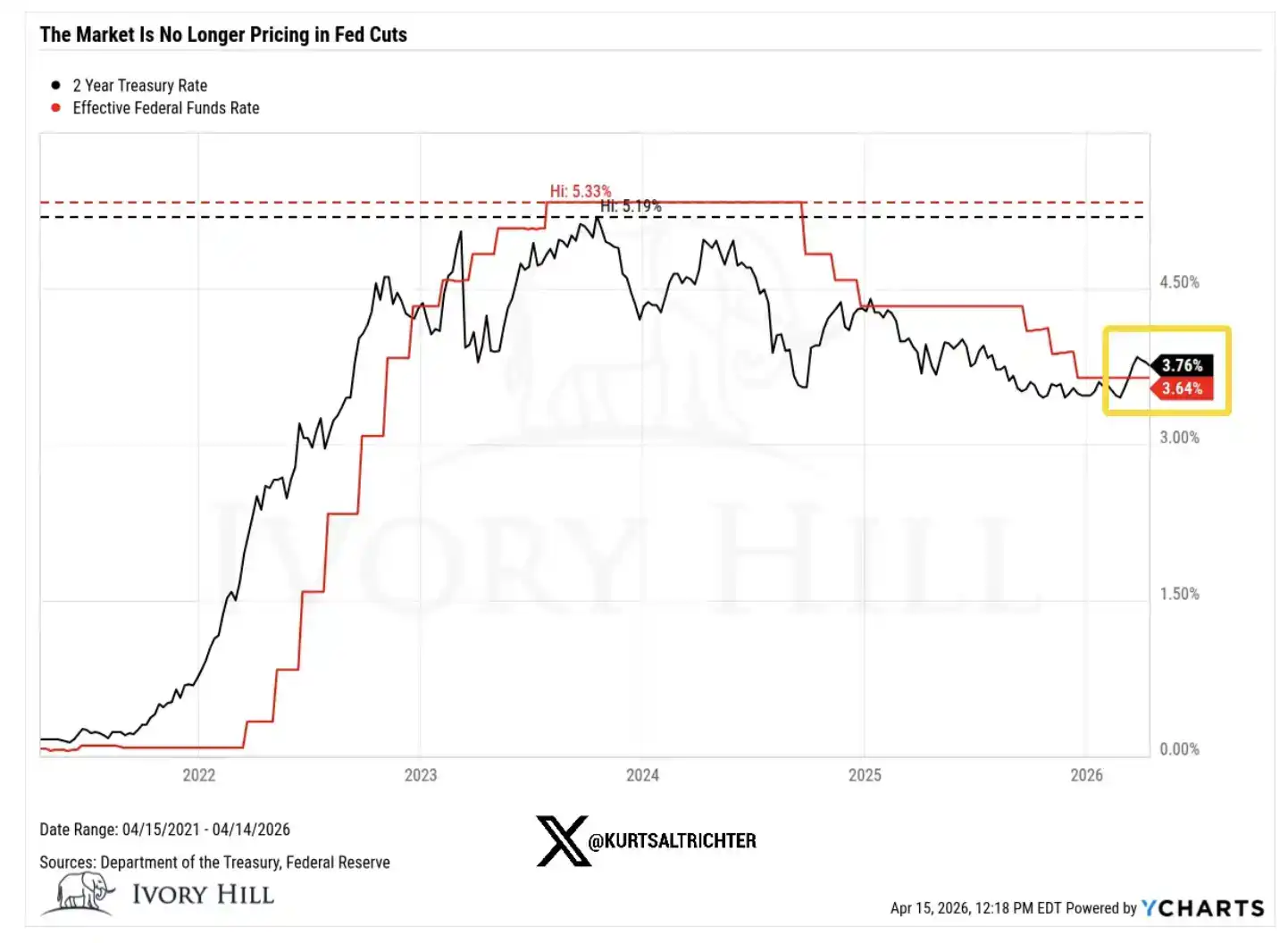
So, who was right?
The stock market may be right, and I’m willing to admit that. If a substantive ceasefire agreement is truly reached, bond yields could quickly fall; and once supply concerns are credibly resolved, oil prices could also drop sharply. This isn’t the first time the stock market has led the way, with other markets subsequently catching up.
But there is another interpretation that I believe is currently undervalued.
This rally has been driven largely not by fundamentals, but by momentum. Traders’ reluctance to short during an upward trend continues to push the market higher. Such buying pressure can indeed sustain the rally longer than it otherwise should.
But it won't change the underlying logic.
But the underlying reality is that oil prices remain high, interest rates are still rising, and the Fed’s room for rate cuts is more limited than bulls need.
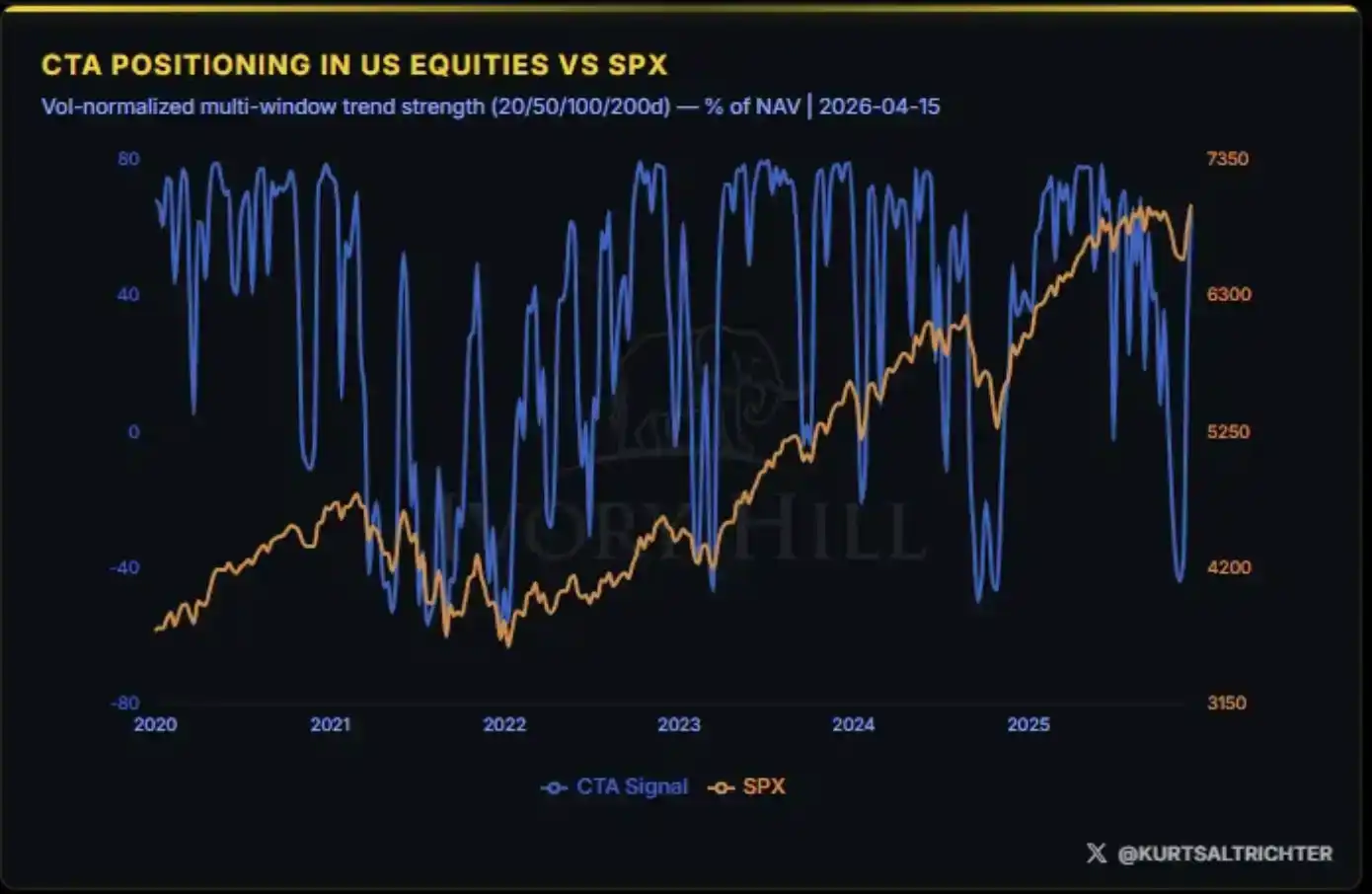
Rallies driven by fundamentals tend to be more sustainable, while those fueled by momentum are typically more fragile and short-lived. This distinction is especially critical when considering whether to add to your position near all-time highs. As the market valuation chart above shows, current stock prices are already pricing in a "perfect scenario."
My actual judgment
Over the past 10 days, things have indeed improved, and I won't deny that. I'm not someone who arbitrarily bears a bearish outlook.
However, there remains a clear gap between stock market pricing and the realities reflected by bonds and crude oil, and this gap has not narrowed. I am closely monitoring this.
Currently, the stock market is at the most optimistic end of the range; bonds and crude oil are closer to the middle, reflecting a world where inflation persists, the Federal Reserve’s policy space is limited, and conflicts remain unresolved.
This divergence will ultimately be resolved, and there are only two possible paths:
Or, a genuine ceasefire agreement is reached, oil prices fall back to around $70, the Fed gains clear room to cut rates, and the stock market ultimately proves right;
Alternatively, none of this will happen, and the stock market will decline to align with the levels currently reflected by bonds and oil.
Currently, bonds and crude oil show no signs of moving in line with the stock market; rather, it appears the stock market needs to decline to align with them.
The next inflation data will be released on May 12. If my assessment is correct and the CPI exceeds 3.5%, the narrative of rate cuts in 2026 will essentially come to an end.
If you continue to add positions at this level, you're essentially betting that everything unfolds in the most ideal way: the war ends smoothly, there are no disruptive "Trump off-the-cuff remarks," inflation remains under control, the Fed cuts rates as planned, and corporate earnings hold steady. All four of these conditions must be true simultaneously. If any one of them deviates significantly, the market’s downward correction could be swift and severe.
In contrast, I prefer to remain patient rather than chase a rally that has been quietly denied by two key asset classes. If long-term signals point to a buy, we will naturally increase our positions gradually according to our strategy.
Don’t forget— the only certainty is that everything will change.