




Billions of dollars in fresh USDC were printed in just the first week of March — a minting pace that, if sustained, could push Circle’s total for the month past $12 billion.
That surge is one sign of the momentum behind a broader milestone: total stablecoin transfer volume hit $1.8 trillion in February, the highest monthly figure on record.
USDC Pulls Far Ahead Of Tether
USDC, issued by Circle Internet Group, accounted for roughly 70% of all stablecoin transfers last month — about $1.26 trillion. Tether’s USDT logged $514 billion over the same period.
That gap surprised some analysts, given that Tether holds the larger market cap by a wide margin — $184 billion compared to USDC’s $77.4 billion.
According to Simon Dedic, founder of Moonrock Capital, USDC has “consistently flipped” Tether on transfer volume over the past several months.
The disparity means each dollar of USDC is moving far more often than each dollar of USDT.
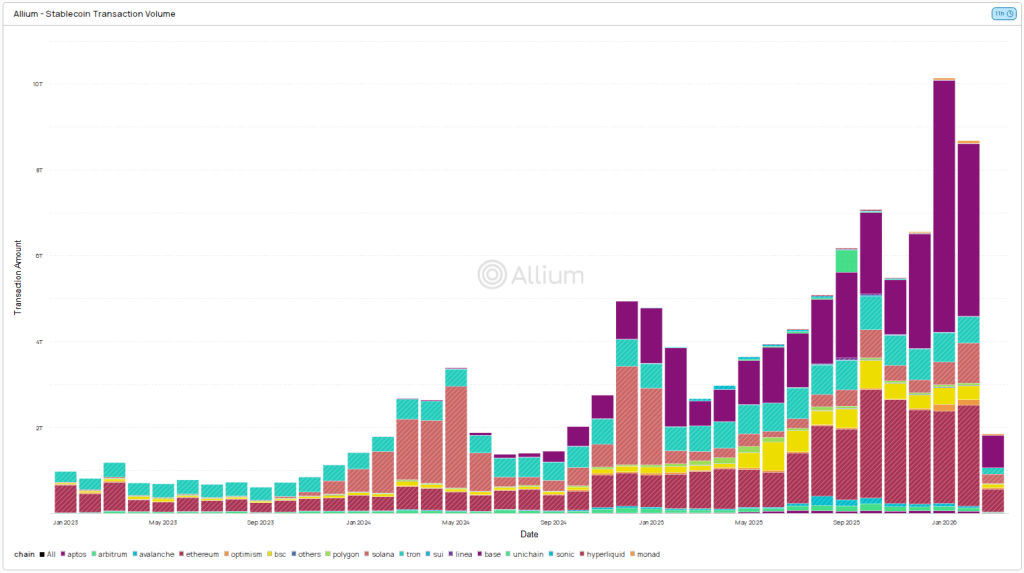
Data from blockchain analytics firm Allium confirmed the February figures.
Circle’s business has been growing fast. The company posted strong earnings for the fourth quarter of 2025, driven by rapid expansion of USDC’s payment operations.
Partnerships with platforms such as Polymarket have added to that momentum. Tether’s supply, by comparison, has held relatively flat through the start of March while USDC continues to be printed at speed.
What Rising Stablecoin Supply Means For Markets
More stablecoins on exchanges generally means more money ready to buy crypto. On March 5 alone, roughly $5.14 billion in stablecoins flowed into exchanges — up from $1.14 billion just four days earlier on March 1.
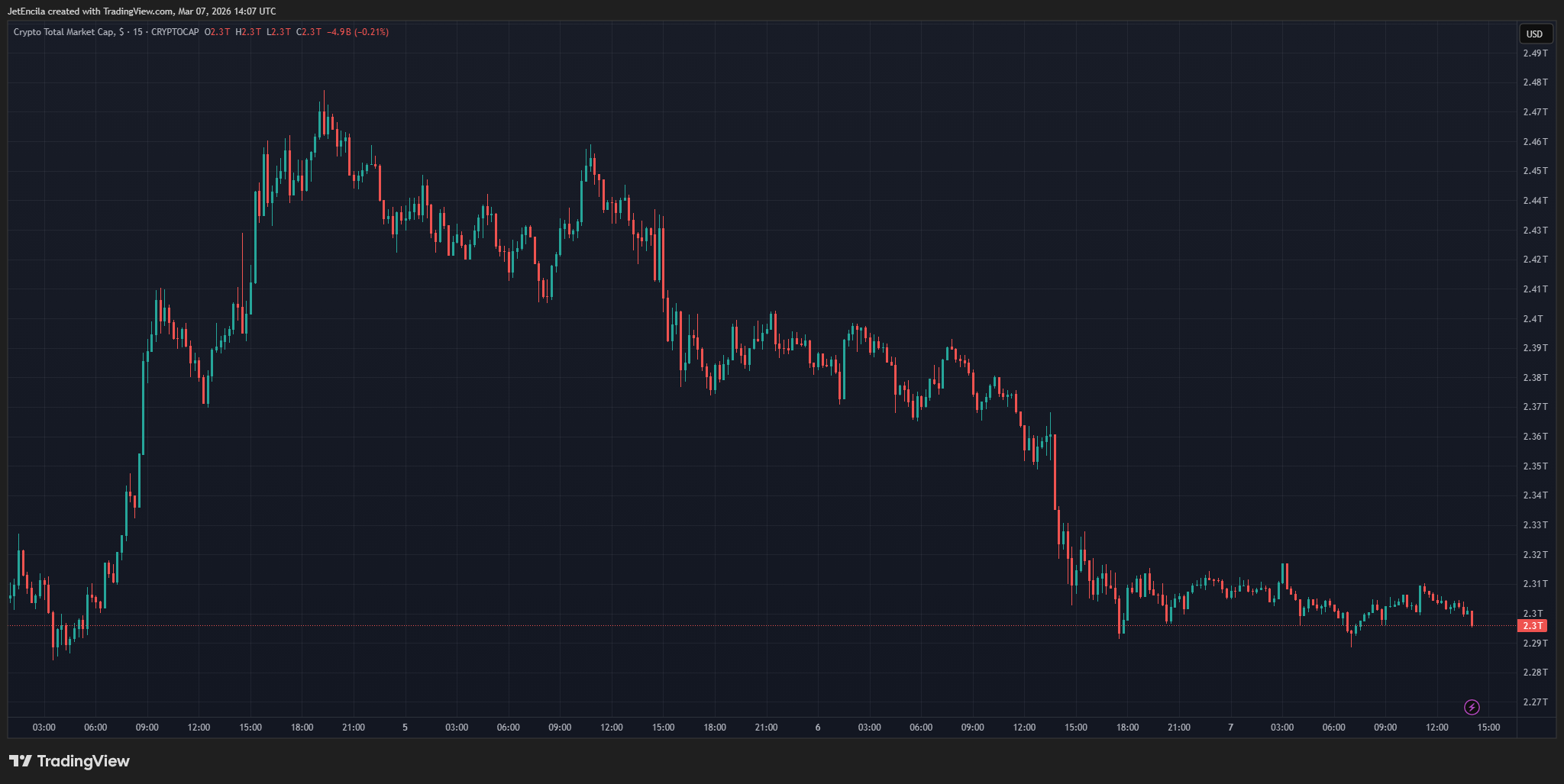
The total stablecoin supply sitting on exchanges climbed to a three-week high of $66.5 billion by Friday. Historically, big jumps in exchange stablecoin supply have preceded crypto price rallies, as sidelined capital gets redeployed into the market.
Bitcoin briefly pushed toward $74,000 this week, partly lifted by that stablecoin inflow. The Stablecoin Supply Ratio — which measures Bitcoin’s market cap against total stablecoin market cap — has been recovering after a sharp drop in February.
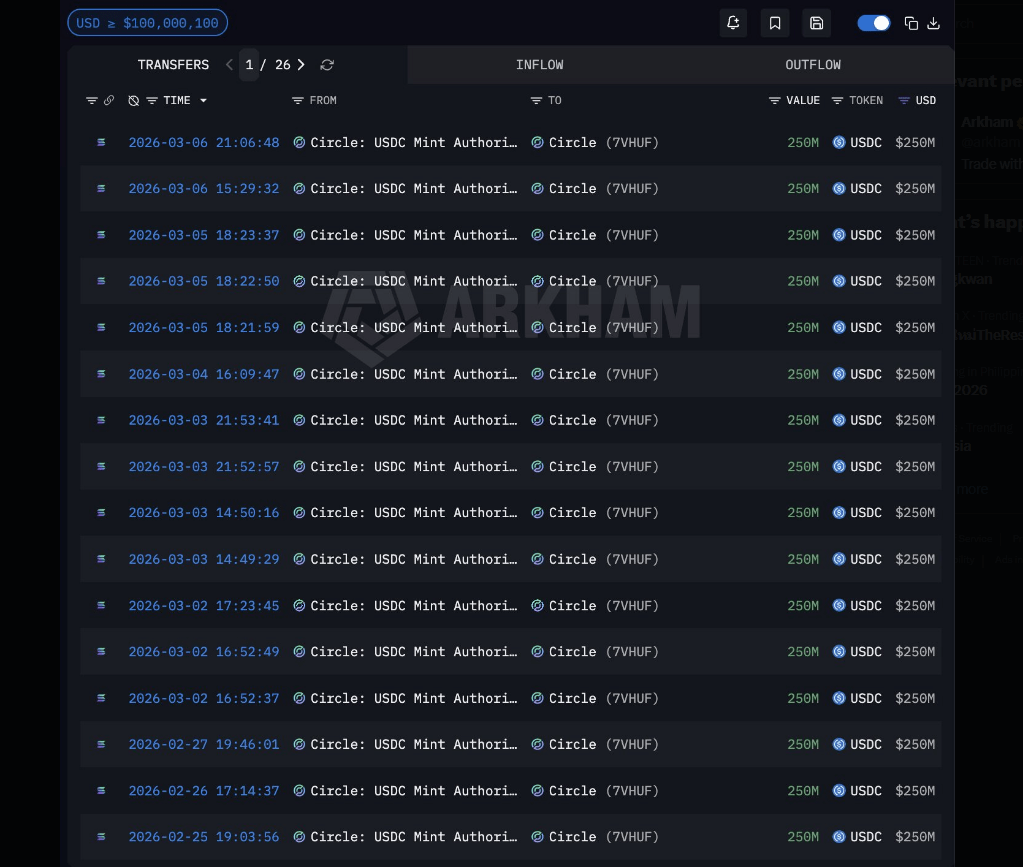
CIRCLE JUST MINTED $250M $USDC
Circle just minted another $250M USDC on Solana. They’ve minted over $3 BILLION in just this first week of March.
If Circle continue at this pace, they’re on track to mint over $12 Billion USDC by the end of the month. pic.twitter.com/aoQKi6zbFE
— Arkham (@arkham) March 7, 2026
The February record was not just about USDC. Overall stablecoin adoption has been climbing. Florida’s state senate passed a stablecoin bill this week, which now awaits the governor’s signature.
Regulatory movement at the state level, combined with growing institutional use of dollar-backed tokens for payments and settlement, has kept demand rising.
USDC’s $1.26 trillion in February transfers marks the highest monthly total since the stablecoin launched in September 2018.
Reports indicate Circle has already minted more than $3 billion in USDC in March’s first week, with Arkham data showing one single mint of $250 million on Solana.
Featured image from Bitkub Academy, chart from TradingView