





Key Insights:
- South Korea’s FSC plans to permit spot Bitcoin ETFs in 2026 under the new Economic Growth Strategy, pending rule and product design.
- A second-stage Digital Asset Act targets stablecoin licensing, 100% reserve backing, and holder redemption rights.
- Regulators will add rules for cross-border stablecoin transfers and advance deposit-token payment rails through legal revisions.
South Korea is setting out a 2026 agenda that brings crypto markets closer to mainstream finance. The government’s growth strategy calls for spot Bitcoin ETFs. Regulators also plan a second-stage Digital Asset Act that adds stablecoin rules. The same workstream targets cross-border stablecoin transfers and related transactions. Separately, officials are mapping a public-sector rollout of bank-backed “deposit tokens” by 2030.
Spot Bitcoin ETFs Enter South Korea 2026 Agenda
The Financial Services Commission (FSC) said it will pursue the introduction of digital asset spot exchange-traded funds during 2026. The plan appears in the 2026 Economic Growth Strategy the government announced on January 5.
Notably, the policy will open a path for spot products that track digital assets, including Bitcoin. Korean rules have blocked spot crypto ETFs because regulators did not recognize Bitcoin as an eligible ETF underlying asset.

The FSC referenced overseas markets, including the United States and Hong Kong, where spot Bitcoin ETFs already trade. However, the growth strategy did not list a specific listing date, fund structure, or approved issuers.
Digital Asset Act Updates Target Stablecoins
The FSC is also preparing a second wave of digital asset legislation that adds a stablecoin regulatory framework. The government plans to prepare the bill in 2026, with enactment expected to follow. The bill is expected to include authorization rules for stablecoin issuers, as well as capital requirements.
Moreover, the proposal targets reserve management standards for stablecoin operators. It is expected to require reserves of at least 100% of the issued amount. It also includes redemption rights for holders, specifying the conditions under which users can claim repayment.
In parallel, the government plans rules for cross-border stablecoin transfers and transactions. The FSC will work with the Ministry of Strategy and Finance on this part of the package. The roadmap links these measures to the stablecoin bill, rather than a separate program.
Officials have not specified which institutions will be eligible to issue stablecoins under the new framework. They also have not published enforcement timelines for cross-border compliance rules.
Legal Changes for Blockchain Settlement
Separate from stablecoins, the government plans to introduce “deposit tokens” into public finance by 2030. Reports describe these tokens as digital instruments backed by commercial bank deposits. The roadmap also refers to using up to a quarter of national treasury funds through deposit-token systems.
To support that target, officials plan to assess the results of a pilot project and pursue legal revisions in 2026. The government listed the Bank of Korea Act and the National Treasury Management Act among laws under review. It also stated that it aims to establish a legal framework for blockchain payments and settlements within the year.
The plan also includes electronic wallets that can process payments using deposit tokens. Policy materials cited public-sector use cases, such as paying business expenses through token-based settlement rails. Officials described the wallet distribution as part of the payment-and-settlement legal program.
Bitcoin Price Prediction 2026
In latest market analysis, Bitcoin price showed signs of easing selling pressure after a sharp pullback. Traders suggest that large traders have begun trimming their leveraged long positions, which could reduce upside momentum. BTC price stabilized near $90,000, with buyers defending the $87,000 support band. If that support holds, the market may attempt a relief bounce toward nearby resistance.
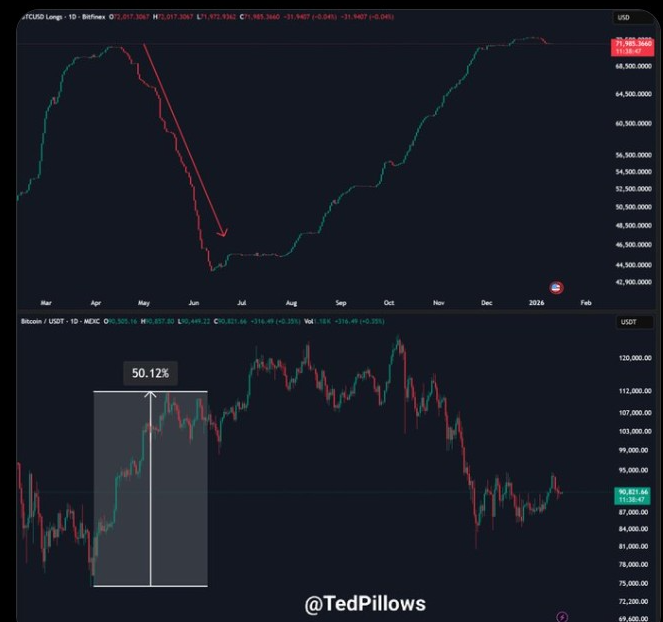
The first hurdle sits around $95,000, followed by the $99,000 level on recent swings. A break above those zones will open the path toward $102,000, while failure could keep Bitcoin range-bound.
However, Bitcoin ETF demand has weakened after a strong start to the year, with four straight days of outflows. Data cited from SoSoValue showed that about $249 million was left in spot Bitcoin ETFs on Friday, lifting weekly outflows to $681 million. BlackRock’s IBIT accounted for most of the move, with about $251 million in redemptions.
The post South Korea Moves to Launch Spot Bitcoin ETFs in 2026 Push appeared first on The Market Periodical.