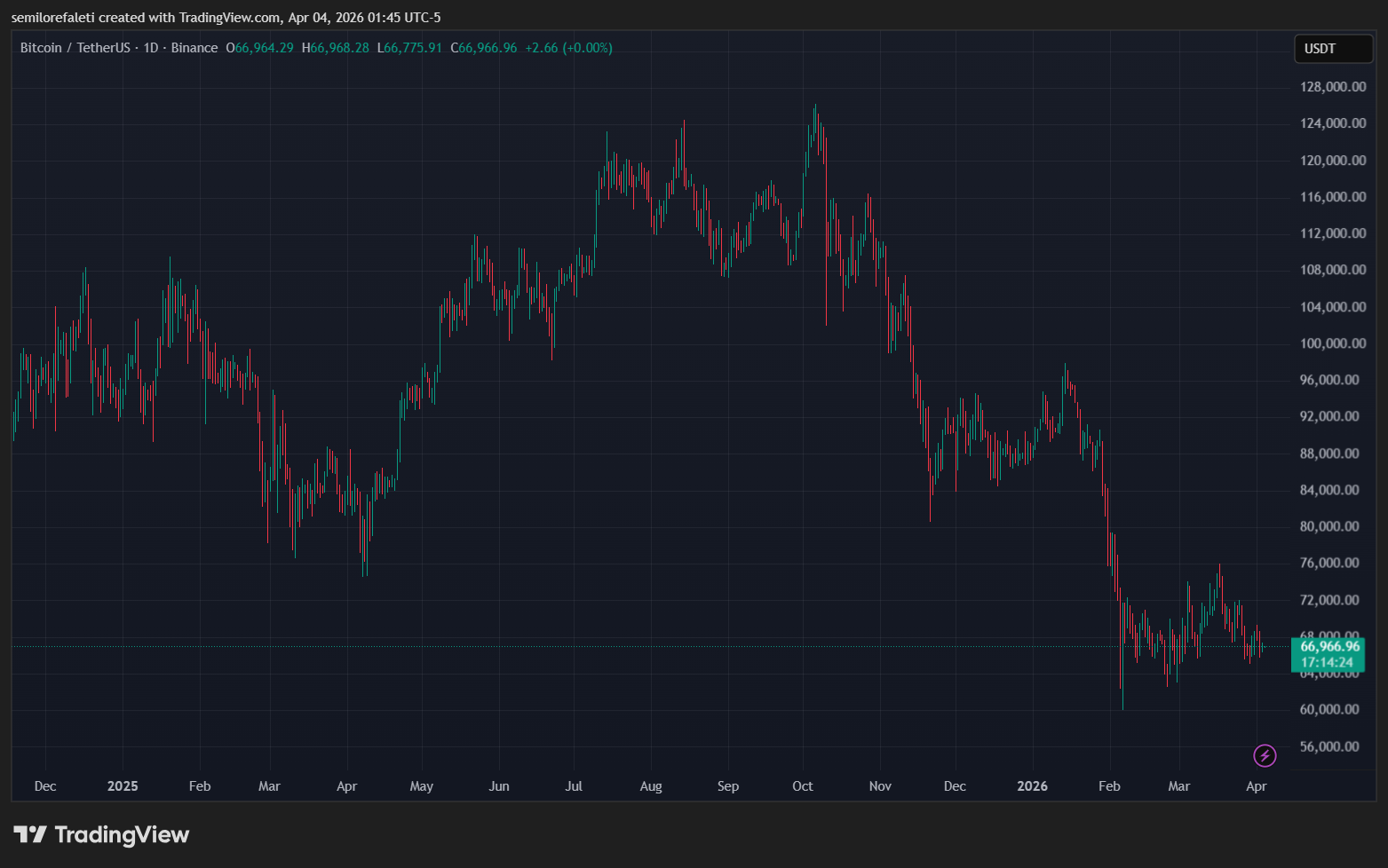


Bitcoin traded within a range-bound spell throughout March, with prices briefly rallying to $75,000 before falling back within the boundaries of the $63,000-$71,000 range. However, despite this, Bitcoin price struggles within this consolidation phase; the underlying dynamics are telling an interesting story concerning who the current distributors of Bitcoin are.
Short-Term Holders Dominate Sell-Side Pressure
In a QuickTake post on CryptoQuant, pseudonymous analyst TeddyVision reveals that, while price appears stagnant, Bitcoin’s most-reactive investor group, i.e., the Short-Term Holders (STH), is still selling their holdings. This revelation is based on readings from the Bitcoin: Exchange Inflow – Spent Output Age Bands – Spot Exchanges metric.
For context, this metric shows the age distribution of BTC being sent into spot exchanges, thereby revealing whether recently acquired coins or long-held coins are being deposited for potential selling. Per the analyst, the dominant flow of BTC into spot exchanges is coming from its 0-12 month cohorts, collectively referred to as the short-term holders, and sometimes includes transition participants.

While the Bitcoin STHs are behind the extant sell pressure, TeddyVision points out that older cohorts (above 12 months) are, for the most part, inactive. The analyst explains that while there have been occasional spikes seen in the investors’ activity, these are at best described as event-driven, rather than long-term distribution activities.
As such, the dynamic becomes clear that weak hands are selling, thereby supplying the market, while stronger hands are holding firm. Based on historical patterns, this dynamic is sensible, as long-term holders tend to sell during periods of strong upward momentum, rather than during consolidation.
Market Absorbs STH Supply As Structural Strength Builds Up
Notably, what’s interesting about this scenario is how Bitcoin has maintained a constant price range, despite increasing Short-term Holder distribution. For context, sustained sell pressure from short-term holders has often caused sharp downturns in the Bitcoin price. This has been observed even in the present market until February 6, when the consolidation commenced. Data from the Coinbase Premium Index reinforces TeddyVision’s proposed idea of a growing market backing. TeddyVision explains that conditions in the US spot market forced the index underwater for extended periods. However, as the consolidation range formed, the premium retracted from these negative extremes, and the price stopped responding to downside pressure.
From a big picture perspective, the Bitcoin market seems to be at a transitional phase where the prevalent STH exit reveals the market’s growing resilience. Nonetheless, market participants should be aware that this does not promise a reversal or price rebound. As of press time, Bitcoin holds a valuation of $66,930, reflecting no significant movement over the past 24 hours.