





You can never know where a butterfly flapping its wings will drive a hurricane.
Nine days after the United States raided Venezuela and arrested its president, Nicolás Maduro, a game called RuneScape also made history once again. On that day, RuneScape reached a concurrent player count of over 258,000, the highest in the game's 25-year history.
Two things that seemed completely unrelated were magically connected in this way.
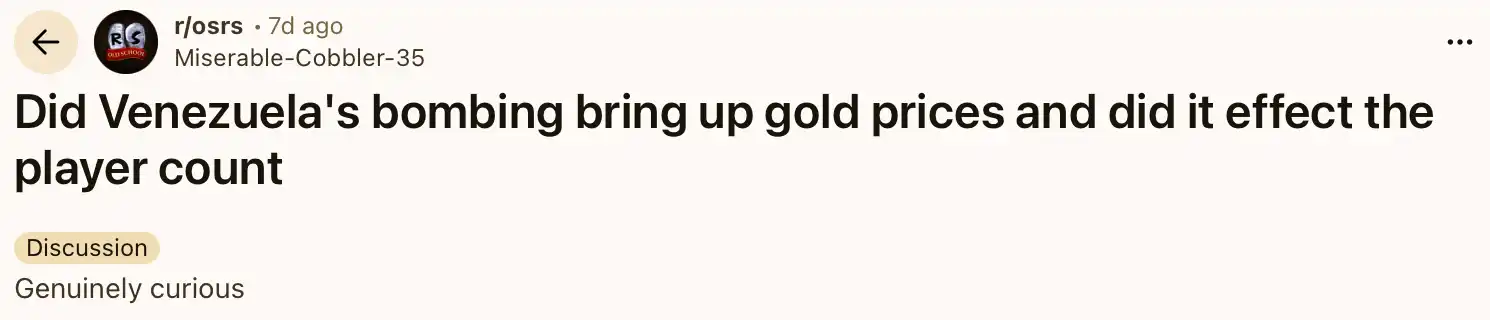
Would the United States' attack on Venezuela lead to an increase in the price of gold in RuneScape and changes in the player base?
While the world is watching international crude oil prices or the Venezuelan stock market due to the country's political turmoil, RuneScape players are paying attention to in-game gold and item prices, as well as fluctuations in the number of RuneScape players.
If Maduro's "departure" from Venezuela marks the end of an era, then Venezuelan players' "departure" from RuneScape also marks the end of an era.
The end of an era merely signifies history's eternal and merciless march forward; it does not equate to new hope. Venezuelans, RuneScape, and cryptocurrency—these three elements once intertwined so intensely, forming a story about survival and escape.
Survival
Because of oil, Venezuela was once one of the richest countries in South America. However, starting in 2013, the country's economy began to gradually collapse.
The process of collapse is like a snowball rolling down from the top of a snow mountain, continuously growing larger and accelerating. Between 2013 and 2021, Venezuela's GDP declined by approximately 75% to 80% in total. This is the most severe economic collapse caused by non-war reasons in the world in the past 45 years, surpassing the scale of the Great Depression in the United States and the collapse following the dissolution of the Soviet Union. By 2021, 95% of Venezuelans were living below the income poverty line, with 77% of them living in extreme poverty.
In August 2018, just before Venezuela's currency "Bolivar" was reformed, the country's annual inflation rate had already exceeded 48,000%. Within just four months, the black market exchange rate of the Bolivar against the U.S. dollar fell from 1 to 1 million to about 1 to 7 million, and paper money became worthless as scrap paper.
In this constantly deteriorating situation, Venezuelans discovered RuneScape. At that time, the in-game currency "gold" in Old School RuneScape (hereafter referred to as OSRS) had an exchange rate of about 1,000,000 to 1,250,000 to 1 U.S. dollar, making it far more valuable and stable than the bolivar.
Although Old School RuneScape (OSRS) was launched in 2013, it is actually a fork of the August 2007 version of RuneScape. The company behind the game, Jagex, made an attempt to bring the older version into the modern era in order to reverse player attrition and negative reactions to updates.
This attempt unexpectedly succeeded, and OSRS continued to develop afterward, keeping the RuneScape IP evergreen. This attempt also had a sense of fate, as it was an older version that could be played simply through a web browser, requiring minimal computer hardware specifications. This allowed a large number of players from Venezuela to join, working within this virtual game world to solve survival issues in the real world.
On YouTube, there is an old video from February 2018 showing someone playing Old School RuneScape (OSRS) on a Canaima laptop with only 2GB of memory. During the 2010s, the Venezuelan government distributed millions of free Canaima computers to students to help with their education.
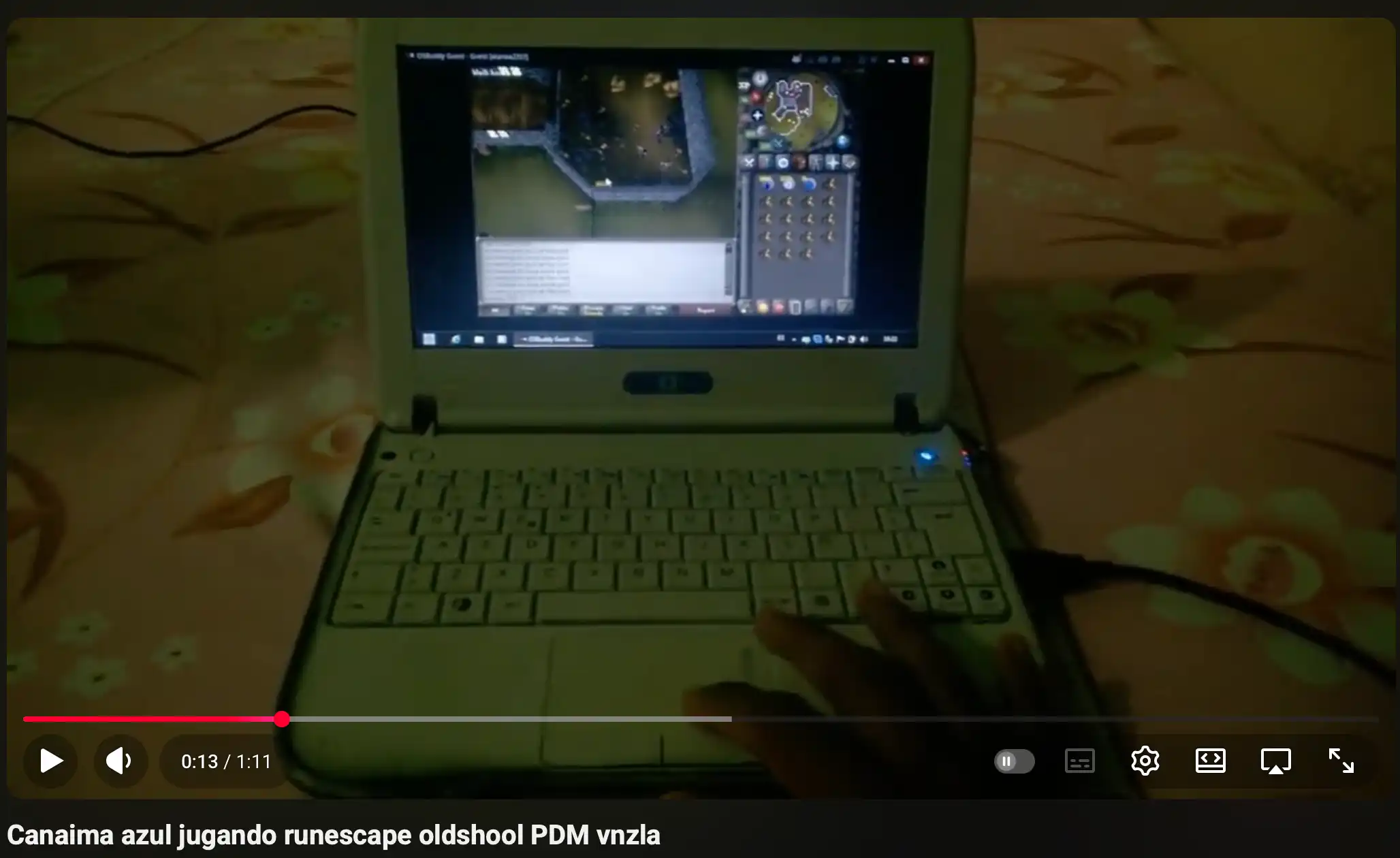
Who could have imagined that knowledge failed to help these children change their fate in the face of the nation's decline, yet this computer, with its very limited capabilities, provided these children with a moment of relief amid the struggles for survival.
Venezuelan players have been using Old School RuneScape (OSRS) to support their livelihoods as early as 2017, if not earlier. This became notable in September 2017, when a popular Reddit post instructed OSRS players on how to hunt and kill Venezuelan players in the in-game "Eastern Dragon Area." The post went viral and later became an important meme in OSRS history:
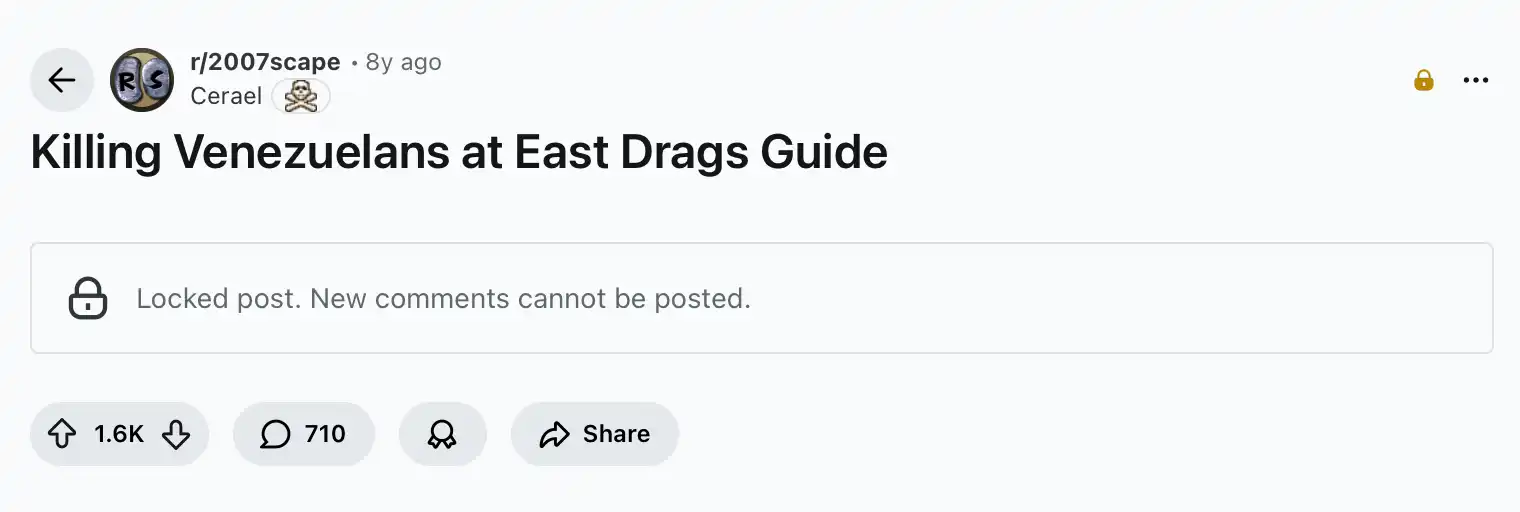
The term "Eastern Dragon Zone" refers to the eastern part of the "Gravehunter Area" in Old School RuneScape (OSRS), where a monster called the "Green Dragon" spawns. Players from Venezuela once heavily occupied this area from 2017 to 2019. They repeatedly killed the green dragons, collected the dragon bones and dragon hides dropped by the monsters, and sold them on the RuneScape trading market to earn in-game gold. They then converted the OSRS gold into Bitcoin or other cryptocurrencies for real-world profit.
According to an article published by user "fisherman" on Steemit in August 2017, killing green dragons in Old School RuneScape (OSRS) for one hour could earn 500,000 OSRS gold coins, equivalent to about 0.5 U.S. dollars. This method of making money once made it into a newspaper in Venezuela:
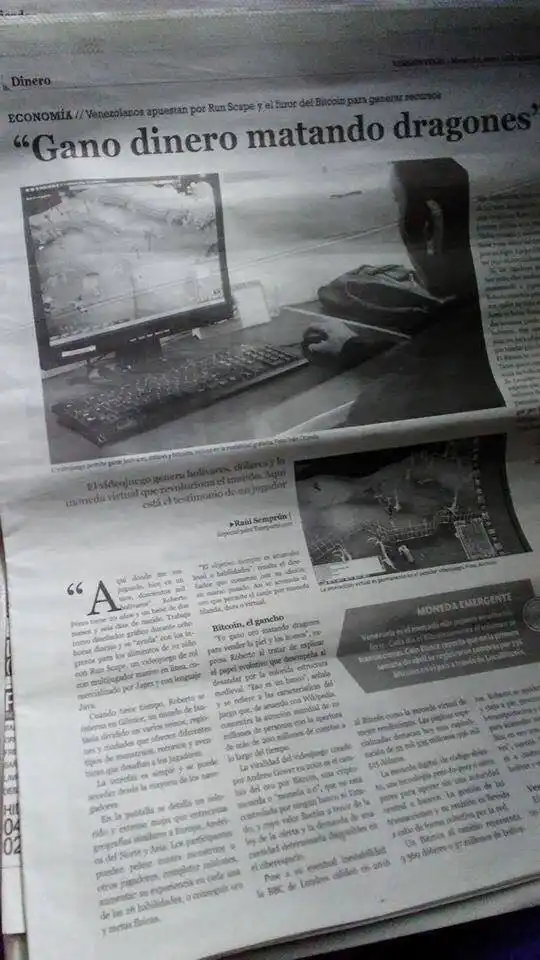
Meanwhile, more advanced players will tackle another winged giant snake boss, "Zurlah," which can increase their hourly income to $2–$3. This hourly wage is already higher than what most university-educated individuals earn in Venezuela.
A few years ago, when Venezuelan players were most active in earning money through Old School RuneScape (OSRS), several English-language media outlets interviewed them. Those interviewed generally earned $100 or more per month from OSRS, while their parents could only earn about $10 per month. In their view, OSRS was extremely well known among Venezuelans and could be considered a mainstream way to earn money. It was sufficient to support their entire families and helped them avoid the impact of the devaluing bolivar on their hard-earned income.
Just as in Hong Kong, where we can see many Filipino domestic helpers filling the labor needs for daily household tasks, players from Venezuela in the OSRS world also fill the labor needs for the tedious and repetitive tasks of monster grinding, leveling up, and collecting resources. In addition to killing dragons, snakes, and deer to gather various materials, Venezuelan players also take on jobs such as training skills for others or crafting items. However, unlike Filipino domestic helpers in Hong Kong, who can casually gather in groups on the streets for a cup of coffee, Venezuelan players must avoid detection due to Jagex's crackdown on in-game item trading for real money. Like cryptocurrency users who use burner addresses to prevent phishing risks, Venezuelan players also maintain multiple burner accounts to avoid the risk of getting their main accounts banned.
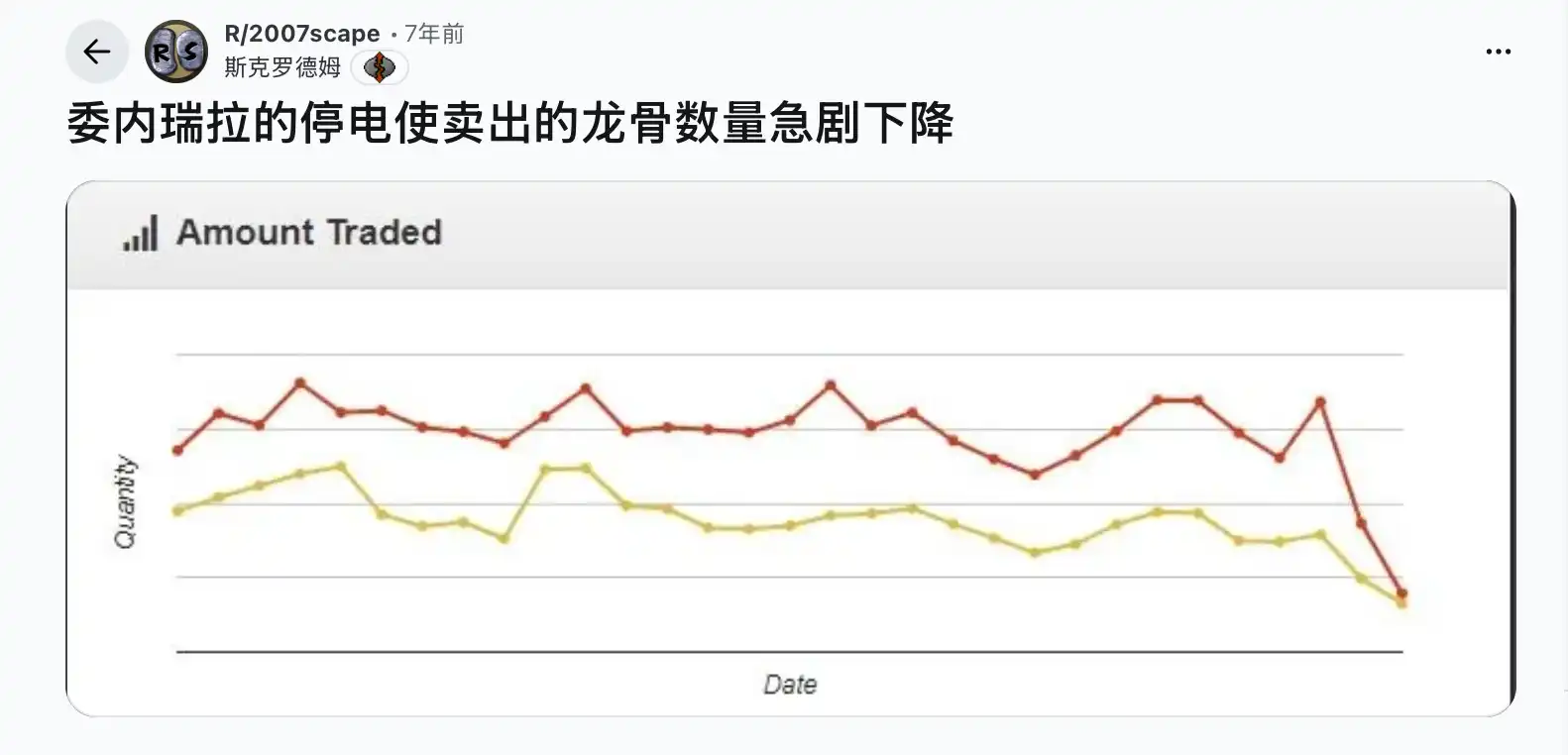
In March 2019, Venezuela experienced a nationwide power outage. During those days, the Green Dragon lost its most loyal dragon-slayers, causing a sharp decline in the supply of dragon bones in the market, and prices consequently rose.
Players' attitudes toward these Venezuelan gold farmers can be described as a mix of love and hate. On one hand, Venezuelan players are often genuine manual players. Unlike players from other countries and regions who may have the conditions to run large-scale gold-making operations through studios, Venezuelans are truly earning in-game gold by playing the game manually, just like other players, and doing so purely out of necessity for survival. Sometimes, more casual players might even feel that the presence of Venezuelan players actually improves their own gaming experience. These players, who don't want to spend too much time or effort, can directly enjoy the game's fun without spending a lot of money.
On the other hand, such profit-driven behavior will inevitably affect the gaming experience of regular players and the game's economic system. The actions of Venezuelan players in the OSRS world, driven by their need to survive in real life, in turn affect the survival of the OSRS world itself. For years, on Reddit, opinions about Venezuelan players have been a constant source of heated debate—there is both anonymous hostility and anonymous kindness.
Until the Venezuelan player left.
Escape
In today's OSRS world, only the legend of Venezuela is heard, but the former gold farmers are nowhere to be seen.
Since 2023, Venezuelan players have gradually been leaving Old School RuneScape (OSRS). While Venezuela's economy continues to collapse, the in-game price of gold in OSRS has also been declining. Non-stop, tireless bots have begun entering the game to compete with the manual labor of Venezuelan players, causing a surge in OSRS gold production and a corresponding drop in gold prices. Currently, the exchange rate for OSRS gold to US dollars is approximately 1,000,000 gold coins to 0.16–0.2 USD.
For Venezuelan players, gold farming hasn't stopped—it has simply moved to more cost-effective options. They have shifted to games like Tibia, Albion Online, and World of Warcraft, continuing to seek a means of making a living in the real world through virtual worlds.
Yet, there are always some who ask, "Is this the right way to live?" As a result, some players resolutely leave these virtual game worlds, and in some cases, even leave the countries of their real lives.
According to the latest data from the beginning of this year, about 7.9 million Venezuelans have fled the country, making it one of the largest refugee crises in Latin America and the world. In English media, we can find some interviews with Venezuelans who have escaped the country and earned money through OSRS.
José Ricardo, an OSRS gold middleman, earns profits by purchasing OSRS gold and reselling it to buyers. When interviewed a few years ago, his monthly income ranged between $800 and $1200. He invested these profits in cryptocurrencies, which provided him with enough money to take vacations in Brazil, Colombia, and Trinidad and Tobago. He still lives in Venezuela, but that is just one option. He refuses to let his life be permanently tied to one place or one thing.
Victor Alexander Rodriguez, in order to help support his family, decided to play Old School RuneScape (OSRS) 14 hours a day with his sister starting from early 2017 to earn money. At the beginning of his gold-making journey, he had already discussed with his sister, "One day, we will leave." Together, they worked hard in OSRS and managed to save up $500, which allowed them to travel to Peru in 2018. Later, he became a security guard, earning a salary higher than what he had made in OSRS. In his free time, he occasionally returns to the OSRS world on his phone, but this time, he is truly a player who enjoys the game for fun.
But not every escape story is so positive. Bran Castillo described the experience of a friend of a friend—someone who successfully earned enough money through OSRS to travel to Peru, and continued playing OSRS there. However, the income level that was sufficient in Venezuela was no longer enough in Peru. On Reddit, Venezuelan players have previously answered related questions. Although the quality of their public services is poor (the most extreme example being that the first time they logged into OSRS, they had to use mobile data because the copper wiring for their broadband had been stolen), these services are basically free, and the money they earn is mainly used to solve basic needs like food and shelter.
There are even darker rumors circulating among the common people, claiming that a Venezuelan female OSRS player resorted to prostitution after fleeing the country and not knowing how to support herself...
Old School RuneScape players have a saying they believe in: "This game never truly ends; you don't leave, you just take a temporary break."
And the most touching blessing I've seen is, "I hope one day we won't have anything to worry about other than the joy of the game, and can just enjoy the game."
Conclusion
Venezuela's connection to the cryptocurrency industry is so extensive and profound. Now, we are fascinated by the Maduro regime's potential Bitcoin reserves of up to 600,000 BTC, we deeply analyze from every angle why Venezuela's previously issued "Petro" failed, and we examine the economic and daily life conditions after USDT became the de facto currency widely adopted by local people...
But this time, as we tried to seek out the "human" stories rather than focusing on macro-level industry phenomena and perspectives, we discovered how cryptocurrency and a 25-year-old classic video game have helped Venezuelans cope with their livelihoods. In the virtual world, they struggle, express emotions, and fight—not just for survival in the real world, but to escape a damned fate.
If there were no cryptocurrencies that could overcome geographical, linguistic, and cultural barriers, aggregating a sufficiently large global value consensus and providing a solid foundation for settlements with world-class trust, the stories of OSRS and Venezuela might not have occurred.
Whether it is striving to maintain a collapsing life in the virtual world or escaping both the virtual and real worlds to pursue new hopes, these seemingly trivial personal choices in daily life actually contribute to the advancement of the industry.
Their story gradually fades in OSRS, and in the cryptocurrency industry, they are merely passing by like outsiders, quietly leaving behind. Yet, they represent the bitter and bittersweet realities behind the progress of this industry.
Click to learn about BlockBeats' job openings.
Welcome to join the official Lulin BlockBeats community:
Telegram Subscription Group:https://t.me/theblockbeats
Telegram discussion group:https://t.me/BlockBeats_App
Official Twitter account:https://twitter.com/BlockBeatsAsia