






Pi Testnet now includes RPC server, allowing developers direct blockchain access and accelerating smart contract readiness.
Developers can check balances, submit transactions, and build decentralized apps without running full nodes easily now.
Upgrade is part of protocols scheduled until May 2026, preparing network infrastructure for smart contracts deployment.
Pi Network has announced a major technical update. The team confirmed that “Pi Testnet now has an RPC server,” a change that allows developers to connect directly to the Pi blockchain.
This step is important because it brings the network closer to testing and launching smart contracts. It also opens the door for building more useful apps on Pi.
Pi Network Launches RPC Server on Testnet
With the new RPC server, developers can communicate with the Pi blockchain using standard industry tools rather than relying solely on limited SDKs. This makes testing faster and simplifies building applications.
With this update, developers can now check account balances, track transactions, view block data, and submit transactions directly on the Testnet without running a full node.
This change also lays the groundwork for building more advanced decentralized applications such as exchanges, marketplaces, and other utility-driven platforms. The Pi Core Team described the update as a major milestone toward simulating and deploying smart contracts.
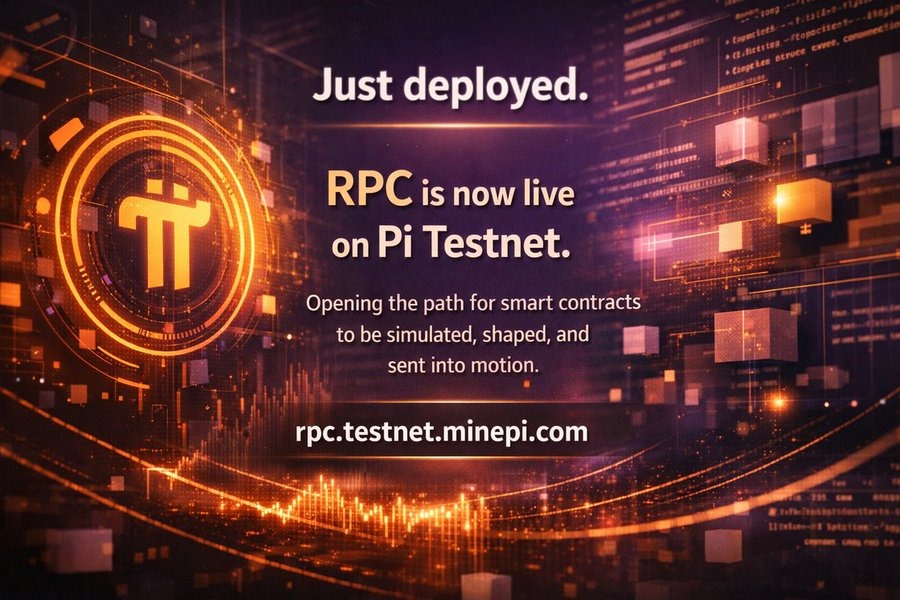
Part of the Larger (Protocols 21–23) Upgrade Roadmap
The RPC server rollout is included in (Protocols 21–23) upgrades scheduled through May 18, 2026. These updates are mandatory for node operators and aim to prepare the network for smart contract functionality.
Once completed, the infrastructure is expected to support more complex applications and improve ecosystem readiness for the open mainnet phase.
How Pi Pioneers Benefit from its Update?
Regular users, or “Pioneers,” won’t interact with the RPC server directly, but they will benefit indirectly:
Improved Apps: More reliable and complex apps will appear in the Pi Browser as developers gain deeper blockchain access.
Mainnet Readiness: Testing ensures that when the Open Mainnet launches, the infrastructure for apps and services will be stable and secure.
Pi Price Outlook and Token Unlock Pressure
The upgrade strengthens long-term utility, which analysts believe could support demand over time. More real-world applications, including the Pi DEX and AMM liquidity tools already under testing, may gradually influence the Pi coin price.
Experts believe that Pi could move toward the $0.50 range by mid-2026 if adoption accelerates.
However, short-term pressure remains. As of now, Pi coin is currently trading near $0.1772, while roughly 210.91 million tokens are expected to unlock this month. The additional supply could limit immediate upside despite improving fundamentals.