





Although it was completed several days ago, the Core Team behind the controversial project announced the migration earlier today, solidifying the successful upgrade to version 20.2.
They reasserted that the new protocol version should be groundbreaking for the project as it provides the foundations to eventually enable smart contract capabilities. However, even this big news couldn’t halt PI’s free-fall.
V20.2 Arrived
The past month has been quite eventful for Pioneers as the Core Team made several key protocol upgrades even before the aforementioned one. At first, they announced the successful migration to v19.6 on February 20, followed by v19.9 on March 4.
All eyes turned to March 12, which was the new deadline for the implementation of v20.2. It was the most important one from this year. In a post on X from hours ago, the team said: “All major Pi nodes have now been upgraded to version 20.2 and are supporting protocol 20.”
It’s worth noting that the team actually completed the migration within the original timeframe, as hinted in their Pi Day celebratory post from the weekend. However, the post now provides more information on what Pioneers can expect, especially since Pi Network has upgraded its Mainnet blockchain to protocol 20. The latest version is a major step toward the network’s goal to have smart contract capabilities, as explained in the post:
“Protocol 20 provides the foundation to enable smart contract capabilities, and the rollout of smart contracts will occur gradually, prioritizing categories that align with utility-based product innovation and operations. The specific types of smart contracts featured will depend heavily on the needs arising from the utility creation process.”
PI Drops Yet Again
Perhaps driven by the initial updates, PI’s price went on a roll in late February/early March. This rally received a major boost when the major US crypto exchange Kraken announced that it would list it for trading on March 13. The effects were immediate as PI skyrocketed by double digits from around $0.20 to almost $0.30.
After hitting a five-month peak, though, the reality set in as it turned out to be another classic sell-the-news event. PI nosedived on the next day toward the $0.20 support, which gave in yesterday. The situation has only worsened in the past 12 hours, as the token has dumped to under $0.175, thus dropping by almost 50% in just a few days.
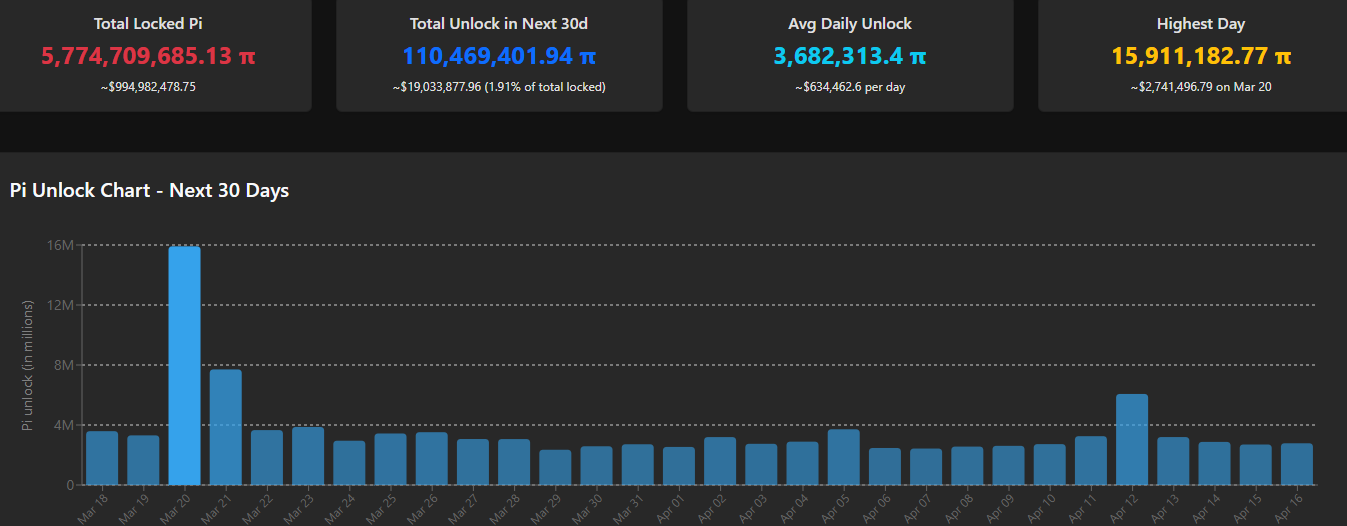
PiScan data shows that the number of tokens to be released in the next month would be rather negligible compared to what it was in February and early March. Aside from March 20, when almost 16 million coins will be unlocked, the rest of the month will see numbers below 4 million.
The post Pi Network Completes Groundbreaking Upgrade but PI Price Plunges Again appeared first on CryptoPotato.