





Author: Digital Life Kha'Zix
Regarding OpenClaw recently, besides what I mentioned yesterday about topping GitHub.
There’s another very magical thing.
OpenClaw charges for on-site installation.
A one-time fee, ranging from a few hundred.
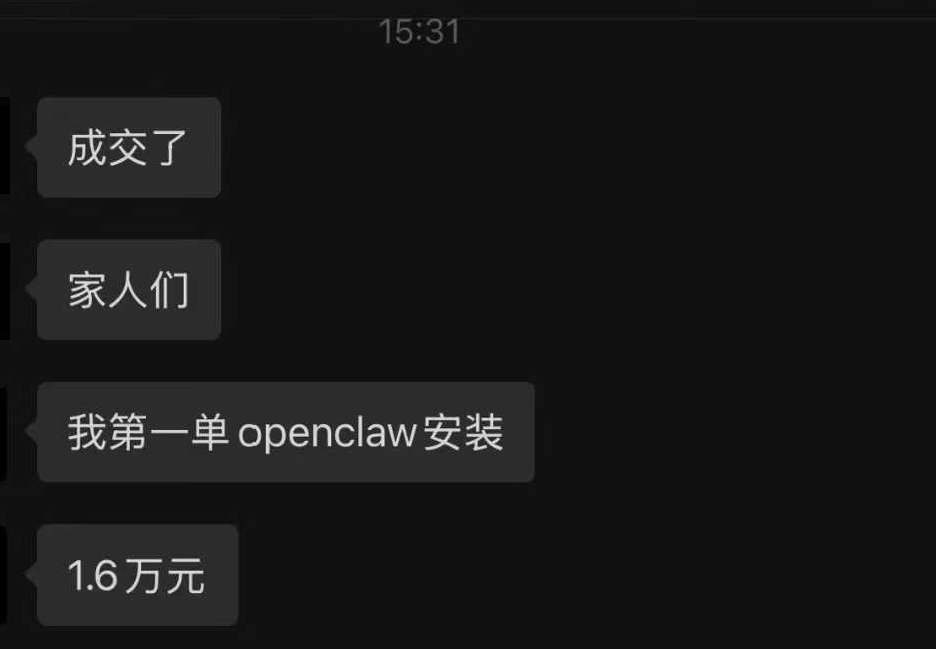
Even more absurd prices exist—I saw one recently in a group chat.
OpenClaw installation, 16,000...
I guarantee I haven't lied; the deposit of 3k has already been received.
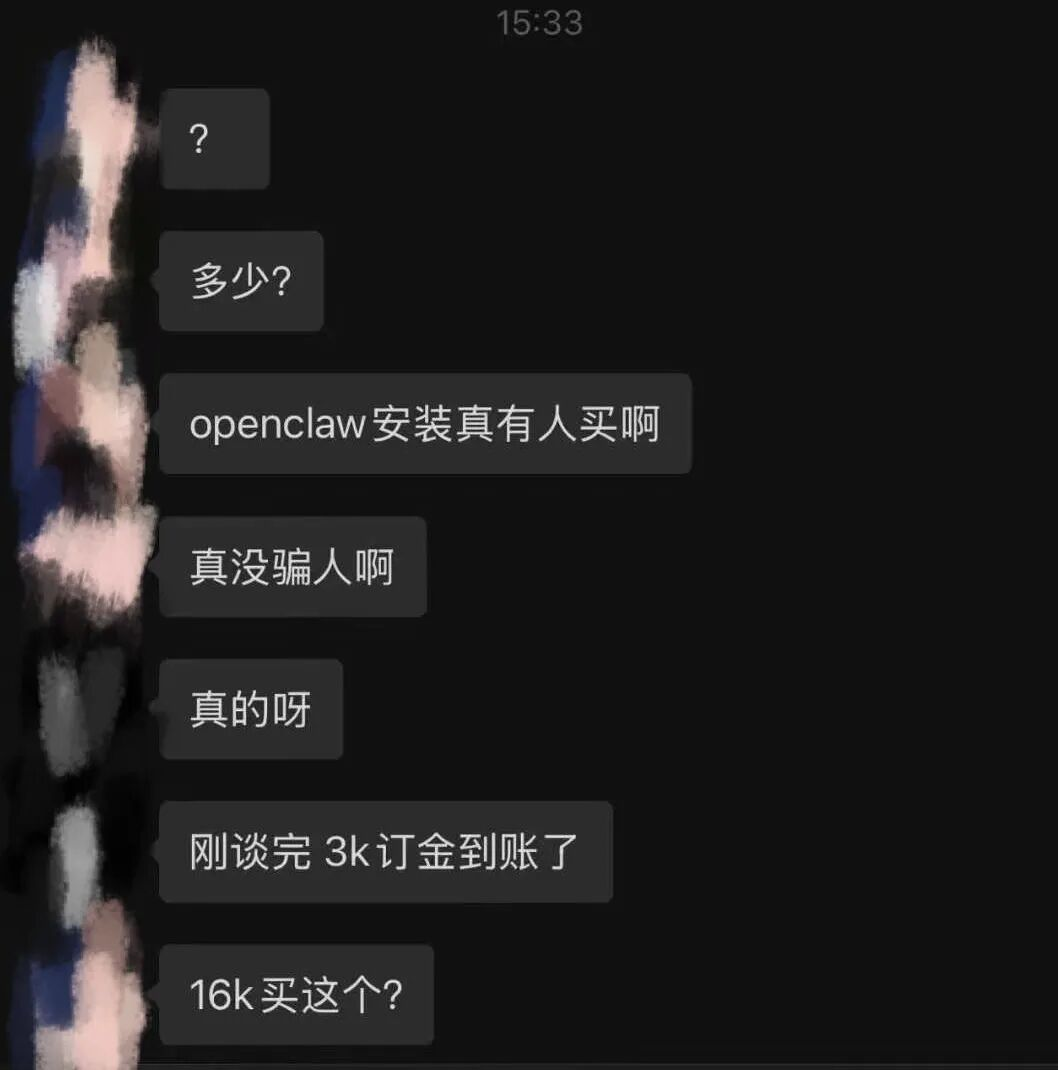
I'm completely baffled—this price definitely isn't the result of an individual's action. I suspect it's likely for bulk installation plus some training for a company.
Paying 16,000 just to install OpenClaw seems a bit excessive...
I also searched on Xianyu and Taobao.
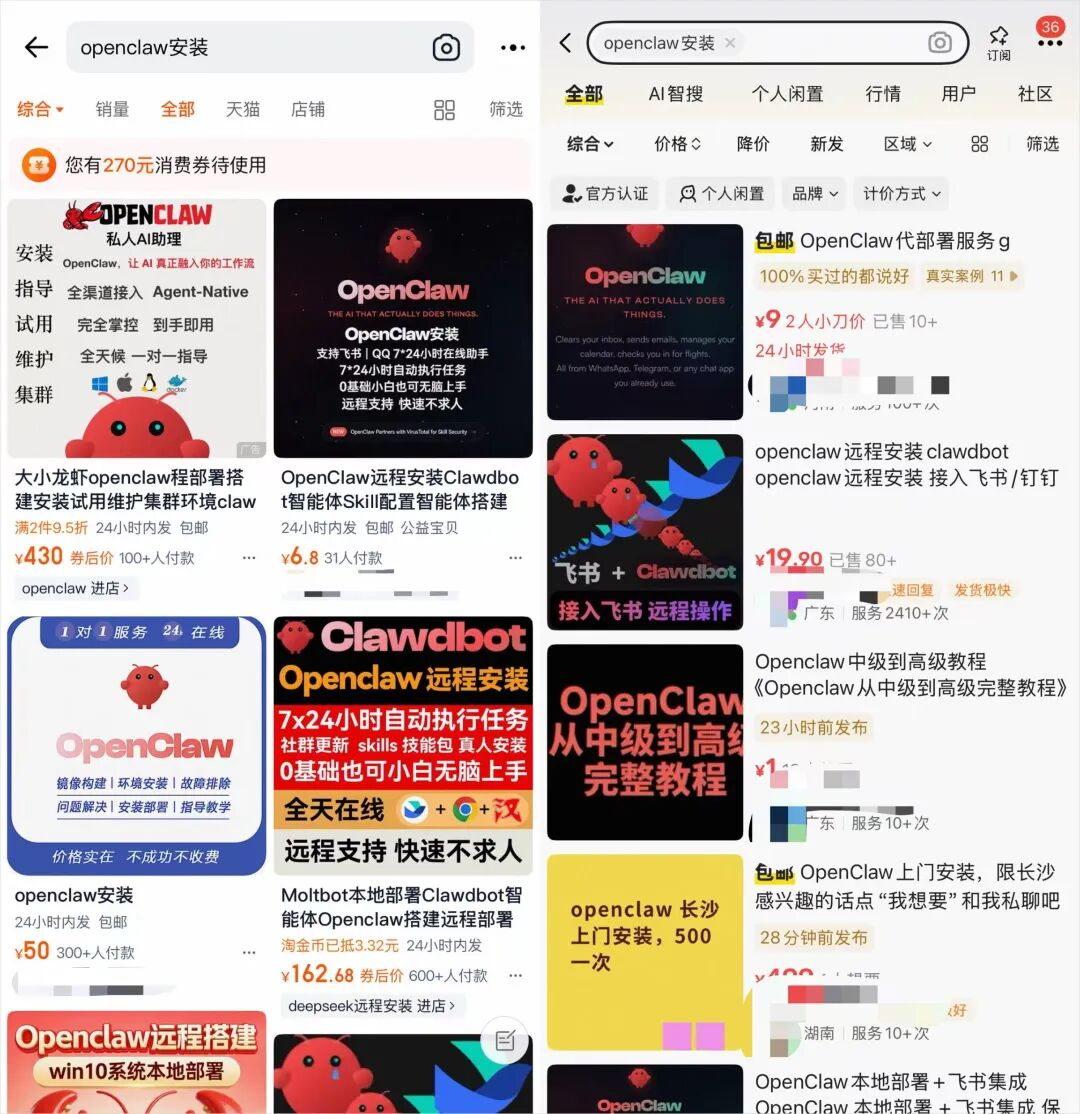
All sorts of strange prices.
But there are still many low-priced leads, as most stores don’t display actual prices, so I have to contact customer service one by one to ask.
I asked about a dozen places, and the online installation prices ranged from dozens to hundreds, most of which were between 100 and 200.
You can deploy for as low as $30.
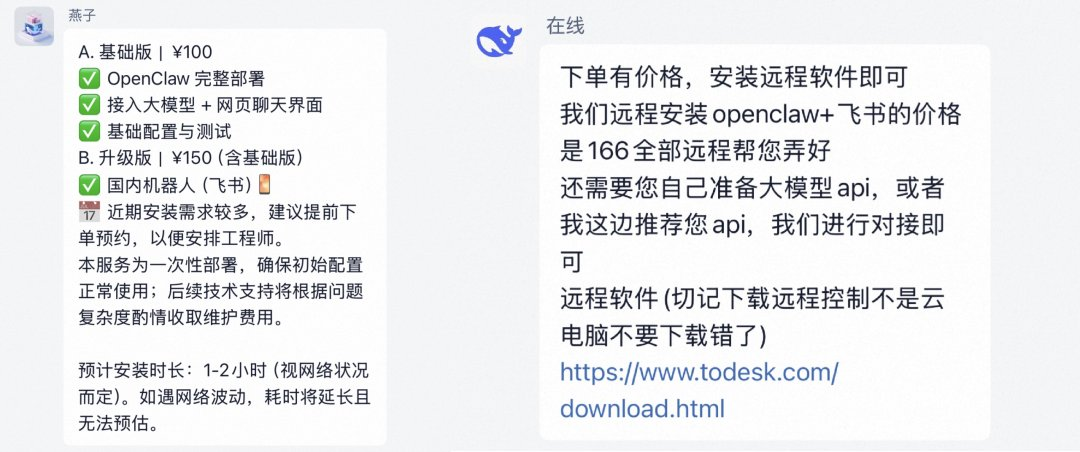
Something funny—I also found an official DeepSeek store...
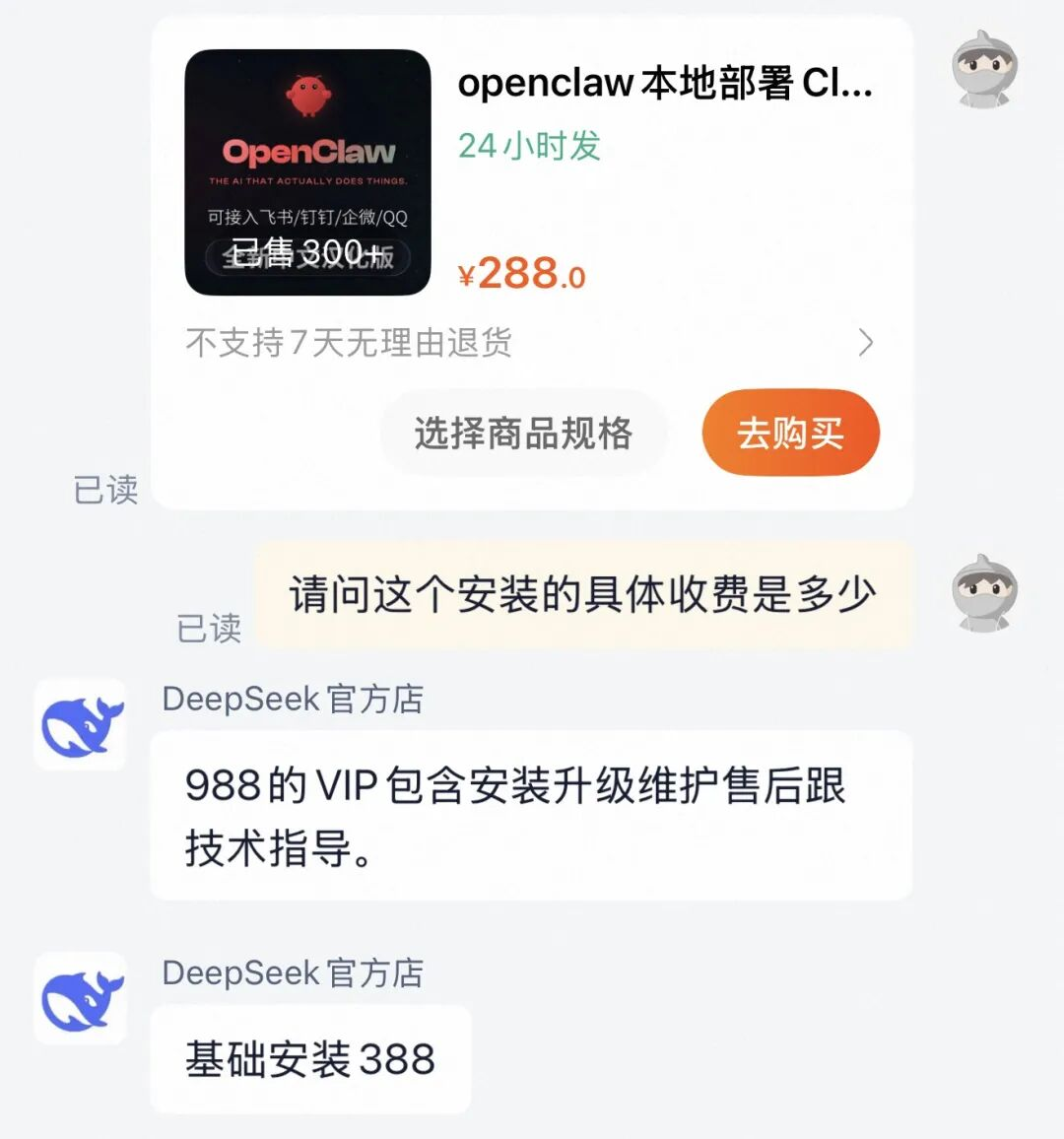
Hmm, the DeepSeek official store sells OpenClaw deployments—basic installation is 388. It just feels like this store is run by Liang Wenheng’s second uncle...
I'm not sure why, but these stores always seem to use DeepSeek's avatar, perhaps in the eyes of the broader user base.
This whale represents the most advanced technology: AI.
The differences between these services, aside from installation, include integration with Feishu and DingTalk, and installing certain skills; otherwise, there’s little else. The more expensive option includes future VIP technical guidance.
These are mostly remote installations.
On-site installation fees in the same city are slightly higher, typically around 500.
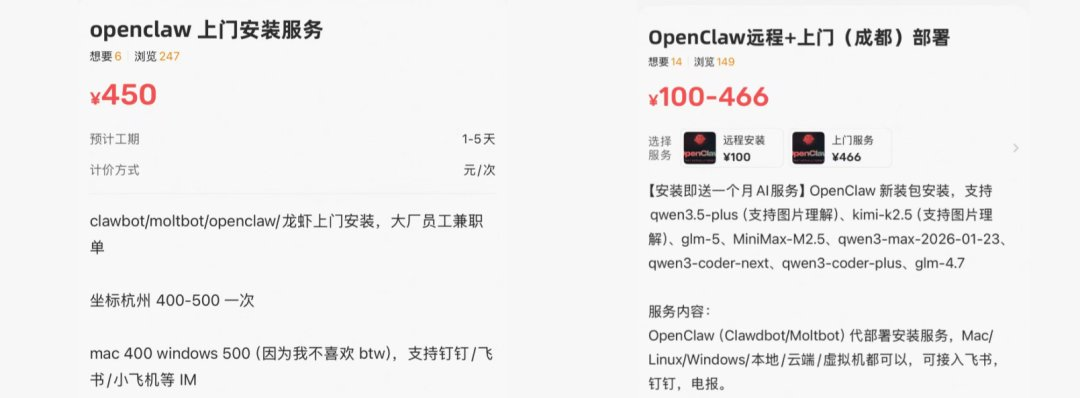
This is something to pay attention to—I’m not dismissing these businesses; where there’s demand, there’s a market, and that’s perfectly normal.
As for some WeChat merchants, that price is something I’d like to curse about.
It just feels like they're here to rake it in.
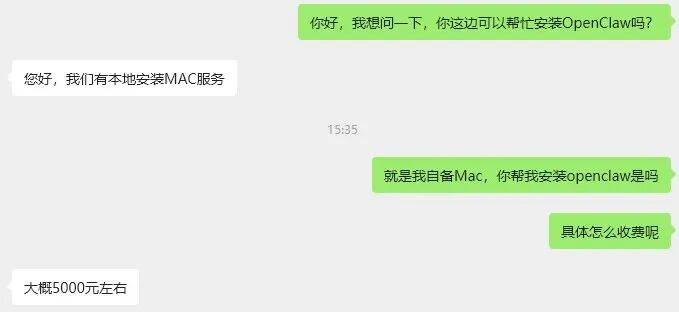
Can you believe they quoted a price of 5,000?
Are my crayfish gilded? Does it cost $5,000 to install???
I even once doubted whether this visit was really for installing crayfish at my place.
Then I asked.

This really left me more confused.
In that moment, I felt like I had purchased a service where Huang Renxun himself was remotely guiding me through the installation of OpenClaw.
Seriously, for 5000 yuan, there’s nothing else besides installation—amazing...

The same thing, with fees ranging from 30 to 5000, shows just how chaotic this market is.
Really, it reminds me of the same time last year.
On-site installation of the DeepSeek all-in-one machine.
Combined with the current sales of OpenClaw installations, a large number of them all have DeepSeek avatars—I have strong reason to suspect these are all the same group.
And demand is indeed quite strong.
I actually misjudged the momentum of crayfish—I thought it should have started to decline by mid-February, but unexpectedly, the entire index continued to rise.
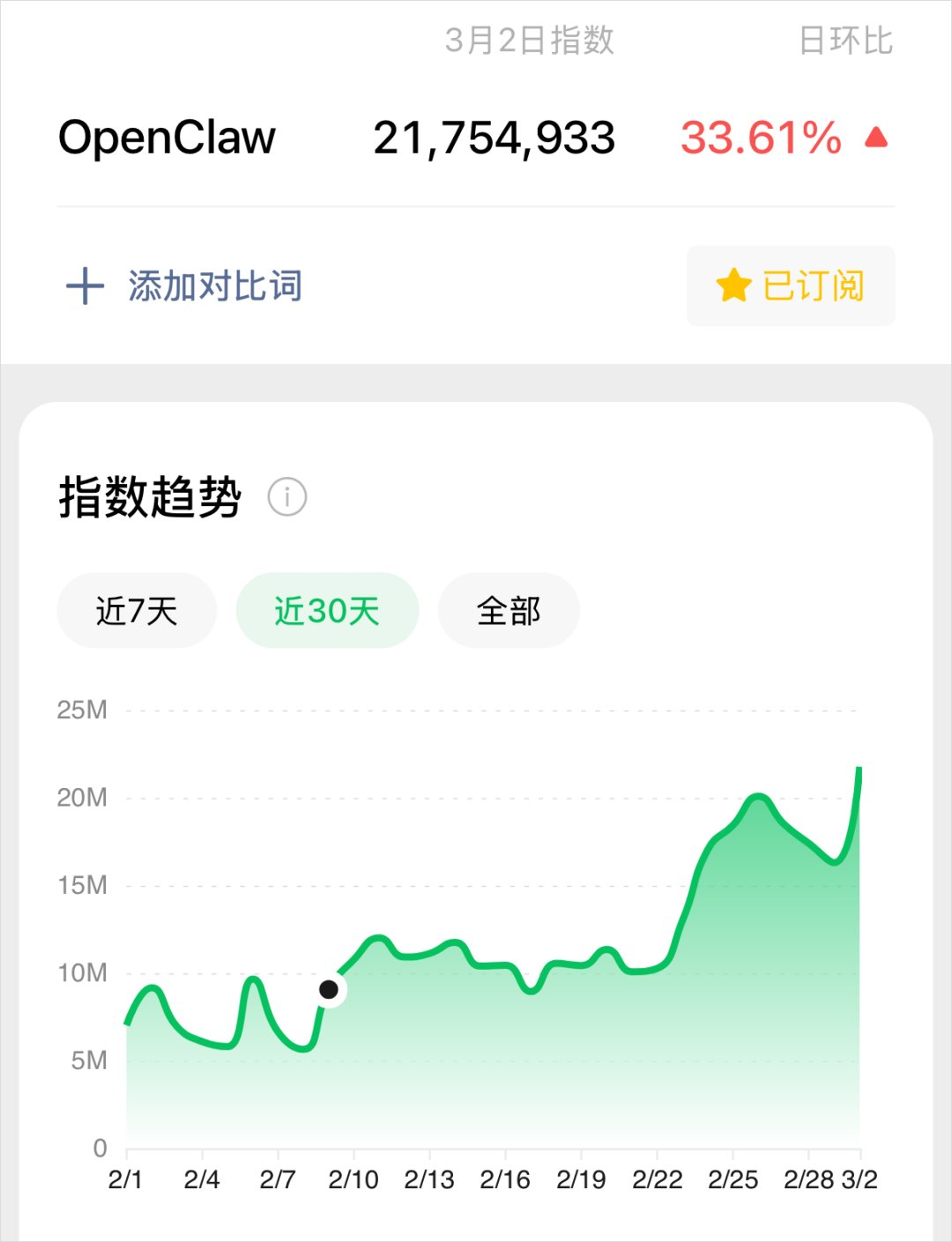
This has led to an increasing number of people requiring小龙虾 installation services.
On Taobao, a store I found for OpenClaw had 10,000 searches in the past 7 days and 5,000 visitors to the store.
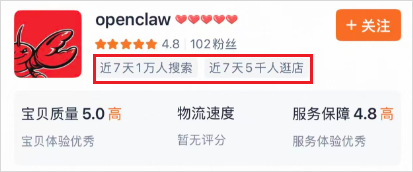
I didn't blur it because his store name is really called OpenClaw...
This code doesn't seem to mean much...
Of course, it's always best to get personally involved in the research.
So, we had our kids go through great lengths to completely uninstall OpenClaw from their computers—I’m talking so clean that even Ultraman wouldn’t be able to tell we ever had小龙虾 installed, and even the Feishu bot was removed from the backend.
Then, let’s have our child go to Beijing to find a home installation service, experience the process, and conduct a simple survey.
Because it was midday in Spain when I spoke with the children, it was already evening in China, so they looked for it later.
Only 7 people replied that day.
Among them, four are working professionals who said they only have time on weekends and after work, so they can’t make it during weekday days.
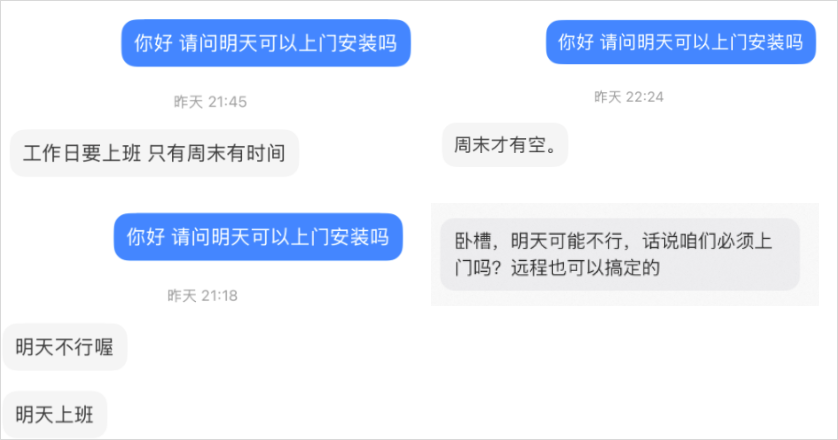
Then the fifth one is a college student with the lowest fee, but they responded a bit late—we’ve already chosen someone else.

The sixth one is a meme, wasting our precious 10 seconds.

And the seventh, the one we ultimately selected, is the delivery guy who came to our door.
Charged 499 yuan, came to our place, set up OpenClaw for our child, connected it to Feishu and GitHub, and offered to cover the first month’s token usage—then immediately purchased a Lite plan for Coding Plan on Bailian for us.

As proof, we really took a big hit and spent $499.

During this guy's installation process, we also chatted with him and gathered some information.
This guy isn't from a technical background; he previously worked in operations in the internet industry.
He told us that after seeing a post about installation services a couple of days ago, he decided to try it out and posted on Xiaohongshu.
I didn’t expect so many people to ask—these past two days, I’ve been getting work every day, averaging several orders per day.
He also found it amazing that there was actually demand for this.
So we asked about the typical profile of people who currently need on-site installation.
He said: "If you're asking about the industry, friends from film and media, finance, and internet companies asked me to help them set it up. Mostly individuals, but all driven by work-related needs, wanting to leverage this wave of OpenCLAW to optimize their business processes."
Then we asked again, do you know what the process is? Or what they used it for after installing it?
He said that because he’s just starting out, the sample size isn’t large enough yet. He couldn’t say for sure, but mentioned that he has a friend who runs an e-commerce business and uses this to analyze sales data.
At this point, we asked him about his own usage, and his response was very candid:
Actually, I don’t use it much in my daily life—I don’t really have a need for it.
Most often, I use it to get a daily push of AI news.
Bro, you're really honest.
When I saw these messages, I immediately thought of a line from the TV show "Love Apartment."
The teacher giving you career guidance may have never been employed themselves.

The person helping you install OpenClaw might not use OpenClaw much themselves...
But think about it, this is indeed a very normal phenomenon.
After all, being able to install OpenClaw doesn't really require you to know how to use OpenClaw...
This is truly a magical phenomenon.
So by now, you can see that this actually has almost no learning curve—take some time to explore and learn on your own, and you’ll get the hang of it quickly.
Seriously, try researching the installation yourself—there are so many tutorials online. If you're stuck, check out the installation guide on my Twitter, where everything is covered.
I emphasize this because, besides helping you save money, there’s something else that the vast majority of people today simply haven’t noticed and don’t care about.
Security.
In yesterday's short post about OpenClaw topping out, I wrote a passage that many people highlighted.

Why don’t big companies like ByteDance, OpenAI, Claude, or Google create products like OpenClaw? Is it really due to technical barriers?
There’s no real technical barrier—these are all open-source projects built with vibe coding. Just search GitHub to see how many clones exist.
A major reason big companies don't do it is because they're scared and hesitant.
Because the crayfish has taken the highest privileges of your system, it can essentially do anything on your behalf, and it can also connect to the internet. Its security is absolutely terrible. It might be fine running on a brand-new Mac Mini, but if you run it on your own computer and accidentally install some suspicious plugins or Skills that steal your API key, or expose ports to the public internet without authentication, do you realize how massive a security risk that is?
Like this website, all of these小龙虾 have been leaked for various reasons.
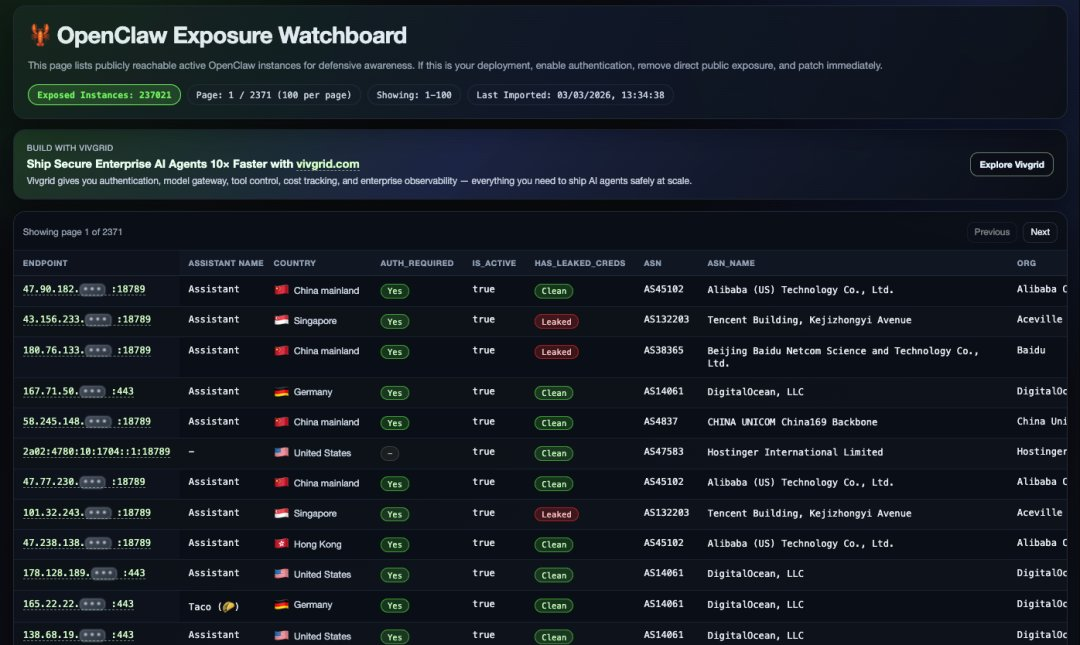
All are default ports.
Everything was leaked, complete with the highest system privileges.
Honestly, a lot of people involved in gray-market activities are laughing their heads off seeing this—they’ve never fought such a lucrative battle; everyone is just a perfect, chosen victim.
If you don't know what a "zombie computer" is, you can search for it yourself or ask an AI.
So none of the big companies dare to do it, because this security issue is too hard to solve. Even something as advanced as Claude Code still has things it can't do.
For example, when using remote control, you can completely make it locate any file on your local device, but it can only return the file path; it is impossible for it to provide you with a download link so you can download the file on your phone, unless you modify it yourself.
Going back to the on-site installation of OpenClaw, the security risks here are indeed much greater.
Because you have no way of knowing exactly what they’ve installed for you.
Is it really the original version without any backdoors, or are there no Skills with backdoors installed in the小龙虾 you received?
I really installed it for you—can you find it?
I believe that the vast majority of people will completely fail to notice.
The world is already so unsafe—don’t entrust your life to others.
Security, security, and still security.
To be honest, I know that many people are currently experiencing fear.
I also feel the fear of being left behind by the times.
I’m afraid that new tools keep popping up one after another, and I’ll always be chasing them but never catch up.
Afraid that one day you’ll wake up and find that the experience and skills you’ve spent years building have suddenly become worthless.
This fear is deeply personal; it won’t appear in any inspirational article or any expert’s year-end summary, but it’s there, in every quiet moment of the night.
So when a new tool comes out, many people rush to install it, even if they don’t yet know what it does—because if you don’t install it, you fall behind, and if you fall behind, you’re done.
Then, many endings are just like buying a Kindle, downloading a hundred books, and never opening them again; signing up for a gym membership and going only twice before it becomes a monthly fee; enrolling in an online course, hoarding a pile of paid knowledge products, and never getting past the first lesson.
No need, really.
In the 1880s, electricity began to spread across the United States, and many factory owners spent large sums of money purchasing generators and electric motors to install in their factories. However, after installation, many found that productivity did not significantly improve.
They simply replaced the steam engine with an electric motor, but the entire factory’s layout, processes, and management methods remained unchanged.
True efficiency gains occurred two or three decades later, when a new generation of factory managers realized that electricity was not just a new source of power—it should redefine the entire production process.
Thus, the factory shifted from a vertical layout to a horizontal layout, from centralized drive to decentralized drive, and from rigid production lines to flexible production lines.
Those who truly benefited from the electricity红利 are the ones who understood first what electricity truly meant.
The same applies to AI.
At this stage, it’s actually quite similar to 1880.
Everyone is frantically installing, buying equipment, and hoarding tools. But most people are simply using AI to replace what they used to do manually—using AI to write what they once wrote by hand, to create spreadsheets that they once drew by hand, and to look up information that they once searched for manually.
This is certainly useful, but it's not where AI's true power lies.
The real power of AI is to make you reconsider whether you should do something at all, not just how to do it faster.
But reconsidering this is the hardest part.
It requires you to pause, to step outside your routine, and to admit that you may have been doing the wrong thing all along.
So at this point, you might want to consider whether you really need OpenClaw.
To be honest, after that initial honeymoon period, I used it less and less.
The two Agent products I've spent the most time on to date are still:
Claude Code and Codex.
Internally, I also didn't strongly push everyone to adopt OpenClaw.
But Claude Code and Codex were things I pushed hard for—choose one, but both must be used. As a result, nearly every role now has the ability to independently develop solutions to their own business pain points.
Even HR manually built a product that uses AI to screen and score resumes based on some of our unusual requirements.
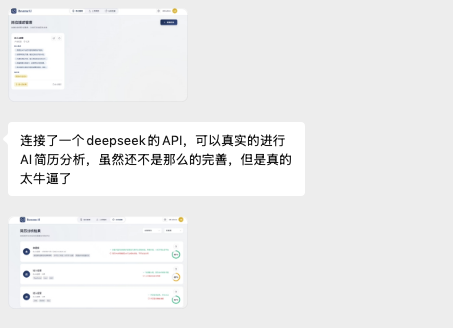

Of course, I’m saying this not because I don’t recommend OpenClaw—it’s a great product. Although its engineering implementation has some rather unconventional aspects and token consumption is extremely high, many of our team members still use it, and we may even release an interesting development tutorial on OpenClaw in the next couple of days.
What I mean is that evolution in this era is happening too rapidly.
Everyone has fears; among the people I've met, the more prominent the expert, the more fearful they tend to be.
Curiosity and fear may be two sides of the same coin.
Curiosity drives us toward the unknown, while fear prevents us from staying still; together, these two forces constitute the entire driving force of human civilization.
But do not surrender your right to think because of fear.
Even surrendered their own security.
Spend a little extra time and do your own research.
This process may be the AI era.
Something more important than learning how to use a tool.