





Editor’s Note: This article argues that what truly drives oil prices is not merely whether the conflict ends, but when the critical threshold is crossed.
Over the nearly four-week-long conflict in Iran, the oil market is experiencing a classic case of "time pricing." Strategic reserve releases have delayed the impact but cannot eliminate the supply gap; disruptions in tanker shipping and delayed production recovery are causing inventory pressures to accumulate into the future. Once the key threshold of mid-April is crossed, the pricing mechanism will shift from "buffered volatility" to "gap-driven repricing."
More notably, the structure of the博弈 itself is changing. The conflict is no longer following a path of “escalation to de-escalation,” but is shifting toward a test of endurance for market tipping points. Whoever can endure until supply-demand imbalances are priced by the market will hold the upper hand in negotiations. This means that even if the conflict ends in the short term, oil prices are unlikely to return to their previous range. The current supply losses are reshaping the global oil balance for the foreseeable future.
The following is the original text:
In this article, I’ll break down several possible scenarios that could arise. With the Iran conflict now approaching four weeks, how might this situation impact the oil market?
On March 9, we published an article titled "My Latest Assessment of the Oil and Gas Markets Amid the Iran Conflict," which stated:
Here is the impact on oil prices under different scenarios (barrels lost already includes the time required to restore production capacity):
Scenario One: Oil Tanker Shipping Resumes Tomorrow
The annual average price of Brent crude oil will range between $70 per barrel high and $80 per barrel low (equivalent to a loss of approximately 210 million barrels).
Scenario Two: Oil tanker shipping resumes before March 15
Brent's annual average price will be in the upper middle range of $80 (equivalent to a loss of approximately 290 million barrels).
Scenario Three: Oil tanker shipping resumes before March 22
Brent's annual average price will be at the low end of $90 (equivalent to a loss of approximately 370 million barrels).
Scenario Four: Oil tanker shipments resume before March 29
Brent's annual average price will be in the upper middle range of $90 (equivalent to a loss of approximately 450 million barrels).
If oil tanker transportation has not returned to normal by March 29, the situation facing the oil market would be too dire to contemplate. The only recourse would be forced demand contraction, pushing prices to extreme levels.
Shortly after the report was released, the International Energy Agency (IEA) announced a coordinated release of 400 million barrels from global strategic petroleum reserves (SPR). This will somewhat mitigate the impact of the supply loss. However, as we noted in our subsequent article, “IEA Coordinated SPR Release: A Gift to Bulls”:
From a trading perspective, traders will not rush to push oil prices higher until this "buffer" is exhausted. The coordinated release of the SPR does alleviate short-term supply concerns, but it is only a temporary solution. The market will remain tense, and as long as tanker shipping has not returned to normal, oil prices will gradually rise.
On the other hand, if the situation eases rapidly—such as through an immediate ceasefire or agreement—the price of oil would drop quickly. For example, if a peace agreement is reached by March 15, global inventories would net increase by 110 million barrels (400 million barrels released minus 290 million barrels lost).
This could push Brent prices back into the mid-$70 range.
Conversely, without a peace agreement and with supply disruptions continuing through the end of March, global inventories would net decrease by 50 million barrels, and the shortfall would expand by approximately 80 million barrels for each additional week.
Therefore, SPR's role was merely to "buy time" without addressing the core issue. Tanker shipping must return to normal. However, it did prevent a catastrophic price spike in the short term, thereby avoiding a massive collapse in demand.
As time has progressed, we have now reached the scenario set for March 29 at the beginning of the month. Next, we will assess the oil market’s direction based on the latest facts.
Fact
The total production shutdown from Saudi Arabia, the UAE, Kuwait, Iraq, and Bahrain has reached 10.98 million barrels per day:
Iraq: -3.6 million barrels per day
Kuwait: -2.35 million barrels/day
United Arab Emirates: -1.8 million barrels/day
Saudi Arabia: -3.05 million barrels/day
Bahrain: -180,000 barrels/day
Saudi Arabia has fully utilized the capacity of its east-west oil pipeline and is currently exporting approximately 4 million barrels per day via the Red Sea. The UAE is also rerouting oil through the Habshan-Fujairah pipeline, whose capacity of about 1.8 million barrels per day has also reached its limit. Tanker traffic through the Strait of Hormuz remains completely halted. In fact, even if the war ended tomorrow, it would take months to restore production and rebuild normal transportation operations.
Scenario Simulation
I will present three possible paths:
1) The war will end within this week, and transportation will resume by the end of this weekend.
2) The war ended in mid-April.
3) The war ended at the end of April.
It should be noted that the release of 400 million barrels from the SPR has provided the market with additional time compared to our initial assessment on March 9. The following oil price scenarios take this change into account.
Scenario One: End of This Week
Global inventory impact: -50 million barrels (already included in SPR)
Impact on Brent: Short-term decline to the low of $80, with full-year average at the mid-to-high $80 range.
Scenario two: Ends in mid-April
Impact on global inventory: -210 million barrels
Impact on Brent: Short-term decline to the low of $90, with full-year average at the mid-to-high $90 range.
Scenario three: Ends at the end of April
Impact on global inventory: -370 million barrels
Impact on Brent: Short-term spike to the $110 range, with full-year average at $110–$120.
Key turning point: Mid-April
For the oil market, there is a clear "tipping point." The market currently expects the conflict to end before mid-April, and this expectation is crucial to oil price pricing.
Oil prices are the result of marginal pricing. As long as the market believes supply remains barely sufficient, panic will not occur. This is precisely the current state of the oil market—no panic.
Policy statements from the Trump administration, eased sanctions on Iranian and Russian crude oil, and the release of SPR reserves collectively suppressed oil prices.
But once this threshold is crossed, these factors will no longer be effective.
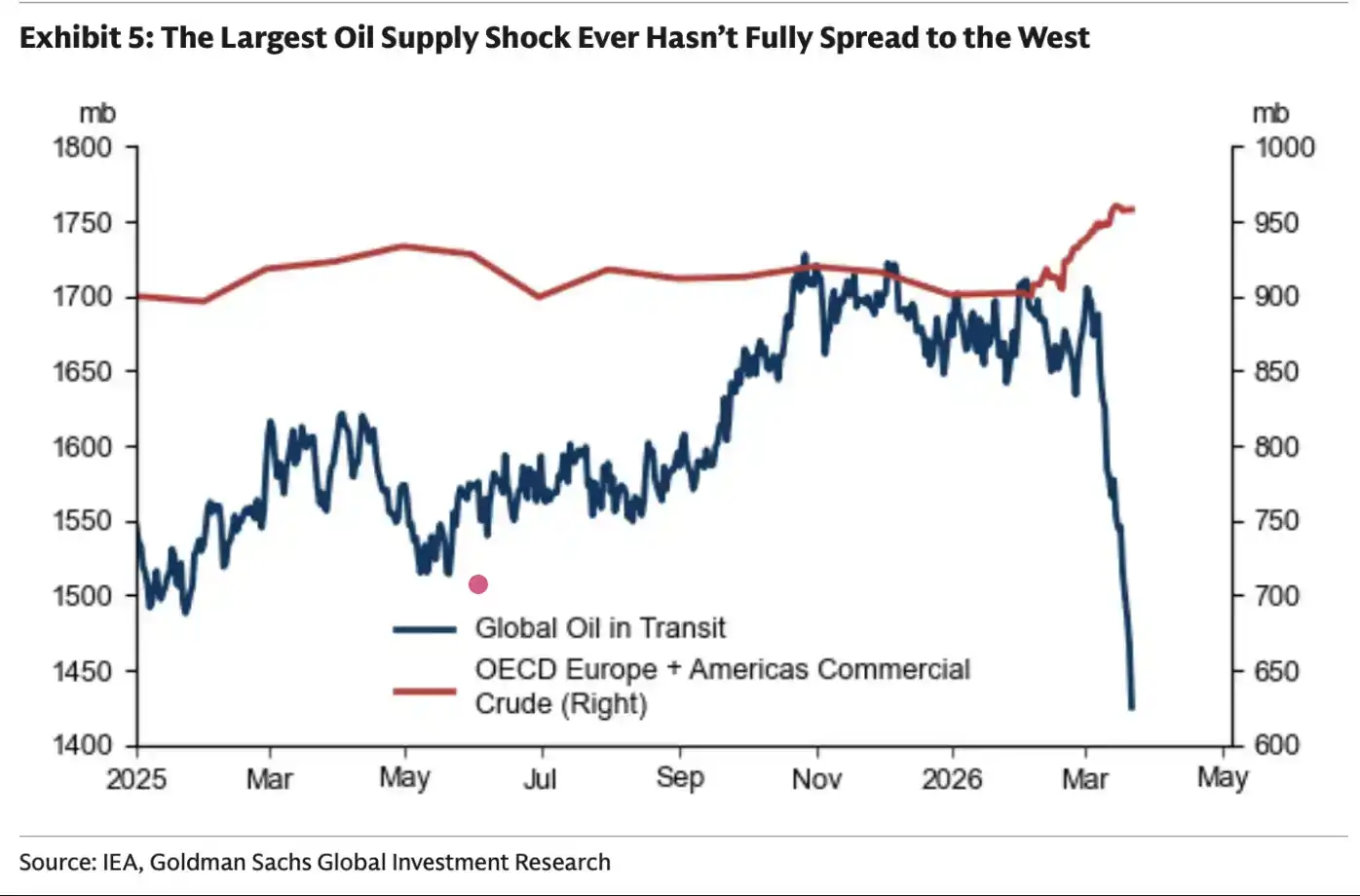
Currently, the evaporation effect of global "crude oil in transit" has not yet fully translated into onshore inventories. However, we expect this impact to become fully apparent by mid-April.
If the conflict remains unresolved by mid-April, the International Energy Agency (IEA) will have to coordinate another release of approximately 400 million barrels from its Strategic Petroleum Reserve (SPR). Otherwise, oil prices could surge into the "demand destruction" range (above $200).
Long-term impact
In Energy Aspect's latest weekly report, the estimated cumulative supply loss in the market is approximately 930 million barrels, with cumulative production losses between May and December totaling around 340 million barrels.
This assessment is clearly more aggressive than ours. Our inventory sensitivity analysis did not fully account for the reality that countries such as Iraq and Kuwait may require three to four months to restore production. This suggests that our previous estimates may have been overly conservative.
For Goldman Sachs, the conclusion is straightforward: the longer the conflict lasts, the longer high oil prices will persist.
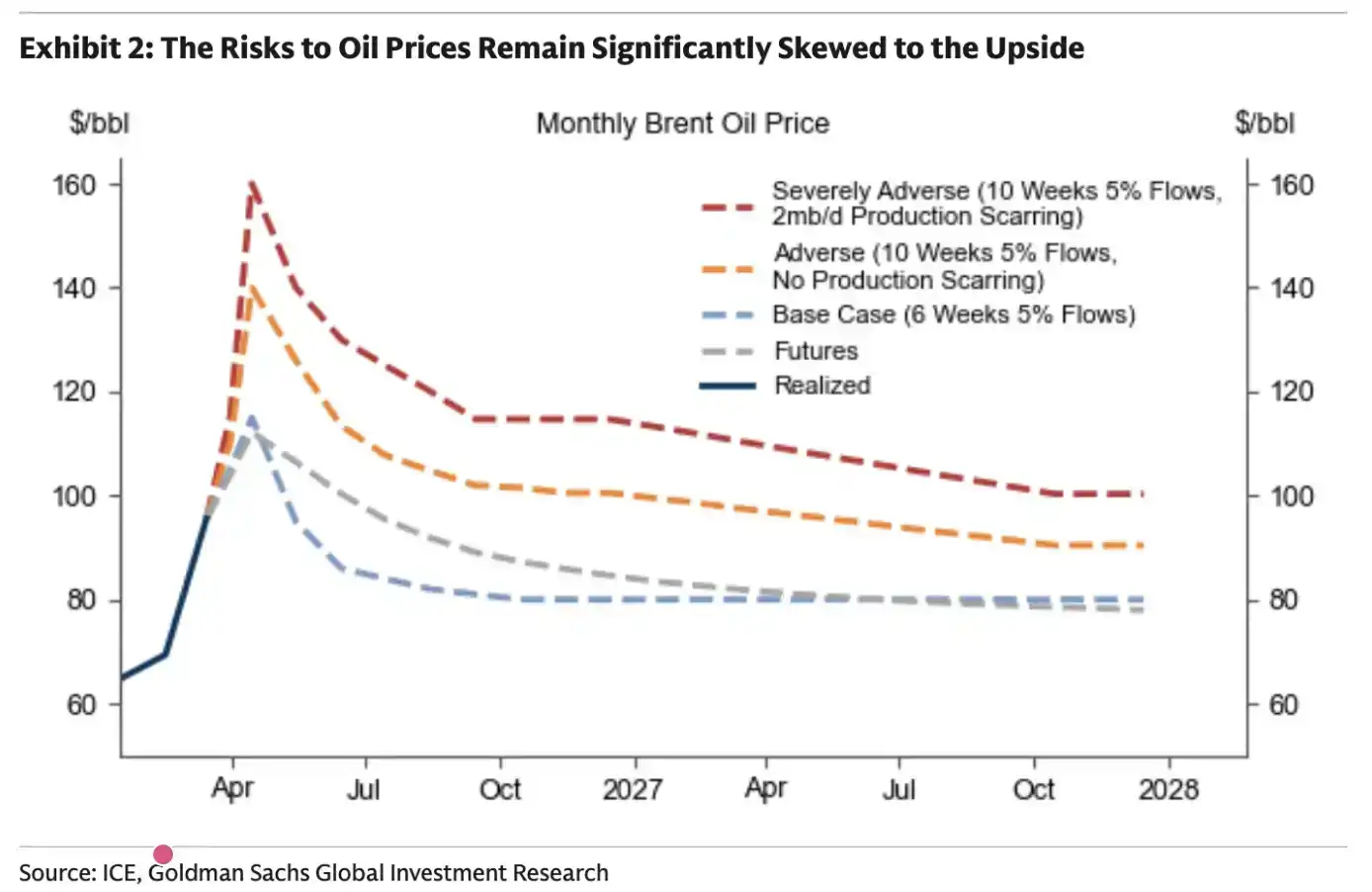
Under the above scenario, Goldman Sachs also made an assumption: what the market would look like if the conflict continued for another 10 weeks. Their assessment is largely consistent with our earlier analysis.
Essentially, the oil market has a "tipping point." Once this threshold is crossed, there is no going back.
Readers should prepare for the expectation that oil prices will experience a structural upward shift. Even if the war ends this week, the supply losses that have already occurred will have a substantial impact on the global oil supply-demand balance in the future.
How long will it last?
So far, I’ve avoided making any judgment about when this conflict will end—partly to avoid jinxing it, and partly because it’s truly unpredictable.
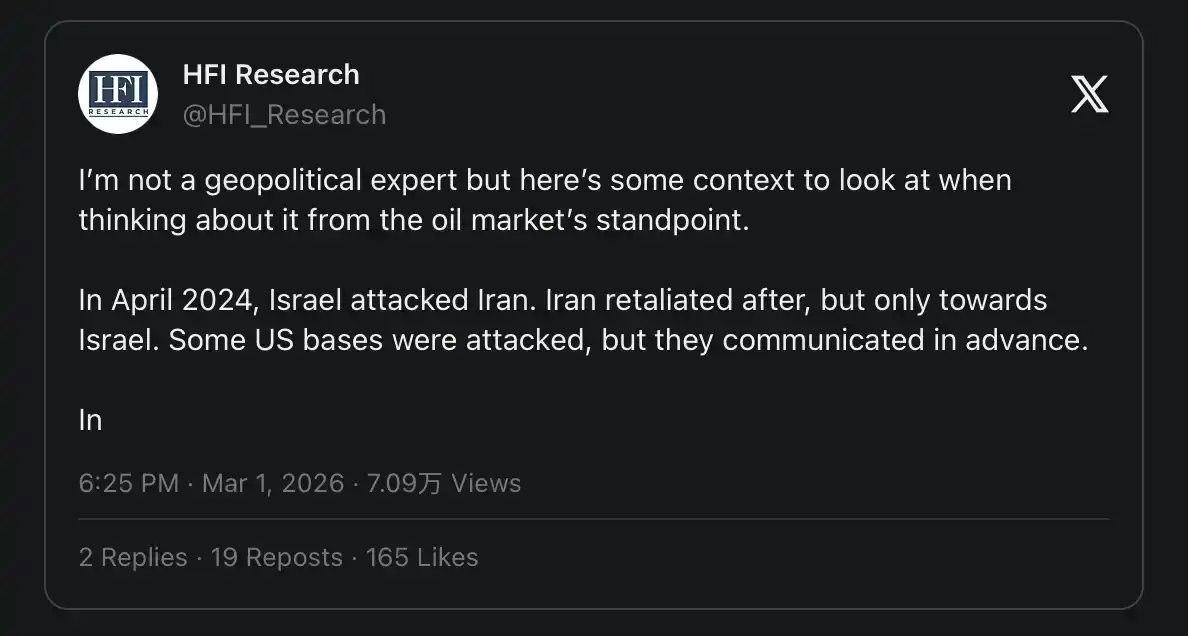
One clear point is that this time is different from previous conflicts. In the past, it was common to see a strategy of "escalating to de-escalate," but there are now almost no signs of this approach.
Retaliatory strikes occurred without warning; Iran’s range of targets now appears to extend beyond Israel to include Gulf nations. It was precisely this kind of response that made me realize from the outset—this time, things are different.
As the conflict has now lasted nearly four weeks, I am increasingly concerned: with each passing day without an agreement, the likelihood of reaching one declines significantly. As we analyzed in our article “Time Is Running Out,” Iran understands the underlying logic of the oil market very well. All it needs to do is wait until the market reaches that critical threshold, after which it can extract maximum concessions from the U.S. in negotiations. From a tactical standpoint, reaching an agreement now offers it no advantage. The card of the Strait of Hormuz has already been played and will be difficult to reuse in the future.
For Gulf nations, if the current Iranian regime is not overthrown, this kind of stranglehold situation will continue to recur. Even if some kind of "toll" mechanism is established, this uncertainty remains unacceptable.
Therefore, logically, the initiative lies not with the United States, but with Iran. Under these circumstances, Iran has greater incentive to push the situation toward a "tipping point" in the oil market to test America’s resilience. All it needs to do is hold on for just three more weeks until cracks begin to appear in the market.
However, it is important to emphasize that I am not a geopolitical expert and do not have absolute certainty regarding such assessments. What I can provide is only an analysis of the current situation based on fundamental factors.