





Key Insights
- Nvidia Chief Executive Officer Jensen Huang said artificial intelligence computing demand rose tenfold yearly.
- The surge intensified competition for graphics processing units, pressuring Bitcoin mining operations.
- Nvidia confirmed Rubin and Vera chips entered full production, offering fivefold AI performance gains.
Nvidia Chief Executive Officer Jensen Huang warned that artificial intelligence computing demand accelerated sharply, reshaping competition for hardware. Speaking at a Nvidia live event in Las Vegas on Monday, Huang said computing needs now rose tenfold each year, driven by rapidly expanding artificial intelligence models. The surge intensified pressure on graphics processing unit supply, raising fresh concerns for Bitcoin mining operations competing for the same hardware.
The comments mattered because Nvidia dominated global graphics processing unit supply for both artificial intelligence and crypto mining workloads. Nvidia AI computing demand increasingly dictated hardware availability, pricing power, and capital allocation decisions. As miners faced rising Bitcoin network difficulty, artificial intelligence workloads offered higher, steadier revenue opportunities, reshaping incentives across the mining sector.
AI Model Growth Redefined Nvidia’s Compute Economics
Huang said artificial intelligence development had become a computing race rather than a software challenge. “The amount of computation necessary for AI is skyrocketing,” Huang said during the event. He added that artificial intelligence models increased by an order of magnitude every year, forcing companies to scale computing capacity aggressively to remain competitive.
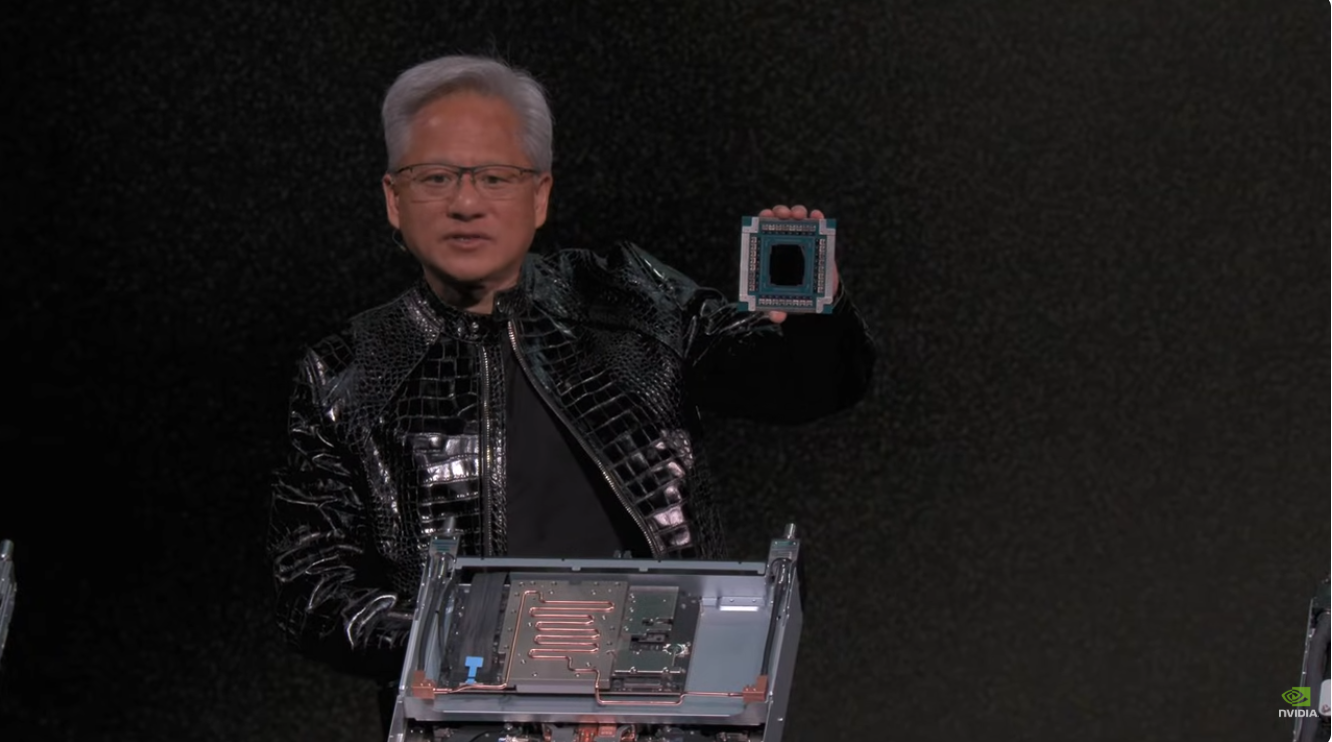
The Nvidia chief executive framed artificial intelligence as a time-sensitive competition. Faster computing shortened development cycles and accelerated commercial deployment, Huang said. That dynamic rewarded firms able to secure sustained access to high-performance graphics processing units, particularly Nvidia’s data-center-grade hardware.
Nvidia positioned itself at the center of that expansion. Huang confirmed that the company’s next-generation Rubin and Vera chips entered full production and remained on schedule. He said the combined architecture delivered five times higher artificial intelligence computing performance compared with previous generations, strengthening Nvidia’s technological lead.
Nvidia Stock Reflected AI-Centric Demand Momentum
Nvidia Corp shares closed at $188.12 on Jan. 5, according to Nasdaq data, posting a 0.39% daily gain. The stock slipped slightly in after-hours trading to $187.99. Equity performance tracked investor confidence that artificial intelligence infrastructure spending remained resilient despite broader market volatility.
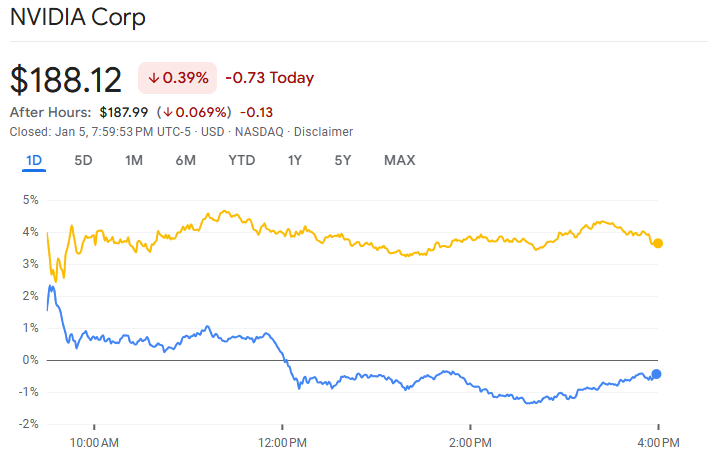
The company’s valuation increasingly reflected artificial intelligence demand rather than legacy gaming or crypto-related revenue cycles. Nvidia’s earnings exposure tilted toward data centers, cloud providers, and enterprise artificial intelligence deployments. That shift reduced Nvidia’s sensitivity to crypto mining downturns while increasing its leverage to artificial intelligence capital expenditure trends.
Huang’s comments reinforced that narrative. He described artificial intelligence adoption as an ongoing race rather than a discrete product cycle. That framing suggested prolonged demand visibility for Nvidia hardware, supporting sustained revenue expectations.
Bitcoin Miners Faced Harder Choices on GPU Allocation
Bitcoin mining companies already adjusted business models in response to shifting economics. Rising network difficulty compressed mining margins, especially during periods of stagnant Bitcoin price action. Artificial intelligence workloads offered an alternative revenue stream with predictable demand and long-term contracts.
Huang’s remarks strengthened the case for further diversification. More artificial intelligence computing demand tightened graphics processing unit availability, potentially raising acquisition costs for miners. That pressure reduced incentives to deploy hardware solely for Bitcoin mining when artificial intelligence customers offered higher utilization and pricing stability.
Several mining firms previously repurposed or expanded infrastructure to serve artificial intelligence data center clients. Huang’s description of exponential computing growth suggested that trend could accelerate. Artificial intelligence demand now competed directly with mining for power capacity, real estate, and capital expenditure budgets.
Rubin and Vera Chips Raised the Competitive Bar
The introduction of Rubin and Vera chips represented a structural upgrade in artificial intelligence compute density. Huang said the two chips were designed to operate together, maximizing throughput and efficiency. The architecture targeted large-scale training and inference workloads rather than consumer applications.
For Bitcoin miners, the shift mattered because newer Nvidia hardware increasingly optimized for artificial intelligence rather than hash computation. That specialization limited cross-use cases and raised switching costs. Hardware purchased for artificial intelligence data centers often proved unsuitable for traditional mining workloads.
Nvidia’s roadmap therefore reinforced artificial intelligence as the company’s primary growth engine. The focus reduced incentives for Nvidia to prioritize mining-specific optimization, further marginalizing crypto-native use cases within its product strategy.
Market Implications for Crypto and Hardware Allocation
Huang’s remarks framed artificial intelligence as a sustained computing arms race rather than a temporary boom. That outlook supported Nvidia’s long-term revenue visibility but complicated the outlook for crypto mining economics. Hardware scarcity, rising prices, and competition from enterprise buyers constrained miners’ access to next-generation graphics processing units.
Bitcoin mining profitability increasingly depended on scale, energy efficiency, and strategic diversification. Artificial intelligence computing emerged as a parallel path rather than a complementary one. Miners without access to cheap power or artificial intelligence partnerships faced mounting cost pressures.
The immediate focus shifted to capital allocation decisions. Firms choosing between expanding mining capacity or pivoting toward artificial intelligence faced a narrowing window. Nvidia AI computing demand continued to reshape incentives across both sectors, favoring players able to adapt their infrastructure quickly.
Huang’s comments underscored a clear message. Computing power determined winners across both artificial intelligence and cryptocurrency mining. The faster side secured the advantage.
The post Nvidia AI Computing Demand Puts Pressure on Crypto Mining Economics appeared first on The Market Periodical.