



Original Title: "After a $23.3 Million Bet on Stay or Leave, Why Is NBA Star Giannis Antetokounmpo's Investment in Kalshi Causing Outrage?"
Original Author: Zen, PANews
At 4 a.m. Beijing time on February 6, the most turbulent trade deadline in NBA history finally settled down. Amid the dazzling array of trade news, the biggest name on the free market—the star player of the Milwaukee Bucks, "Giannis"—ultimately chose to stay with his mother team after two months of trade rumors and back-and-forth negotiations.
At the same time, event contracts on the prediction market platform Kalshi regarding "Giannis' stay or departure" also began entering the settlement phase. The contract's cumulative trading volume exceeded $23.3 million, making it the NBA's single-event contract with the highest trading volume, aside from the "NBA championship winner."
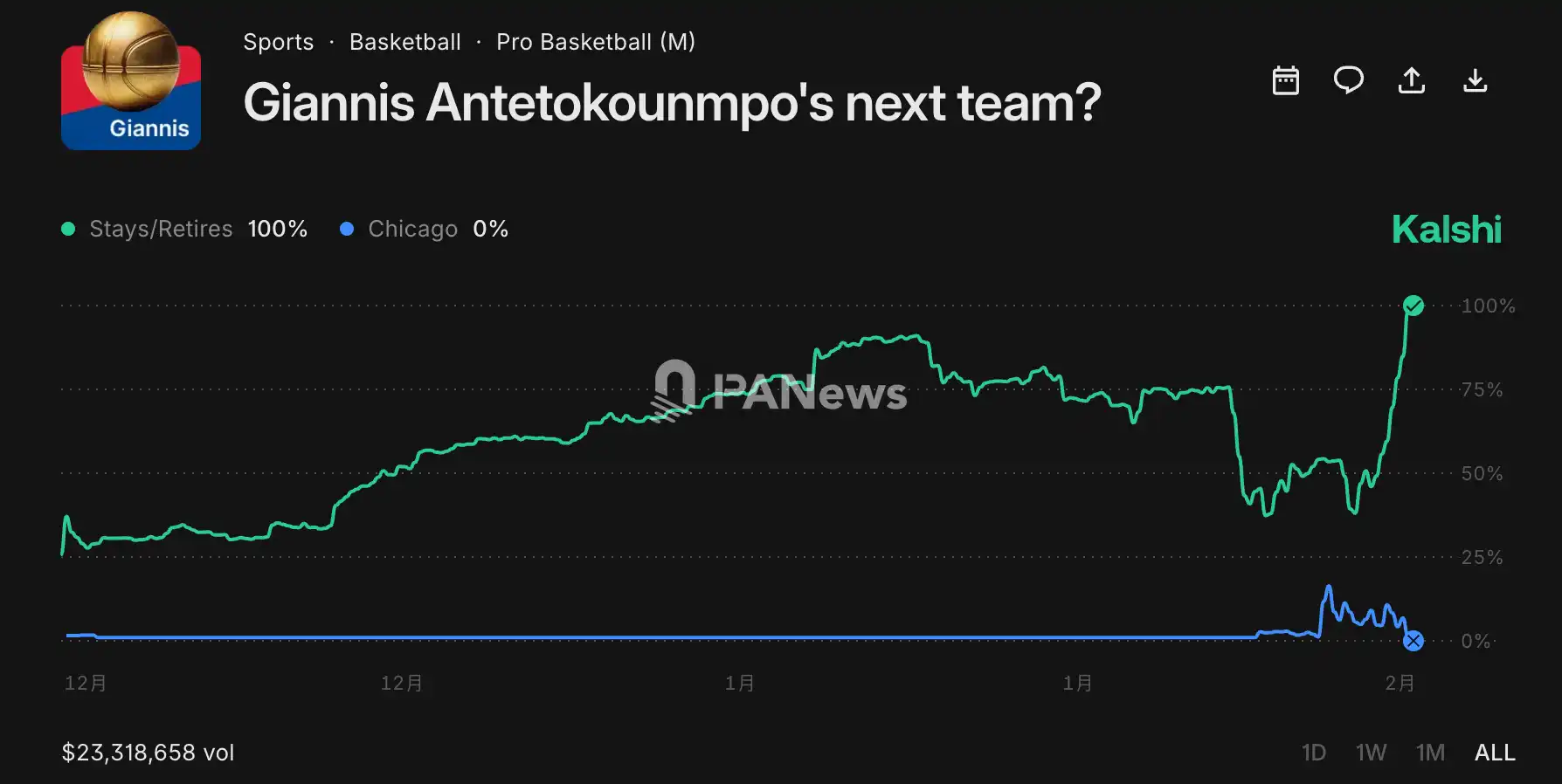
When people thought the trade deadline had passed and the drama surrounding Giannis Antetokounmpo could finally be completely resolved, Giannis unexpectedly "took his talent to Kalshi" and transformed into a shareholder of the platform. Having long gained high exposure through trade rumors, he ultimately signed a business partnership under the public's attention. This behavior has caused much dissatisfaction among many fans.
In a way, it's like when another top NBA star, LeBron James, solemnly announced before last season's opening that he would make a "Decision 2.0," putting on a serious act as if declaring his retirement, only to finally reveal an advertisement with a teasing tone toward fans saying, "I'm bringing my talent to Hennessy."
But compared to James promoting Hennessy, what is even worse for Giannis is that his collaboration with Kalshi, which is viewed by most fans as an "alternative betting platform," is not just an issue of advertising exposure and brand public relations, but more importantly, it concerns sports ethics, competitive fairness, and conflicts of interest.
Giannis Antetokounmpo's Experience Resonates with Kalshi: From "Blacklisted" to Top Stream
Giannis Antetokounmpo's Chinese nickname "Letter Brother" comes from the fact that his name is too long and has too many letters. Therefore, sports community fans gave him the nickname "Letter Brother" or "Letter," and it gradually became popular.
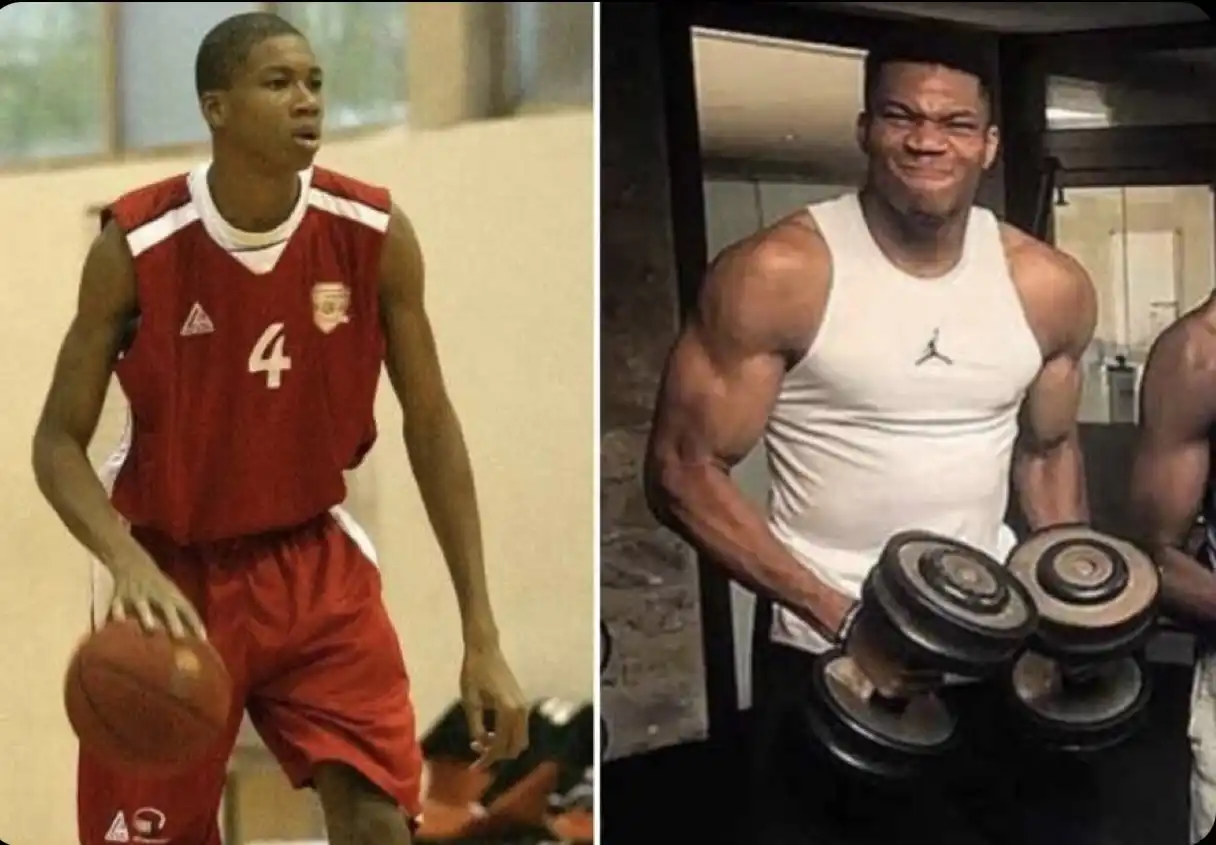
There are always inspiring motivational stories on the NBA court, and Giannis Antetokounmpo's story of a comeback is a typical example full of drama and legend. Giannis was born in Greece, and his parents are illegal immigrants from Nigeria. According to Greece's jus sanguinis principle, being born in a family without legal documents and work permits, Giannis could not obtain Greek citizenship. His parents, with their five children, struggled every day just to make a living.
At the age of 13, the tall and athletically gifted Giannis began learning to play basketball. With hard work and extraordinary talent, Giannis became one of the brightest new stars in European basketball at 18. He attracted the attention of several major European clubs, and later drew a large number of NBA scouts to evaluate him.
And when Giannis was preparing to go to the United States to participate in the 2013 NBA draft, he was actually still in an "unregistered" status. After a series of meetings between his agent and the Greek government, and with strong support from the then sports minister Yiannis Ioannidis, Giannis finally obtained Greek citizenship on May 9, 2013. On June 27, he was selected by the Milwaukee Bucks at the 15th pick in the first round and smoothly entered the NBA.
Giannis Antetokounmpo's life philosophy, in his own words, is "the most important thing is the spirit of relentless effort." After entering the NBA, Giannis became an All-Star and a superstar through his persistent efforts and the spirit of constantly pursuing progress. Since 2019, he has consistently been a strong contender for the league's best player. Today, he holds two MVP trophies, led the Bucks to their first NBA championship since 1971, was named Finals MVP, and has received numerous honors including All-NBA selections and All-Star appearances.
From humble beginnings to a comeback as a top-tier platform, Kalshi has had a similar journey. After its founding in 2018, Kalshi went through six years of dormancy, exploration, and struggle before finally shedding its non-compliant "black market" status and gaining recognition from the U.S. Commodity Futures Trading Commission (CFTC), becoming a regulated trading platform.
The "struggle experience" of the Kalshi platform somehow mirrors Giannis Antetokounmpo's personal journey of striving, which might also be one of the reasons why the two parties can reach a collaboration.
The NBA's proactive acceptance of gambling has opened the Pandora's box.
Giannis is the first NBA star with a publicly known interest in Kalshi, but not the first public figure in the entire league to engage in prediction markets.
In November 2025, the NBA is reviewing the entry of a startup company called Mojo Interactive Inc. into the prediction market, as the company's founders are Mark Loll and Alex Rodriguez, who are shareholders of the Minnesota Timberwolves. According to Mojo's CEO Vineet Bhardwaj, the company began trading contracts related to sports events during the NFL season last fall, but has not yet engaged in trading related to NBA games.
Regarding this matter, an NBA spokesperson said that the league is aware that two shareholders of the Timberwolves own minority stakes in Mojo, but they are not involved in the company's daily operations. "We are reviewing this arrangement to verify whether it complies with the league's relevant regulations." At the same time, he also emphasized that NBA team and league personnel are prohibited from trading NBA or WNBA contracts on any prediction market platforms.
The NBA has a relatively lenient management policy regarding whether team owners hold shares in gambling companies, as long as they do not personally oversee operations related to NBA betting. For example, Dallas Mavericks owner Patrick Dumont is the president and chief operating officer of the globally renowned casino and hotel operating group, Las Vegas Sands Corporation. The two Minnesota Timberwolves owners have also given the NBA league full assurance of compliance with the NBA's established policies. While they have justified the legitimacy of their businesses, they have also revealed that the Pandora's box has already been opened.
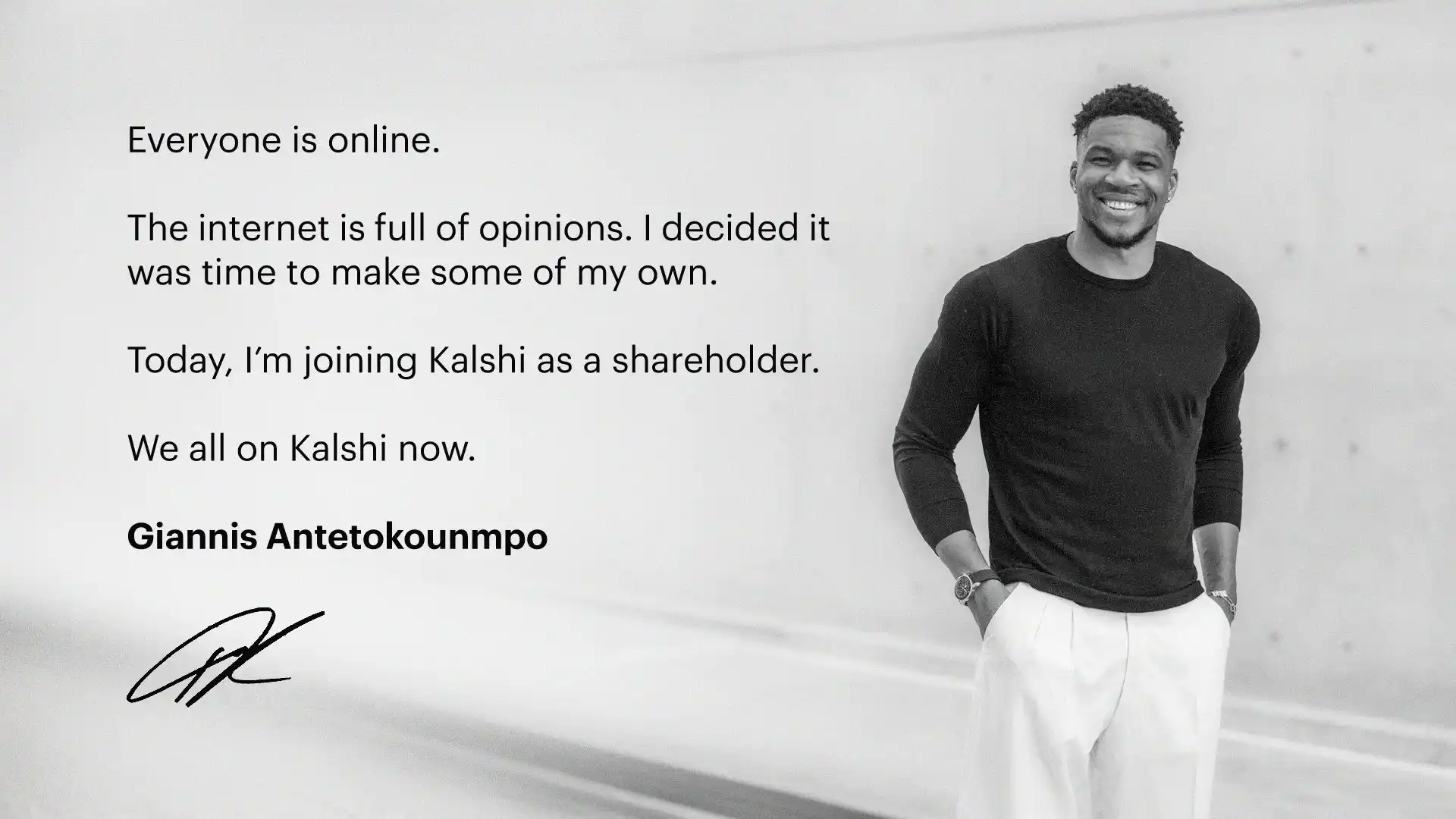
"The internet is full of all sorts of comments, I decided to make my voice heard... Today, I joined Kalshi as a shareholder." Now, Giannis' declaration of joining has made the relationship between the NBA and prediction markets even more complicated. Among global sports leagues, the NBA is the most proactive in commercializing sports betting partnerships, willing to embrace incremental revenue, and more willing to use compliance terms to manage risks.
According to the rules, since the NBA and the players' union signed a new collective bargaining agreement in 2023, NBA players' commercial reach has become broader and more flexible. The league even allows NBA players to participate in sports betting and recreational marijuana businesses, with the only restrictions being that "the investment must be passive" and "players' ownership stake cannot exceed 1% of the betting company" (50% for marijuana brands).
Therefore, regardless of the debate over whether the prediction platform is considered gambling, even if it falls within the gambling category, the collaboration between the Greek letter and Kalshi does not violate the league's rules. This is also why the Kalshi spokesperson only disclosed that the Greek letter's shareholding does not exceed the 1% red line, without revealing specific shareholding data. Before the Greek letter, James had reached a collaboration with the betting company DraftKings in 2024, serving as a brand ambassador for NFL and some non-NBA events. However, James's involvement only reached the level of brand ambassador, with a depth of collaboration that did not match that of the Greek letter.
In contrast, the NFL, also a top-tier commercial sports league, has taken a stricter stance toward similar collaborations. Giannis' signing has raised speculation about whether NFL athletes might follow suit. An NFL spokesperson responded that players in the league are not allowed to own shares in prediction market companies.
How to Restore Fairness, Morality, and Trust in the Era of Predictions and Gambling
The news of Alphabet becoming a shareholder in Kalshi immediately exploded on social media. And the real fan base that pays attention to Giannis Antetokounmpo has largely taken a stance against him. People began to question, how much money would it take for a billionaire to feel that this was worth doing?
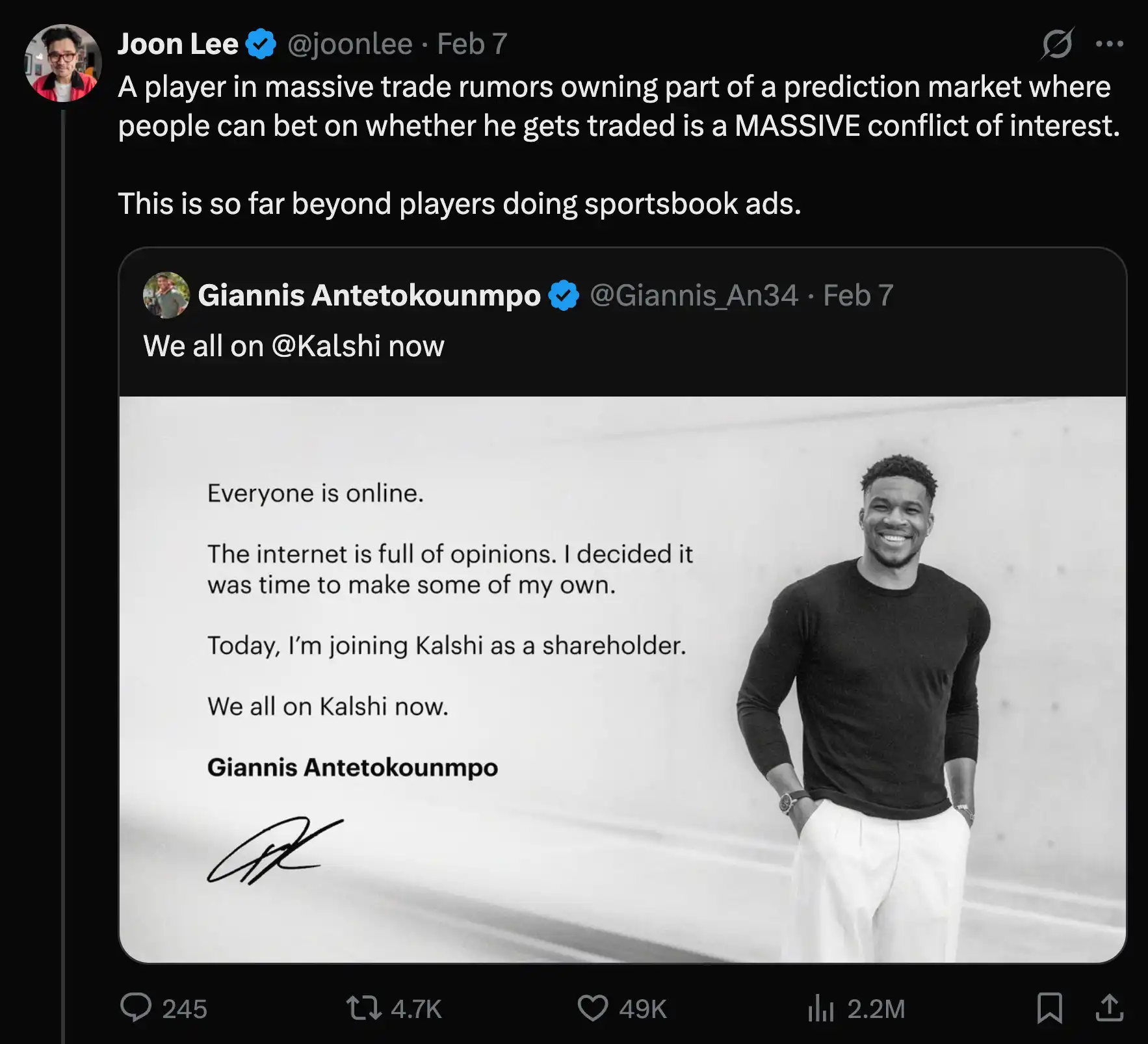
"It is a huge conflict of interest that a player involved in rumors of a blockbuster trade also holds a partial stake in a prediction market, allowing people to bet on whether or not he will be traded," said independent sports journalist Joon Lee, who believes this collaboration goes far beyond the scope of a player simply advertising for a sports betting company. He also unexpectedly discovered in a Barron's report that Kevin Durant appears to be an investor in Kalshi as well.
Previously, fans saw more of endorsement-type collaborations, which are essentially more like advertising deals and do not involve equity ties. However, Giannis' "shareholder identity" this time has pushed the issue into a higher conflict sensitivity zone. Even a passively held minimal equity still makes him a "stakeholder," especially since this is a newly emerging company valued in the billions of dollars.
In the cooperation statement, Kalshi emphasized that Giannis will be prohibited from participating in any NBA-related trades. However, the real risks remain, and fans are not optimistic about Giannis' willingness, ability, intensity, and transparency in self-regulation. In fact, many fans have even started to speculate whether Giannis himself is involved in trades regarding his future. Combined with the contradictory statements he has made repeatedly before the NBA trade deadline, some people speculate that he is manipulating insider trading and at the same time playing tricks on the fans.
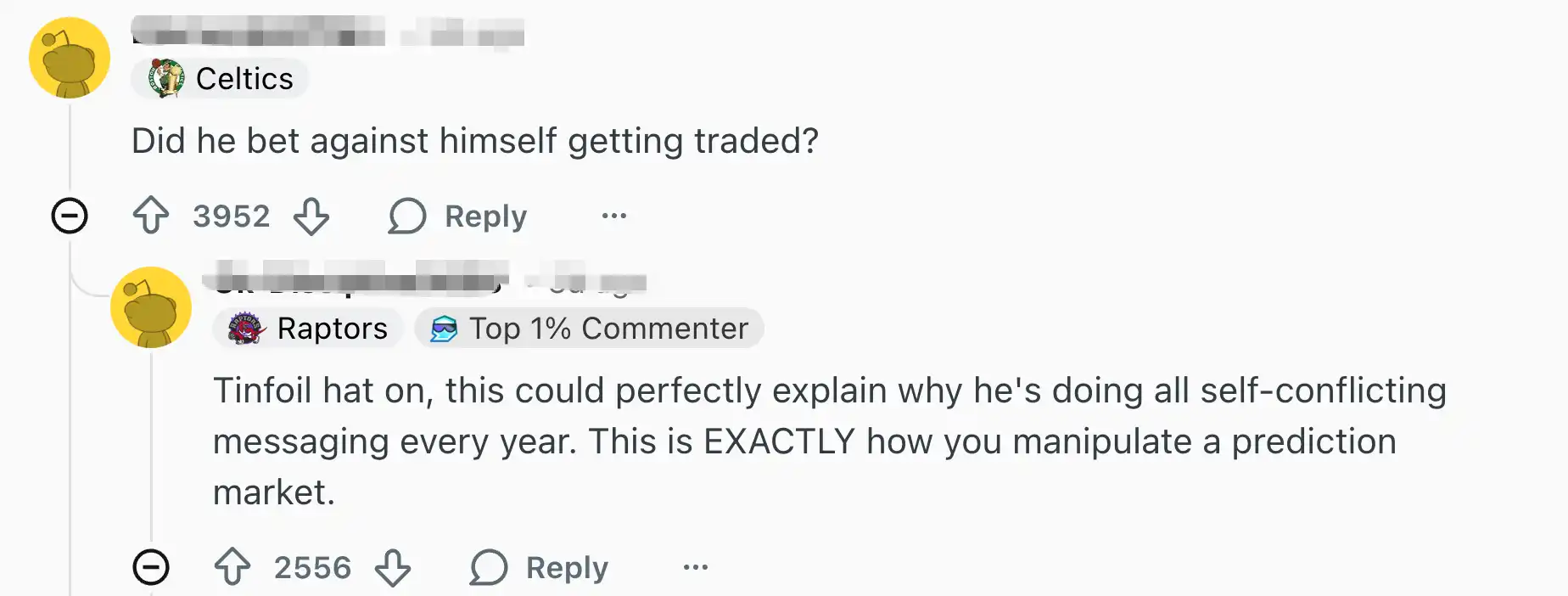
Nowadays, the NBA league is deeply tied to the gambling industry, and fans have long been living among various odds and data. This has also intensified the motivation for inside operations, causing the quiet collapse of trust in sports.
At the beginning of this NBA season, Portland Trail Blazers head coach Chauncey Billups was arrested on suspicion of illegal gambling; Miami Heat player Terry Rozier was also arrested on suspicion of manipulating bets using inside information about NBA players. This situation in the NBA, where new scandals can erupt at any moment, is severely eroding fans' confidence in sports ethics and trust in the motivations behind the games.
Another consequence of completely financializing sports is that in an environment where gambling is everywhere, fans will project more game stoppages, substitutions, injury return timelines, and even a post-game interview as variables that "could affect the market."
This is exactly the most thorny aspect of the era of prediction markets, where its financial logic turns around and rewrites the way people appreciate sports narratives. The exciting process of a game can no longer be fully appreciated by fans, and inspiring stories like that of Giannis no longer matter to anyone. People have started to care only about where the "Greek Freak" will go next, when he will retire, and how much money they can make from him.
In the era of gambling and prediction markets, doubts and controversies cannot be calmed by talking to oneself. Restoring fairness, ethics, and trust is a more difficult proposition that we need to address.
Click to learn about Lüdòng BlockBeats' open positions
Welcome to join the official community of Lvdong BlockBeats:
Telegram subscription group:https://t.me/theblockbeats
Telegram discussion group:https://t.me/BlockBeats_App
Official Twitter account:https://twitter.com/BlockBeatsAsia