





This year, NAND flash prices have entered a new rapid upward cycle, with consumer-grade storage products feeling the impact first. In October 2025, a SanDisk Extreme 128GB microSD card sold for $17 on Amazon. In February of this year, the same card was priced close to $40—a 130% increase in less than four months.
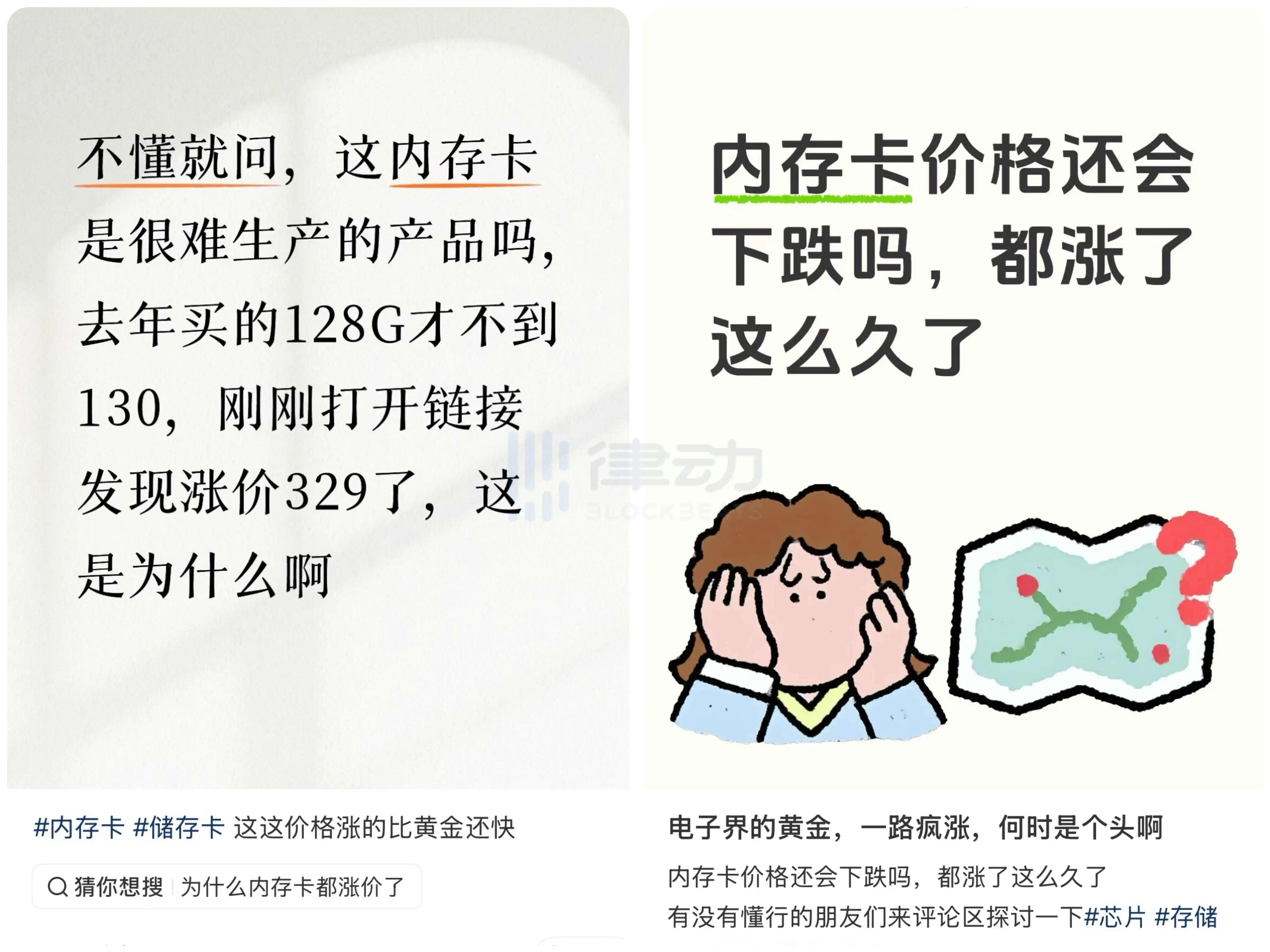
First, it’s important to clarify the difference between RAM modules and memory cards—they are not the same product. RAM (Random Access Memory) is internal temporary storage in a computer, used for reading and writing data while programs are running; data is lost when power is turned off. Memory cards (such as microSD cards), on the other hand, are external storage devices designed for long-term retention of files like photos and videos; data remains intact even without power. The price increase discussed in this article pertains to the latter—memory cards and the underlying NAND flash chips.
The continuous rise in memory card prices is driven by a systemic repricing of the entire NAND flash market, with the repricing triggered by AI data centers competing for the same wafers.
The contract price increased by 50%, but by the time it reached you, it had risen by 130%.
First, let's explain what is happening.
Global NAND flash contract prices have risen sharply since the end of last year. According to a report released by market research firm TrendForce in February this year, the overall NAND contract price in the first quarter of 2026 increased by approximately 55–60% compared to the fourth quarter of last year, with enterprise SSDs seeing a rise of 53–58%, setting a new record for quarterly price growth. TrendForce also forecasts that the overall NAND contract price will rise another 70–75% in the second quarter.
These figures represent bulk contract prices between large clients and do not directly equal retail prices on e-commerce platforms. However, retail prices at the consumer end have risen even more sharply than contract prices. The rightmost bar in Figure 1, representing 130%, reflects the actual price impact felt by ordinary consumers.
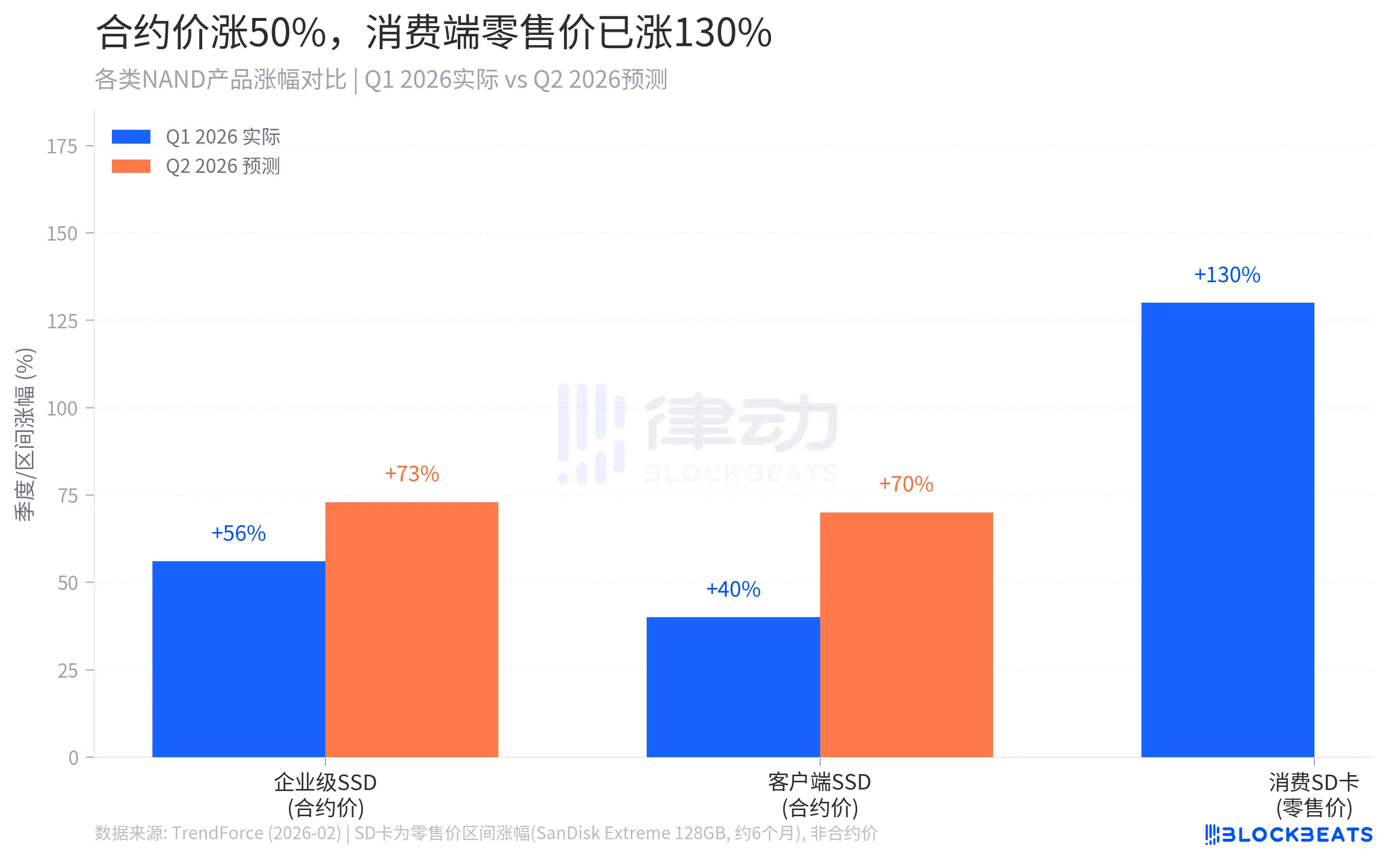
Why are retail price increases far greater than contract prices? Because the consumer market is a “residual allocation market.” NAND manufacturers prioritize fulfilling long-term framework agreements with major clients, including AI data center operators and hyperscale cloud service providers. Only after these orders are fulfilled do the remaining inventories enter the consumer market distribution channels. Supply is severely constrained, leaving the spot market with almost no buffer against price increases—resulting in steeper retail price hikes compared to contract prices.
Kingston this year publicly confirmed that its NAND wafer procurement costs have increased by 246% compared to a year ago. This is a cost shock at the raw material level, ultimately passed down to consumers through product pricing.
How is the price of a storage card being pushed up by AI?
This chart has two key nodes worth mentioning individually.
The first was around October 2025, when consumers could purchase storage cards at relatively low prices. This period marked the end of the previous cycle of oversupply. Between 2023 and 2024, major storage manufacturers accumulated large inventories amid weakening demand, causing prices to decline steadily. Photographers, creators, and gamers all took advantage of this window to replenish their stock of storage cards at historic lows.
The second node is the fourth quarter of 2025. Samsung, Kioxia, Micron, and SK Hynix sequentially announced production cuts and price increases, causing a complete reversal in the market in a short time. Samsung raised prices for enterprise customers by over 100%, and Kioxia explicitly stated that its full-year 2026 capacity has already been pre-sold to major clients, directly cutting off supply to the consumer market.
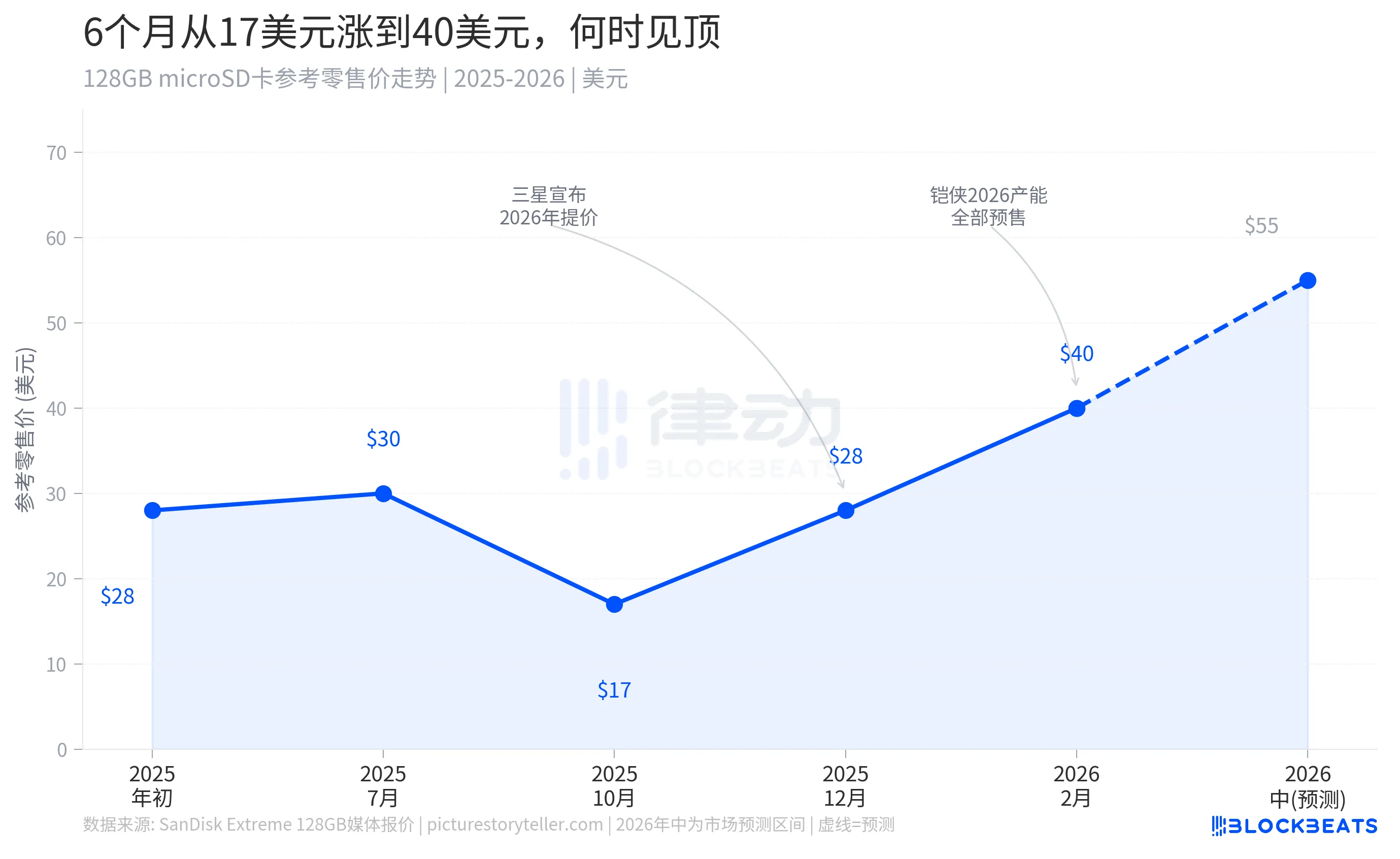
Since then, the retail price of storage cards has risen steadily, and is expected to reach the $50–$60 range by mid-2026, with no window for a market correction throughout the year. This is not market speculation, but a structural realignment of supply allocation. Before AI data centers became the top priority buyer in the NAND market, consumer and enterprise products shared capacity allocation equally. Now, consumer products are at the very end of the allocation chain.
This time, it's completely different from 2017.
The NAND industry typically experiences a price cycle every three to four years. The last significant price increase occurred between 2016 and 2017, lasting nearly two years. This cycle was triggered by the technological transition from 2D NAND to 3D NAND. The new stacking process slowed effective output during the yield ramp-up phase, tightening supply and driving prices higher. However, once manufacturers stabilized their 3D NAND production yields, Samsung, SK Hynix, and Micron simultaneously expanded capacity significantly, causing inventories to quickly shift from shortage to surplus, leading to a sharp price decline in early 2018.
The driving force this time is completely different, so the repair path is also entirely different.
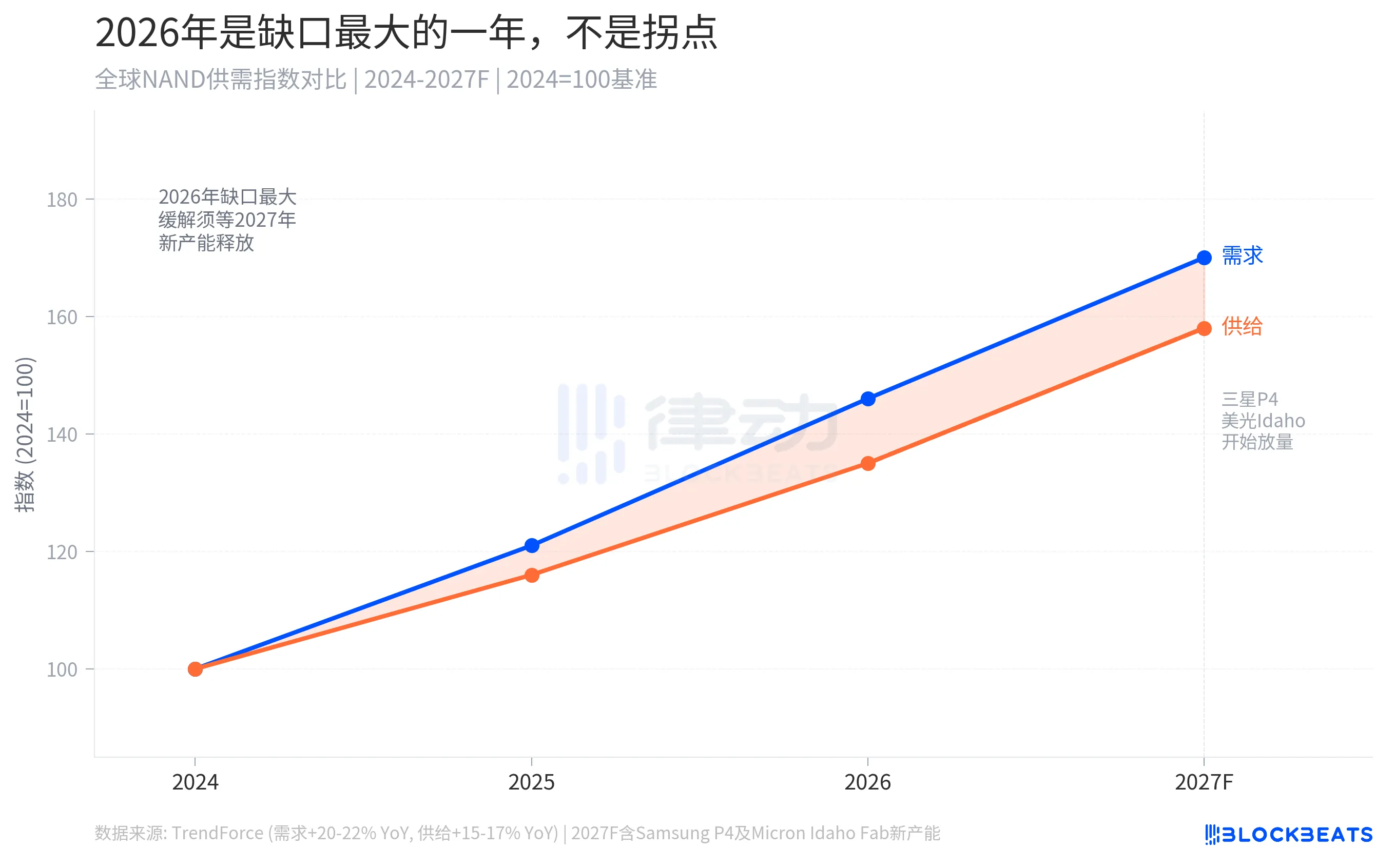
According to TrendForce data, global NAND demand is expected to grow by 20–22% in 2026, while supply growth is projected at only 15–17%. Although the absolute gap is not large, in a market of this scale, a few percentage points of supply-demand imbalance can trigger significant price movements. More importantly, this gap is not caused by technical issues but by structural shifts in demand: AI data centers consume NAND capacity continuously, at high volumes, and with top priority—and this demand has no upper limit.
New production capacity to alleviate supply constraints is expected to come online between late 2027 and 2028. Samsung’s NAND production line in the P4 facility in Pyeongtaek, Gyeonggi, Micron’s new wafer fab in Idaho, USA, and Kioxia’s expansion in Iwate all point to this timeframe. 2026 will be the year with the largest supply-demand gap, not the price turning point.
The manufacturers aren't lacking capacity—they're actively selling their capacity to the highest bidder.
This chart illustrates the underlying mechanism of this price increase. In the NAND industry's revenue structure, the share of enterprise-grade products (AI data center SSDs, general-purpose server storage) is rapidly expanding. According to industry estimates, the proportion of enterprise-grade products in total NAND revenue has risen from approximately 45% in 2024 to about 62% in 2026, while the share of consumer and client markets has contracted from 55% to approximately 38%.
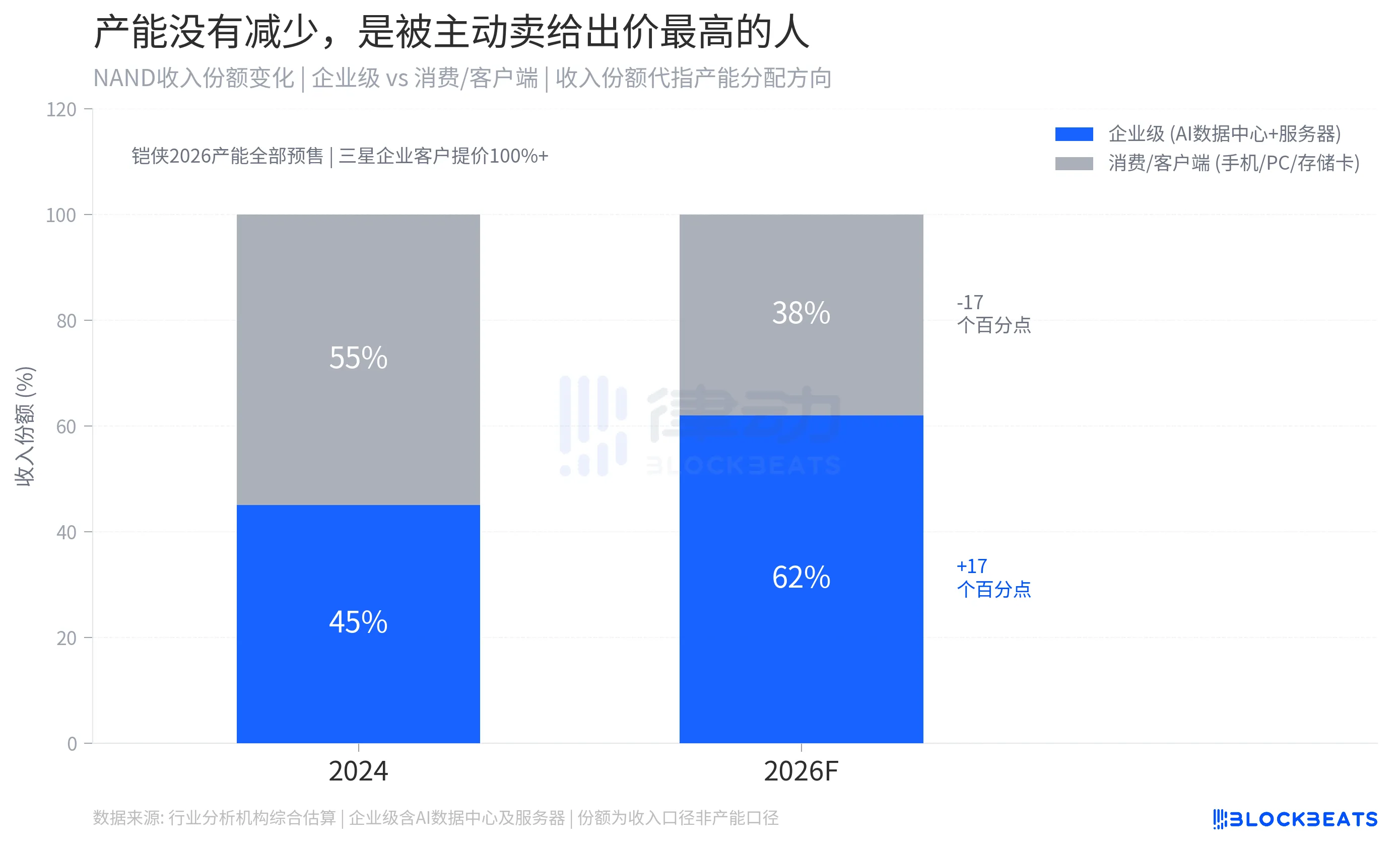
The logic behind this migration is straightforward: for the same wafer area, the unit profit from producing enterprise-grade high-density QLC SSDs is 3–5 times higher than producing consumer-grade storage cards. Manufacturers like Kioxia and Samsung allocate their production capacity according to the principle of maximizing commercial profit, prioritizing the highest bidders for their best wafers.
This mechanism also has an implicit effect: as available inventory in the consumer market decreases, distributors and retailers accelerate restocking to hedge against future price increases, further speeding up inventory depletion on the consumption side and creating a self-reinforcing cycle of price increases.
For consumers, card prices will remain high for a long time—not due to insufficient wafer capacity, but because allocation priorities in the consumer market have been lowered at the system level. Only after the pace of AI computing infrastructure construction slows down will excess wafer capacity return to the consumer supply chain, but that won’t happen until after 2027.
The SD card in your camera and the world’s largest AI data center are made on the same wafer. Now you know who won.
Click to learn about the open positions at BlockBeats
Welcome to the official BlockBeats community:
Telegram subscription group: https://t.me/theblockbeats
Telegram group: https://t.me/BlockBeats_App
Official Twitter account: https://twitter.com/BlockBeatsAsia