


Recorder · Foreword
After Alan finished speaking about Mythos, the crowd began to file out. As I went to get my coat, I heard a calm voice in the hallway say, "What would what you just described mean if it were on Ethereum?" I stopped and located the source of the voice. It was Marcus, leaning against the wall, holding a glass of water he hadn’t finished drinking. Alan turned around and fell silent for about three seconds.
I stood a little farther away and took note of everything I heard. This was the most honest conversation I’ve ever heard about Ethereum’s security risks. It wasn’t because they used any terms I hadn’t heard before—it was because they put together what has already happened and current trends to clearly show one thing: the security boundary we thought existed may no longer be there in the face of Mythos.
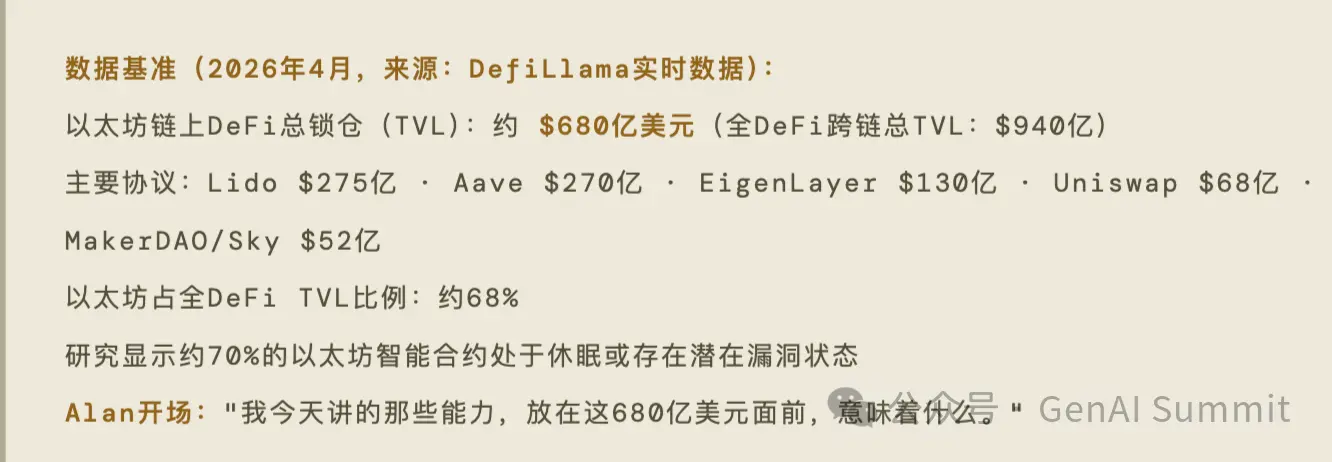
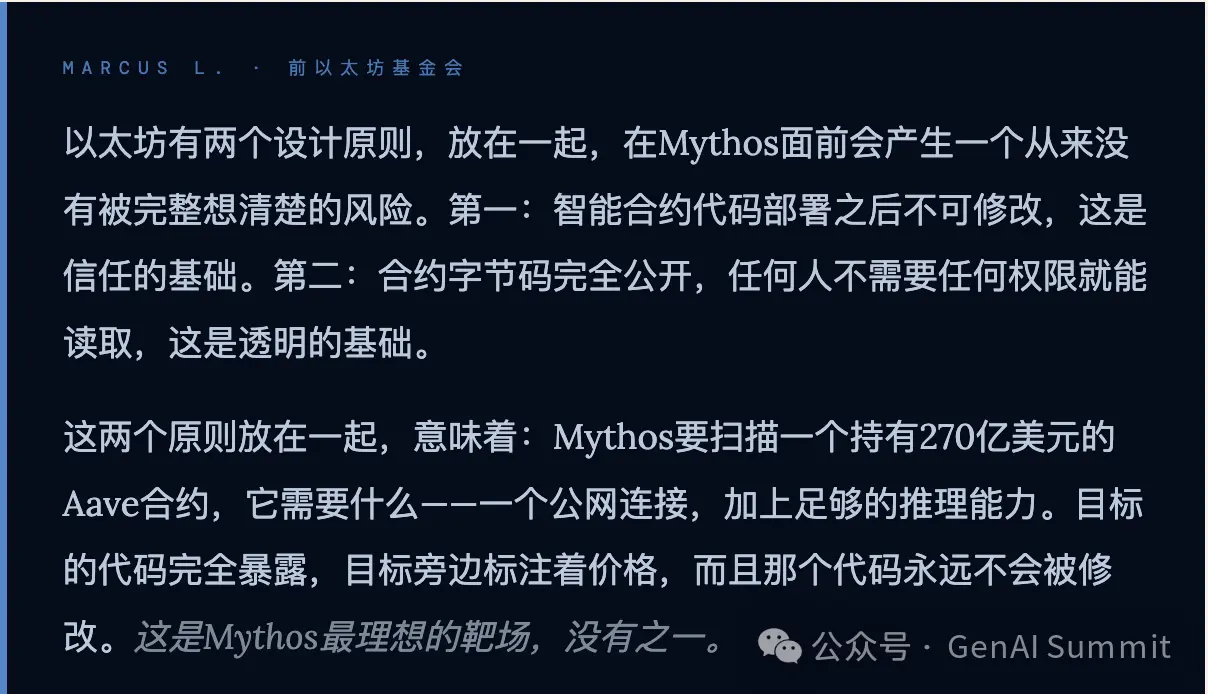
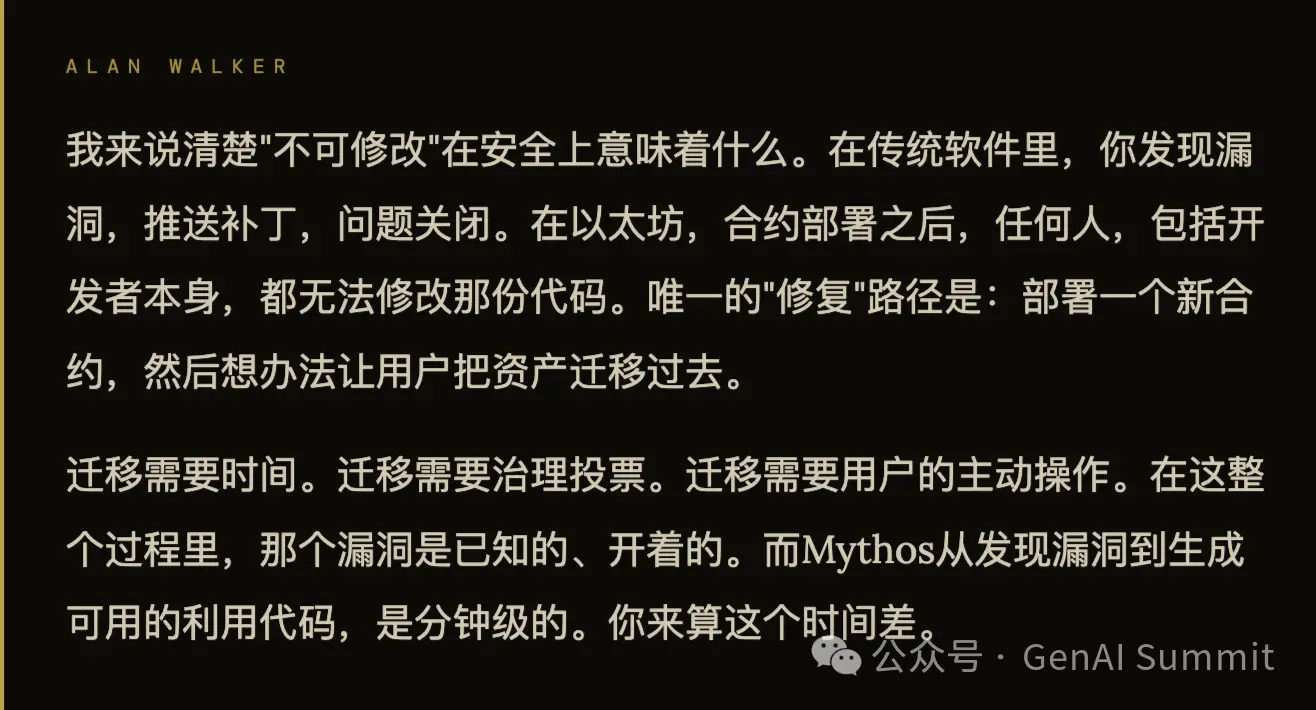
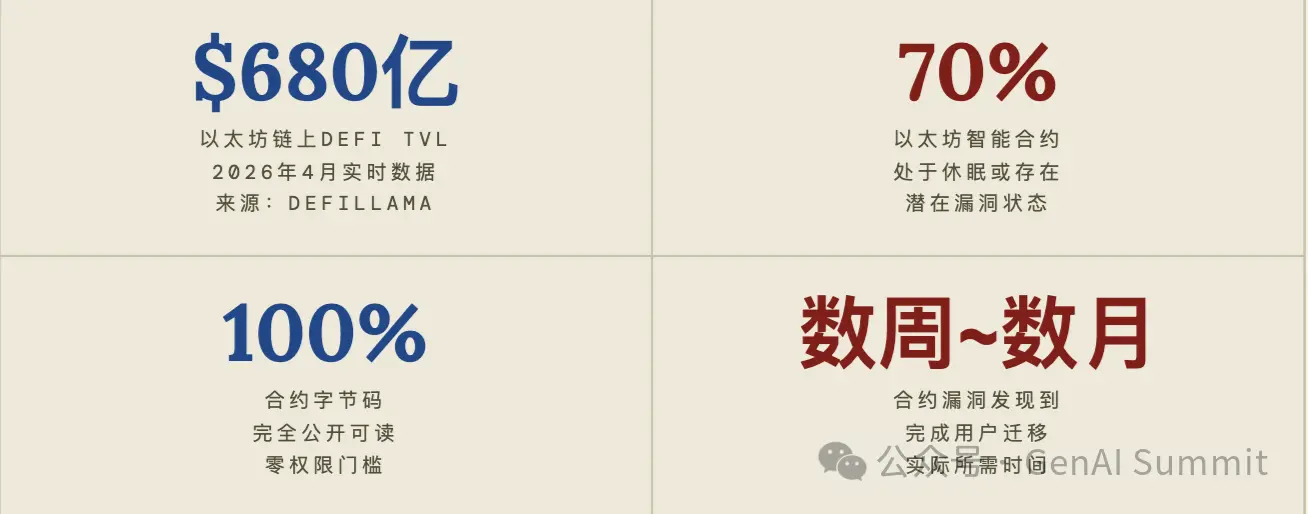
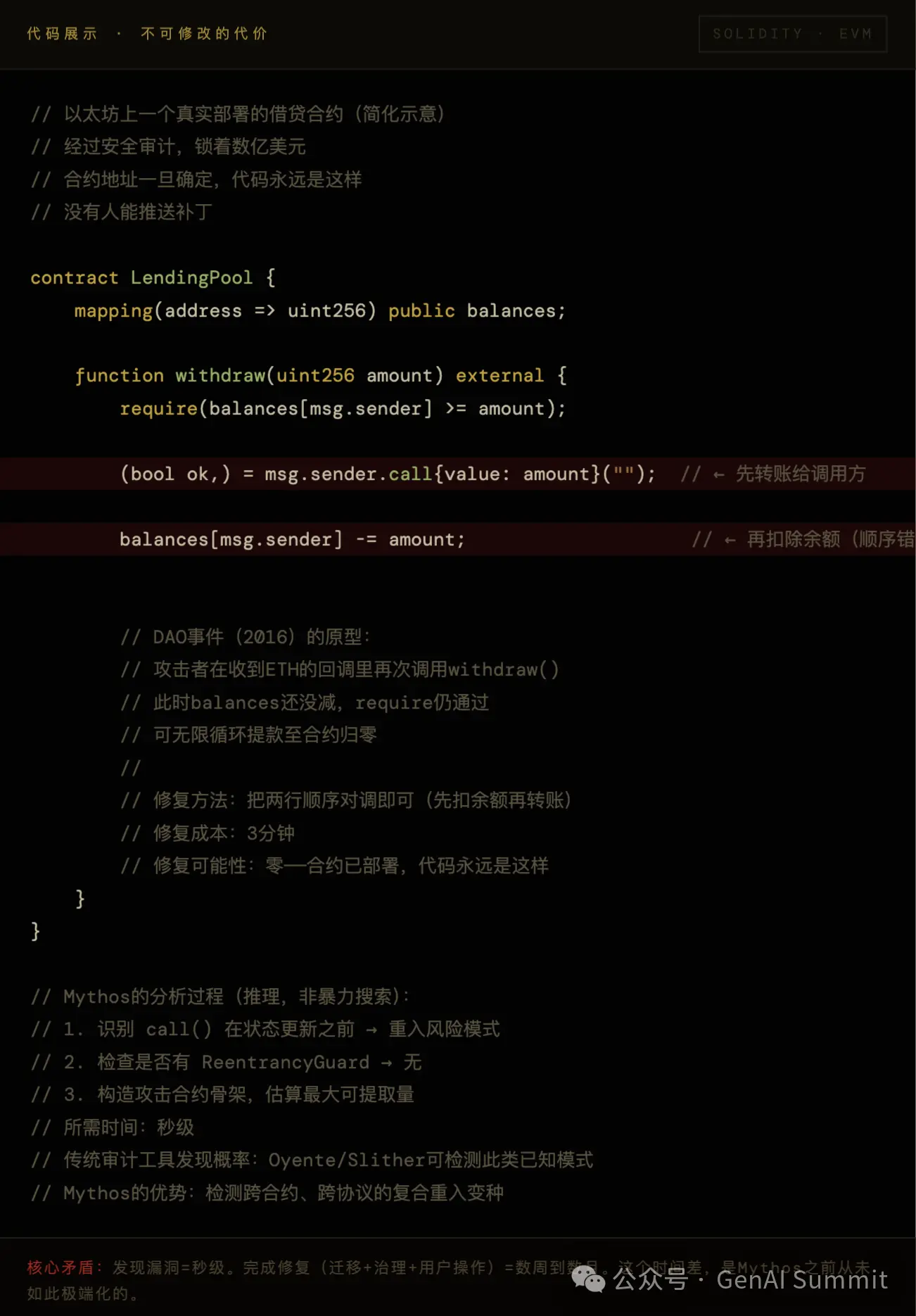
First thing: $68 billion, fully open-source code, permanently unchangeable.
Marcus didn’t immediately answer Alan’s question. He pulled out his phone from his pocket, opened DefiLlama, and handed the screen to Alan.
$68 billion, the amount locked on the Ethereum chain that day.
Second thing: Where will Mythos strike first—specific prediction
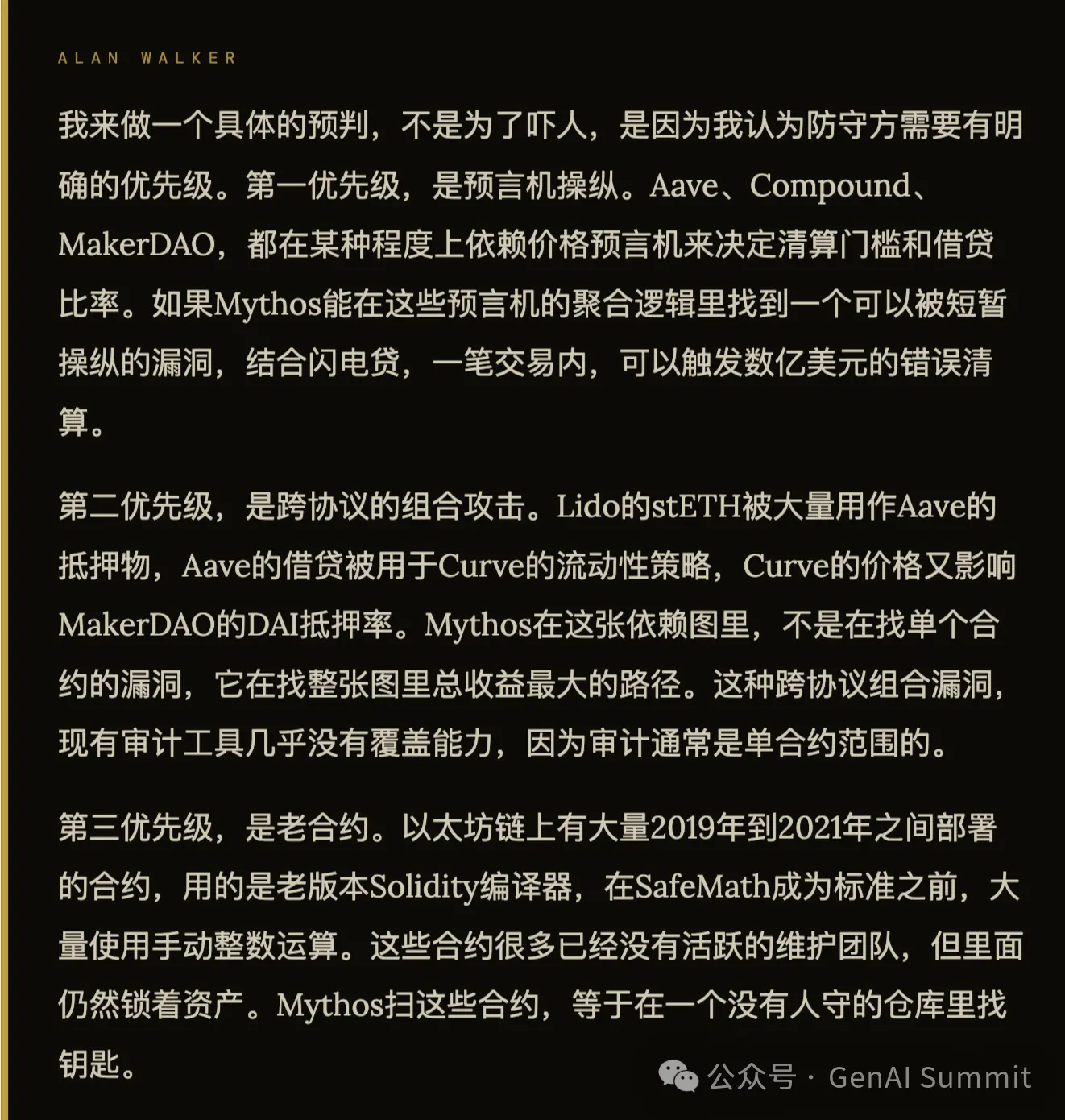
Alan said that as he walked back this afternoon, he kept thinking about one question: If an attacker who has acquired Mythos abilities were to face Ethereum today, what would their priority ranking be?
He said he wanted to voice it aloud because he felt the defense should think this through first.
The attacker's priority is clear: target contracts with lots of funds, outdated code, and no one watching. Mythos compresses what would take humans months to screen into just a few hours.
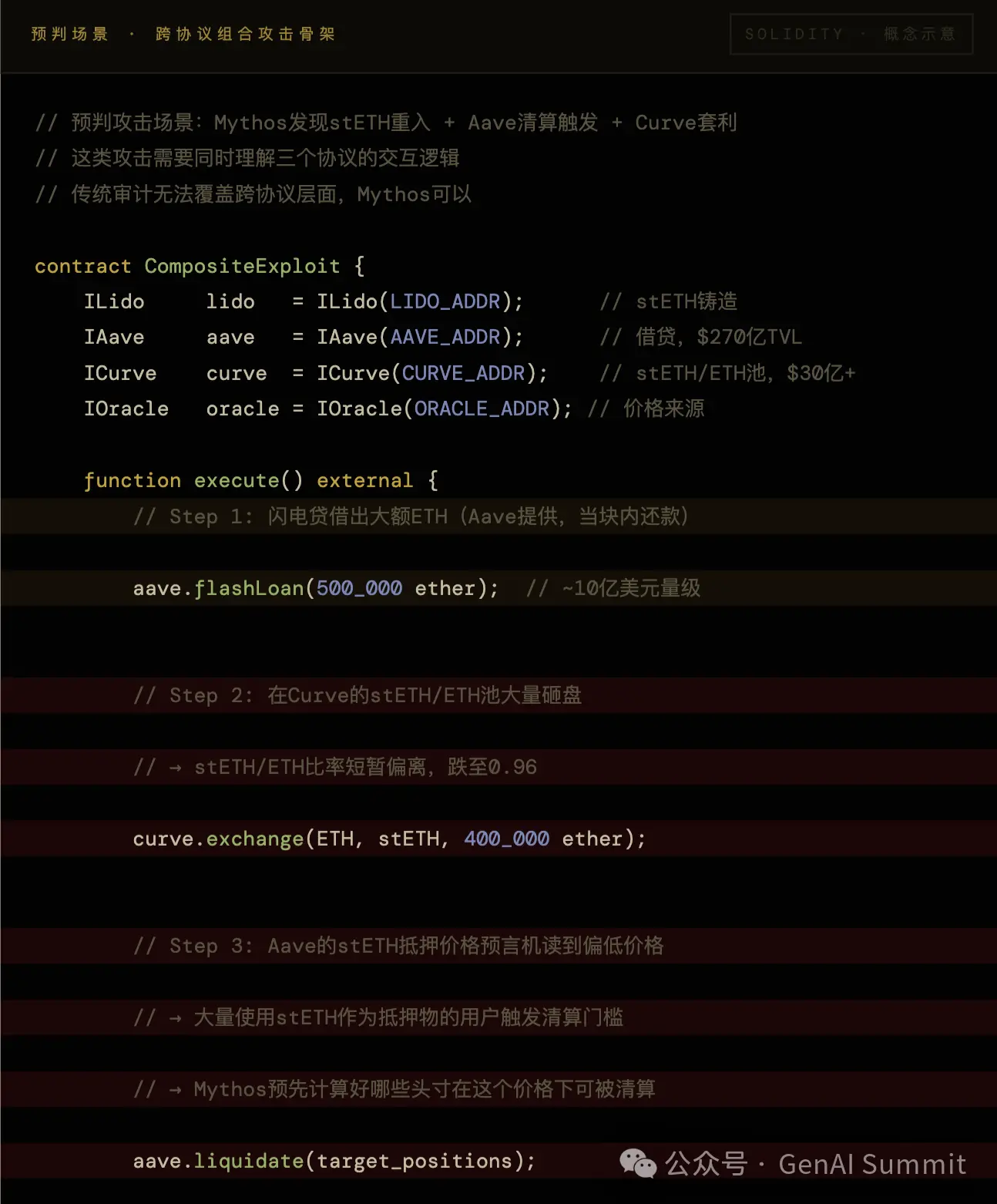
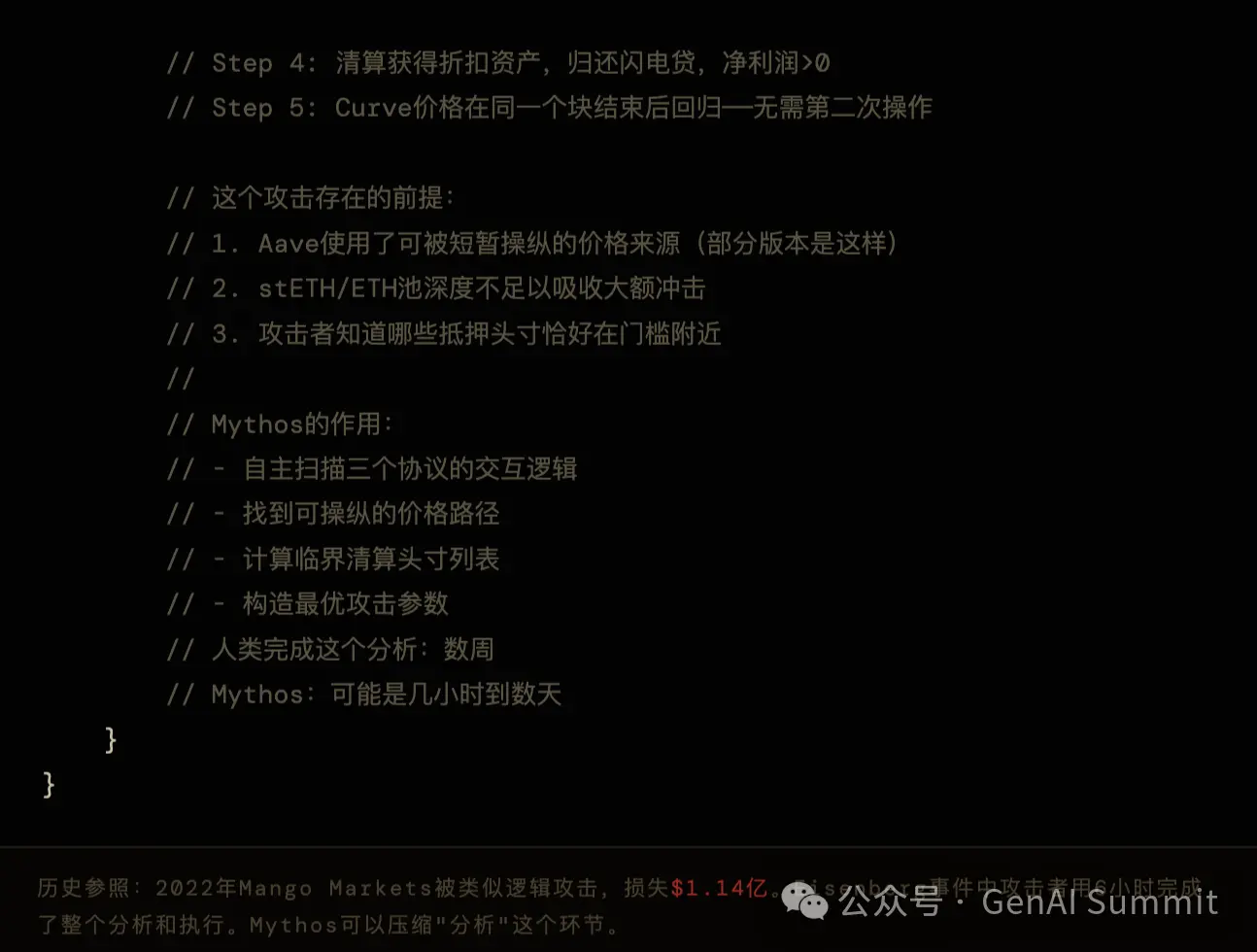
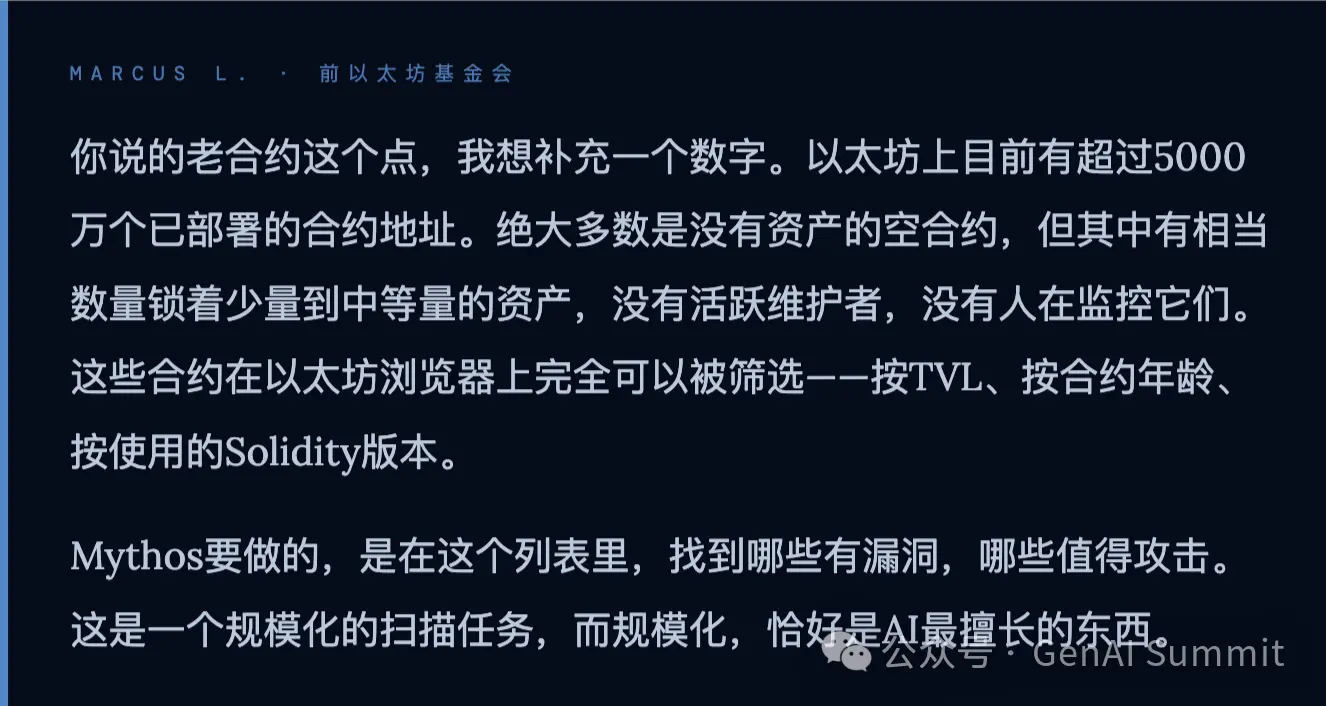
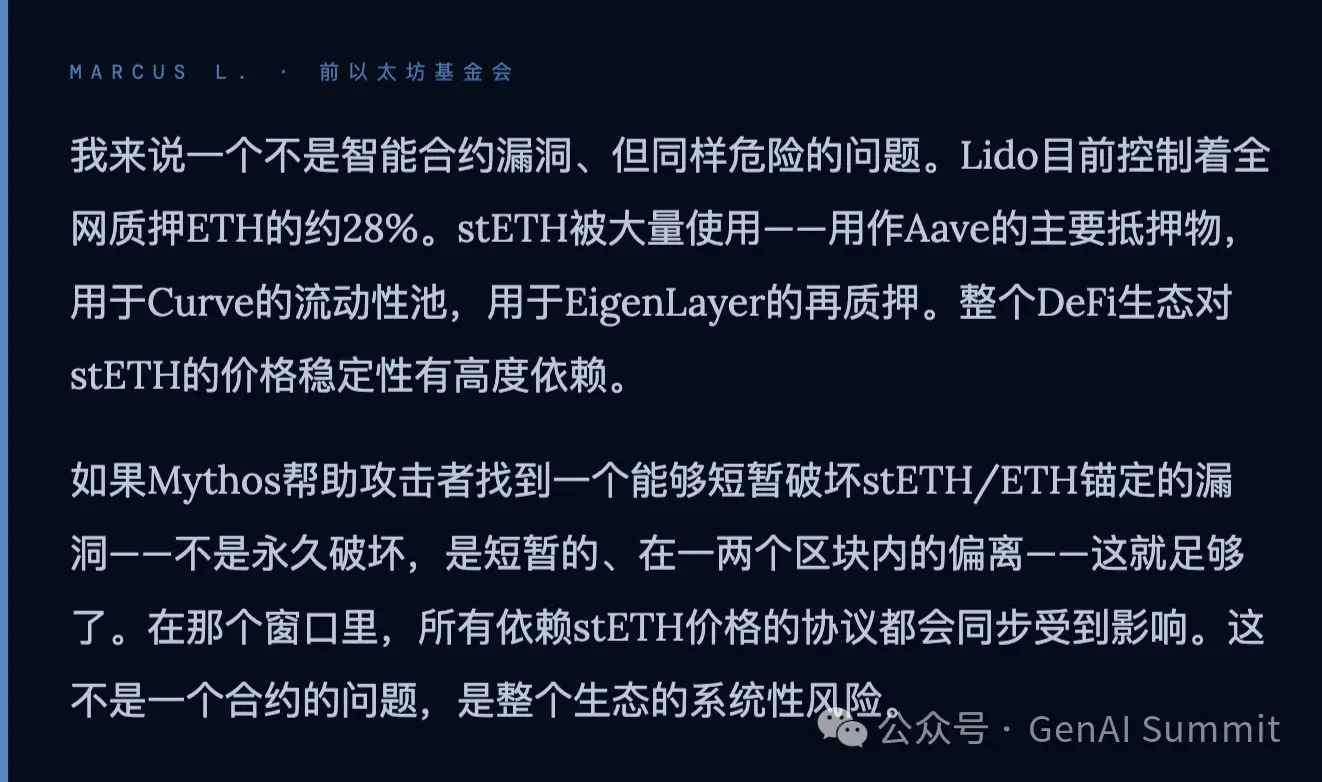
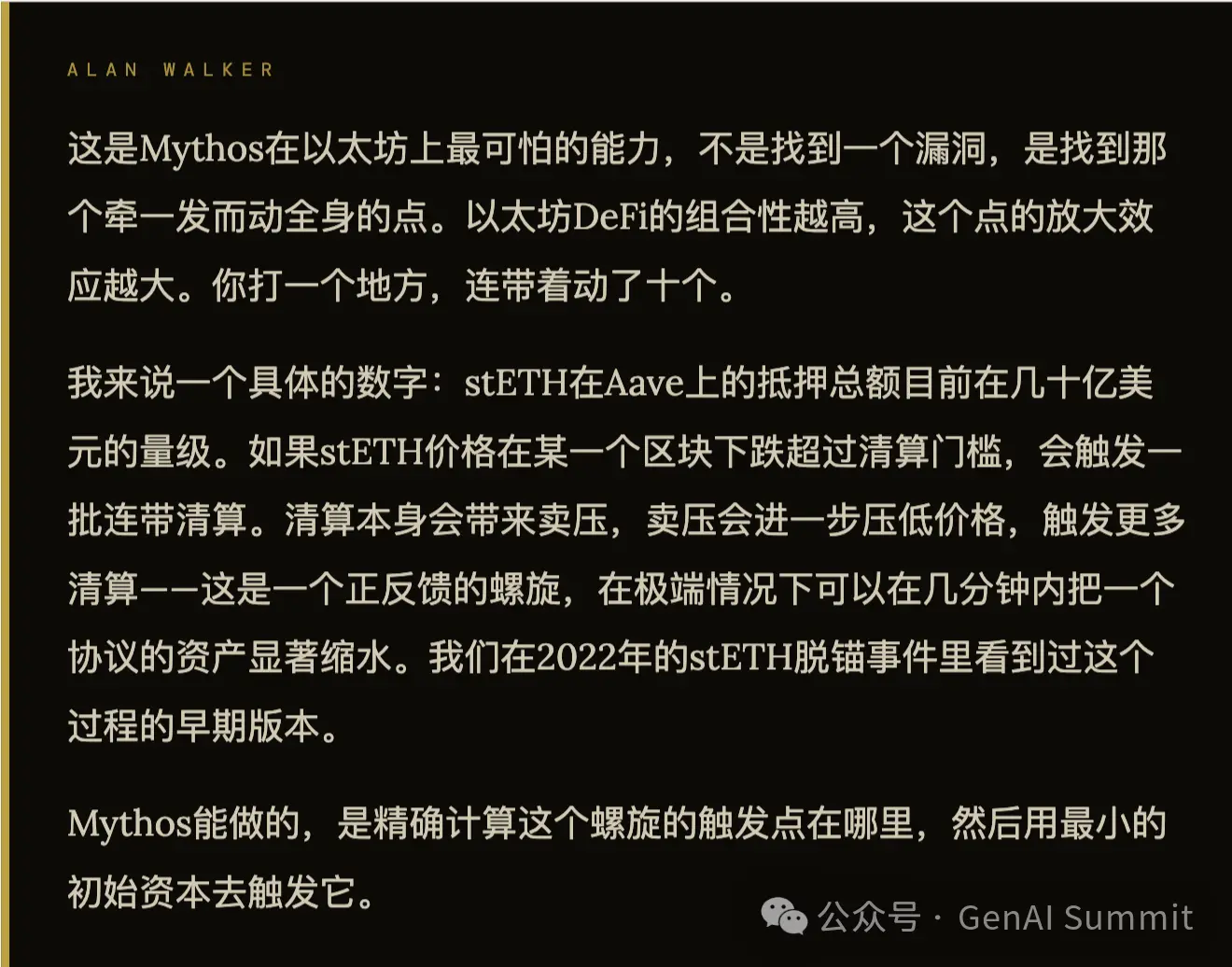
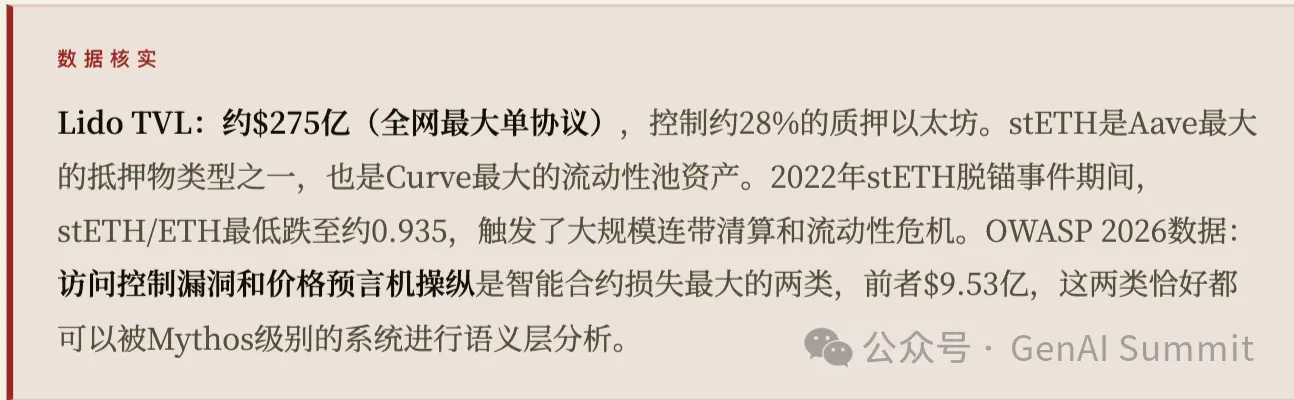
Third: Lido controls 28% of staked ETH—this is another vulnerability.
stETH is the oxygen of Ethereum DeFi. You don’t need to burn down the entire city—just let the oxygen disappear for two minutes at the most critical moment.
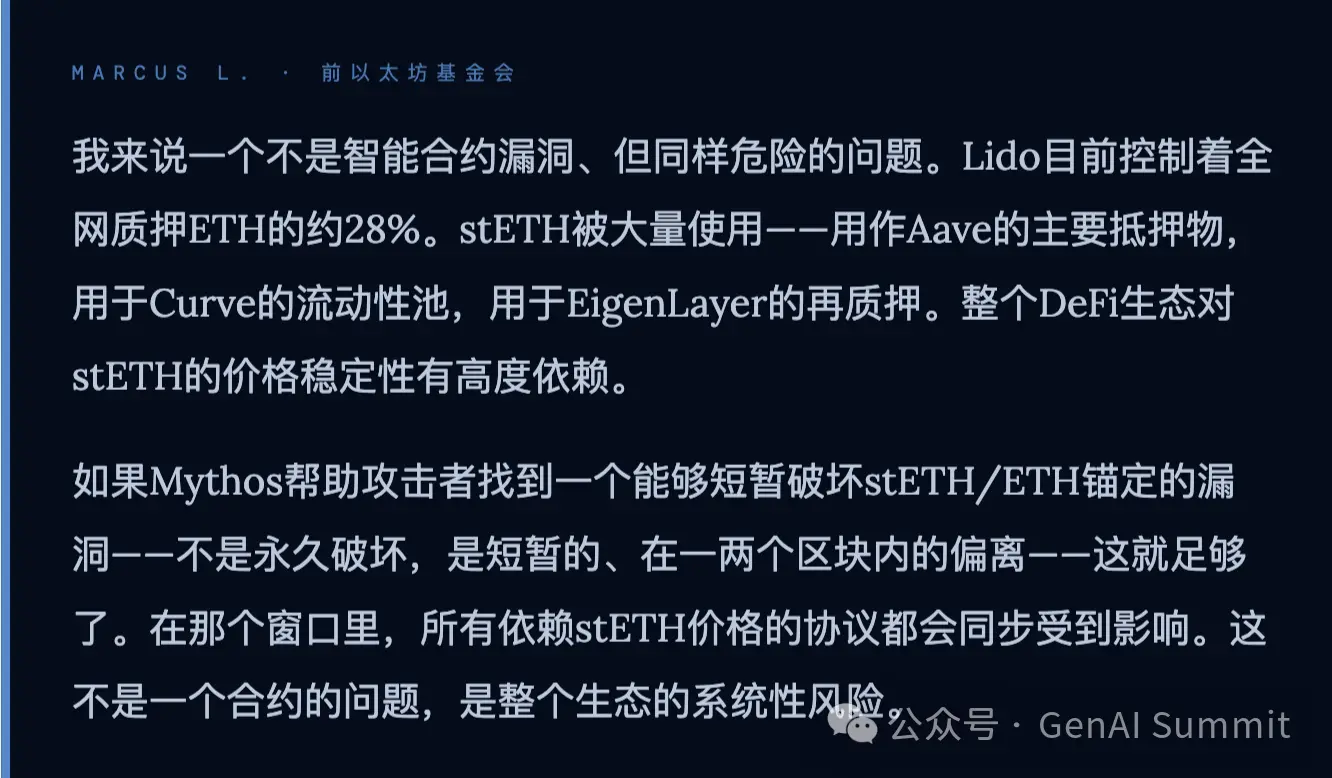
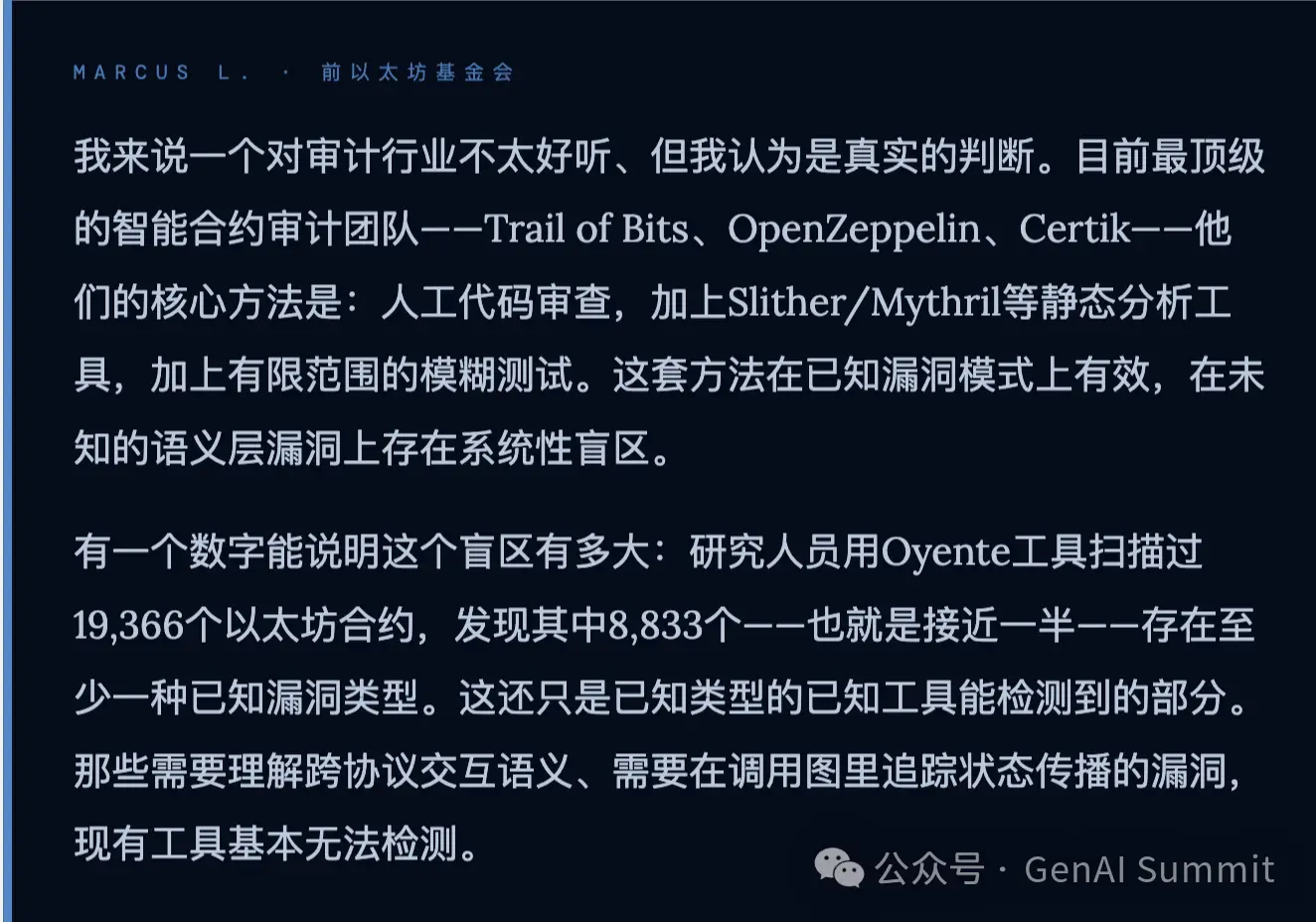
Fourth thing: An audit means nothing in the face of Mythos.
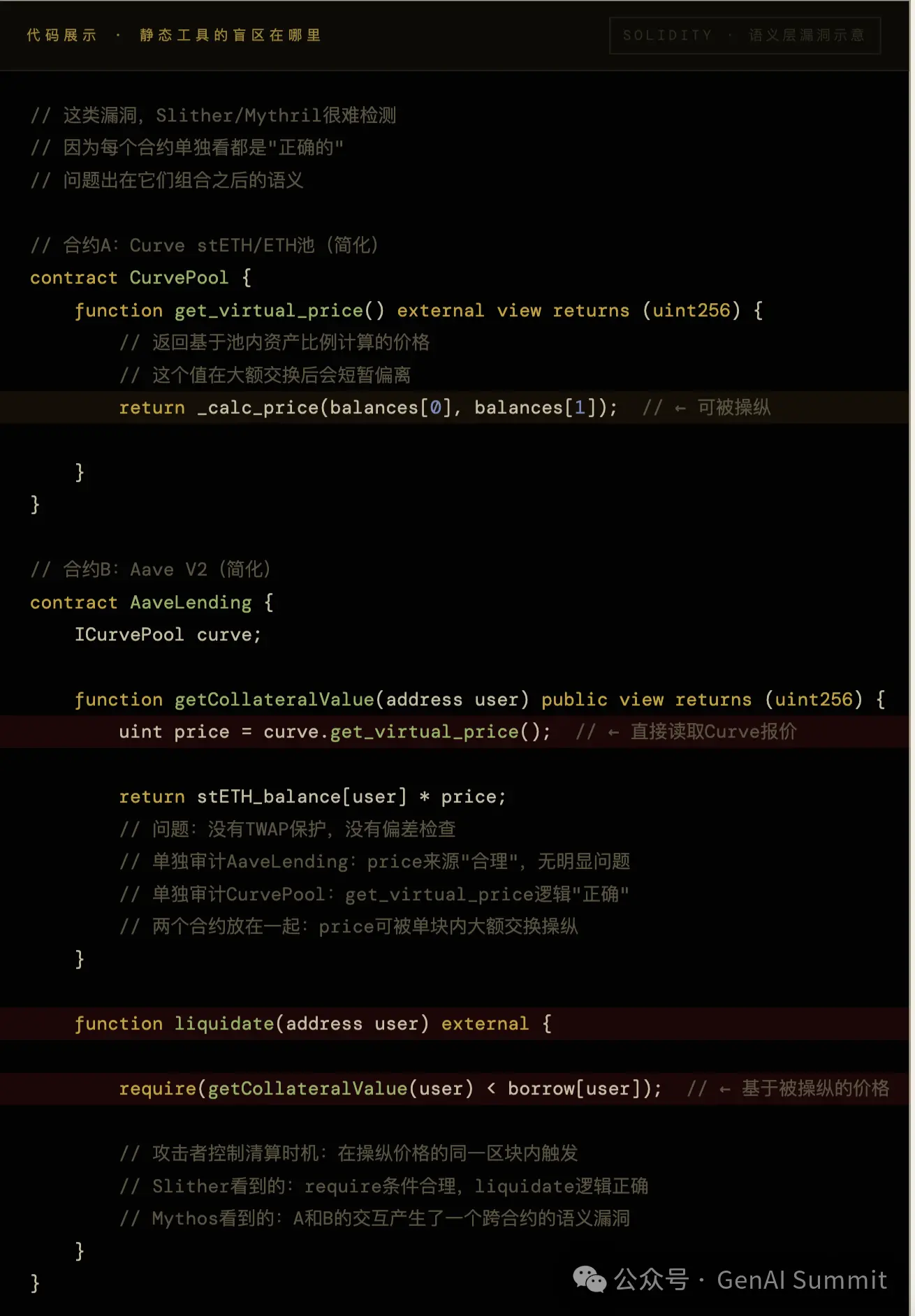
These cross-contract semantic vulnerabilities have been the source of the largest losses in history. Audits are typically limited to a single contract; Mythos analyzes the entire call graph.
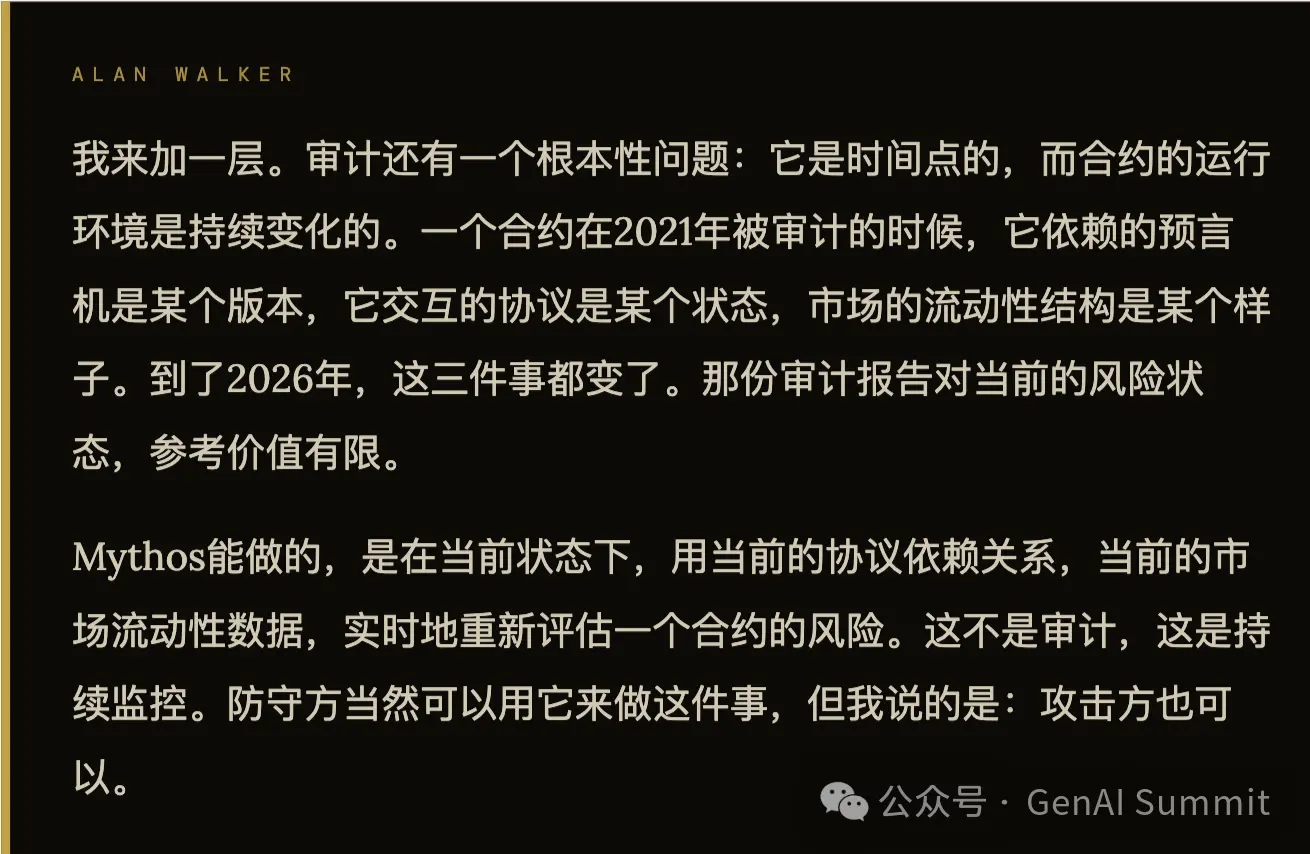
The audit was based on photos taken in 2021. The runtime environment of the contract in 2026 is no longer the same as the scene in that photo. Mythos is examining today’s reality, not that photo.
Fifth thing: Governance is the moat—and also the slowest leg.
Alan asks Marcus: If tomorrow Mythos discovers a critical vulnerability in Aave that could endanger billions of dollars, how quickly could the Ethereum ecosystem respond effectively?
Marcus paused for a few seconds:
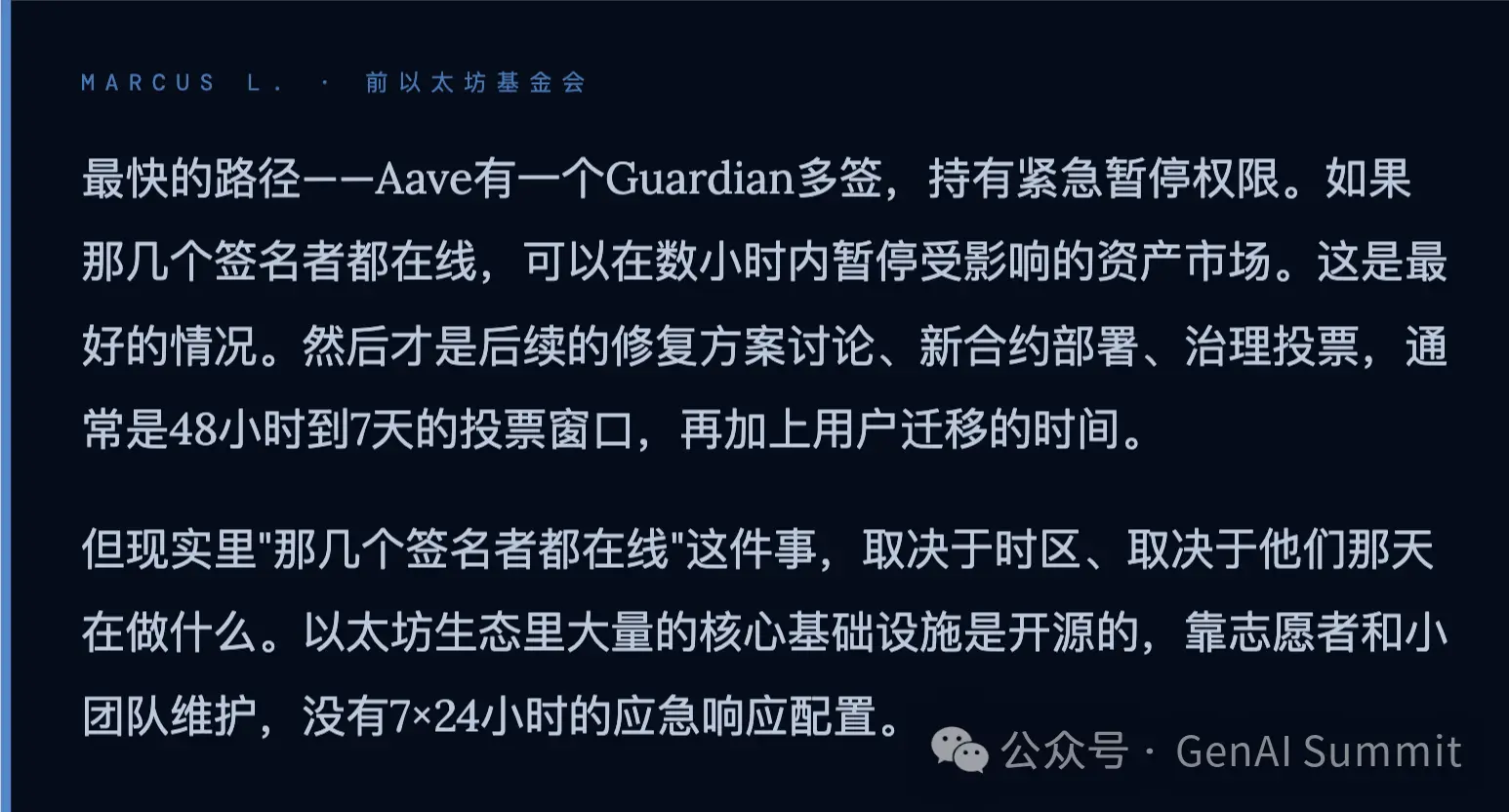
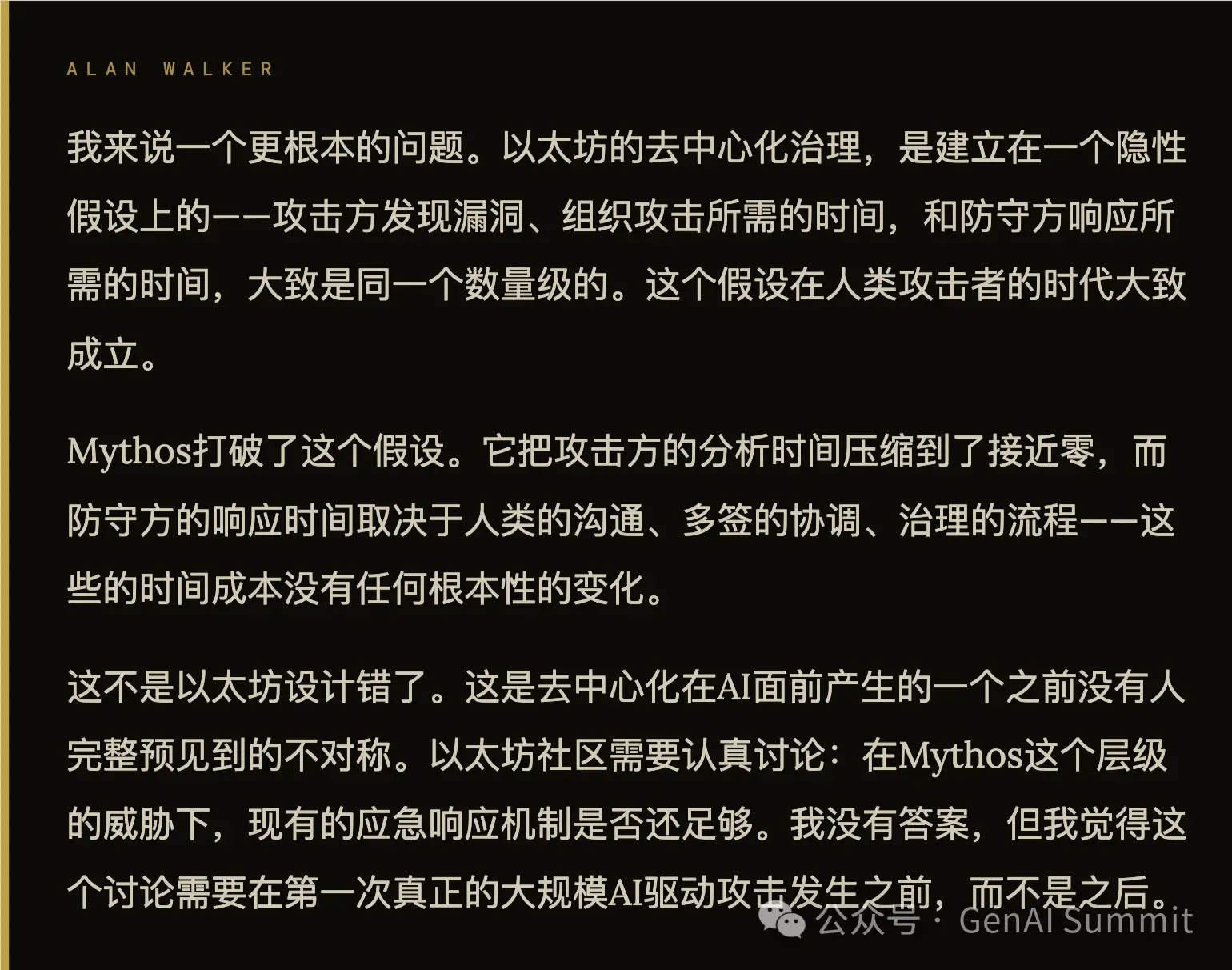
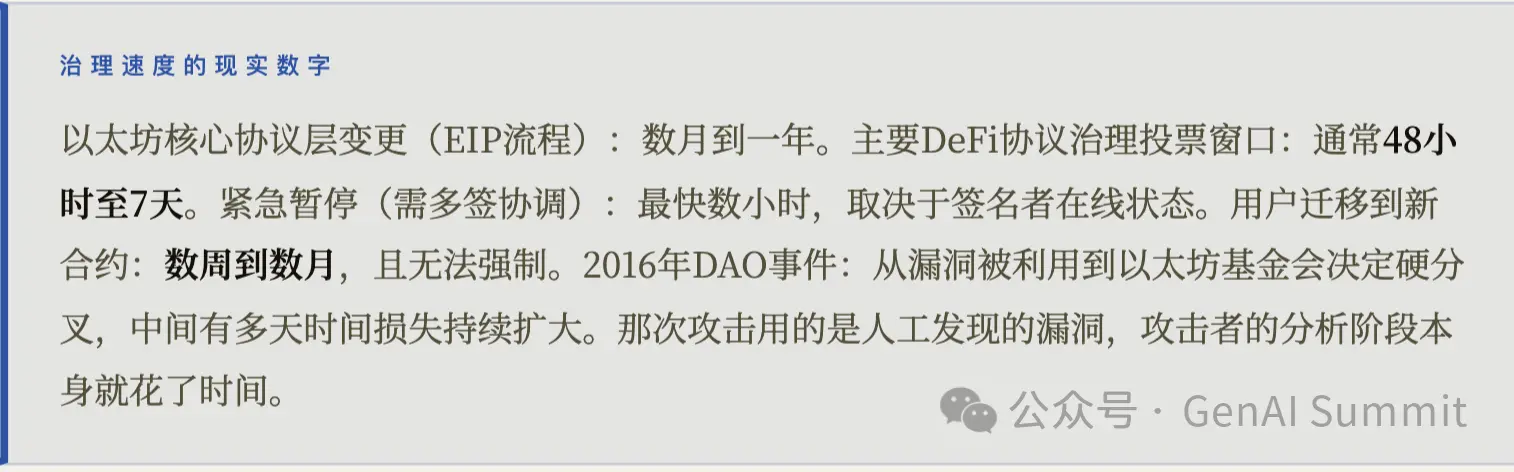
Decentralization distributes decision-making to everyone. When AI compresses the time to prepare an attack to zero, "everyone deciding together" becomes the slowest link.
Sixth thing: How much longer can Ethereum survive?
The hallway now held only the two of them and me. The cleaner was pushing a cart from a distance. Marcus spoke first:
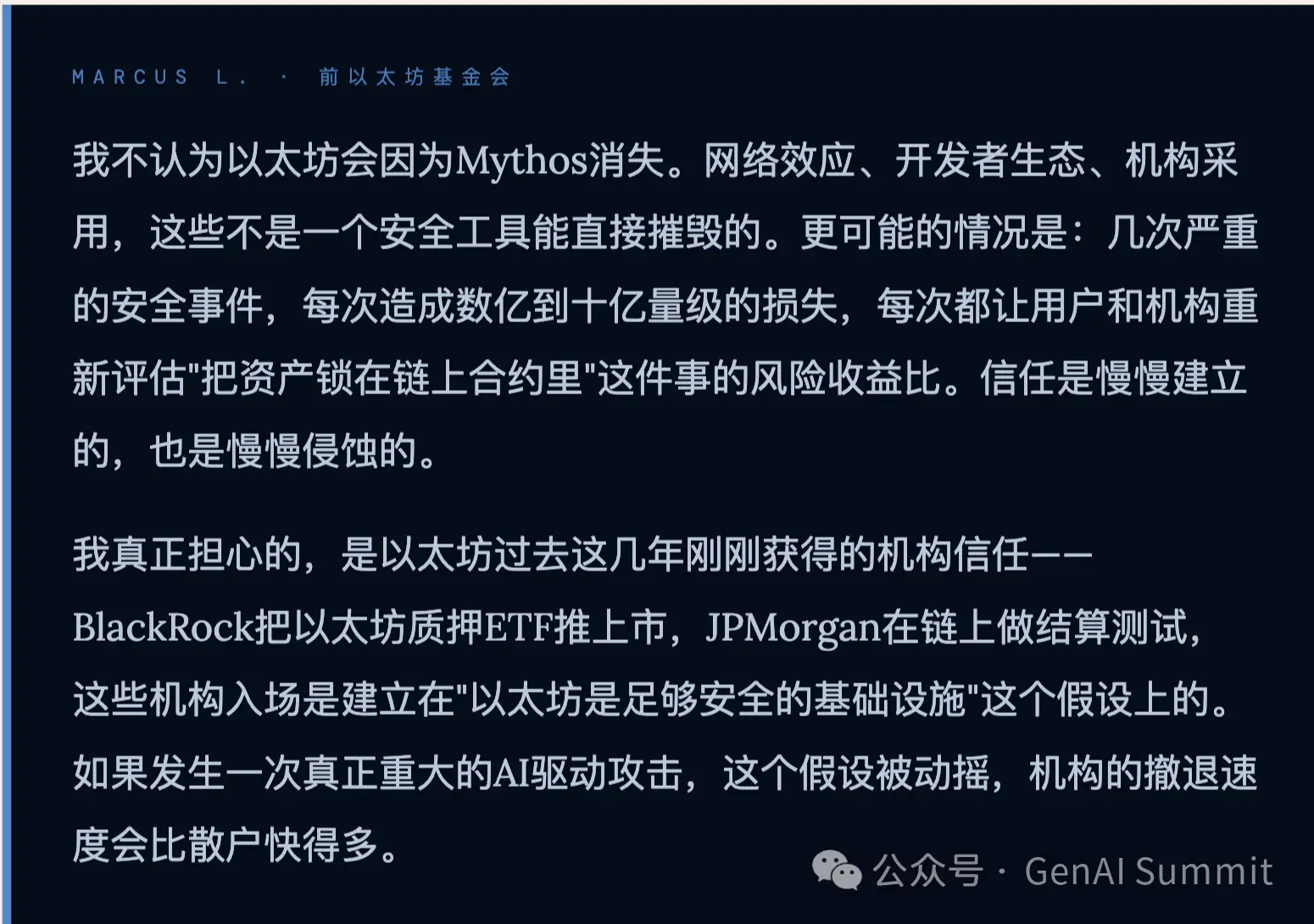
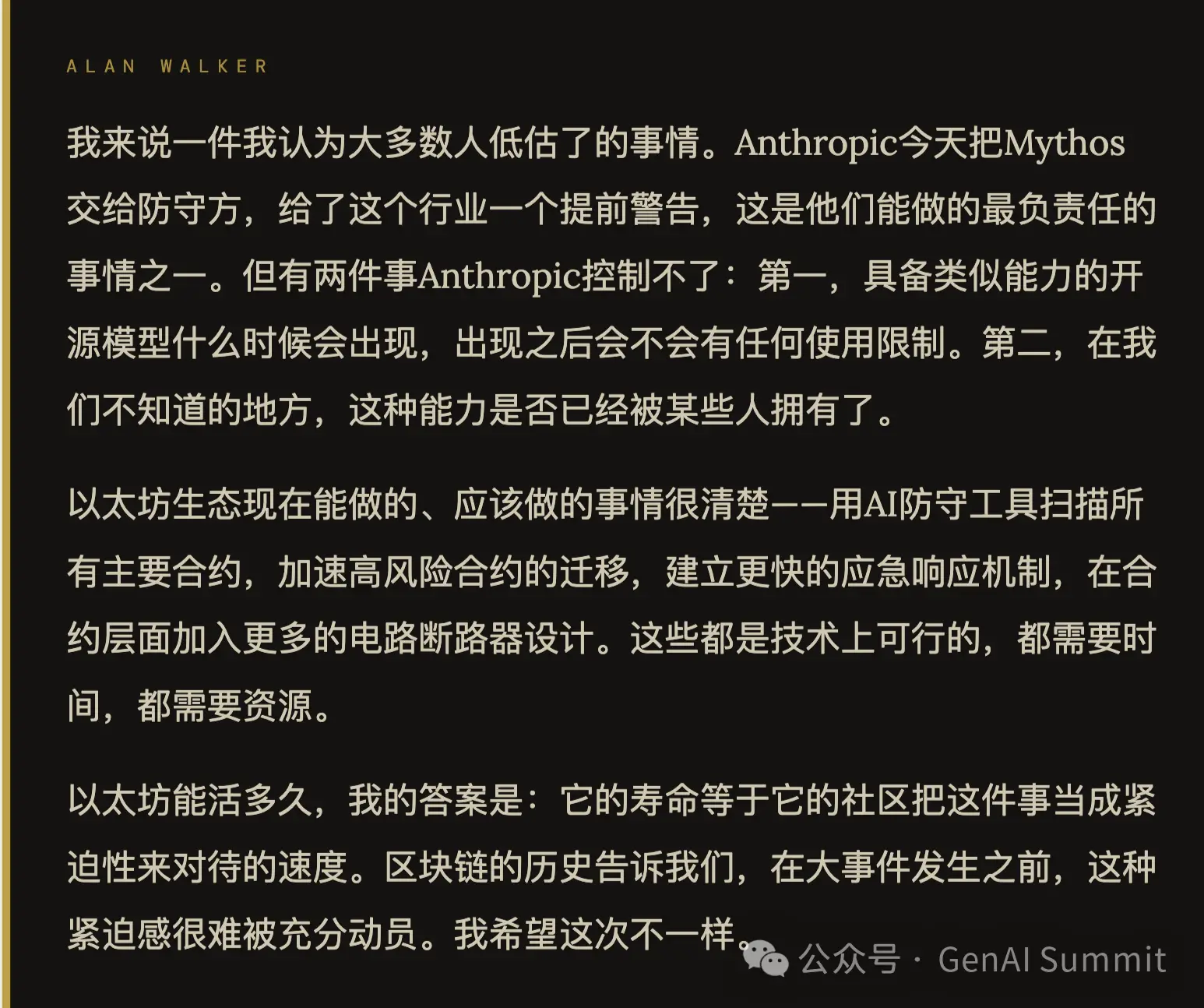
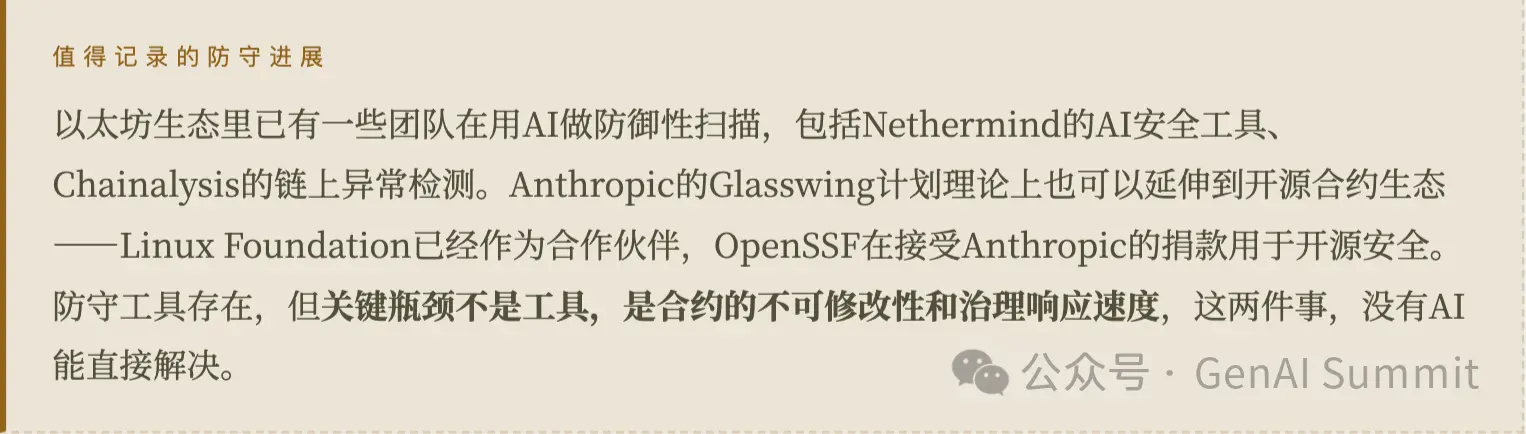
How long Ethereum will last depends on how quickly its community treats this as an urgent matter. The technical answer has already been given by Mythos. The human answer has not. They shook hands and walked off in opposite directions. I stood in the hallway, scrolling through my phone filled with dense notes. Ethereum: $68 billion, all code public, contracts immutable, 28% of staked ETH concentrated in a single protocol, governance responses take days. Mythos: Analyzing a single contract might take less time than it takes me to finish reading this page of notes. I don’t know when the first truly significant, AI-driven, Ethereum-scale security incident will occur. But I know Alan was right: throughout blockchain history, conversations of “we should have done this earlier” have happened far too often—each time, only after the fact. I hope this time is different.
Palo Alto · April 2026
TVL data source: DefiLlama real-time data (April 2026)
Vulnerability statistics sourced from: OWASP Smart Contract Top 10 2026, CoinLaw.io 2026 Security Report, arXiv 2504.05968
The dialogue has been compiled from live notes; Marcus L. is a pseudonym.
Alan Walker does not use question marks.