





Original | Odaily Planet Daily (@OdailyChina)
Author | jk

On February 28, 2026, the United States and Israel launched a joint military strike on Iran, prompting Iran to immediately launch a large-scale counterattack. The skies over the Middle East were instantly torn apart by missiles—not only military installations on the battlefield, but also the lives of crypto professionals who had only recently settled in the region, were shattered. Dubai, hailed in recent years as the "Promised Land of Web3," faced a far more tangible and severe test.
To this end, Odaily Planet Daily interviewed several crypto industry professionals based in Dubai, asking about their experiences, current situations, and plans for their next destination.
Current situation in Dubai: Airport attacked, hotel fire, delayed signals from financial and real estate markets
For residents of the UAE, Dubai is already a kind of battlefield.
Since Iran launched its "True Promise" retaliation operation, it has fired over two thousand missiles and drones toward Dubai, triggering a back-and-forth battle between missiles and missile defense systems in the skies above Dubai.
The ground, Dubai International Airport, and the Burj Al Arab hotel have all been affected, with numerous posts on Xiaohongshu depicting scenes of the airport terminal pierced by drone debris, billowing smoke, and passengers fleeing in all directions.
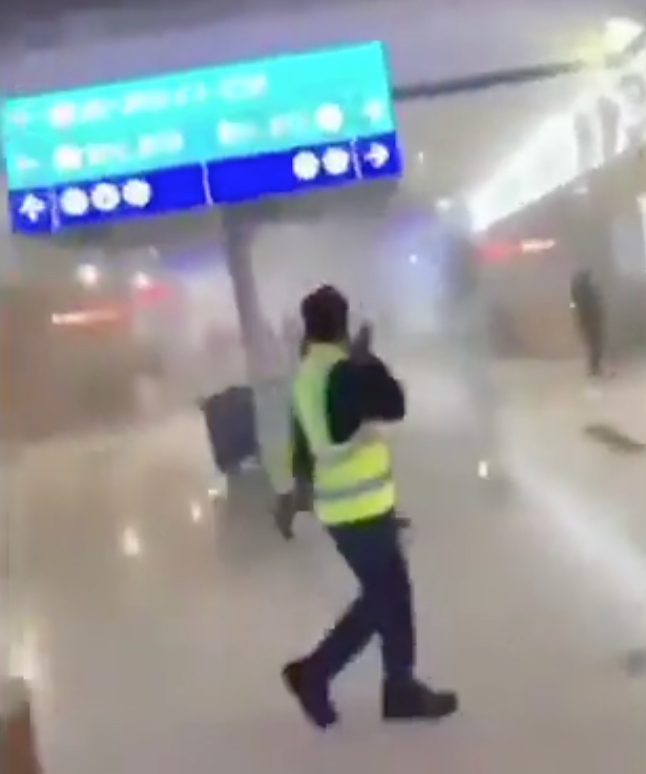
Evacuation was carried out at Dubai International Airport when it was hit. Source: X
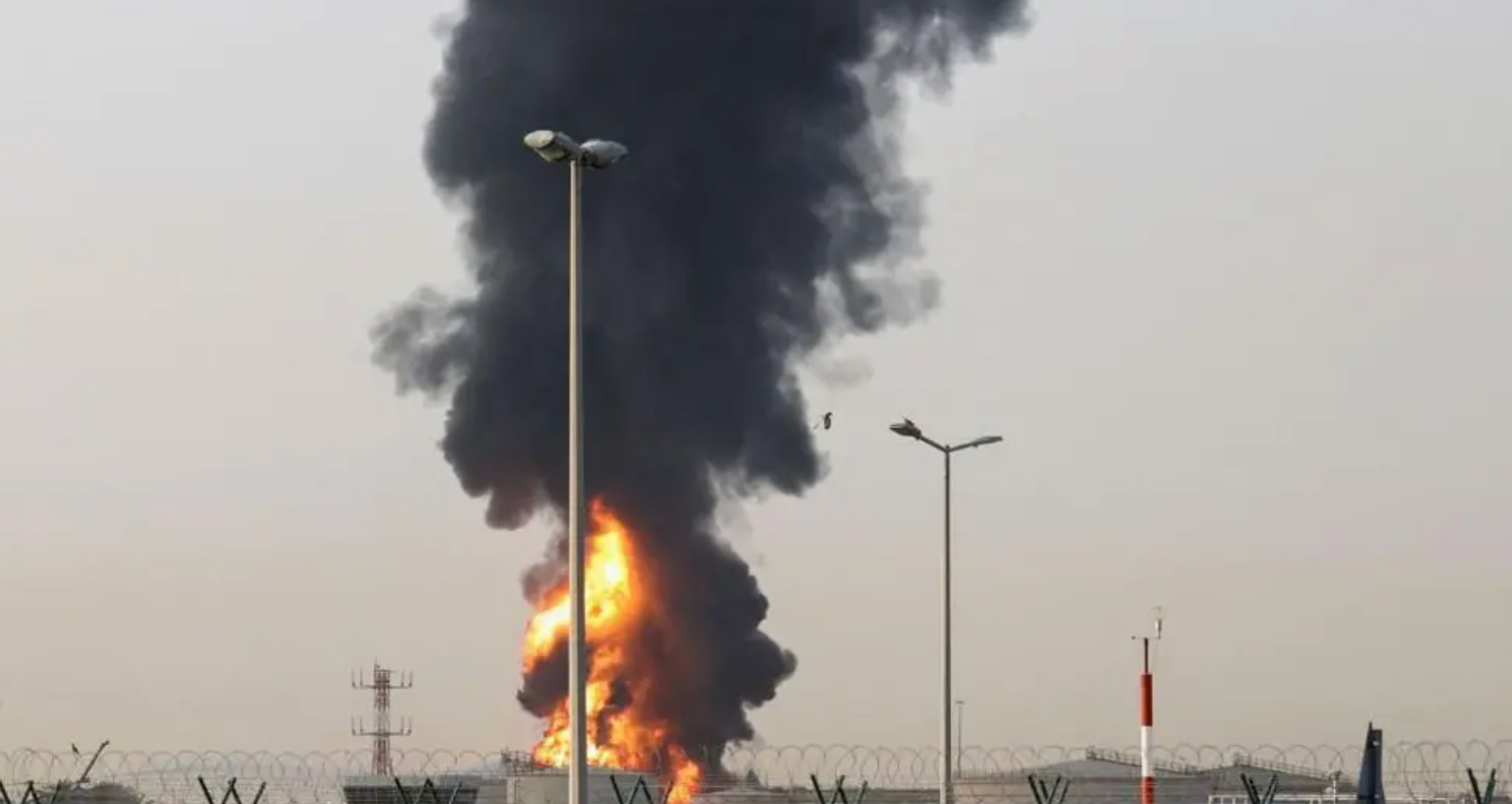
Struck near the fuel depot at Dubai International Airport, source: BBC
Every day, members of the local Chinese community in Dubai share, "I heard another explosion sound here again."
Previously, Odaily Planet Daily reported that a fire broke out at the Fairmont Palm Hotel in Dubai’s most luxurious area, Palm Island, after debris from a drone fell onto the property, injuring four people. (I looked up this hotel—the cheapest room during the off-season costs 1,500 RMB per night, and during peak season, it can reach 3,000 to 4,000 RMB.)
If you only read the news, you might think nowhere in Dubai is safe.
An outsider’s first reaction might be: if things have gotten this bad, hasn’t Dubai’s hottest real estate market already plummeted through the center of the Earth? Shouldn’t we all be evacuating?
What about the real estate market and the financial market?
When the retaliatory actions began, the Dubai Financial Market Real Estate Index (DFMREI) plummeted from approximately 16,000 points to the range of 11,500–11,700 points, declining by about 30% within just a few weeks, while residential transaction volumes also dropped by 25%–30%. The DFMREI fell from around 16,140 points on February 28 to approximately 11,500 points in mid-March, a decline of roughly 30%, hitting its lowest level since April 2025 and erasing all gains accumulated throughout 2026. As of March 31, the DFMREI closed at 11,721.04 points, remaining largely stagnant at low levels with no clear signs of rebound.
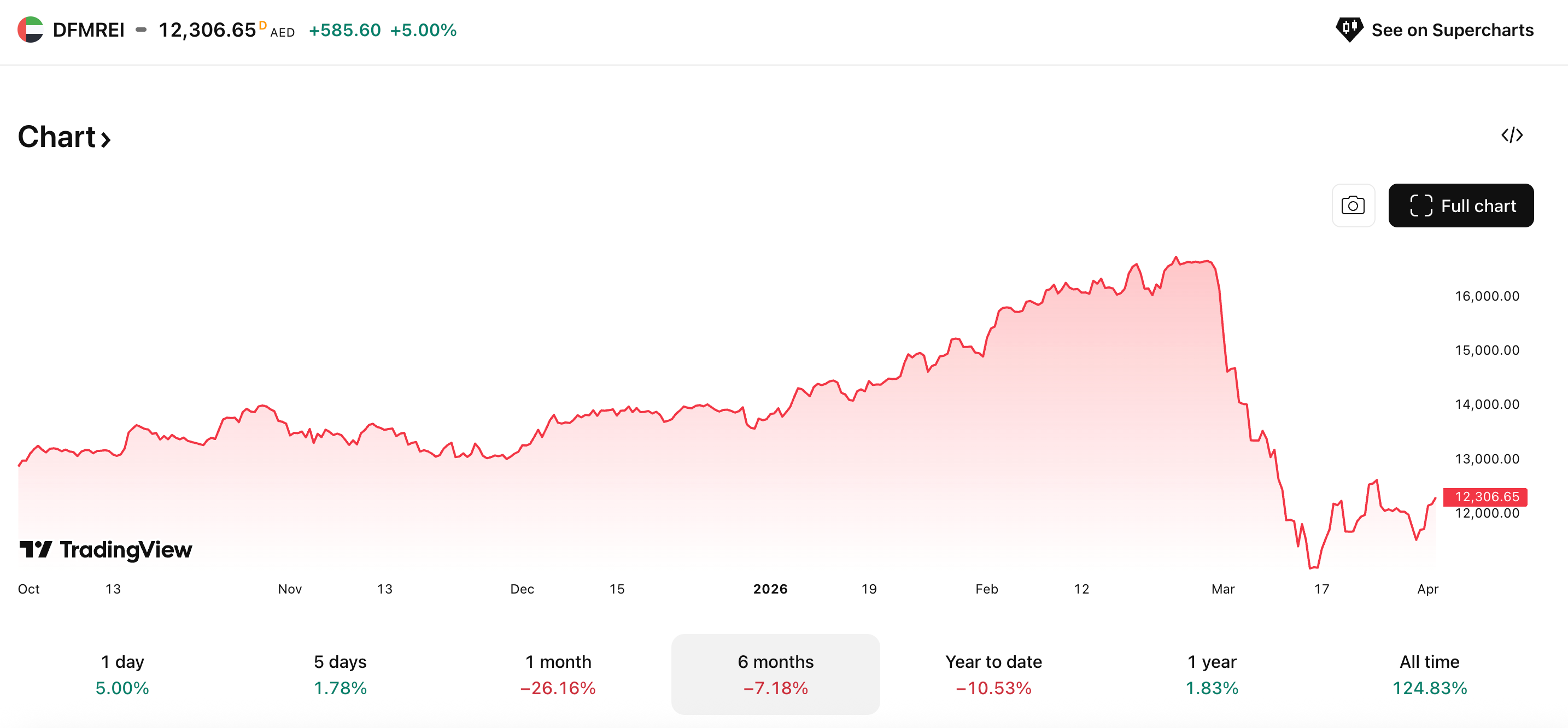
Dubai Financial Market Real Estate Index, source: TradingView
However, note that DFMREI is a stock index tracking the share prices of real estate companies listed on the Dubai Exchange, such as Emaar and DAMAC, not actual property transaction prices. A 30% drop in the index does not mean apartment prices in Dubai have fallen by 30%; in terms of actual transactions, local news reports indicate that property sales between February 28 and March 22 were significantly lower compared to the same period last year, with average transaction prices declining by approximately 4%-5%.
In financial markets, as of March 31, the stock markets in Dubai and Abu Dhabi have collectively lost approximately $120 billion in market value since the outbreak of hostilities on February 28. The Dubai Financial Market (DFM) General Index fell by approximately 16%, resulting in a loss of about $45 billion, while the Abu Dhabi ADX General Index declined by approximately 9%, losing around $75 billion.
From the market's reaction, it doesn't seem that severe.
Meanwhile, Dubai International Airport remains operational but is operating under a reduced flight schedule; a drone-induced fire at a fuel depot on March 30 briefly halted flights again, with limited resumption only at 10:00 a.m. that day; suspension of Dubai routes by major European airlines such as Lufthansa, Air France, and British Airways has been extended to the end of March or later, with some cancellations lasting until May 31.
The Token2049 Dubai summit, widely known in the crypto industry and originally scheduled for April 29-30, 2026, has been postponed to April 2027 due to "ongoing regional uncertainties impacting security, international travel, and operational logistics."
With so many conflicting pieces of information, what is the real Dubai like?
What lies ahead for the city of Dubai? Is the Dubai crypto industry suffering irreversible setbacks?
Portrait of crypto professionals in Dubai: some leave their posts to return home, while others race to the “frontline” through the night.
"Some resign from office to return home, while others race through the night toward the imperial examination." In 2026, this line from "The Scholars" perfectly captures the scene in Dubai. Based on responses from crypto industry professionals gathered by Odaily Planet Daily, these reactions can be broadly categorized into three groups.
Fugitive: Ten thousand reasons can't outweigh a single word of concern from your parents.
Stella is a data analyst at a cryptocurrency exchange headquartered in Dubai, where she has been working for a year. In February this year, she took her annual leave to return to her hometown in Hunan for a lively Spring Festival celebration with her parents.
But as soon as the new year passed, geopolitical tensions erupted.
On the day of her return, Stella waited at the airport for five hours as her scheduled flight was repeatedly delayed and eventually canceled.
"The flight prices changed every day during those days," she told Odaily Planet reporter. "Fortunately, the company eventually allowed all of us to work remotely, including our colleagues in Dubai—no one went to the office anymore."
She told the reporter that she had originally planned to try to get more tickets back to Dubai, but she just couldn’t explain it to her parents at home. Stella said her parents are both over fifty, and they often see articles on WeChat saying there are explosions or air raids here and there—she simply couldn’t let them worry so much.
When I was pursuing my master’s degree abroad during the COVID-19 pandemic, my parents couldn’t sleep at night watching the infection rates in the local area. After noticing that the conflict in Iran seemed to be trending toward a prolonged situation, Stella decided she didn’t want to go through anything similar again—even if it meant working through time zone differences.
Stella was lucky. Rebecca, who works for a cryptocurrency infrastructure provider, rushed back to her country after the conflict broke out.
On March 6, the Ministry of Foreign Affairs reminded Chinese citizens stranded in the Middle East to take advantage of the window of resumed flights to evacuate promptly.
After the conflict broke out, Rebecca revealed that flight prices didn’t skyrocket excessively, but tickets were still hard to secure during the initial period. Especially at the start of the conflict, when news reports claimed that “U.S. forces bombed Iran by hiding beneath civilian aircraft radar, thus avoiding detection,” some people worried that civilian flights might become potential targets. As a result, many drove for hours from Dubai to Oman—the only Middle Eastern country without a U.S. military base—to arrange their return home.
Rebecca said that everyone she knew at the time returned home.
This time, for the vast majority of Chinese people, it was the first time they had ever heard an explosion firsthand—who could possibly handle that?
The one who stays: If the chief hasn’t left, why should I?
A significant number of remaining personnel expressed a very optimistic attitude in interviews. Within days of the Iranian attack, the leaders of the UAE—the sheikhs—publicly appeared in downtown Dubai to reassure the public and express confidence.

After the conflict, the chiefs appeared in public view. Source: Gulf News
Meanwhile, according to The National, as of the 29th, the UAE reported 11 deaths and 178 injuries; fortunately, no Chinese citizens were among them. Most of the injured were South Asian expatriate workers, with a smaller number being military personnel.
Tiffany, who works on a crypto wallet project, told reporters, "In Dubai, the companies that aren't remote are basically just carrying on as usual—people are still showing up to work normally."
According to an interview with crypto.news, a exchange employee using the pseudonym Jarseed said they have left Dubai for Hong Kong, but “many exchange employees have already bought homes, settled down, and enrolled their children in schools in Dubai—this group has far greater loyalty than the digitally nomadic class that can relocate at any time.” Even if the company permits temporary remote work or extended remote arrangements, these individuals have already put down roots in Dubai. Where else could they go?
Returnee: Dare you sign a life-and-death contract?
It’s not my company, but I know some companies require employees returning to Dubai to sign a waiver of liability,” revealed an anonymous employee stationed in Dubai.
At first glance, this may sound shocking, but it is indeed the reality for some expatriate workers in Dubai. As a business entity, the company naturally cannot guarantee personal safety amid such circumstances, so some companies require employees to sign liability waivers—what they call a “life-or-death contract.”
Partly, some people truly cannot return home due to various reasons; on the other hand, with too many people returning, local businesses have created a certain vacuum in some niche areas. At this moment, whoever has the courage to step forward and take on these orders gains the opportunity to overtake others across all industries.
This is both a risk and an opportunity. Therefore, the Middle East has witnessed some bold returnees.
Stella opened her phone and showed Odaily Planet Daily the local group chat, laughing and shaking her head: “Look, as soon as this person came back, everyone started flooding the chat with ‘Welcome back, xx, let’s overcome these tough times together!’”
The location of Dubai, with no substitute available
“In the long term, will Dubai still be the crypto hub of the Middle East?” I asked everyone for their thoughts on this question.
From Ethan, founder of a certain Web3 x AI project, who directly opened the map to discuss this issue.
Ethan believes that Dubai’s location is irreplaceable in the long term. His logic is simple: apart from Dubai, where else could you go?
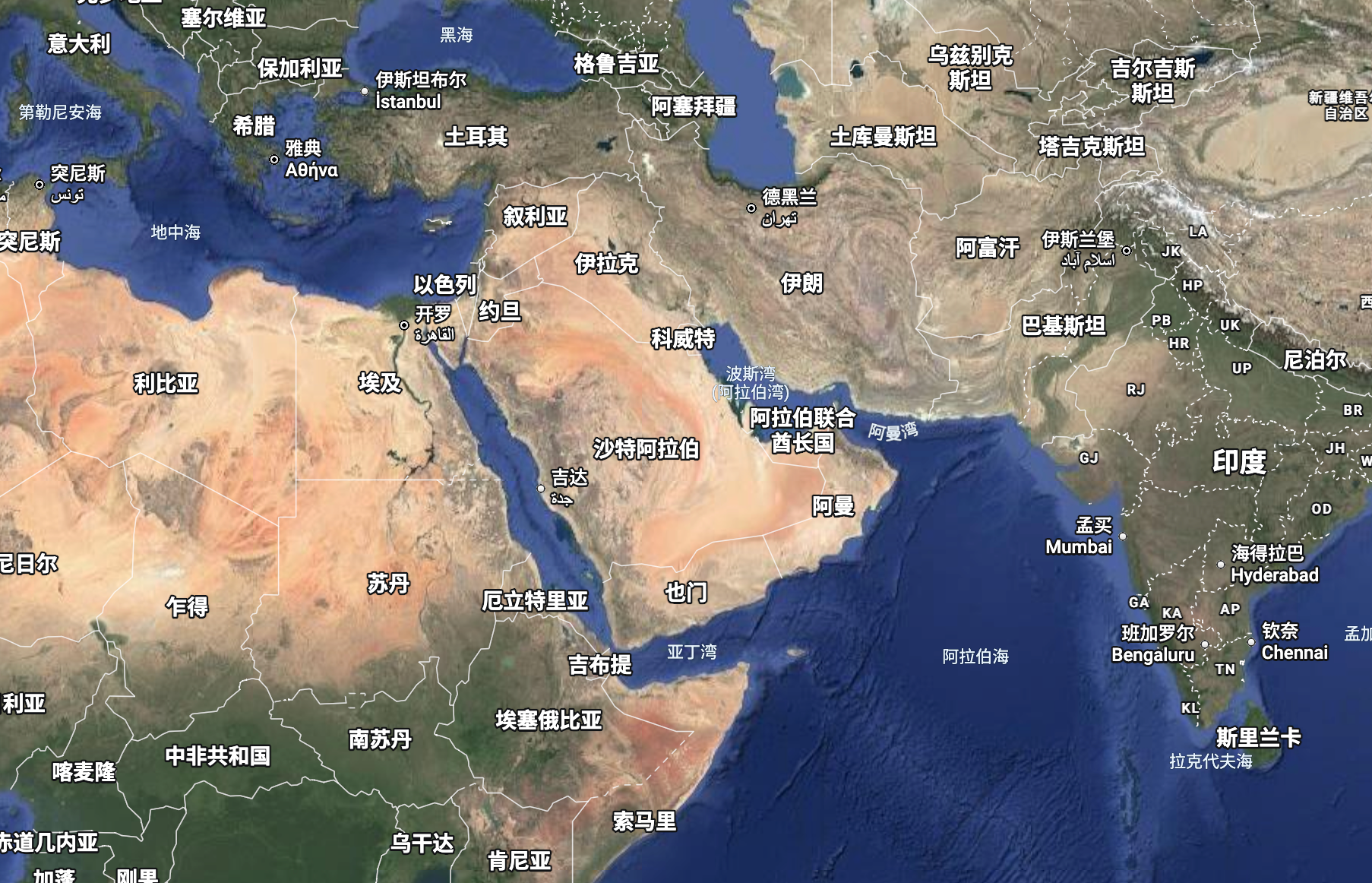
If you draw a circle centered on the United Arab Emirates, you’ll find few cities within that range that can compare to Dubai.
Qatar, the only nearby city of similar scale, is also within the scope of sanctions, despite its development and national wealth. Although Israel is developed, how could one conduct business with Arab nations if one moved there? Other cities in the Middle East are smaller than Dubai and may also be affected by the escalating situation.
Istanbul is a bit farther away, with a market that is not large enough and insufficient English proficiency. North Africa, even farther, lacks the financial and political stability of Dubai.
Farther still, if you want to do business in the EU, why not just move to London, Paris, or Frankfurt?
After considering all the options, Ethan concluded that Dubai is the only choice that meets all these criteria simultaneously: a city of similar scale, seamless language communication, crypto-friendliness, and a stable policy and financial environment.
We can't go to India, can we?
Ethan told me that Dubai has always been the hub of business in the Middle East. Agricultural products from North Africa are unloaded here, and small electronics from across the region are distributed here. Around the Deira district where Ethan lives, hundreds of thousands of Indians, Arabs, and Africans have built the largest trading market in the Middle East.
Rebecca holds a similar view. Her company is a multinational corporation, with Dubai serving as the hub for its MENA (Middle East and North Africa) region. Although she is currently working remotely from her home country, she told us that business operations are running smoothly and that she “will return to Dubai eventually.”
The agglomeration effect in major cities is important, especially in the crypto industry.
Oliver, the Business Development lead for the audit project, told Odaily Planet Daily that living in a major city like Dubai is important for the team.
He told us that although Web3 is largely remote, online connections and virtual meetings alone are far from sufficient for BD. Most of his colleagues are based in hotspot cities like Singapore and New York, and they actively cultivate strong local crypto communities in their own cities, which is crucial for getting recognized and building early trust.
Oliver comes from a traditional finance background and believes that the BD and sales process is “best done in person.”
From this perspective, it’s important to live in a major city with a strong crypto atmosphere. While digital nomads working remotely can certainly choose to live in low-cost destinations like Nepal, how many potential crypto customers would there be there?
Trust the UAE, but even more so, trust your homeland
According to Crypto.news, MegaETH co-founder Shuyao said, "We remain very bullish on Dubai in the medium to long term; this is just its own bear market phase."
Tiffany, who works in operations, says there is another layer of risk.
Due to factors such as war being considered force majeure, the company may terminate employment without liability under contracts signed by certain staff. In such cases, if employees also do not wish to return to Dubai, they may part ways with the company.
So, some people returning may also be driven by necessity.
However, she told us,
I believe in the UAE and am confident it won’t let the situation spiral out of control; China will definitely evacuate its citizens. I also have faith in our country.
(Stella, Rebecca, Tiffany, Ethan, and Oliver are pseudonyms.)