





Author: Chloe, ChainCatcher
MegaETH launched its TGE today at 18:00 after completing its first KPI milestone, with the FDV rising from $1 billion during the presale to approximately $2 billion; MEGA briefly surged to $0.37 and was trading at $0.205 as of press time.
Alongside the TGE, fund flows within the MegaETH ecosystem have become a focal point for the market. Core protocols such as Cap, Kumbaya, Brix, Euphoria Finance, and World Capital Markets are each addressing key use cases including stablecoins, DEXs, yield-bearing assets, derivatives, and unified margin trading. If early MEGA tokens undergo reallocation after launch, these projects may serve as primary indicators of whether ecosystem momentum can be sustained.
MegaETH has met its KPI and the token has been listed.
MegaETH's TGE is triggered by quantifiable on-chain milestones rather than an arbitrarily chosen date—a design relatively rare in the industry: the first KPI requires at least 10 Mega Mafia incubated applications to be deployed on mainnet with verifiable core functional loops, each accumulating over 100,000 transactions within 30 days. On the 23rd of this month, all 10 applications simultaneously met the criteria, initiating a seven-day countdown, with the native token $MEGA officially entering the market today.
Co-founder Shuyao Kong stated that the token's goal is to serve as an ecosystem accelerator, not to launch on any arbitrary date. She emphasized that the past three years have been focused on building the system, and now it’s time to verify whether it can grow on its own.
Moreover, the KPI framework extends far beyond the first milestone. Subsequent unlock conditions include: at least three MegaETH applications generating daily fee revenue exceeding $500,000 for 30 consecutive days; and the circulating supply of the native stablecoin USDM reaching $500 million, with at least 25% deposited into smart contracts. In other words, token supply will be unlocked only upon meeting specific criteria—53.3% of the total MEGA supply is contingent on achieving these objectives, resulting in an extremely limited initial circulating supply.
What’s the current state of the ecosystem? Kumbaya dominates with 60% TVL.
According to cryptocurrency data platform RootData, many projects within the MegaETH ecosystem have strong funding and team backgrounds, making it the most vibrant ecosystem among pre-token public chains and the current focus of airdrop hunters.
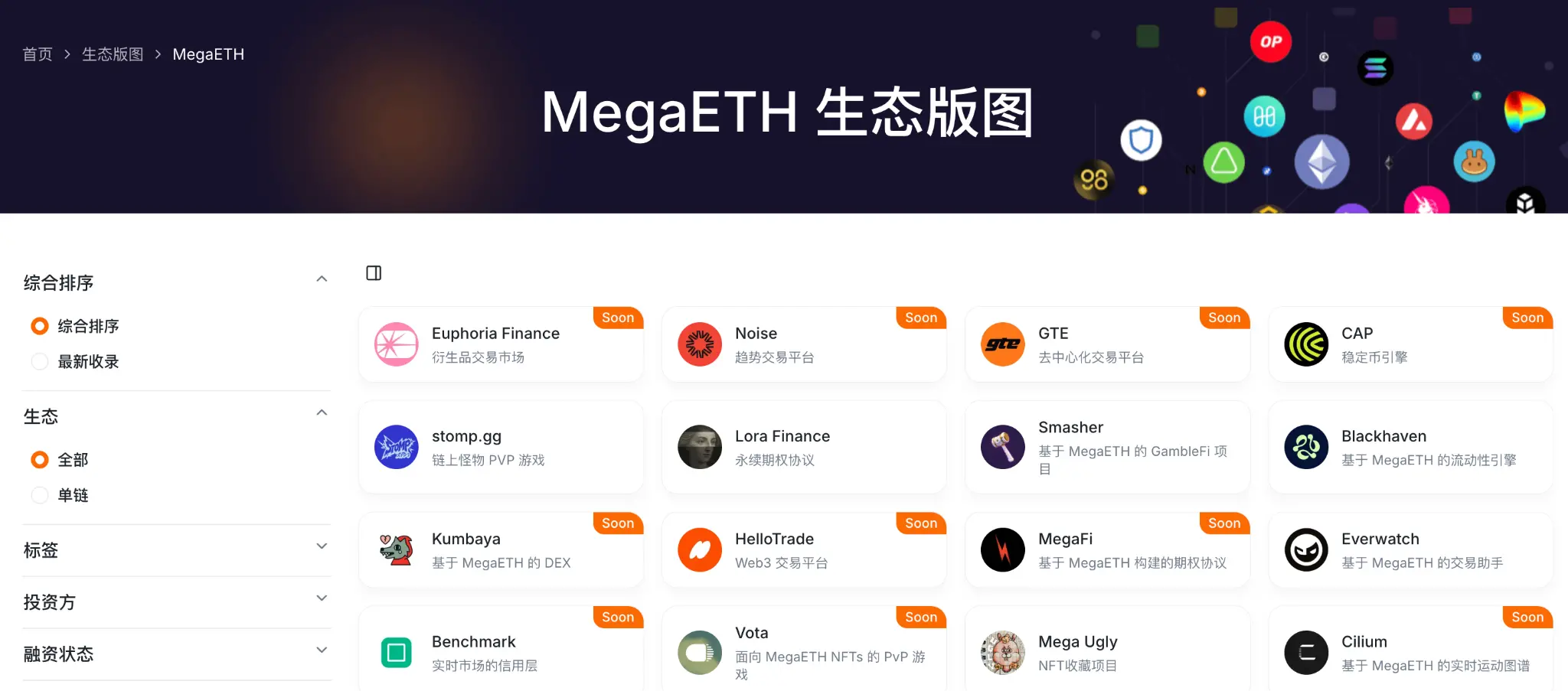
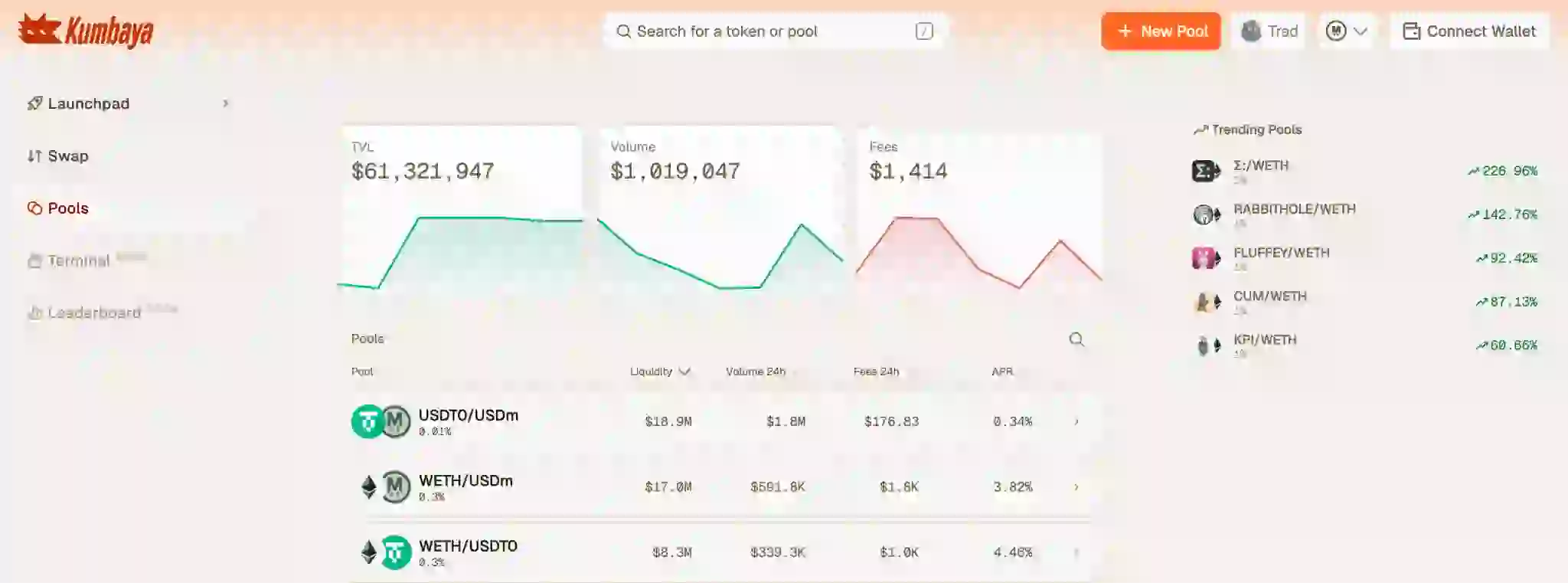
Among these, Kumbaya is currently the largest DeFi protocol in the MegaETH ecosystem, accounting for $59.03 million of the total $98.43 million TVL, or 60%. Conversely, this highly concentrated TVL structure signals both early-stage capital aggregation and potential risk exposure; if Kumbaya experiences a smart contract vulnerability or a liquidity withdrawal, the on-chain ecosystem of MegaETH could face a crisis.
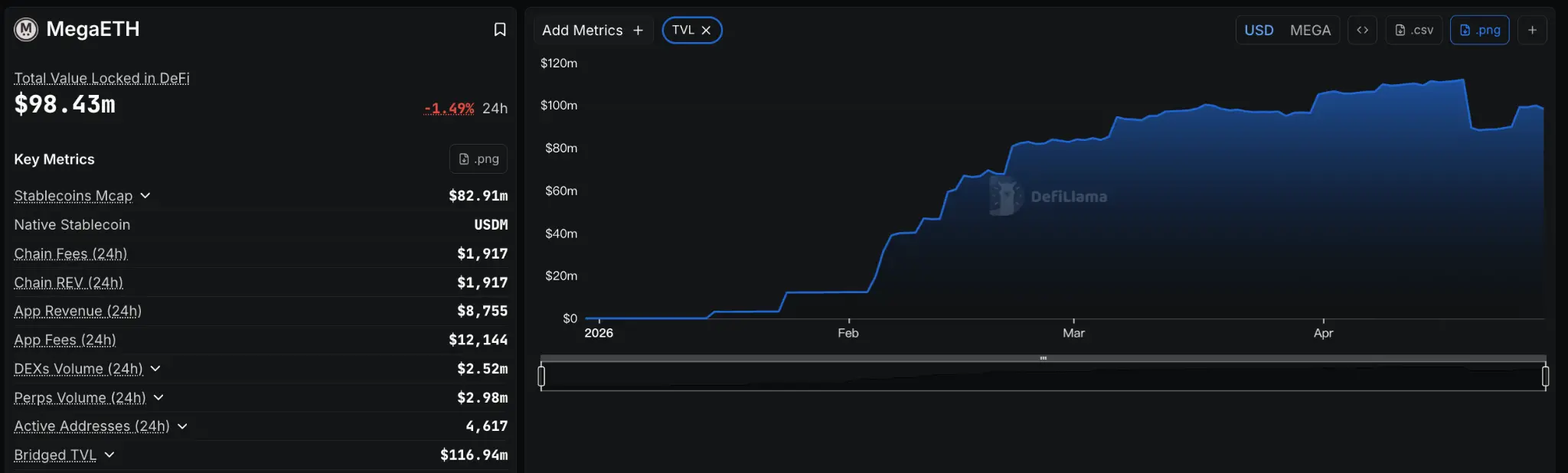
Additionally, the stablecoin market also faces concentration risks: USDM currently accounts for 81% of MegaETH’s $82.91 million stablecoin market cap. Meanwhile, the newly introduced iTRY, a yield-bearing stablecoin pegged to the Turkish lira and backed by money market funds, offering approximately 45% APY, represents an initial experiment in diversifying MegaETH’s stablecoin ecosystem and signals an effort to enter the emerging market yield space.
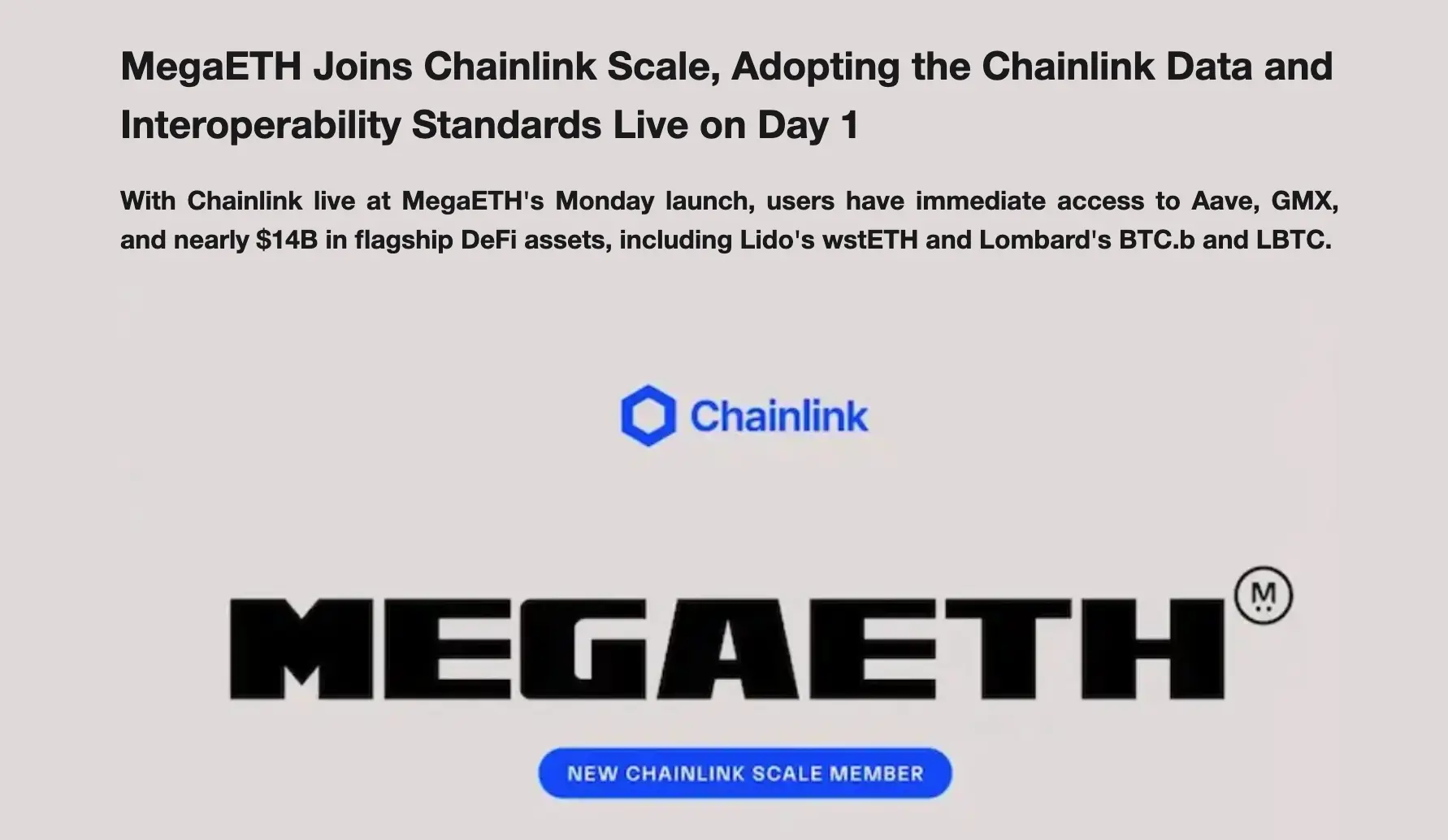
Notably, Aave V3, GMX, and Chainlink Scale were integrated and live on mainnet from day one, providing access to nearly $14 billion in flagship assets, including wstETH and LBTC. The inclusion of these blue-chip DeFi protocols solidifies MegaETH’s position as a production-grade infrastructure, rather than merely creating an illusion of ecosystem growth through native applications alone.
Five ecosystem projects to follow on MegaETH
The 10 applications that passed the first KPI evaluation are: CAP (Stablecoin Payment Protocol), Brix (Yield Tokenization Platform), Avon (On-chain Lending Market), Kumbaya (Decentralized Exchange), Ubitel (Decentralized Telecommunications Protocol), and Showdown, World, Stomp, HitOne, and Nectar AI.
The following key projects warrant in-depth attention:
Stablecoin Engine CAP
CAP is an innovative stablecoin engine that provides users with native yield opportunities by combining stablecoins with high-efficiency on-chain strategies. Users can mint cUSD at a 1:1 ratio using USDC or USDT, and further stake it as stcUSD to earn yields from authorized strategy providers.
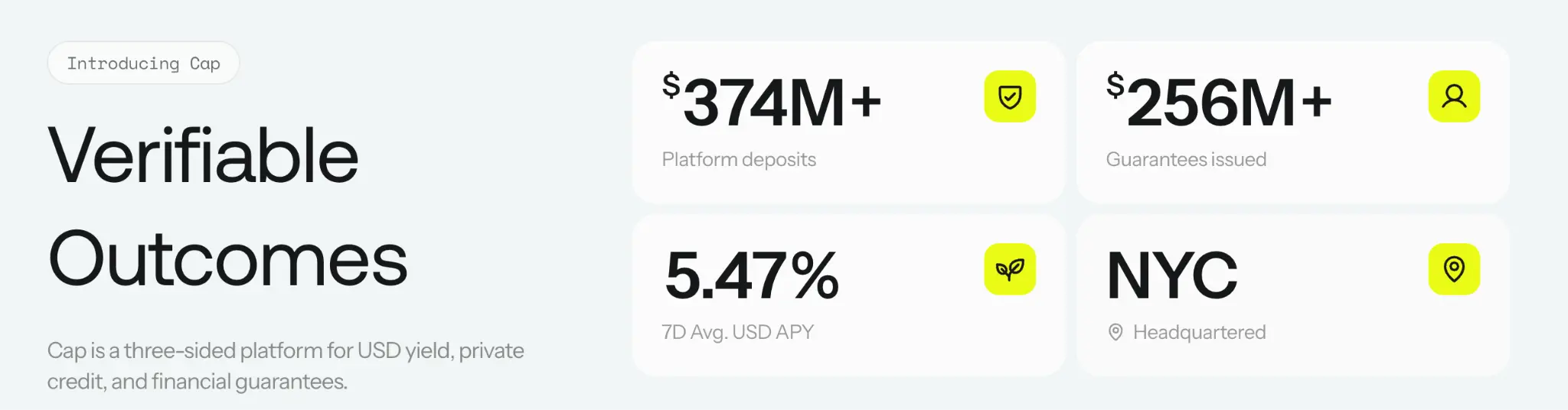
According to the crypto asset data platform RootData, Cap raised $11 million in funding last April, with participation from Triton Capital and others. As MEGA is expected to conduct its TGE on April 30, 2026, the market widely anticipates that Cap will be one of the key projects among the first tokens launched on the MegaETH ecosystem.

Cultural assets and DEX platform Kumbaya
Kumbaya is positioned as the fastest and most liquid platform for creating and trading cultural assets, with a total value locked (TVL) of approximately $59 million.
Its core gameplay revolves around building a "culture-value flywheel." Unlike pump.fun’s model of “buy, pump, and quickly exit,” Kumbaya emphasizes the continuous accumulation of cultural asset value and liquidity. This approach avoids the liquidity gap and collapse of cultural value cycles that occur when tokens leave the issuance platform and move to Raydium, resulting in a “graduation = exit” scenario.
Emerging market tokenized yield platform Brix
Brix is positioned to connect DeFi users with on-chain yield opportunities in emerging markets, enabling users to gain high-yield exposure through tokenized yield-bearing stablecoins and assets.
One of its core products is currently iTRY, a tokenized Turkish lira money market instrument offering an annualized yield of approximately 45%. In the future, Brix also plans to陆续 launch additional emerging market currency products, including the Brazilian real (BRL) and Indian rupee (INR).
According to cryptocurrency data platform RootData, in April of this year, Brix completed a $5.5 million funding round led jointly by FRWRD and IS Asset Management, with participation from Circle Ventures, ConsenSys, and Borderless Capital.

The derivatives trading market of Euphoria Finance
The core gameplay of Euphoria is the "Tap Trading" mechanism, where users can predict short-term price movements by simply tapping squares on a grid interface, further gamifying and socializing the trading experience. However, Euphoria’s mainnet is currently in closed testing, accessible only to AMA participants and early testers; yet, as the full public launch approaches in mid-May, the market widely believes it will become one of the most anticipated consumer-grade applications in the MegaETH 2.0 ecosystem.
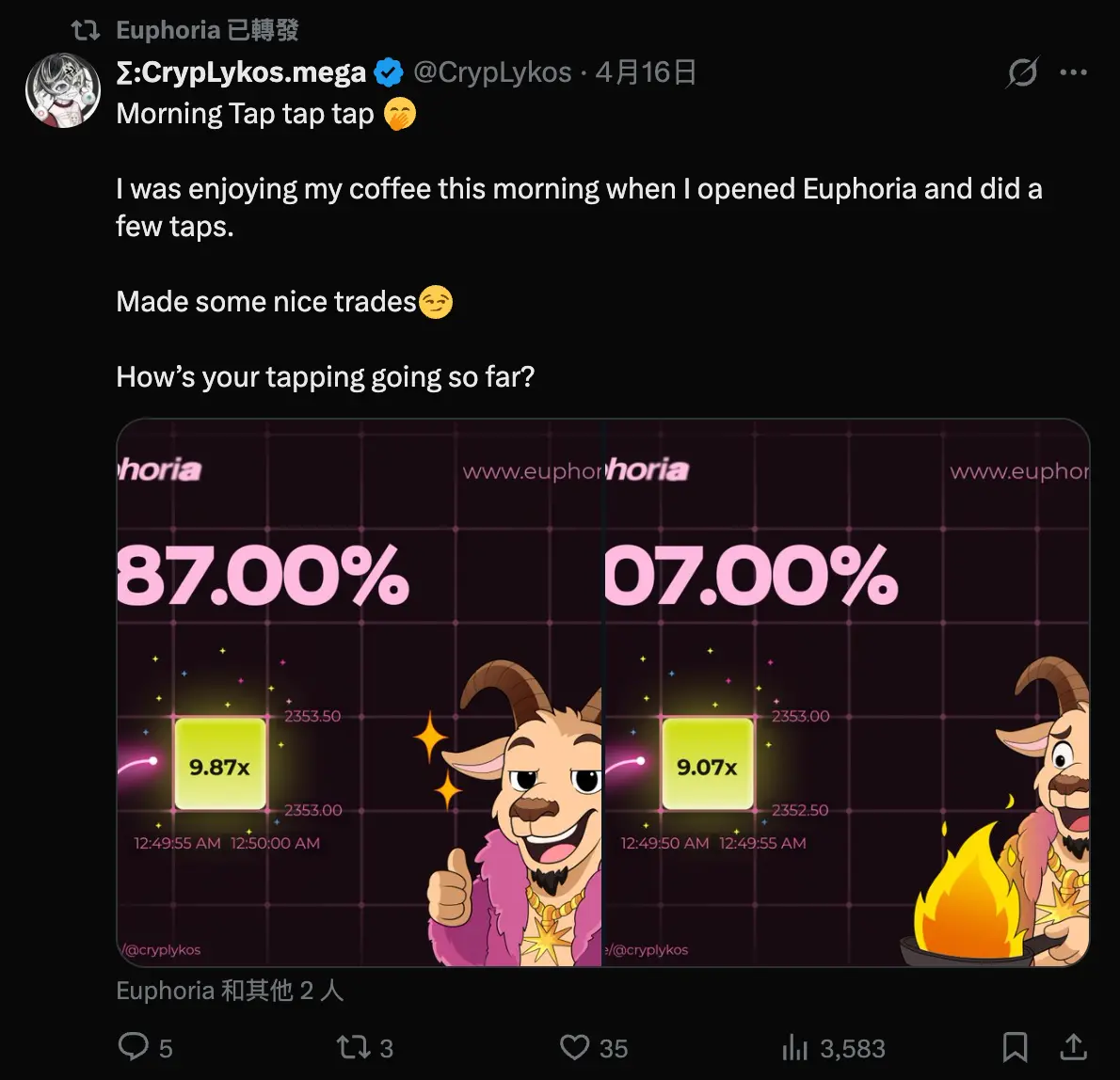
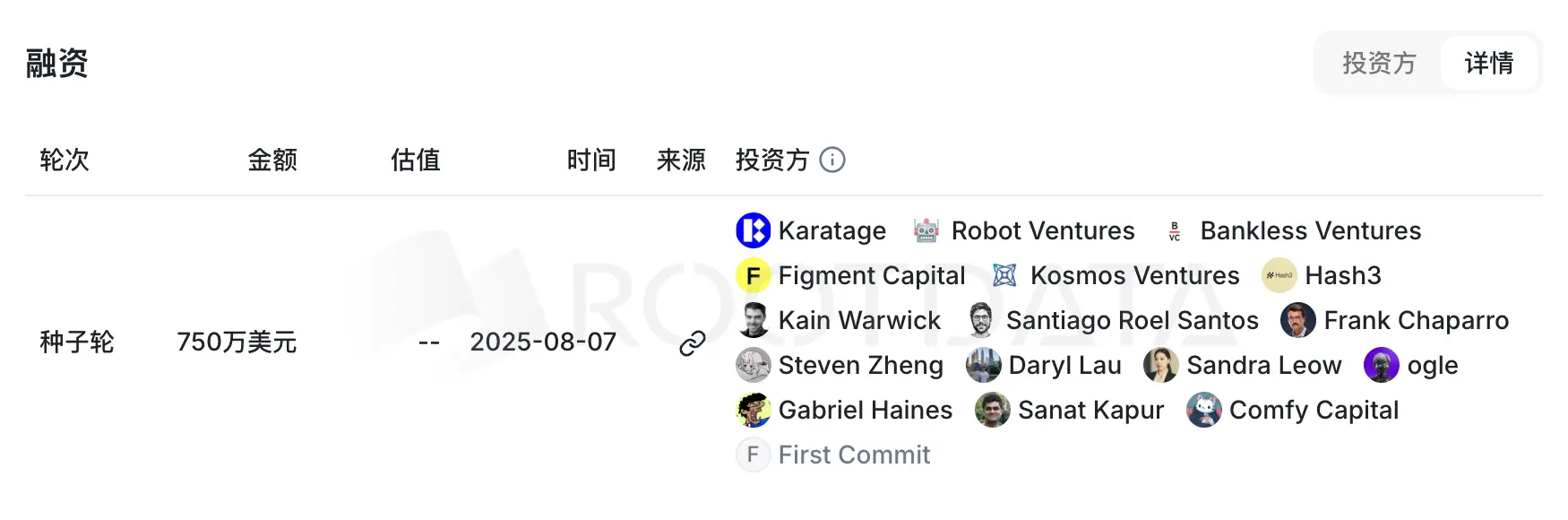
According to the crypto asset data platform RootData, Euphoria completed a $7.5 million funding round in August last year, led by Karatage.
DeFi trading platform World Capital Markets
World Capital Markets is an integrated margin order book system covering spot, perpetual contracts, and lending, with a single collateral serving all three business areas, dedicated to realizing the vision of "trading anywhere, anytime, in any market."
With MegaETH's high-performance infrastructure, World Markets can fully leverage the advantages of on-chain high-frequency order books, enabling margin updates, risk checks, and liquidation processes to be completed within the same block during cross-margin trading scenarios, enhancing overall capital efficiency. MegaETH’s high throughput and low latency are the core foundations supporting such applications.
Key focus after TGE: MegaETH ecosystem tokens are following closely
MEGA's TGE is essentially a liquidity reallocation event. Echo holders unlock 20% of their allocation upon listing, Fluffle holders unlock up to 50%, and Sonar's non-lockup participants receive substantial airdrops; once these early tokens enter the secondary market, short-term selling pressure is inevitable.
What’s truly worth observing may not be the selling pressure, but whether this capital can remain circulating on-chain after exiting its original position—flowing into protocol liquidity pools, chasing popular narratives within the ecosystem, and trading cultural assets on Kumbaya. This will be the key indicator of whether the MegaETH ecosystem’s momentum can be sustained.
On the other hand, the more promising long-term opportunities lie within ecosystem protocols that have not yet launched their tokens. Token events for projects like Kumbaya, Cap, and Euphoria are likely to launch sequentially in May–June, at which point protocols with genuine TVL and user bases will see token pricing supported by stronger fundamentals rather than mere narrative arbitrage—this will be a key area to position for in the next phase.