





Public Bitcoin miners who have either partially or wholly ditched the sector and pivoted to AI could be an incredible boost to those remaining behind. While this lowers the hashrate and perceived network security, the shift is not that bad for Bitcoin, according to analysts.
This week, MARA offloaded 15,133 BTC, worth over $1 billion, reducing its outstanding debt by 30%. The firm recently partnered with Starwood to develop AI data centers.
Other public miners, such as Bitdeer, dumped their entire BTC, and Riot also offloaded part of their holdings to fund AI data ventures. For analyst Billy Boone, the AI bet is currently paying better than BTC mining.
But the exits also allow solo miners and those who remain to get higher margins. Boone clarified,
When they (large miners) redirect capital and infrastructure toward AI, that hashrate comes offline. Unless equivalent hashrate fills the gap, difficulty drops. Lower difficulty = higher margins for every miner who stays.
Is the West Asia crisis a catalyst for Bitcoin miners?
For the uninitiated, hashrate refers to the computing power needed to mine BTC by solving mathematical problems.
On the other hand, network difficulty is a self-adjusting parameter that is adjusted every two weeks to determine how easy or challenging it is to mine BTC. Both help enhance Bitcoin network security.
Interestingly, the current market cycle has seen the lowest network difficulty growth at only 75% as key players shift to AI.
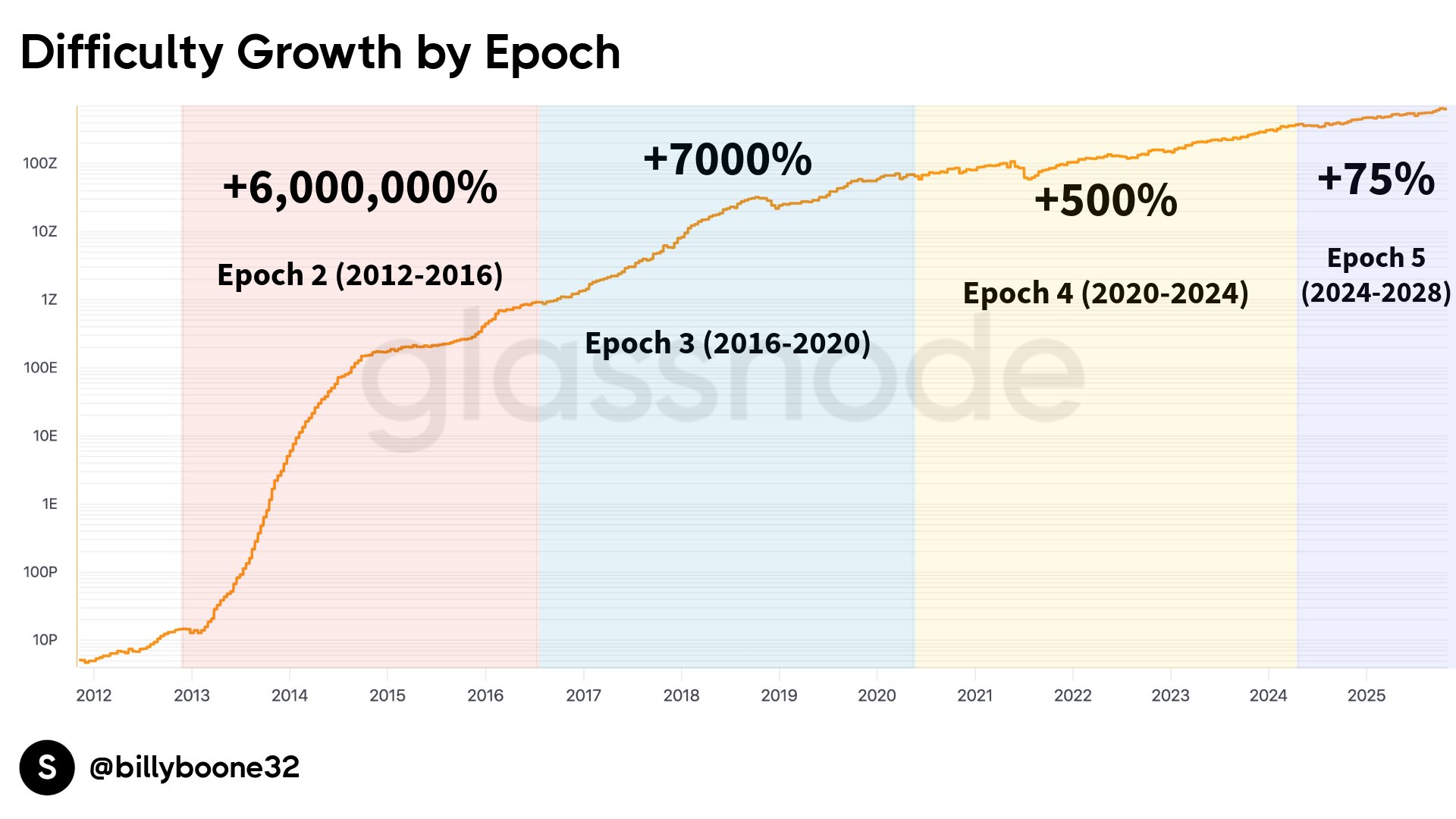
In other words, it is relatively easier to find new blocks (BTC) for solo and medium miners. But another opportunity may present itself if the West Asia crisis extends into April, added Boone.
If the Strait of Hormuz stays closed into April, energy prices climb. Oil-dependent miners get hit hardest. This might be the best setup small/medium miners with stable PPA’s have seen since the 2021 China mining ban.
Barefoot Mining CEO Bob Burnett echoed Boone’s analysis of the segment and added,
Public miners pushed out smaller miners. The ecosystem will be much better balanced with much less hash rate in their control.
Status of Bitcoin miner distress
That said, the miner distress seen from late November eased earlier this month, as shown by Hash Ribbon (shaded areas). Consequently, this reduced miner sell-off and boosted the March BTC price recovery.
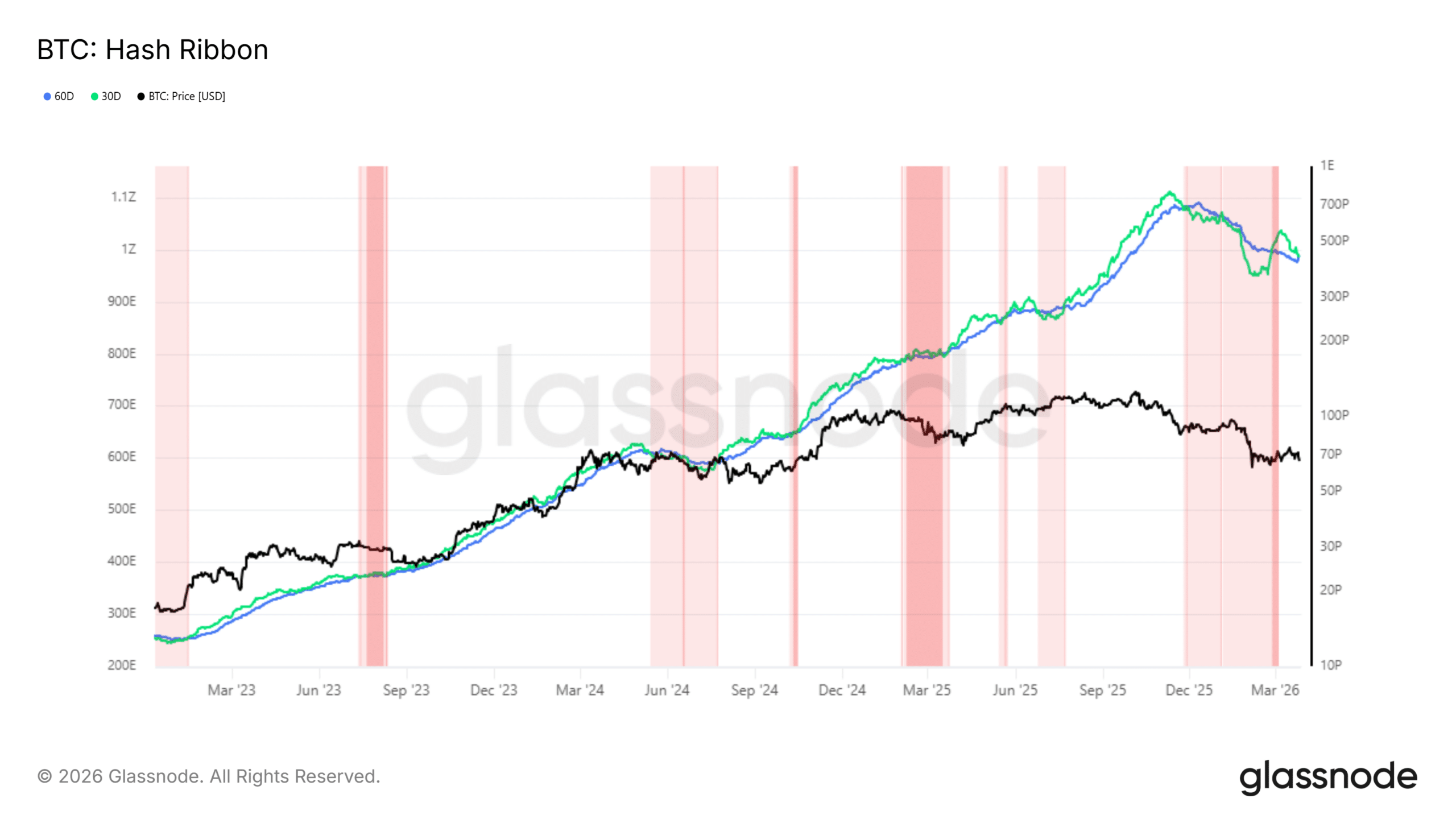
However, if BTC drops below $65K, there is likely to be another distress that could subdue BTC if miners begin offloading again.
Final Summary
- Analysts viewed the trend of public Bitcoin miners, such as MARA, partially or wholly pivoting to AI as bringing “better balance” for solo and medium miners.
- Miner distress eased in early March, but any further price drop could prompt miners to offload their BTC.