





As the largest liquidity staking protocol on Hyperliquid, Kinetiq holds over $700 million in TVL (primarily from HYPE's liquidity staking tokens, kHYPE), serving as a key infrastructure layer within the HyperCore and HyperEVM ecosystems. Built on Hyperliquid's HIP-3 protocol, Kinetiq pioneered the "Exchange-as-a-Service" business model through its Launch platform. Kinetiq's flagship DEX product, Markets, is the first HIP-3 exchange built via Launch and is expected to launch on January 12th. It will support perpetual contracts trading for assets such as BABA, crude oil index, energy index, Russell 2000 index, and bond index.
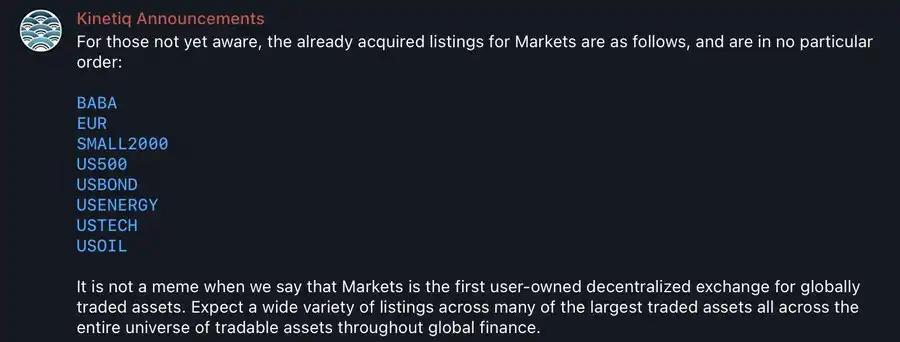
BlockBeats interviewed Omnia, founder of Kinetiq. The interview covered their transition from an LST protocol to an "exchange curation platform," the competitive landscape of HIP-3 exchanges, and strategies for attracting institutional capital. We also explored the utility of the newly launched $KNTQ token, and how Kinetiq has designed mechanisms to align incentives among builders, traders, and stakers.
Full interview transcript:
Belief in Hyperliquid
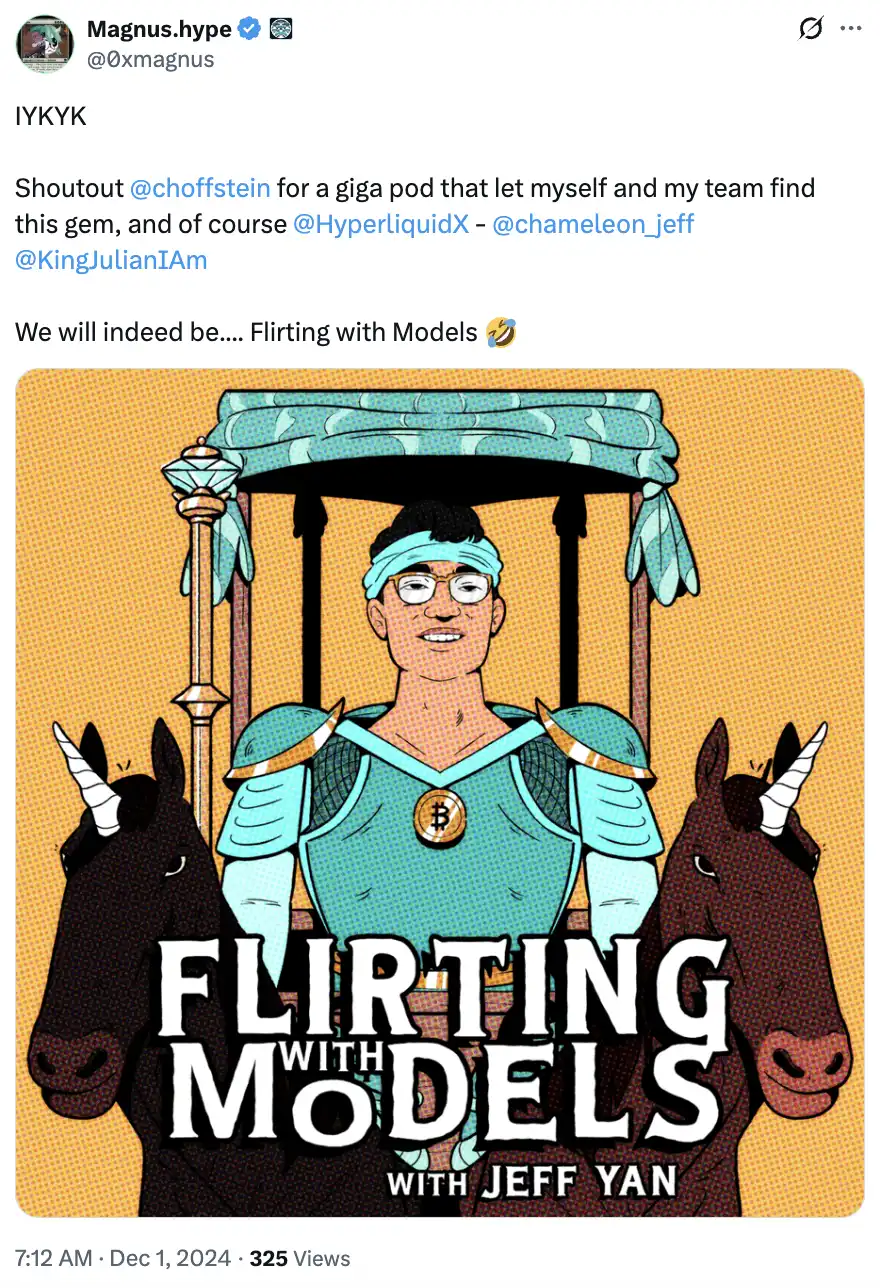
BlockBeats:Let's start from the beginning. In a tweet, you mentioned that your journey with Hyperliquid began in May 2023 when you listened to a podcast featuring Jeff. In that podcast, what specific "Alpha" or insight sparked your conviction? And what made you so confident that it was worth fully committing yourself to build with Hyperliquid, long before it became a consensus?
Kinetiq:Yes, that podcast is called "Flirting with Models," and Jeff was the guest, which is how we discovered Hyperliquid. It was a very insightful podcast that clearly demonstrated Jeff's high level of intelligence. The discussion about Hyperliquid mainly occurred in the second half of the podcast. The most fascinating aspect was that this perpetual contract DEX is built on its own blockchain. Over the past few years, we've gained extensive experience in deeply using and understanding these protocols, and the fact that Hyperliquid is built on its own chain greatly intrigued us. The rest, as they say, is history we've witnessed.
BlockBeats:When it comes to the broader ecosystem, Hyperliquid is facing intense competition from emerging Perp DEXes like Lighter and Extended. As a core infrastructure builder, how do you view these challenges? What do you think is Hyperliquid's core moat that ensures its long-term leadership?
Kinetiq: We firmly believe that Hyperliquid's moat is durable for the following reasons:
1. Hyperliquid has demonstrated network effects between market makers (Makers) and takers (Takers). Even after the genesis airdrop, Hyperliquid has maintained strong data across all time periods. Although other Perp DEXs that have not yet conducted a Token Generation Event (TGE) have caused some very short-term erosion in market share, it is worth noting that once these competing projects launched their TGEs, Hyperliquid's market share recovered healthily.
2. We believe that Hyperliquid's core team is right to focus on core infrastructure optimization and core product development. This allows the core team to concentrate on ensuring that Hyperliquid's technology can scale to several times its current capacity, while enabling other teams to build products on top of it. This approach helps shift the burden of business development from the core team to the community.
3. Jeff, Iliens, and the team have proven to be world-class in terms of execution and integrity. We believe this gives ecosystem participants (traders, market makers, builders) a high level of comfort, encouraging long-term engagement. No other ecosystem in the crypto space is worth such effort and commitment.

Markets and the HIP-3 Ecosystem
BlockBeats:Kinetiq is preparing to deploy its first decentralized exchange, "Markets," via the Launch platform. Why is it so important for Kinetiq to build its own HIP-3 DEX "reference implementation"? Is the goal of Markets to directly compete with other projects deployed through Launch, or is it more of a showcase and onboarding model for the ecosystem?
In addition to that, how do you think Markets will differentiate itself from other HIP-3 exchanges like trade.xyz and Felix? Especially considering it is directly supported by the Kinetiq team, what unique advantages does Markets bring?
Kinetiq: Kinetiq has always viewed HIP-3 as a key upgrade for Hyperliquid, fundamentally transforming HyperCore from a product into a platform. HyperCore has already demonstrated unprecedented commercial potential, and with the addition of HIP-3, the potential for productization is now realized. As a result, Kinetiq has been eager to leverage HIP-3 to expand our core business beyond liquidity staking, making us unique among all LST protocols and even in the exchange space. This includes Launch and Markets, both of which benefit from Kinetiq's distribution capabilities built for kHYPE.
We do not view Markets as directly competing with other HIP-3 products. In our view, most DEXs have unique advantages in terms of unique asset selection or unique collateral options. Markets aims to be a general-purpose HIP-3 DEX that covers traditional asset classes. We intend to differentiate ourselves through the following:
• Asset Selection: We bring the most popular assets into the perpetual contract framework, with a strong focus on the details of oracle construction.
· First-rate liquidity.
· First-rate UI/UX and user guidance.
· Cost Competitiveness: Using USDH as collateral benefits from discounts on aligned quote assets.

BlockBeats:A key challenge of the HIP-3 model is the risk of liquidity fragmentation. As more exchanges list the same equity perpetual contracts, how does Kinetiq plan to address this issue? Will the Launch platform provide direct support to the exchanges it helps deploy, such as shared liquidity solutions or market-making resources?
Kinetiq: First, we maintain a list of potential listing tickers. A key metric we track is the potential taker trading volume. We make every effort to ensure that each ticker listed on Markets has strong taker demand, which naturally incentivizes market makers to operate on Markets.
Second, a certain degree of liquidity fragmentation is inevitable. Whenever we list a tradable asset, we are always committed to making it the authoritative ticker among all HIP-3 products tracking the same underlying asset. As for liquidity, we have strong relationships with market makers who have expressed their intention to provide strong liquidity on Markets.
Perpetual Contracts and Institutional Capital in the Stock Market
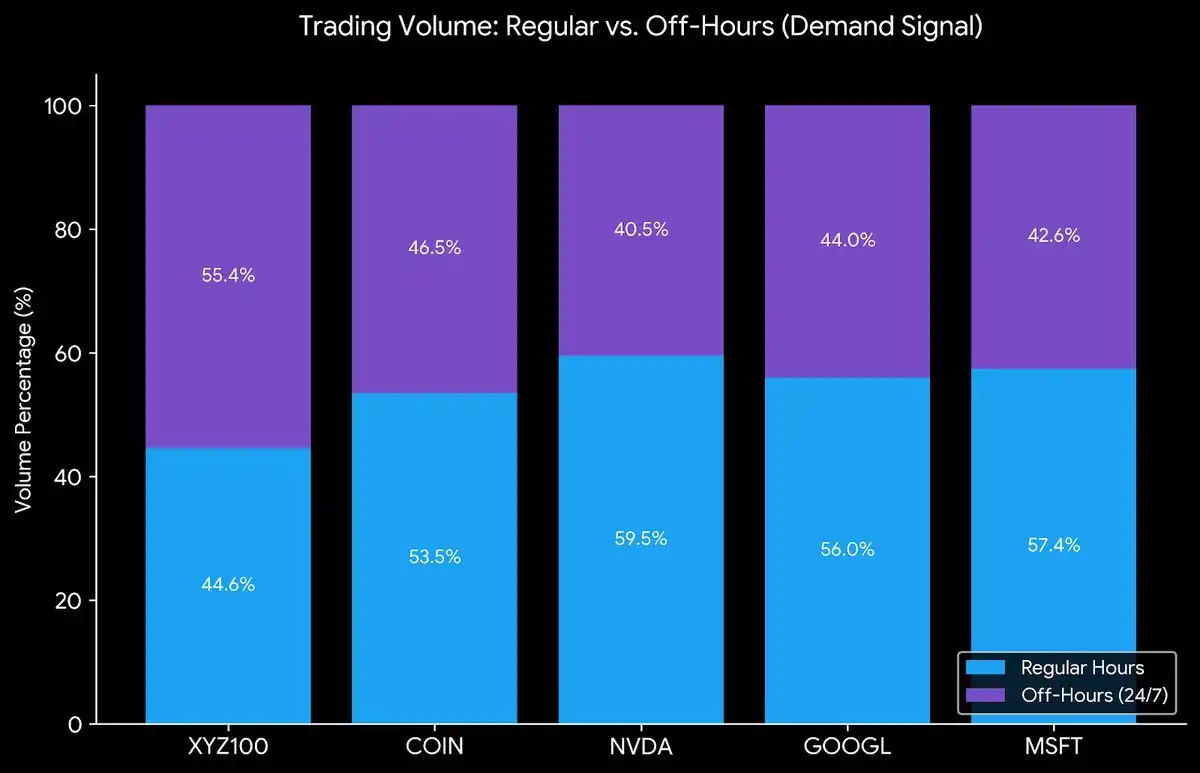
BlockBeats:Magnus, co-founder of Kinetiq, analyzed 24/7 trading in stock perpetual contracts and found that 30-55% of the trading volume occurs outside traditional market hours, which is a strong validation. Beyond native crypto traders, do you think this is enough to attract the interest and capital of traditional financial players? What are the key obstacles that need to be overcome to achieve this?
Kinetiq: We believe that as a leveraged instrument, perpetual contracts are superior to options because they are products with a Delta of 1, where returns are based purely on price movements, unlike options, which require consideration of technical factors such as volatility and time decay. This will be a key differentiating factor in capturing retail trading volume in the future.
We believe we have also observed early institutional interest in RWA perpetual contracts, as they view blockchain as a more efficient distribution channel for RWA assets (spot and perpetual contracts). Their primary considerations are liquidity depth and oracle construction. The latter is particularly critical, as improperly constructed and backtested oracles can create multiple arbitrage and malicious attack opportunities. Therefore, oracle construction is a key task for Markets' launch.
Whether it's retail investors or institutional capital, the key barrier to overcome is the fear of the on-chain environment and the lack of proper education. Therefore, Markets is committed to simplifying as many on-chain operational steps as possible at the user experience (UX) level, making it as friendly as possible to traditional finance.
BlockBeats:You have partnered with Hyperion DeFi to launch iHYPE, a permissioned capital pool that complies with KYC/KYB standards. Why is it crucial for a decentralized protocol like Kinetiq to have a dedicated institutional on-ramp? Do you see iHYPE as the main bridge for traditional financial capital to enter the Hyperliquid ecosystem?
Kinetiq: Hyperliquid has achieved tremendous success in a short period of time—not only in token price, but also in fundamental performance and profitability. Its unique position lies in the fact that it is a project that can be easily evaluated from a fundamental perspective, similar to traditional finance. Therefore, Kinetiq's argument is that HYPE's DAT and ETF have a significantly higher potential to perform well compared to other projects. These DAT and ETFs will ultimately require a compliant staking solution in order to generate more returns for their shareholders. We are confident that iHYPE is the preferred tool for this purpose.
BlockBeats:You also partner with Native Markets to support $USDH. Why are native stablecoins so critical to the success of perpetual futures markets on HyperCore? How does the Kinetiq ecosystem plan to support and accelerate the adoption of USDH?
Kinetiq: Kinetiq has selected USDH as collateral for Markets, as well as the primary pairing asset for our governance token, KNTQ. We have also built workflows to simplify the process of converting USDC to USDH on Markets, allowing users to seamlessly enter Markets and use USDH.
Business Model and Token Empowerment
BlockBeats:The Launch mode relies on a 500,000 HYPE deposit through crowdfunding, which may attract "mercenary capital" seeking short-term gains. How do you ensure that the incentives of these crowdfunders align with the long-term growth vision of the builders? What mechanisms are in place to prevent capital flight after the initial mining cycle ends?
Kinetiq: Launch is designed to create a win-win situation for both deployers and stakers. Project teams will be able to guarantee at least 500,000 HYPE staked, with the staking duration determined by them at the start of the fundraising. After the initial term expires, they can seek to renew the agreement with the community to maintain continued staking, or even replace part of the community staking with their own funds. This provides a flexible solution for them to gain community support and ownership at the outset, while overcoming any issues related to the redemption of staked tokens.
We also encourage project teams to align with stakers through a combination of token allocations and revenue sharing. Once again, the Markets team's release of data prior to any Launch project has validated the Launch model and demonstrated some market benchmarks regarding revenue sharing.
BlockBeats:Markets allocates 10% of its revenue to kmHYPE holders and uses 90% for growth. What is the long-term vision behind this ratio? As the ecosystem matures, is it possible that KNTQ stakers (sKNTQ holders) will begin to capture a portion of the fees directly from all exchanges deployed through Launch?
Kinetiq:KNTQ is at the core of the Kinetiq protocol and is prioritized across all Kinetiq business lines, allowing value to flow to KNTQ holders through sKNTQ from all Kinetiq business lines. We recently announced how sKNTQ accumulates value from all aspects of the Kinetiq protocol, including the use of all revenue sources for programmatic KNTQ buybacks and the destruction of 100% of KNTQ transaction fees on HyperCore. More details can be found in our posts on Twitter.This article.
BlockBeats:Besides the deployment of exchanges, what other innovations do you foresee emerging on the Launch platform? Could we possibly see it being used to create novel financial products, structured products, or even non-financial applications leveraging the HIP-3 framework?
Kinetiq:Launch is envisioned as a permissionless LST infrastructure that enables deployers who want to launch their own customized DEX to utilize HIP-3 features. You can think of Launch as a combination of Shopify + Kickstarter, as it is an out-of-the-box platform that allows the creation of permissionless LSTs and offers optional HIP-3 functionality. This allows protocols to fully own their distribution channels without building independent staking protocols or LSTs from scratch, and also benefits from Kinetiq's support in contract security, making it extremely capital-efficient compared to any possible alternatives. Financial products/structured products are likely to be built on top of kHYPE, as it already has a strong existing distribution channel among stakers and is well integrated within the Hyperliquid ecosystem.
BlockBeats:BlockBeats has a large and passionate readership in the Chinese-speaking world, and many Chinese-speaking users are actively participating in the Hyperliquid ecosystem. What would you like to say to the builders, traders, and HYPE holders in this community? Are there any plans for more direct engagement with the Chinese-speaking market in the future?
Kinetiq:First, we would like to thank all our supporters of Hyperliquid and Kinetiq. Kinetiq is not just an LST project; we are a team of builders who develop high-quality products specifically tailored to Hyperliquid's needs. We place great emphasis on user experience, and everyone is welcome to provide feedback through our Discord. We also welcome other Hyperliquid builders to reach out and explore potential collaboration opportunities with us.
Click to learn about BlockBeats' job openings.
Welcome to join the official Lulin BlockBeats community:
Telegram Subscription Group:https://t.me/theblockbeats
Telegram discussion group:https://t.me/BlockBeats_App
Official Twitter account:https://twitter.com/BlockBeatsAsia