





Key Insights
- Kalshi launched $1B perfect bracket contest for March Madness
- Kalshi volumes surged as sports prediction markets expanded
- Kalshi push coincided with Polymarket MLB partnership move
Kalshi moved deeper into sports prediction markets on March 19, 2026, launching a high-stakes contest tied to March Madness. The platform offered $1 billion for a perfect bracket, aiming to drive trading activity. The move followed rising interest in sports-based contracts across regulated and offshore venues.
Kalshi’s expansion came as prediction markets gained traction beyond political events into sports betting-like structures. The focus keyword Kalshi reflects a shift toward regulated platforms capturing retail flow. This shift occurred because major sporting events draw consistent liquidity and repeat participation cycles.
Kalshi Volume Surge Tracks Sports Market Demand
Kalshi data showed the platform processed over $1 billion in trades during the Super Bowl. CEO Tarek Mansour said that day marked the highest trading volume in the company’s history. The surge reflected growing demand for event-driven markets that settle quickly and attract speculative capital.
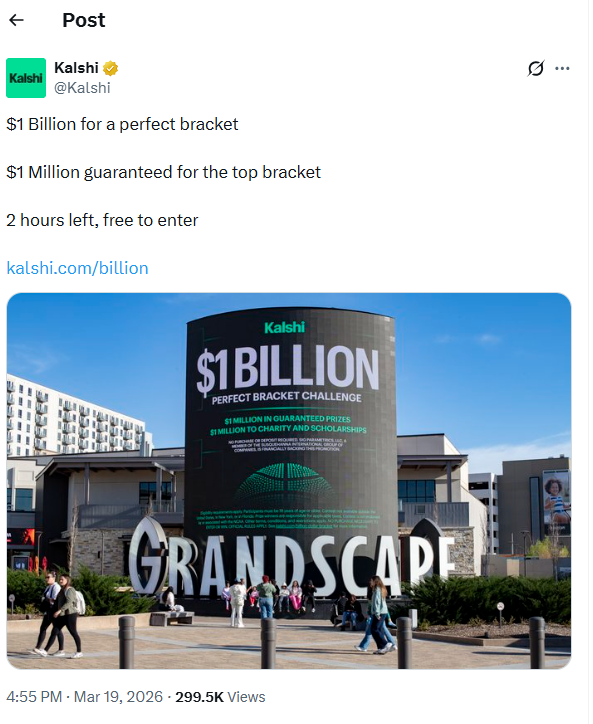
The March Madness contest extended that strategy into college basketball, which historically drives high engagement. Kalshi required users to submit brackets before the first game tipped off. The platform restricted participation to U.S. users, excluding New York and Florida due to regulatory constraints.
SIG Parametrics, part of Susquehanna International Group, backed the contest financially. That backing added institutional weight to a promotion built on near-impossible odds. Kalshi compared the probability of success to selecting one grain from a pile of rice delivered by trucks.
The platform still introduced secondary incentives to maintain engagement despite low success probabilities. Kalshi pledged $1 million for the highest scoring bracket and another $1 million to charity. These incentives aimed to sustain participation even when perfect outcomes remain statistically unlikely.
Kalshi Market Structure Reflects Accumulation of Liquidity
Kalshi activity showed sports markets accounted for a growing share of total contracts traded. Thecoinrepublic reported that the platform had already established itself across NFL, NBA, and NHL markets. This expansion mirrored a broader trend where prediction markets absorbed retail speculation previously directed toward sportsbooks.
Trading behavior suggested users treated these markets as short-duration speculative instruments rather than long-term positions. The move followed the appeal of binary outcomes, where contracts settle quickly after events conclude. That structure increased turnover and allowed platforms to recycle liquidity across multiple events within short periods.
Regulatory positioning also shaped Kalshi’s approach, as it operated under Commodity Futures Trading Commission oversight. This framework differentiated it from offshore competitors and provided a compliance narrative to attract institutional participants. The model aimed to balance innovation with regulatory acceptance in the U.S. financial system.
Kalshi Push Coincides With MLB-Linked Expansion
Polymarket disclosures confirmed on March 19, 2026 that Major League Baseball named it an exclusive prediction market partner. The multi-year agreement granted access to official data feeds and licensing rights. That move expanded prediction markets into formal partnerships with major sports leagues.
The deal introduced a new layer of legitimacy for event-based contracts tied to professional sports outcomes. Market participants reacted with mixed sentiment, as some traders welcomed deeper integration while others questioned long-term implications. The reaction reflected tension between traditional sports structures and financialized prediction systems.
Major League Baseball also signed a Memorandum of Understanding with the Commodity Futures Trading Commission. Chairman Michael Selig stated the agreement created a framework to monitor integrity risks and prevent manipulation. The collaboration allowed faster response to irregular trading activity and emerging threats.
This coordination indicated regulators and sports leagues recognized the growing influence of prediction markets. It also showed efforts to integrate oversight mechanisms before market scale increased further. The development aligned with rising volumes and expanding product offerings across both regulated and decentralized platforms.
The next phase will depend on sustained participation through the tournament cycle and early baseball season markets.
The post Kalshi $1B Bracket Push Meets MLB Deal in Prediction Markets appeared first on The Coin Republic.