


JPMorgan has filed to launch JLTXX, a tokenized money market fund built on the Ethereum blockchain, marking a significant step by one of the largest U.S. banks into on-chain asset management.
The filing, submitted to the U.S. Securities and Exchange Commission, outlines JPMorgan’s plan to bring a traditional cash-management product onto blockchain rails. A 485BPOS post-effective amendment associated with the fund appeared in the SEC’s EDGAR database, indicating the product is moving through the regulatory process.
What JPMorgan’s JLTXX Filing on Ethereum Actually Covers
JLTXX is designed as a tokenized money market fund, a product that represents shares in a traditional money market fund as digital tokens on a blockchain. Unlike stablecoins, which are typically backed by reserves held by a crypto-native issuer, a tokenized money market fund is a registered investment product managed by a traditional asset manager.
JPMorgan Asset Management confirmed the product in a press release describing its first tokenized money market fund. The fund uses Ethereum as its settlement network, meaning token transfers and ownership records are recorded on the public blockchain.
It is important to distinguish between a regulatory filing and a live public launch. The SEC filing signals JPMorgan’s intent and regulatory engagement, but availability to investors depends on the completion of the approval process. The exhibit filing provides additional documentation tied to the fund’s structure.
Why a JPMorgan Tokenized Money Market Fund on Ethereum Matters
Ethereum’s selection as the settlement layer is notable because it positions the network as institutional-grade infrastructure for regulated financial products. The blockchain already hosts a significant share of decentralized finance activity, and institutional adoption of Ethereum for tokenized assets reinforces that role. Efforts like the Ethereum clear signing standard targeting blind signing reflect the network’s ongoing push toward safer institutional interaction.
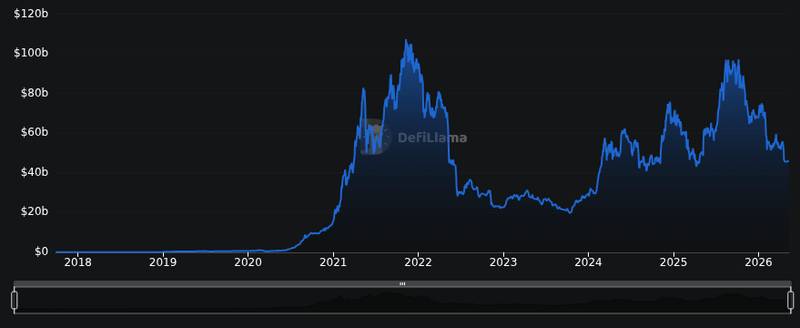
Tokenized money market funds differ from simple stablecoin exposure in meaningful ways. They are SEC-registered products, managed by licensed asset managers, and offer exposure to short-term debt instruments like Treasury bills and commercial paper. The token layer adds programmability, meaning fund shares could potentially be used as on-chain collateral, settled in real time, or integrated into decentralized finance protocols.
This matters for institutional treasury management. Firms holding on-chain assets currently rely on stablecoins or direct token holdings for liquidity. A tokenized money market fund from a bank like JPMorgan introduces a yield-bearing, regulated alternative that sits on the same rails. The development parallels broader moves toward institutional crypto product expansion across the industry.
For Ethereum specifically, hosting regulated money market funds alongside native DeFi protocols strengthens its position as a multi-purpose settlement layer. Whether institutional tokenization drives meaningful on-chain volume remains an open question, but the filing makes clear that JPMorgan sees Ethereum as the venue for this product class. As markets continue to weigh institutional signals against broader conditions, developments like the Wintermute analysis of recent market structure offer additional context for how traditional finance entries are being received.
Disclaimer: This article is for informational purposes only and does not constitute financial or investment advice. Cryptocurrency and digital asset markets carry significant risk. Always do your own research before making decisions.