





If there’s one positive takeaway from recent FUD, it’s that it’s strengthening crypto’s hedge narrative.
In the 2025 Q2 cycle, the “liberation FUD” triggered a clear risk-off move across crypto, as investors repositioned amid tightening monetary expectations driven by U.S. President Donald Trump’s tariff actions.
The result?
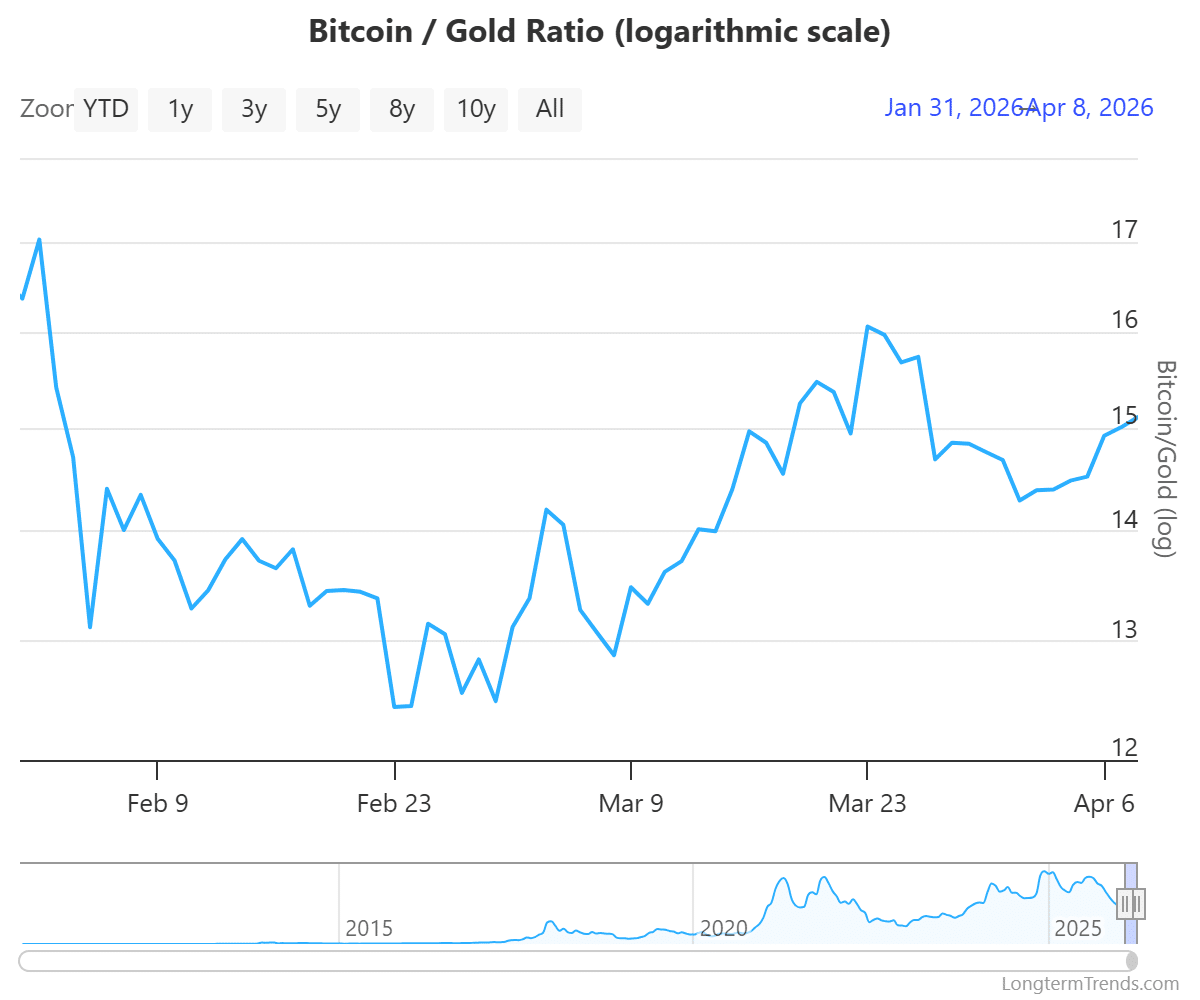
The XAU/BTC ratio closed the cycle up 76%, with capital clearly rotating into gold relative to Bitcoin [BTC] as investors sought safer macro hedges.
This time, the pattern hasn’t fully repeated. Even with the Middle East conflict reinforcing a similar tightening backdrop, Bitcoin inflows have stayed relatively resilient.
Notably, Japan’s recently revised crypto framework plays a key role in that shift, signaling a gradual structural upgrade in how policymakers treat digital assets.
For context, Japan amended its main financial law to tighten oversight of crypto assets.
According to Nikkei, the government recently approved changes to the Financial Instruments and Exchange Act, classifying crypto assets as financial instruments.
In practical terms, it shifts crypto away from the “purely speculative gamble” narrative and moves it closer to a regulated financial asset class.
More than the theoretical implications, however, the timing of this revision stands out.
With Japan’s economy facing renewed pressure, does the formal recognition of crypto as a financial asset mark the beginning of a framework that could eventually spill over into other jurisdictions equally affected by macro FUD?
Crypto emerges as policy hedge amid market uncertainty
Japan serves as a prime example of the Middle East crisis’s impact.
From a macro lens, Japan’s 10-year government bond yield keeps pushing into multi-year highs, rising nearly 32% since the conflict began in March and reaching 2.44%. Higher yields mean higher borrowing costs, tighter financial conditions, and growing pressure on government balance sheets.
But the stress isn’t limited to Japan.
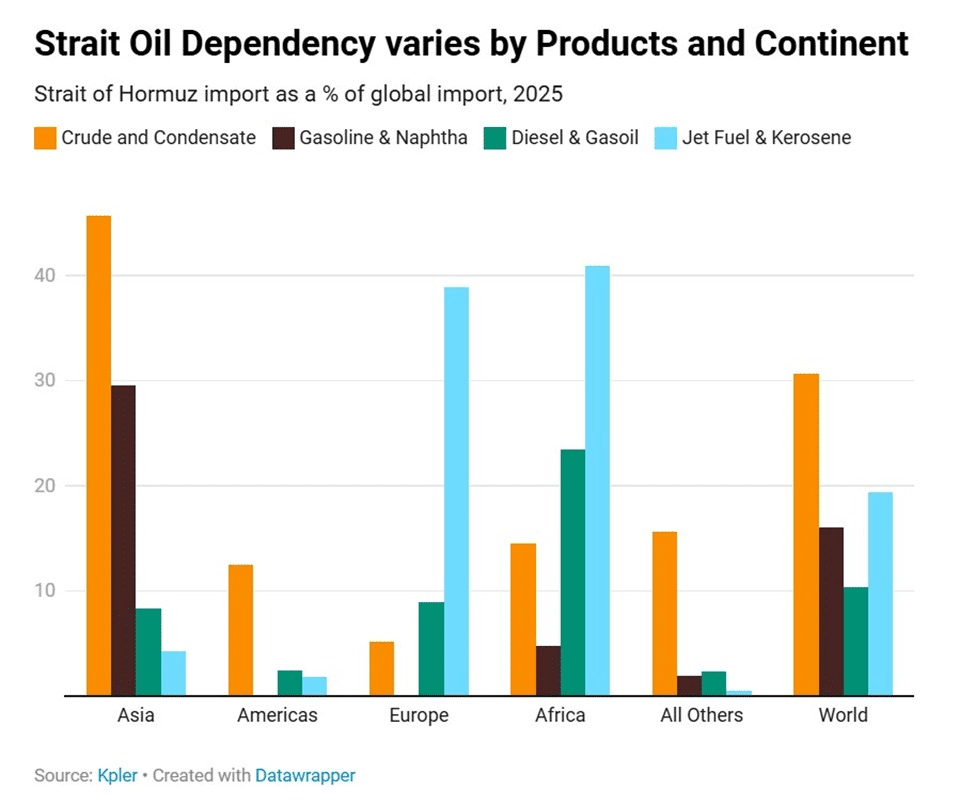
According to The Kobeissi Letter, Asian markets remain the most exposed, with 45% of Asia’s crude oil flowing through the Strait of Hormuz in 2025, the highest dependency globally. Any disruption of the Strait naturally translates into a direct energy supply shock across the region.
Against this backdrop, Japan’s crypto recognition looks far from isolated.
Instead, it may signal the early phase of broader adoption, as recent macro FUD has exposed structural fragilities across Asian markets.
In this environment, crypto’s resilience arrives at a timely moment, with capital gradually rotating toward alternative, non-sovereign hedges.
Going forward, macro stress is unlikely to fade anytime soon. As a result, crypto appears poised to transition from a risk asset into a strategic allocation, not just for traders, but also for economies searching for stability.
In turn, Japan’s move may represent the first step toward wider policy adoption across global markets.
Final Summary
- Japan’s policy shift signals crypto’s transition from a speculative asset to a regulated financial instrument amid rising macro stress.
- Persistent geopolitical and energy risks continue driving capital rotation toward crypto as an inflation hedge.