





No country has been spared from the economic stress triggered by ongoing geopolitical crises.
According to The Kobeissi Letter, Asian markets are now entering a structurally driven energy shock. For crypto investors, the implications extend beyond short-term volatility. Instead, what matters is how these macro shifts play out “over time,” determining whether the current dip evolves into a broader opportunity.
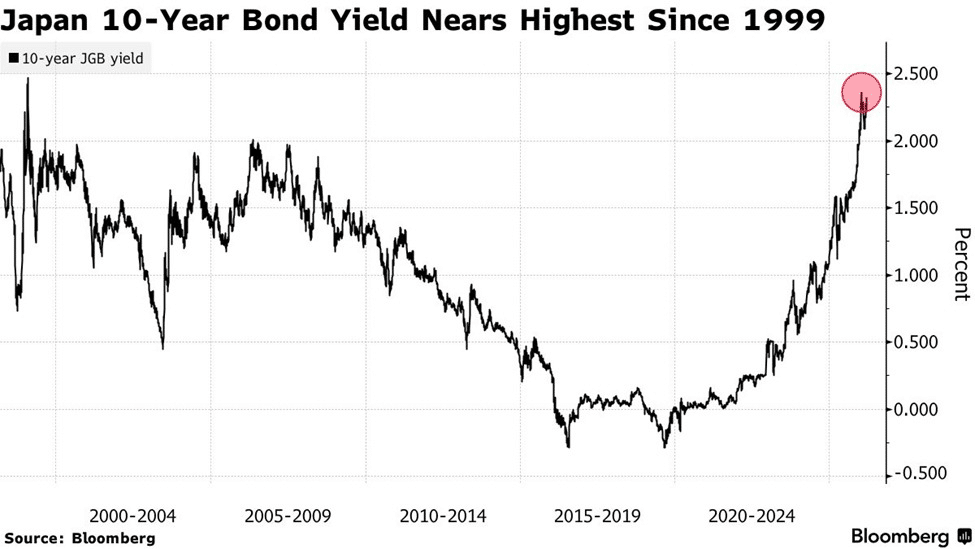
Notably, Japan serves as a key case study. With roughly 90% of its energy imported, rising oil prices are directly feeding into inflation. Consequently, this pressure is now showing up in bond markets, with Japan’s 10-year government bond yield climbing to 2.30%, nearing levels last seen in 1999.
So naturally, the question becomes, how do crypto investors position themselves around this?
From a technical lens, USD/JPY is approaching the 160 level, reflecting sustained yen weakness against the U.S. dollar. Historically, this level has acted as a trigger point for intervention. The mechanism is critical: to support the yen, Japanese authorities intervene by selling U.S. Treasuries to buy their domestic currency.
Why does this matter? Japan is the largest foreign holder of U.S. Treasuries, with roughly $1.1 trillion in holdings. If Japan starts selling, it signals money moving out of U.S. assets and back into yen. That shift reduces demand for the dollar, putting downward pressure on it.
Historically, a weaker dollar has supported liquidity and driven capital into crypto. So the question is, with the crypto market still capped amid ongoing geopolitical uncertainty, could this weakening dollar setup be creating a longer-term bullish opportunity?
Recession fears push investors to rethink crypto exposure
The focus isn’t on oil. Instead, it’s on the U.S. bond market, where the real action is unfolding.
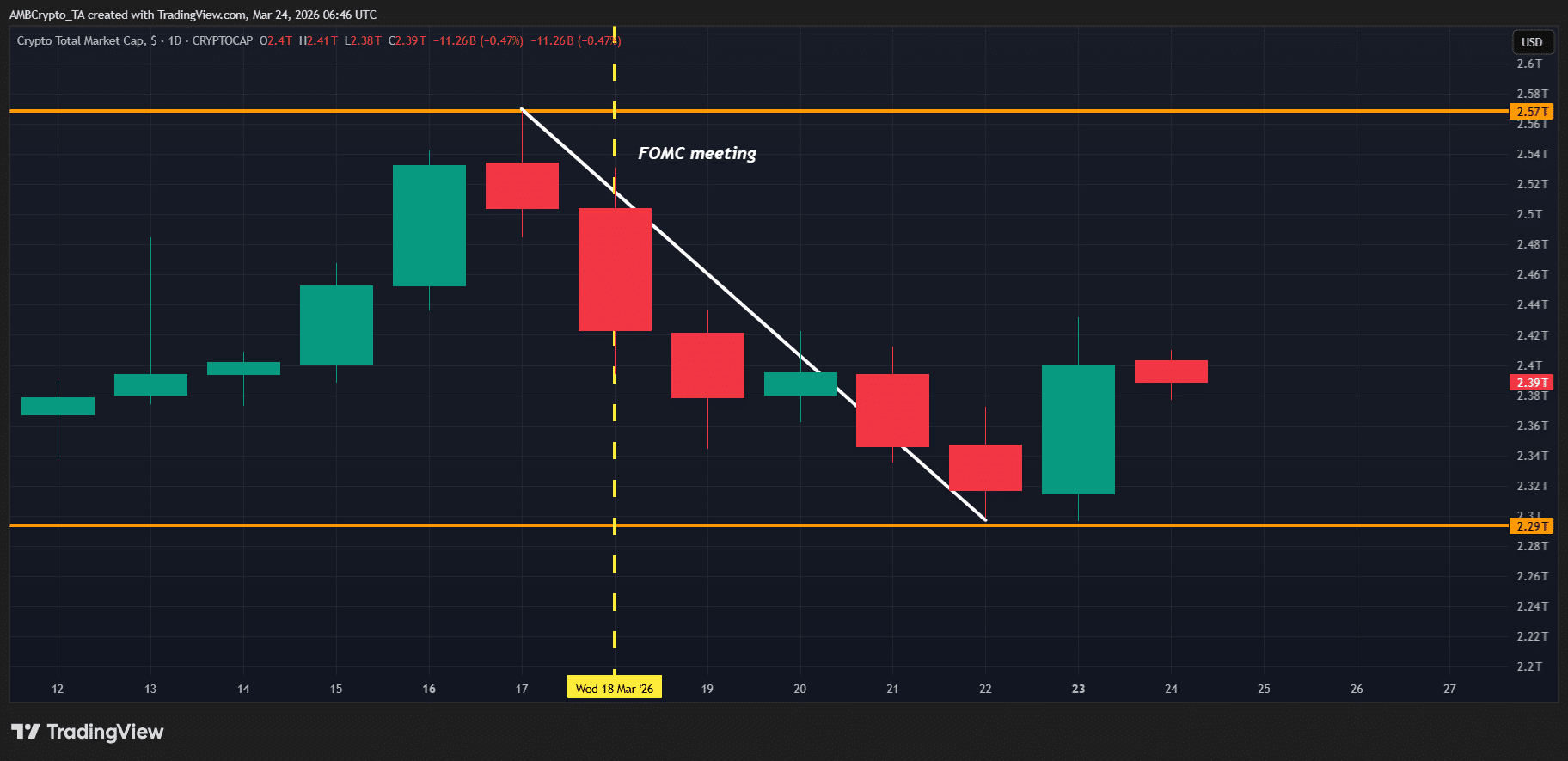
For context, the latest FOMC meeting kept interest rates steady, signaling that rate cuts are unlikely anytime soon. That move pushed the U.S. Dollar Index (DXY) above 100 and sent the 10-year Treasury yield up nearly 4%, back to levels last seen in July 2025.
Crypto markets reacted immediately, dropping 5.5% for the week, underscoring the familiar inverse relationship with the dollar. Yet, smart money appears unconcerned about a sustained trend, treating this as a short-term shock rather than a structural shift.
Goldman Sachs, for instance, has raised the U.S. recession probability to 30%, a 5 percentage point increase from prior estimates. The drivers include rising oil prices, tighter financial conditions, and ongoing Middle East tensions.
The implications are clear: slower GDP growth (1.25%-1.75% in H2) and rising unemployment (4.6%) put pressure on the economy, while the door remains open for rate cuts later this year. Notably, Japan is already showing similar stress, reflecting how these pressures are playing out across Asian markets.
Taken together, these shifts could reroute global capital flows, weigh on the U.S. dollar over time, and create potential opportunities for crypto. This suggests that much of the current volatility in risk assets is likely a short-term reaction rather than a long-term trend.
Final Summary
- Rising yields, yen interventions, and weaker U.S. dollar conditions could create long-term opportunities for crypto.
- The recent FOMC triggered a crypto drawdown, but smart money views it as a temporary shock rather than a lasting trend.