



AI Within Cannon Range
Original author: David, Shenchao TechFlow
On March 1, missiles and drones from Iran struck the Gulf region, with one landing on an Amazon data center in the UAE.
Data center fire and power outage caused approximately 60 cloud services to be interrupted.
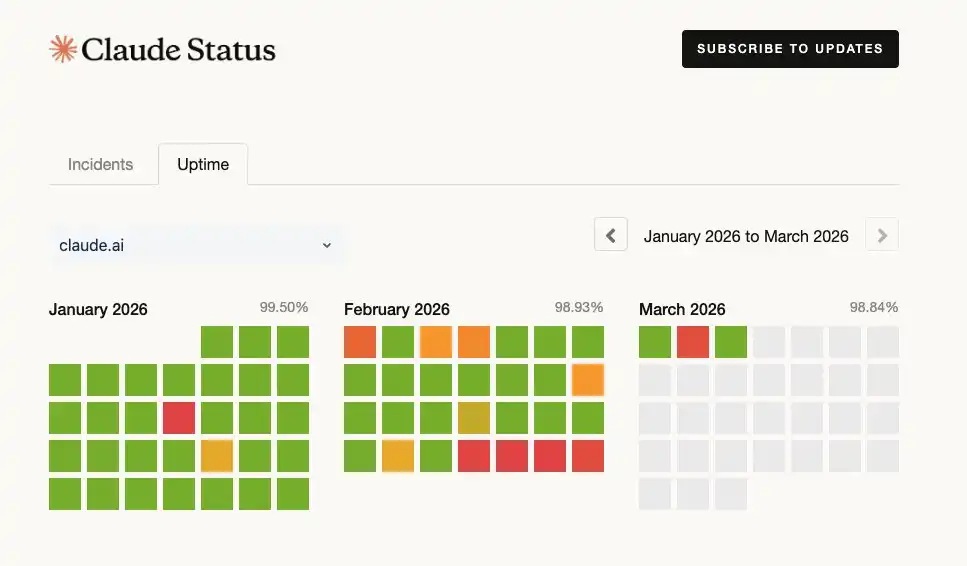
One of the world's largest AI models, Claude runs on Amazon's cloud. On the same day, Claude experienced a global outage.
Anthropic's official statement is that user traffic has surged beyond server capacity.
As of press time, social media still features complaints about Claude being unavailable; on the prominent prediction market Polymarket, a prediction topic titled "How many more outages will Claude have in March?" has already appeared.
If it is ultimately confirmed that Iran was responsible, this will be the first time in human history:
A commercial data center physically destroyed in a war.
But why would a civilian data center be bombed?
Go back two days. On February 28, the United States and Israel conducted a joint airstrike on Iran, killing Supreme Leader Khamenei and a number of senior officials.
A significant portion of the intelligence analysis, target identification, and battlefield simulation for this airstrike was assisted by Claude. Through collaboration between the military and the data analytics company Palantir, Claude has long been integrated into the U.S. military’s intelligence system.
Ironically, hours before the airstrike, Trump ordered a complete ban on Anthropic because Anthropic refused to hand over AI without restrictions to the Pentagon. But even with the ban in place, the war still had to be fought.
It will take at least six months to extract Claude from the military system, according to official statements.
So the ban was barely dry when the U.S. military took Claude to bomb Iran. Then Iran retaliated, and missiles landed on the data center running Claude AI.
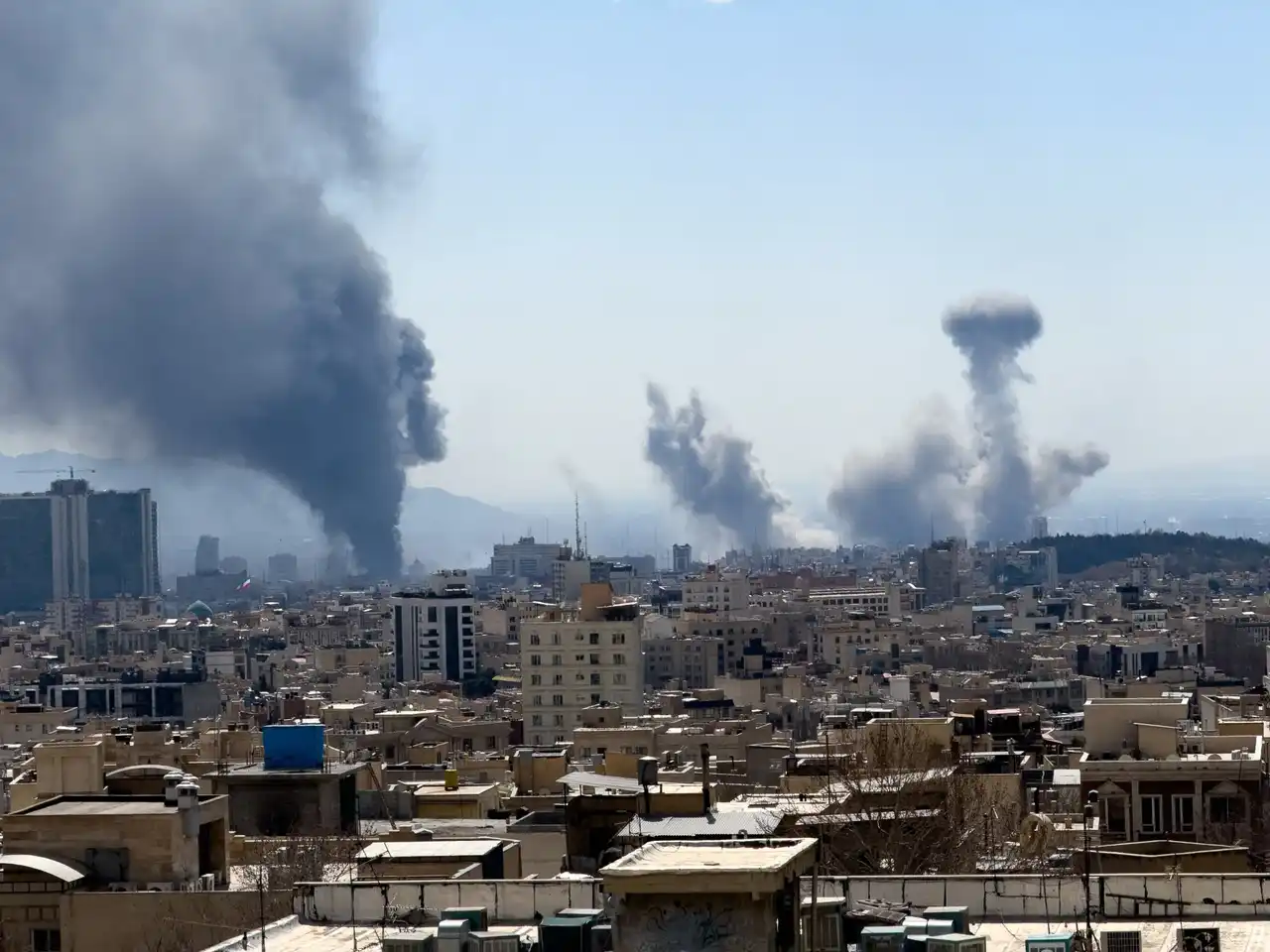
Source: Bloomberg
The data center was most likely not targeted for destruction, but rather caught in the crossfire. But regardless of whether the missile was aimed at the data center, one thing is certain:
Truth lies within the range of artillery, and so does AI. Both sides—the one firing the artillery and the one being hit—are within its range.
AI mega-infrastructure built on the Middle East's powder keg
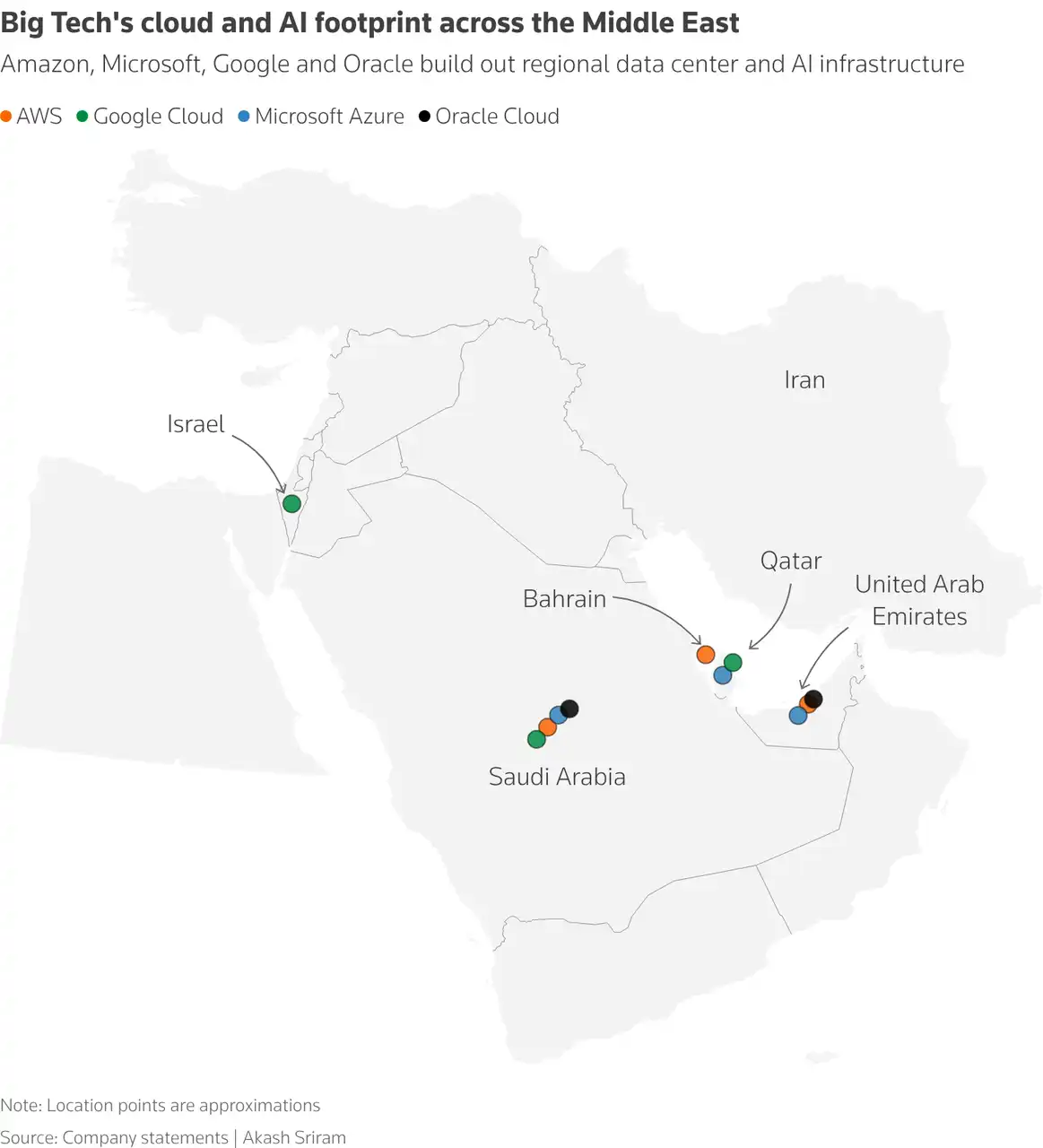
Over the past three years, Silicon Valley has moved half of the AI industry to the Middle Eastern Gulf.
The reason is simple. The UAE and Saudi Arabia have the world’s wealthiest sovereign funds, cheap electricity, and one regulation:
To serve my clients, the data must be stored on my premises.
So Amazon has opened data centers in the UAE and Bahrain, and is investing $5.3 billion to build another one in Saudi Arabia; Microsoft has nodes in the UAE and Qatar, and its facility in Saudi Arabia is also completed.
OpenAI, in collaboration with NVIDIA and SoftBank, is building an AI campus in the UAE worth over $30 billion, touted as the largest computing facility outside the United States.
In January this year, the United States, along with the UAE and Qatar, signed an agreement called "Pax Silica," which translates to "Peace of Silicon"—sounds beautiful.
The core of the protocol is to control the flow of chips and ensure that advanced chips do not fall into Chinese hands.
In exchange, the UAE received approval to import hundreds of thousands of NVIDIA's most advanced processors each year. G42 in Abu Dhabi has severed ties with Huawei, and Saudi Arabia’s AI companies have pledged not to purchase Huawei equipment...
The entire Gulf's AI infrastructure, from chips to data centers to models, is fully aligned with the United States.
These protocols take into account everything, from chip export controls and data sovereignty to investment reciprocity and technology leakage risks.
But no one considered that someone might use a missile to blow up a server room.
An international security scholar from Qatar University said something after seeing the Amazon data center fire, which I found quite apt:
These security frameworks were designed for supply chain control and political alignment; physical security has never been on the agenda.
Cloud computing has been telling the same story for ten years: elasticity, redundancy, decentralization. But data centers are physical buildings with addresses, walls, roofs, and coordinates. No matter how advanced your chips are, if the data center is blown up, it’s blown up.
"Cloud" is a metaphor; the data center is not.
AI seems abstract, running in code, floating in the cloud. But code runs on chips, chips are installed in data centers, and data centers are built on Earth.
Who protects AI?
This Amazon data center can be said to have been affected, or alternatively, collateral damage.
But what about next time?
In the context of escalating global geopolitical conflicts, if your data center is running AI models that help your adversaries with target recognition, they have no reason not to treat your data center as a military target.
International law also has no answer to this question.
Current laws of war address "dual-use facilities," but those provisions refer to factories and bridges—no one considered data centers.
A data center that runs banking transactions during the day and military intelligence analysis at night—is it civilian or military?
In times of peace, data center locations are chosen based on latency, electricity costs, and policy incentives... But when war comes, none of that matters—what matters is how far your server room is from the nearest military base.
So, this bombardment has started to shift people's attention.
Previously, everyone was discussing the same anxiety: whether AI would replace my job; but no one discussed another issue:
How fragile is AI itself before it replaces you?
A regional conflict took down the Middle East node of the world’s largest cloud provider for an entire day—and that was just one data center.
There are currently nearly 1,300 hyperscale data centers worldwide, with another 770 under construction. These facilities consume increasing amounts of electricity, water, and money, and they host an ever-growing array of data—your savings, your medical records, your food delivery orders, and even a nation’s military intelligence...
But the solutions for protecting these data centers may still consist of fire suppression systems and backup generators as of today.
When AI becomes a nation’s infrastructure, its security is no longer just a company’s concern. Who protects AI? Cloud providers? The U.S. Pentagon? Or the UAE’s air defense system?
This was a theoretical question three days ago. It isn't anymore.
AI is within the range of artillery. In fact, it’s not just AI. In this era, what isn’t within the range of artillery?
Click to learn about the open positions at BlockBeats
Welcome to the official BlockBeats community:
Telegram subscription group: https://t.me/theblockbeats
Telegram group: https://t.me/BlockBeats_App
Official Twitter account: https://twitter.com/BlockBeatsAsia