





Original | Odaily Planet Daily (@OdailyChina)
Author | Golem (@web3_golem)
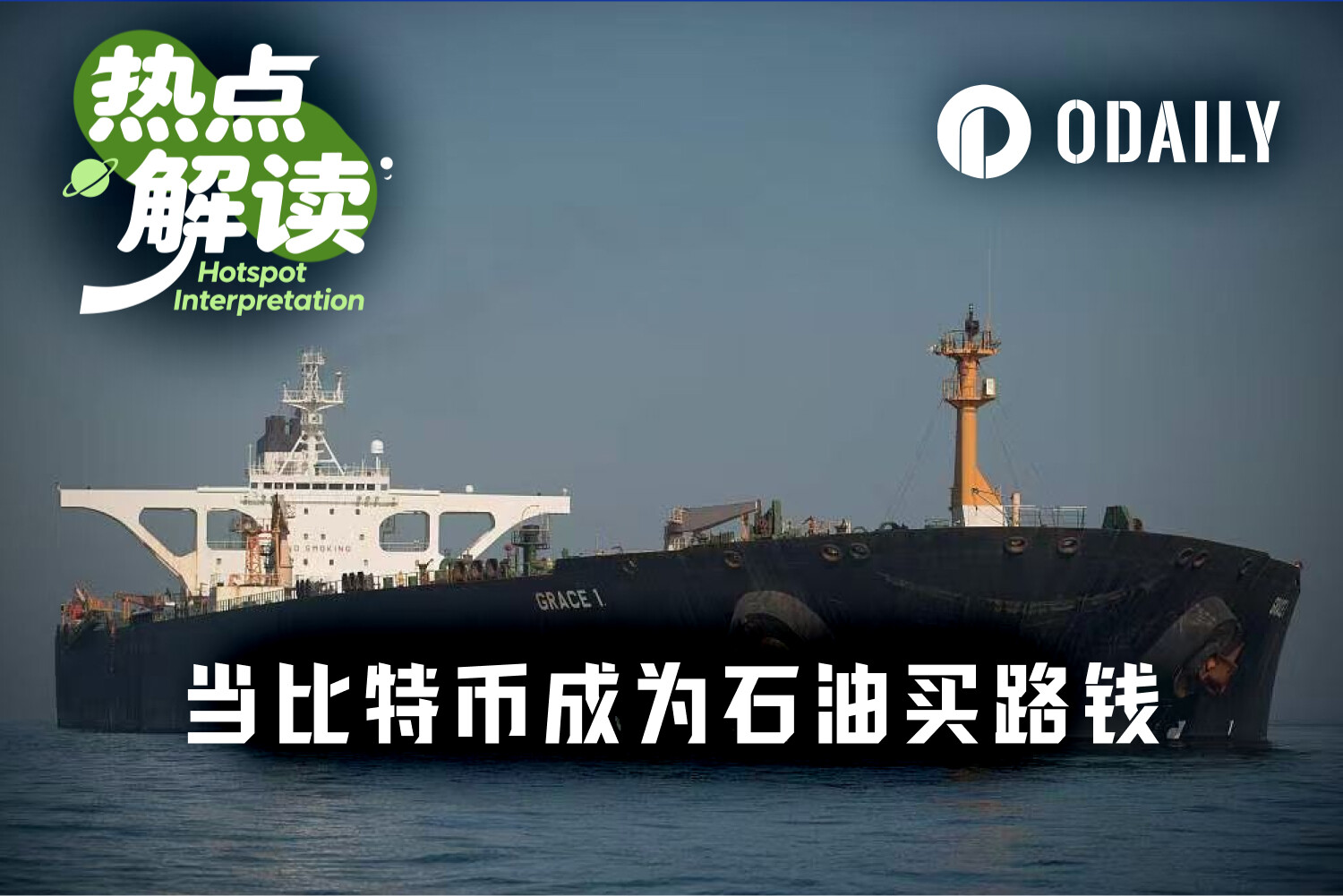
Some news stories immediately spark speculation, such as the one on April 8—Iran proposed charging a $1 per barrel toll on tankers passing through the Strait of Hormuz during a two-week ceasefire, payable in Bitcoin.
The crypto market reacted quickly. When Iran announced it was preparing to accept Bitcoin for tanker tolls, BTC's price briefly surged to $73,000 as a result. Although Bitcoin’s price has since retreated to around $70,000 today, for Bitcoin believers, the symbolic significance far outweighs the mere price increase—the vision Satoshi Nakamoto had for Bitcoin as “electronic cash” was activated under extreme circumstances.
Extreme tool, finally encountered an extreme scenario
After Iran announced this news to the world, I imagined an absurd yet profoundly real moment.
On the narrow but vital blue chokepoint of the Persian Gulf, which controls over 20% of the world’s crude oil supply, tankers line up in long queues awaiting passage. Above them, helicopters armed with machine guns circle relentlessly, and nearby, Iranian warships stand ready to sink any vessel that disobeys the rules. At this very moment, the captain of a very large crude carrier carrying 2 million barrels stands on deck, squinting at his screen as the salty sea wind blows. He hears no sound of the Persian Gulf’s waves—only waits anxiously for a massive Bitcoin transaction to be “packed into a block” by miners, a process that takes about 10 minutes. Only when those Bitcoins successfully reach the Islamic Revolutionary Guard Corps’ address will his ship be allowed to pass safely.
When the most vital industrial blood of human civilization—oil—must be cleared by both physical straits and the online Bitcoin network, a surreal, epic sense of dissonance sends shivers through the mind.
Over the years, one of the most debated topics has been: what is Bitcoin actually useful for? But regardless of the final outcome of these debates, the original narrative from Bitcoin’s whitepaper—“peer-to-peer electronic cash”—has been dismissed. This is because Bitcoin exhibits high price volatility and extremely low settlement efficiency; it is not only vastly inferior to traditional banking settlement systems, but even when considering the cost and efficiency of cross-border payments, market participants overwhelmingly prefer stablecoins. As a result, Bitcoin appears to have been completely excluded from payment use cases.
But in extreme scenarios, traditional banking settlement systems and stablecoins both become useless. What constitutes an extreme scenario? It’s when a country is expelled from SWIFT, and its foreign exchange reserves held in overseas banks turn into a string of numbers that can only be viewed but not accessed—even stablecoins can be frozen by their issuers. Iran is currently facing such an extreme scenario: no matter how fast banking or stablecoin settlements may be, the funds never reach Iran’s pockets. (Odaily Note: In 2025, Tether froze 42 Iranian addresses; in March 2026, Circle and Tether jointly froze approximately $2.49 million in stablecoin assets associated with Iran’s exchange Wallex.)
If you are Iran, facing a “global police” that can freeze all your foreign exchange assets and cut off all banking connections at any moment, efficiency and volatility no longer matter—autonomous settlement is everything. Hamid Hosseini, spokesperson for the Consortium of Iranian Oil, Gas, and Petrochemical Exporters, told a Financial Times journalist bluntly why Bitcoin was chosen as the settlement tool: it is used to ensure transactions cannot be traced or seized due to sanctions.
Hosseini is only half right—Bitcoin transactions can indeed be traced on the blockchain, and the U.S. has previously tracked and seized Bitcoin in multiple international cases. But these actions are always retrospective, require time, and due to Bitcoin’s decentralized nature, the U.S. government cannot track or block transactions—such as those between Iran and a tanker—at the exact moment they occur. For Iran, being able to achieve this is sufficient.
This also shows that perhaps Bitcoin was never intended to serve “peaceful times.” When the world begins to fracture and trust collapses, this consensus built on mathematics and code becomes the last financial sanctuary for marginalized groups. The “dragon-slaying technique” written by Satoshi Nakoshi over a decade ago has found its use amid the smoke of the Persian Gulf.
Are you just talking big by accepting Bitcoin across the bay?
But don’t pop the champagne for Bitcoin just yet—let’s return to reality: the “option” of accepting Bitcoin for transit oil tankers may never happen. On the morning of April 9, the day after Hosseini announced the Bitcoin toll for passing tankers, the Strait of Hormuz was closed again. This raises the question: was Hosseini just talking tough from the start?
Arthur Hayes also expressed the same skepticism, posting on X that he would only believe Iran had collected tolls in Bitcoin if he saw actual Bitcoin transaction records on-chain; otherwise, it is more likely a mockery of the Western financial system.
Even if we go further and assume the Strait of Hormuz remains open, and the Iranian Islamic Revolutionary Guard Corps has accumulated a massive amount of Bitcoin, they couldn’t simply hold onto it—they would eventually need to sell these Bitcoins for fiat currency to purchase food, medicine, and weapons. But under current OFAC sanctions against Iran, which exchange or institution in the world would dare assist Iran in selling these Bitcoins? The U.S. might not catch you immediately, but reprisals are inevitable.
Therefore, in light of reality, Hosseini’s statement is likely also a psychological tactic—未必真要收比特币,只是对美国放一句狠话—and not necessarily an actual intention to accept Bitcoin; it’s merely a strong message to the U.S. Iran aims to convey that U.S. sanctions are ineffective: even under extreme circumstances, without relying on the U.S. dollar, SWIFT, or stablecoins, I can still maneuver freely within the international financial system.
Ultimately, in geopolitics, what matters is often not whether a statement can be implemented, but what signal it sends to the other side, what psychological pressure it creates, and what expectations it shifts—even if the matter ultimately comes to nothing, it has already fulfilled its communicative purpose. For instance, just before the U.S. and Iran announced a two-week ceasefire, Trump made a strong rhetorical threat that he would wipe out Iranian civilization overnight; had Trump not made such a forceful threat, it’s uncertain whether the U.S. and Iran would have reached a ceasefire at all.
So in this game, Bitcoin can play the role of an assassin or merely a smoke screen. As supporters of cryptocurrency, don’t be too disappointed—the right attitude is to neither overestimate nor underestimate it.
One thing is certain: Bitcoin has been forcibly pulled into the realm of geopolitics. When sovereign nations wield Bitcoin as a weapon or threat, it proves it has not been forgotten.
This is reassuring: the world is growing colder, while Bitcoin mining machines are heating up.