





This report examines the key requirements and approaches financial institutions should consider when adopting digital assets.
PayPal launched the USD-pegged stablecoin PYUSD and integrated it into its payment services. BlackRock introduced the tokenized money market fund BUIDL, whose assets under management surpassed $3 billion. JPMorgan, Fidelity, and Goldman Sachs have also followed suit. Wall Street, which stood on the sidelines just two or three years ago, has now entered the market directly.
The reason is simple: the structural inefficiencies of the traditional financial system. Every transaction incurs intermediary fees, settlement takes days, and trading halts after market hours. Digital assets have fundamentally changed this: lower costs, faster speeds, and no time restrictions. The result is a more flexible and scalable market. Digital assets are no longer a question of "why," but of "how."
But “how to achieve it” is much harder than it appears. When the financial industry transitions online, the challenge is not technology, but how to maintain trust and control in a new environment. The same applies here: issuing, custody, transferring, and settling must operate reliably on-chain while integrating with traditional financial systems and regulatory frameworks.
The core challenge is clear: how to enable digital assets to fulfill financial functions within the existing system.
1. The New Global Financial Order
Digital assets have transitioned from a speculative market to one dominated by institutions. Long regarded as conservative, institutional investors are now shifting their perspective due to accelerated regulatory developments, led by the United States. Today, institutional investors view digital assets as a novel opportunity and seek to explore and capitalize on it as early as possible.
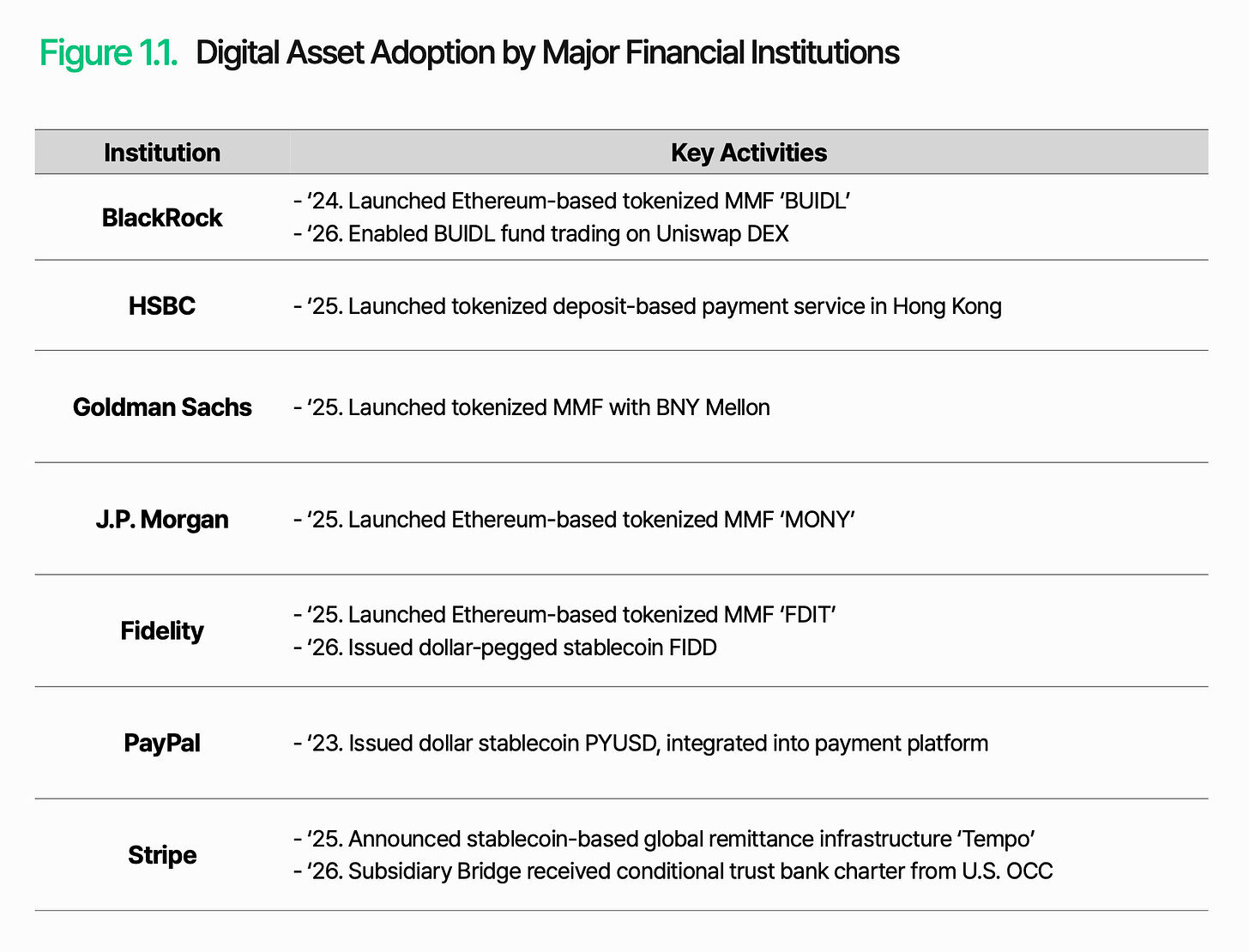
This shift is most evident in the actions of large financial institutions. For example, BlackRock has not stopped at tokenizing its money market fund—it has begun enabling trading of the fund on the decentralized exchange UniswapX. This indicates that global financial institutions now view digital assets as a new form of infrastructure, not merely as investment products, capable of extending the functionality and reach of traditional finance. It also marks a symbolic convergence, as digital assets and traditional finance increasingly interpenetrate to form a unified ecosystem.
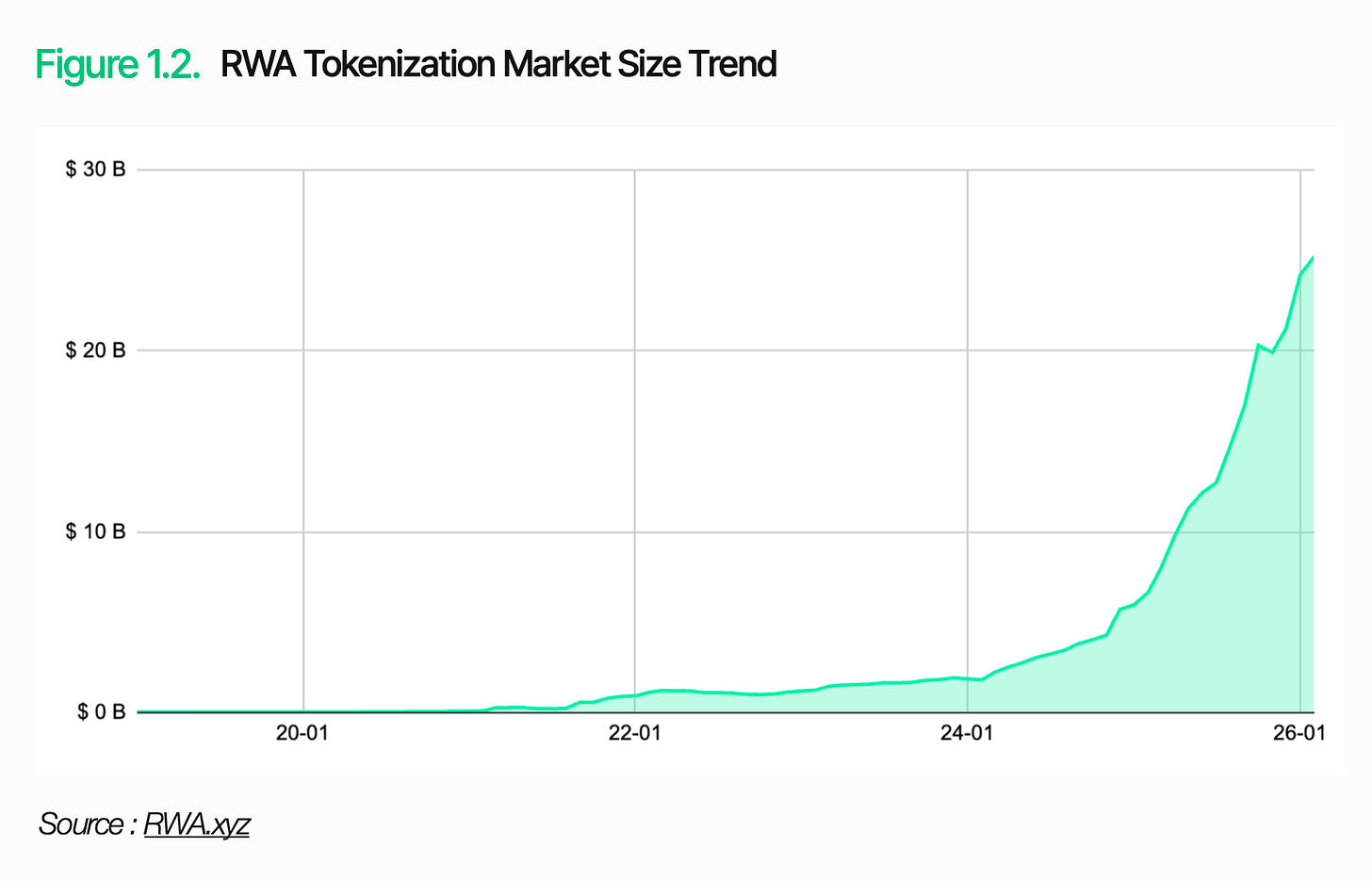
The market itself is rapidly expanding. In 2025, the annual trading volume of stablecoins is projected to reach approximately $33 trillion, a 72% year-over-year increase. The tokenization market for real-world assets (RWA) exceeds $25 billion, with U.S. Treasury tokenization alone accounting for $10 billion. The scale of digital assets has reached a point where institutional investors can no longer ignore them.
2. What is required for digital asset infrastructure?
Digital assets are no longer optional; the key lies in how they are applied. First, it’s essential to clearly understand what blockchain does—and what it doesn’t. Blockchain is an efficient ledger technology designed to securely record and verify transactions. That is the sole purpose of blockchain.
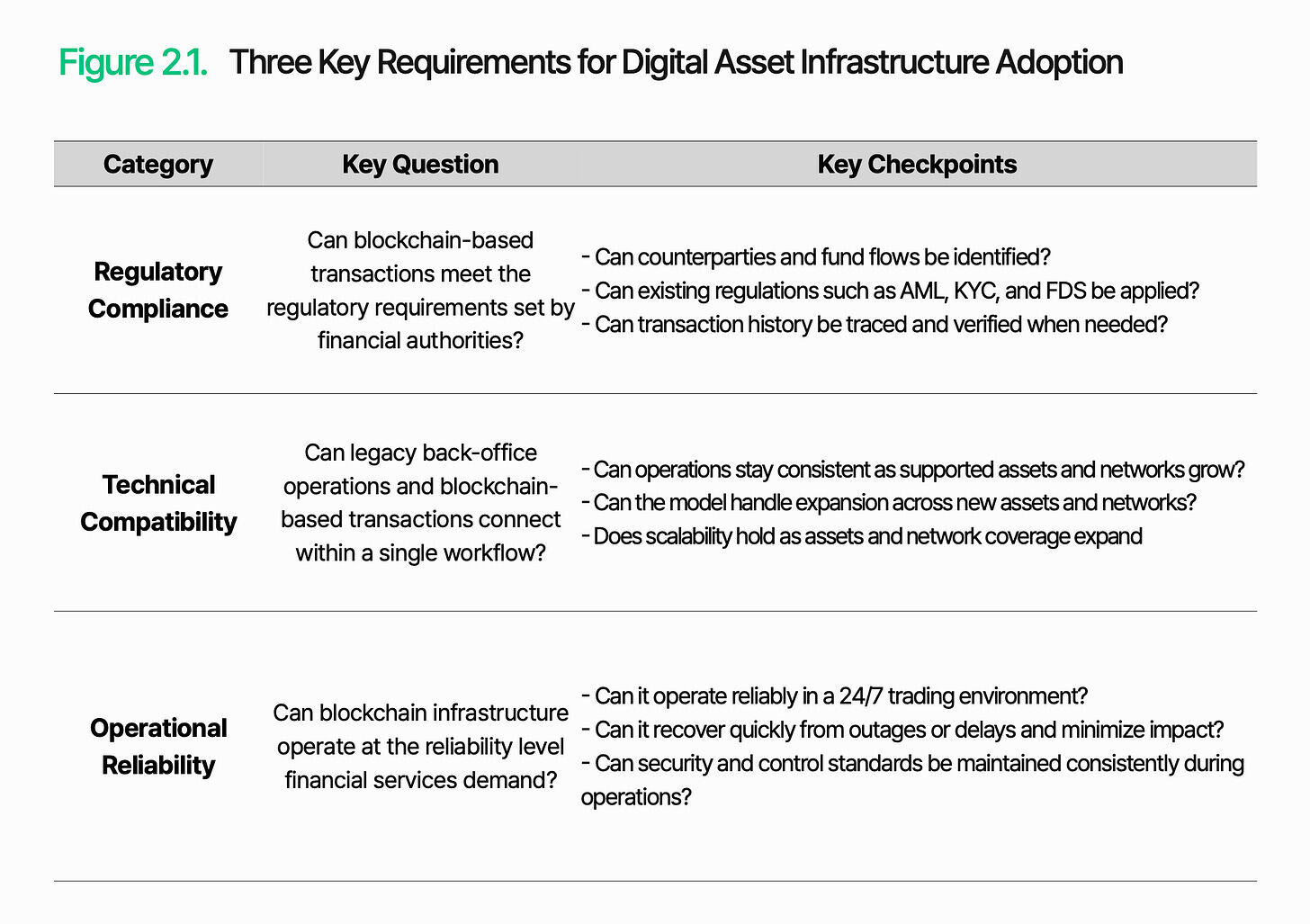
To function as financial infrastructure, independent transaction processing, management, and control systems must be built on top of it. Before adopting this system, financial institutions must first evaluate three aspects: regulatory compliance, technical compatibility, and operational reliability.
2.1. Regulatory Compliance
Key question: Can blockchain-based transactions meet the regulatory requirements established by financial regulators?
Regulatory compliance is the first hurdle for digital asset infrastructure. As digital assets enter the regulated financial sector, they face the same obligations as traditional finance. However, the environment in which these rules must be applied is vastly different and still unfamiliar.
Regulations such as Anti-Money Laundering (AML), Financial Data Security (FDS), and Know Your Customer (KYC) remain in effect. The real challenge lies in how to apply these regulations. In traditional finance, named accounts ensure consistent identification of counterparties and fund flows. On the blockchain, transactions are centered around wallet addresses, and the connection between addresses and actual users is not automatically visible. As a result, identifying counterparties and tracking fund flows becomes significantly more complex.
The core of regulatory compliance lies in identifying and managing blockchain-based transactions within existing regulatory frameworks, ensuring traceability of counterparties and fund flows, and enabling the enforcement of regulatory measures.
2.2 Technical Compatibility
Key question: Can traditional backend operations and blockchain-based transactions be integrated into a single workflow?
Digital assets must fulfill the role of financial infrastructure, and blockchain-based transactions must be processed within existing backend workflows. They cannot operate independently of traditional systems.
The challenge lies in the fact that blockchains operate outside of financial institutions' internal systems. These two environments record and process transactions in fundamentally different ways. The structural format of blockchain data cannot be directly read by traditional systems. Additionally, there are differences in data structures and interpretation methods across different networks. As the number of supported blockchains continues to grow, the scope of integration and operational complexity also increases.
Technical compatibility depends on whether blockchain data can be converted into formats compatible with existing systems and whether on-chain transactions can be integrated into institutional workflows. Issuance, settlement, and clearing must seamlessly connect between traditional backend systems and blockchain-based operations.
2.3 Operational Reliability
Key question: Can blockchain infrastructure operate at the reliability level required by financial services?
Operational reliability is critical because digital asset services rely on infrastructure that must run 24/7/365. In traditional finance, fixed operating hours and scheduled maintenance provide natural buffer mechanisms. However, in the blockchain space, even minor delays or outages can directly cause transaction delays and erode institutional confidence.
The challenge lies in the fact that blockchain-based services do more than just process transactions. Data collection, transaction processing, and system integration occur simultaneously. A failure in any one component can affect the entire service. Transaction delays, missing data, or network outages can all lead to settlement errors or reporting failures.
Reliability encompasses more than just uptime. It requires maintaining transaction continuity, data consistency, event response capabilities, and security controls. Digital asset infrastructure must go beyond mere connectivity—it must sustain this connectivity as a stable, production-grade service.
3. Lambda256: A Unified Financial Middleware for Digital Asset Adoption
As previously mentioned, a core challenge in the adoption of digital assets lies in how to process and manage blockchain-based transactions within existing financial systems. Lambda256 provides a unified financial middleware solution for this purpose. As a blockchain technology subsidiary of Dunamu, the operator of Upbit, Lambda256 has developed a unified technology stack for digital asset adoption, backed by extensive experience in large-scale infrastructure operations and numerous proof-of-concept (PoC) implementations.
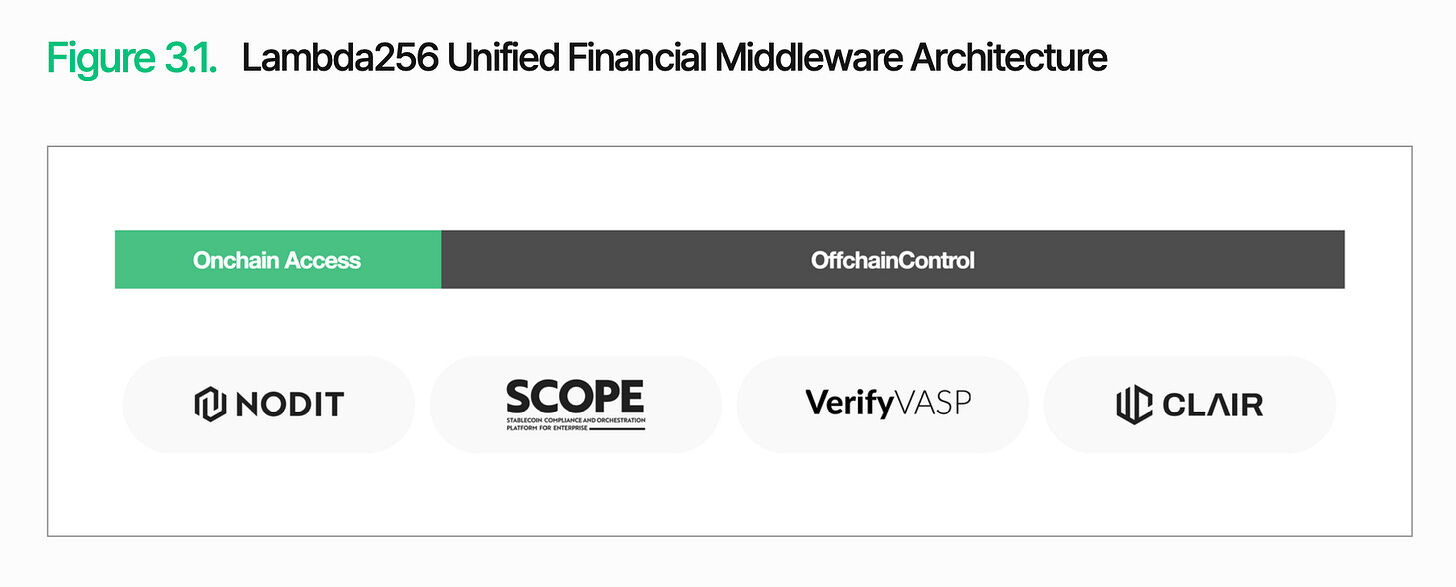
Lambda256’s technology stack consists of two layers: the on-chain access layer and the off-chain control layer. The on-chain access layer is responsible for collecting and processing data and transactions from multiple blockchains and converting them into formats compatible with existing systems. The off-chain control layer manages and processes this data within the framework of traditional financial operations. The core of this architecture lies in connecting blockchain transactions with institutional workflows. Lambda256 delivers these capabilities through middleware, enabling financial institutions to integrate digital asset infrastructure with their existing systems and deploy digital asset infrastructure effectively. Financial institutions can leverage the advantages of on-chain technology while maintaining operations and control within their existing frameworks, thereby reducing infrastructure burdens and focusing more on core business activities.
3.1. On-chain Access
On-chain access refers to the foundational capability of reliably connecting to the blockchain network, retrieving necessary data, and processing transactions. Essential functions such as balance inquiries, transaction status checks, and asset transfers all depend on this layer.
However, on-chain access is not simply a matter of connecting to a blockchain. Although on-chain data is public, its structure is not in a format that existing systems can directly read and use. Querying the balance or asset status of a specific wallet requires tracing relevant transactions and gathering the necessary information. This burden increases due to differences in data structures across various networks.
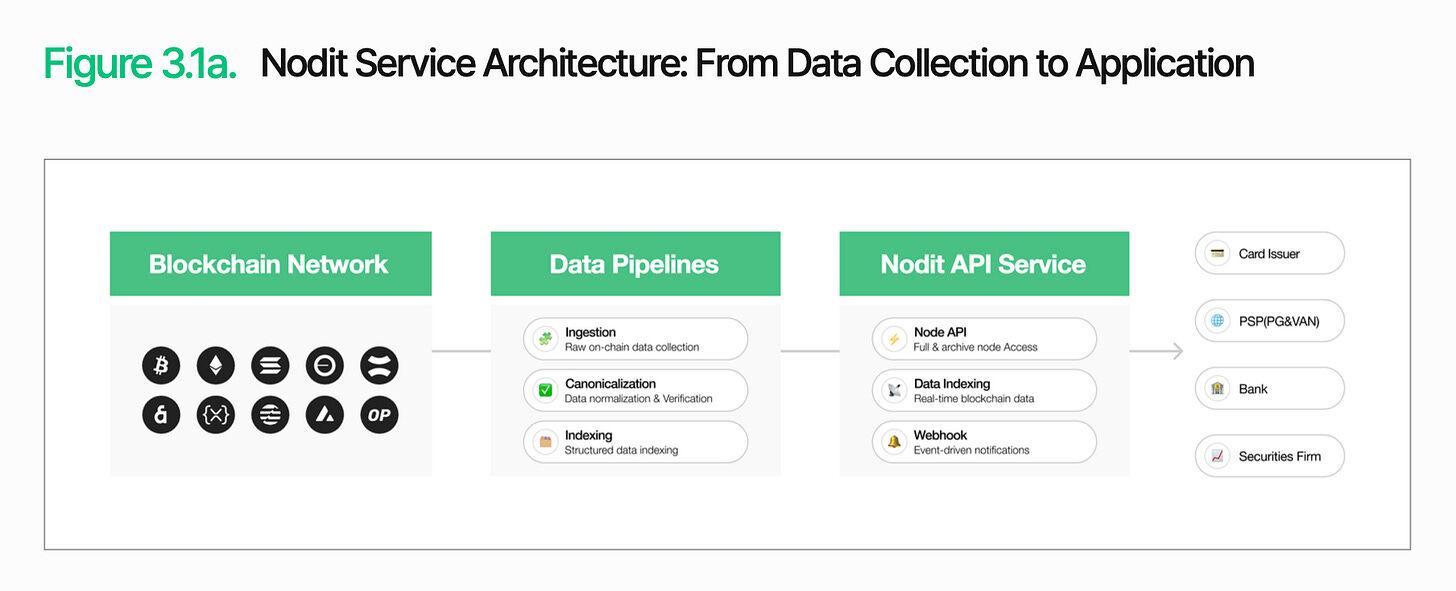
Nodit is an institutional-grade blockchain data infrastructure designed to solve this problem. It collects and processes data from multiple blockchain networks and delivers it in formats immediately usable by existing systems. Financial institutions can leverage on-chain data within their systems without running complex nodes or handling raw data.
Processing stability is equally critical. Continuous operation of digital asset services is essential, as any interruption in data retrieval or transaction verification directly leads to service delays and increased operational costs.
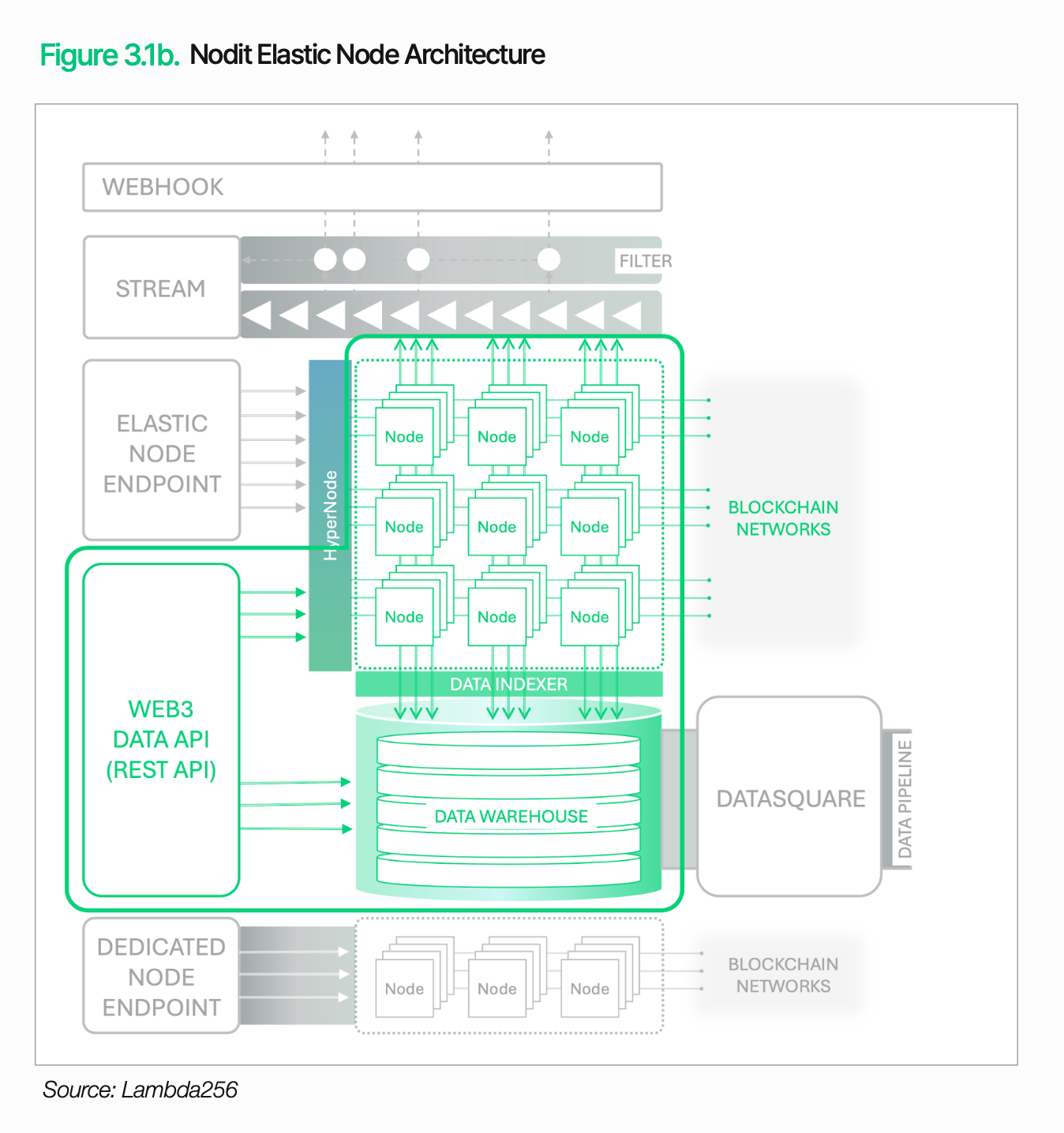
Nodit maintains stable processing capacity even during high traffic by leveraging its elastic node architecture—which automatically scales nodes based on traffic—and the HyperNode engine, which distributes requests across multiple nodes. Combined with 24/7 monitoring, automatic failover, dedicated node support, and SOC 2 Type 2 certification, Nodit provides financial institutions with a trusted access foundation.
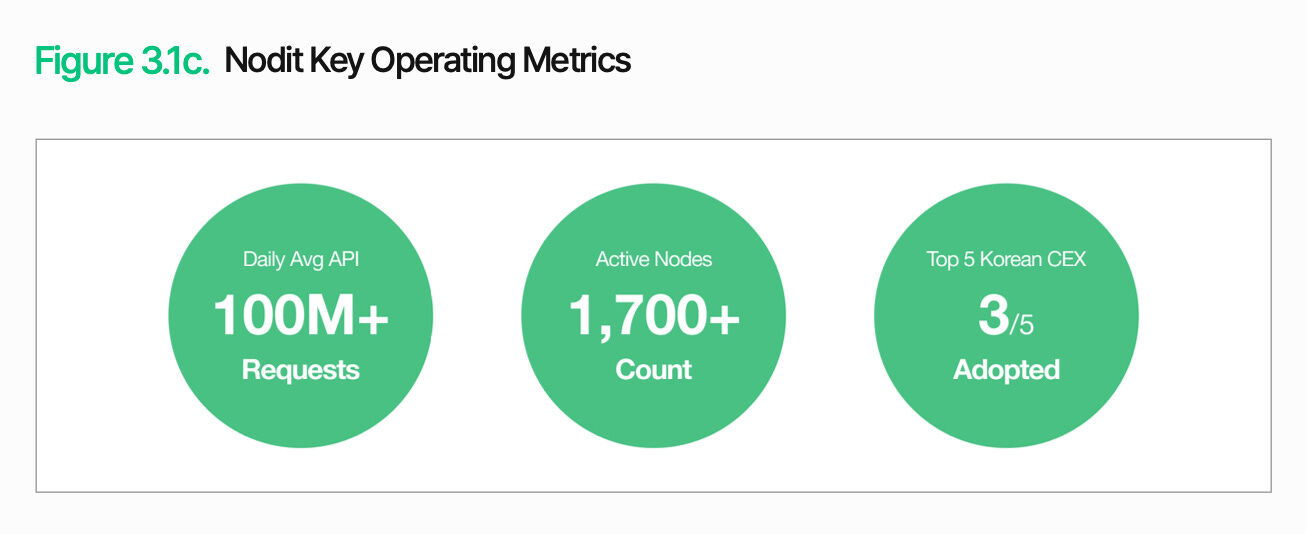
Among South Korea’s top five digital asset exchanges, Upbit, Coinone, and Korbit all operate on Nodit’s infrastructure, handling over 100 million API requests daily and maintaining approximately 1,700 active nodes—demonstrating Nodit’s exceptional capability in managing high traffic and ensuring stable operational environments.
The on-chain access layer does more than just data retrieval. The data and transaction information obtained at this stage provide a shared foundation for downstream functions—including issuance, settlement, clearing, and compliance—all of which operate within the same architecture. Financial institutions can gradually expand their digital asset services by integrating required functions into their existing systems and workflows, without building separate infrastructure for each function.
3.2. Off-chain Control
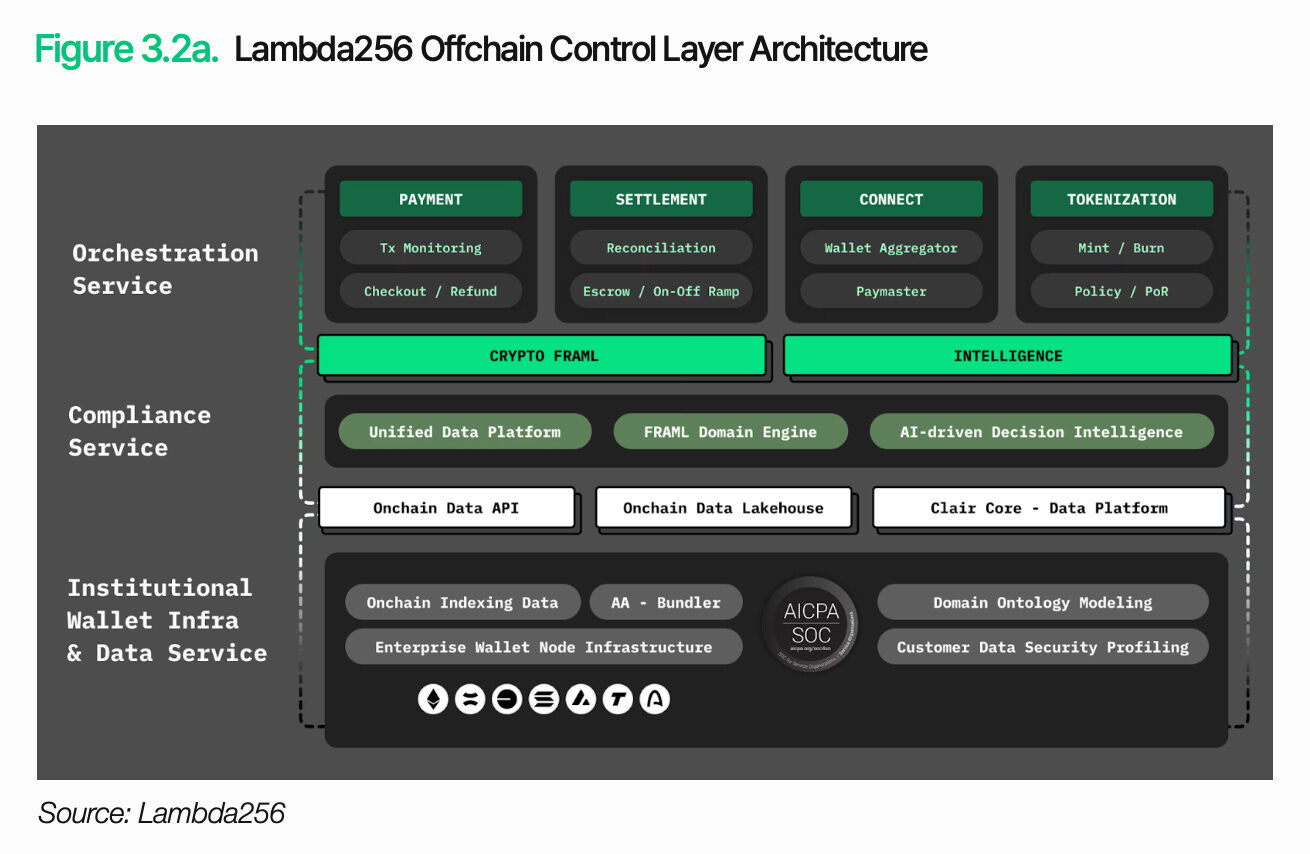
Establishing on-chain access permissions does not complete the digital asset service. Further integration of on-chain transaction results and status data into traditional financial workflows is required. Blockchain transactions must be processable within existing operational procedures and internal control frameworks to fulfill their role in financial services. Off-chain controls are precisely what fulfill this function.
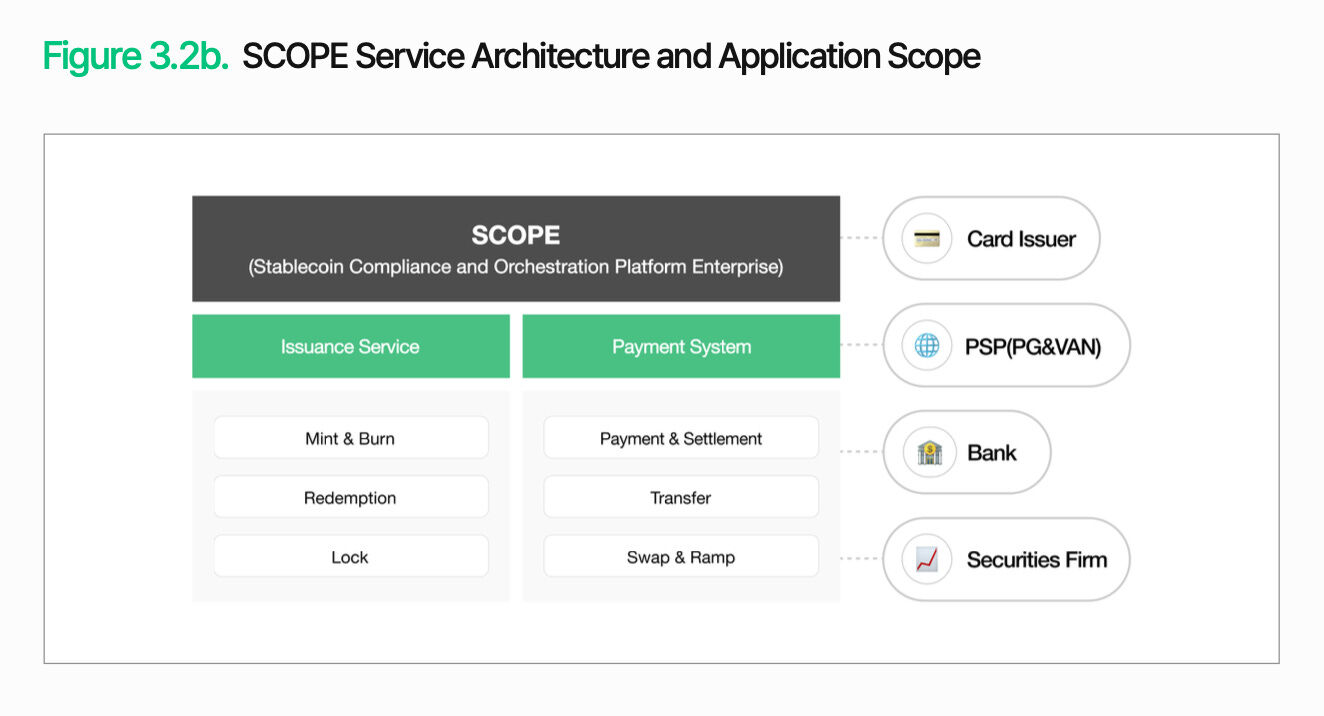
The core of off-chain control lies in integrating blockchain transactions into existing financial operations. SCOPE manages issuance, distribution, settlement, and clearing within a single architecture, connecting blockchain-based transactions with traditional back-office workflows. Importantly, this does not require a complete replacement of existing systems. Institutions can gradually integrate required functionalities into their current workflows.
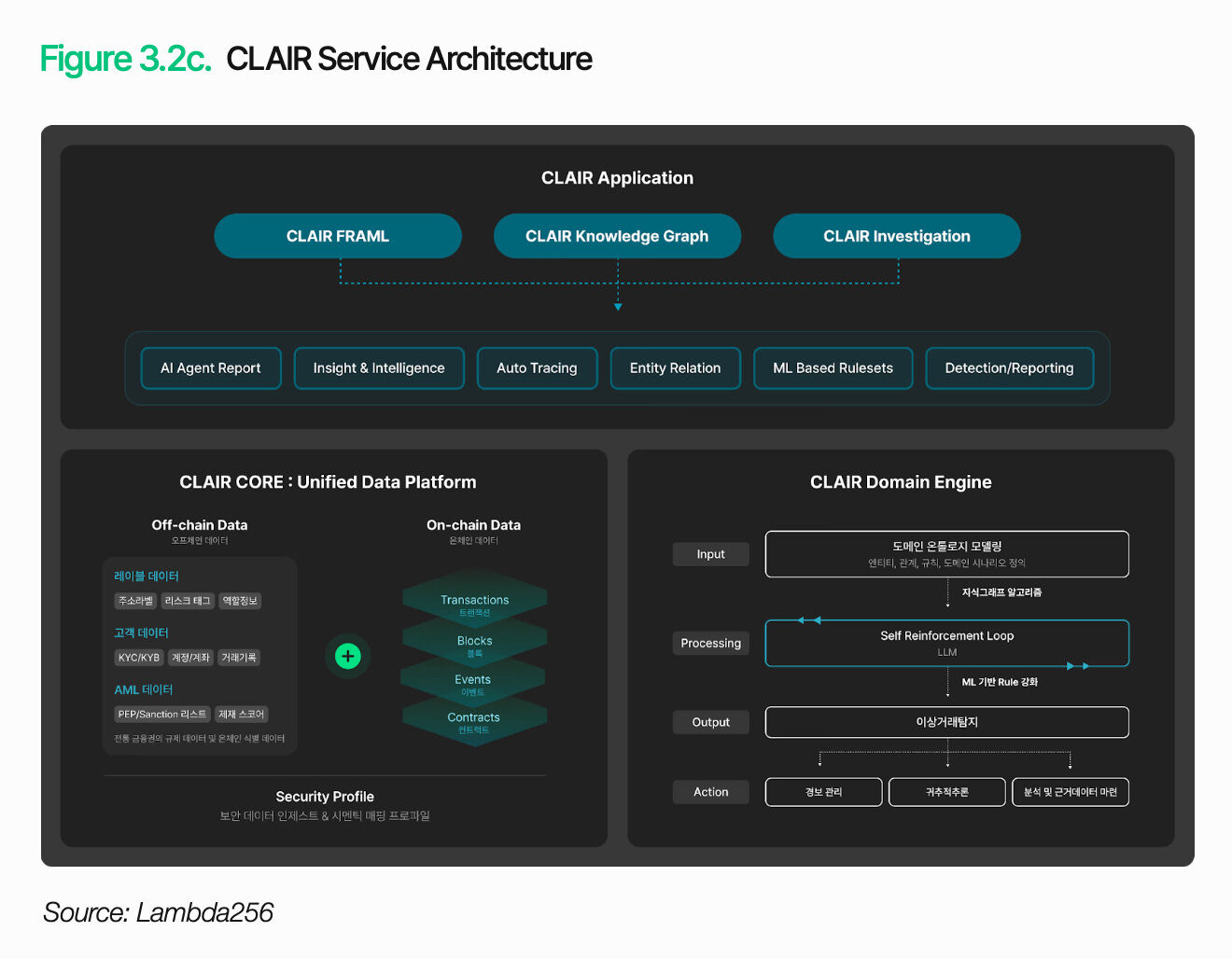
Simply including transactions in operations is not enough. Institutions must also interpret the context and risks of each transaction. CLAIR analyzes fund flows and identifies risk signals by mapping wallet relationships through an ontology-based knowledge graph and contextualizing transaction patterns, enabling end-to-end fund tracking beyond simple anomaly detection.
This feature has been proven in practice. Over a dozen overseas law enforcement agencies and exchanges have adopted CLAIR as their white-label analytics solution. Partnerships with domestic security, auditing, and regulatory solution providers are also continuously expanding.
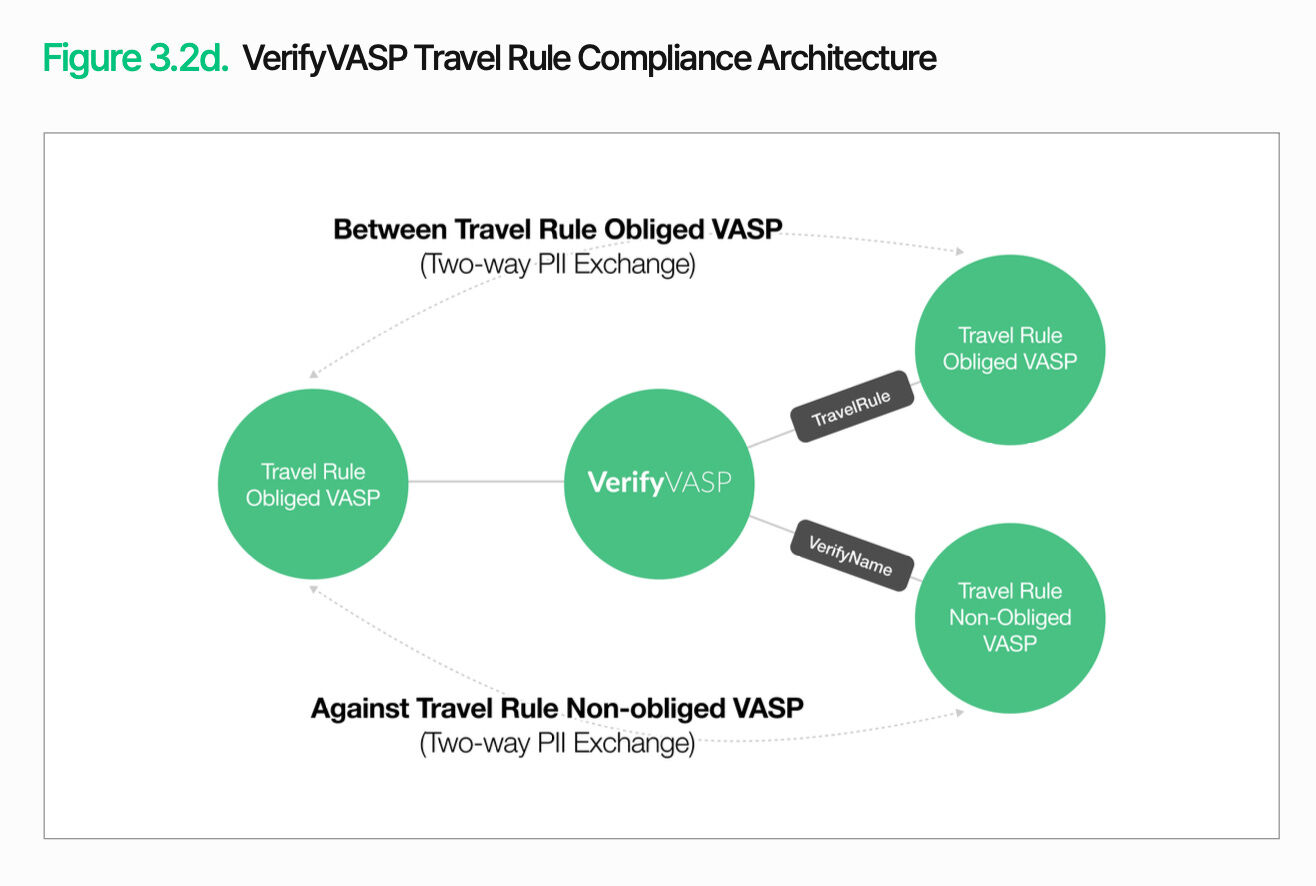
In addition to transaction monitoring, counterparty verification is required. VerifyVASP handles this functionality. To manage on-chain transactions under existing controls, financial institutions must not only verify the flow of funds but also verify counterparty information. This enables institutions to continuously and effectively manage counterparty risk, regardless of specific regulatory requirements.
The core of off-chain control lies in enabling on-chain transactions to be managed within traditional financial operations and governance frameworks. Trade execution, interpretation of fund flows, and counterparty verification must be seamlessly integrated within a unified architecture for digital asset services to truly function as financial services. Institutions can gradually integrate the required functionalities on top of their existing systems.
4. Key Use Cases for Digital Asset Applications
The adoption of digital assets does not follow a single path. Banks, credit card companies, and securities firms each adopt different adoption strategies based on their business objectives and operational structures. Infrastructure requirements and priorities also vary accordingly. The following sections analyze key scenarios by industry, highlighting the challenges involved and potential solutions.
4.1 Adoption of Stablecoin Payments
Suppose a major domestic credit card company, TigerPay, introduces a stablecoin payment option for international tourists.
As inbound tourism grows, the limitations of existing payment infrastructure are becoming increasingly apparent. Cross-border card transactions incur intermediary fees and exchange rate spreads, and merchant settlements are delayed. Tourists also face the inconvenience and costs of currency conversion and opaque exchange rates. To reduce these friction points, TigerPay aims to allow tourists to pay directly in USD-denominated stablecoins, while merchants receive payment in KRW or KRW-linked stablecoins.
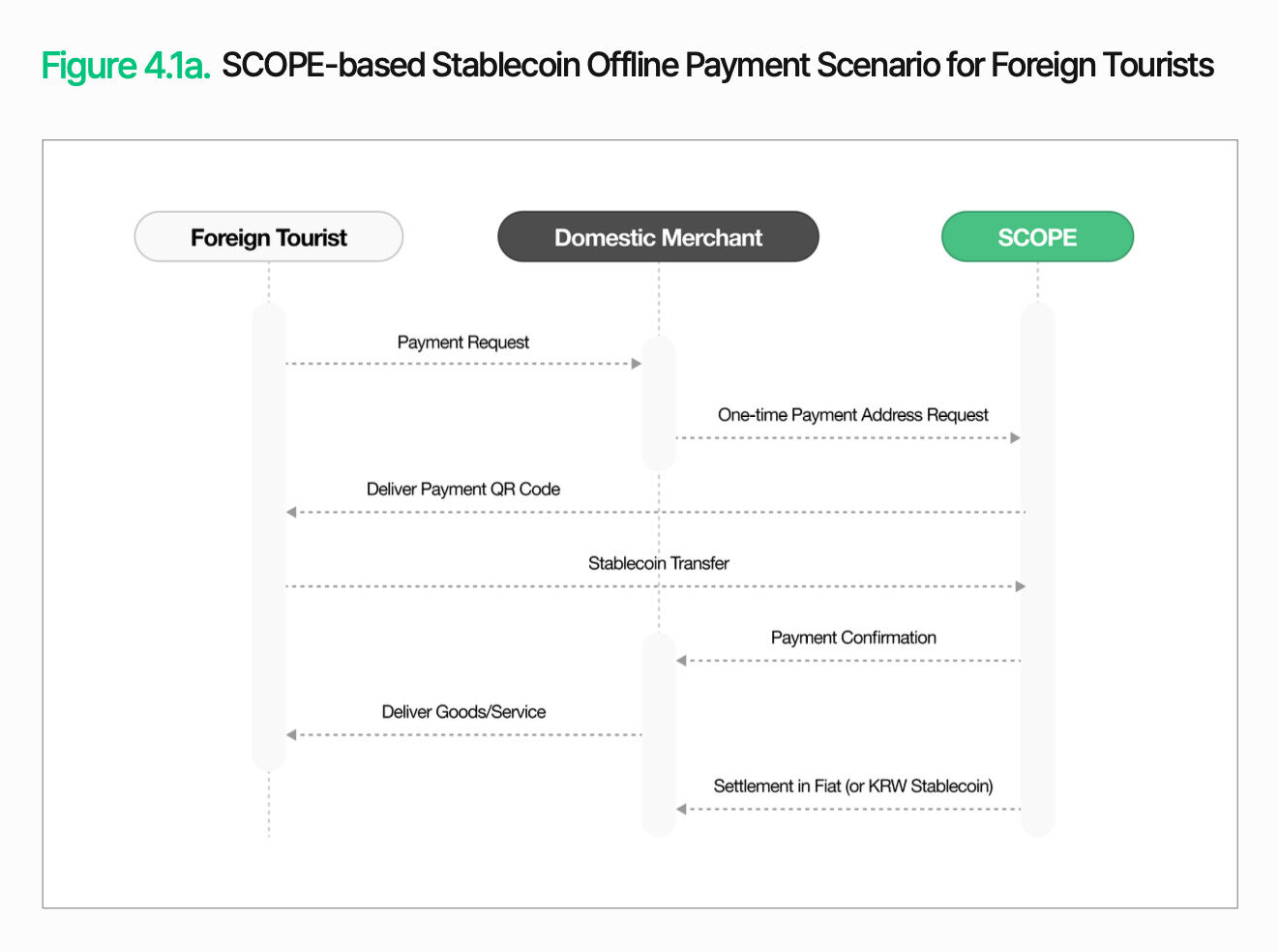
Offline payments are relatively simple. When a merchant within South Korea initiates a payment, SCOPE generates a one-time payment address and sends it to the visitor as a QR code. The visitor sends stablecoins from their wallet to this address. Once confirmed, the merchant provides the product or service. Afterwards, the merchant receives settlement in fiat currency or Korean won-denominated stablecoins. Visitors pay using familiar digital assets, while merchants continue using their existing settlement processes.
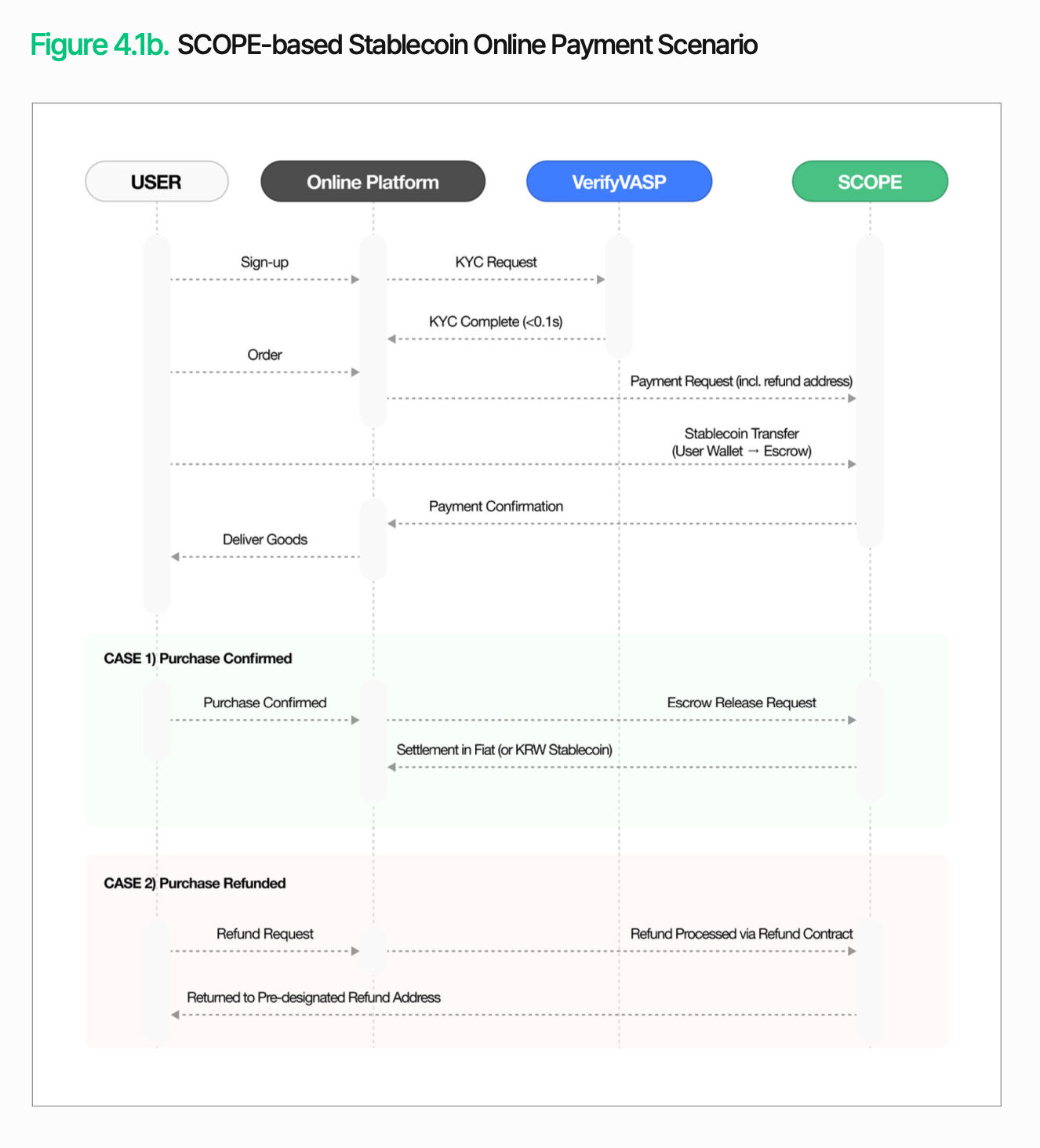
The structure of online payments differs. Since shipping and potential refunds occur between order placement and settlement, funds must be held temporarily rather than immediately transferred to the seller. When a user initiates a payment, VerifyVASP performs KYC verification, and the funds are deposited into SCOPE’s escrow account. Once predefined conditions are met (e.g., shipment confirmation), the settlement process is triggered. If a refund is required, the funds are returned to a pre-specified refund address. This enables payments, settlement, and refunds to be completed within a single process, even for online transactions.
4.2 Security Token Offering Platform
Suppose a domestic securities firm, Tiger Securities, tokenizes a commercial real estate fund.
As the regulatory framework for security tokens continues to mature, building a security token offering (STO) platform has become a practical priority for securities firms. Tiger Securities plans to tokenize its existing commercial real estate fund to attract more retail investors. Under the current structure, minimum investment thresholds are high, redemption processes are time-consuming, and share transfer procedures among investors are complex. Tokenization will transform this by enabling the issuance of lower-denomination tokens and facilitating more flexible trading.
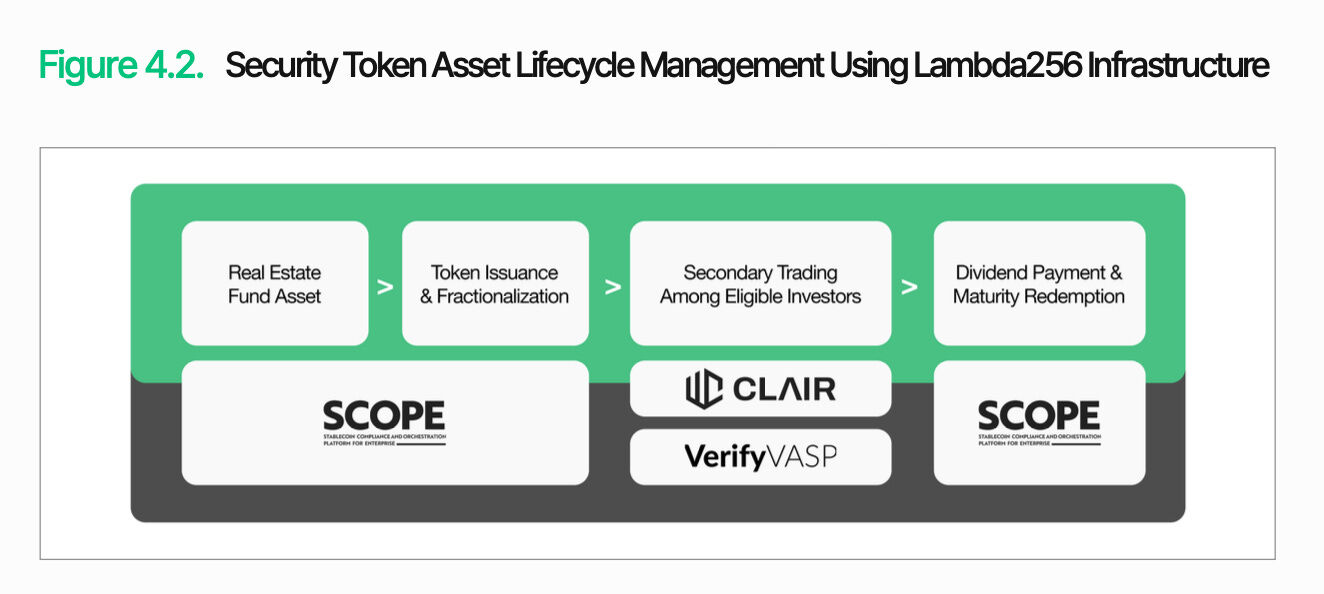
The core challenge lies not in the issuance itself, but in post-issuance management. Security tokens are classified as securities, requiring lifelong control over eligibility for holding, trading conditions, and transfer restrictions. SCOPE provides the foundation for this lifecycle management by building functionalities such as issuance, supply management, redemption, destruction, and transfer restrictions into modular components. Additionally, strategies such as whitelist-based investor restrictions and transfer limitations during lock-up periods can be configured.
To make this architecture an operational service, data integration and regulatory compliance must also be in place. Nodit synchronizes on-chain data—such as token balances, dividend records, and transaction history—in real time with existing securities systems. CLAIR tracks fund flows and monitors anomalous transactions. VerifyVASP handles investor KYC and counterparty identity verification. During dividend distribution and redemption phases, SCOPE’s batch payment functionality enables efficient fund allocation to investors.
This architecture is not limited to a single product. Whether the tokenized assets are bonds, private equity, or commodities, the infrastructure for issuance, management, and regulatory compliance remains the same. The platform built by Tiger Securities is not a one-time system for a single product, but a scalable infrastructure capable of supporting multiple security tokens.
5. Conclusion
The shift has already begun. Today, the gap in digital asset infrastructure is no longer about whether blockchain technology has been adopted, but whether blockchain-based transactions can be truly integrated into the operations and governance of existing financial systems. The challenges facing financial institutions ultimately come down to three areas: regulatory compliance, technological compatibility, and operational reliability.
Lambda256 provides a unified financial middleware solution to address these challenges. Nodit delivers blockchain data in formats compatible with existing systems. SCOPE connects the issuance, transfer, and settlement of assets. CLAIR and VerifyVASP enhance control and regulatory responses through transaction flow analysis and counterparty verification. The significance of this architecture lies not in listing individual features, but in enabling financial institutions to gradually integrate digital asset capabilities into their existing workflows.
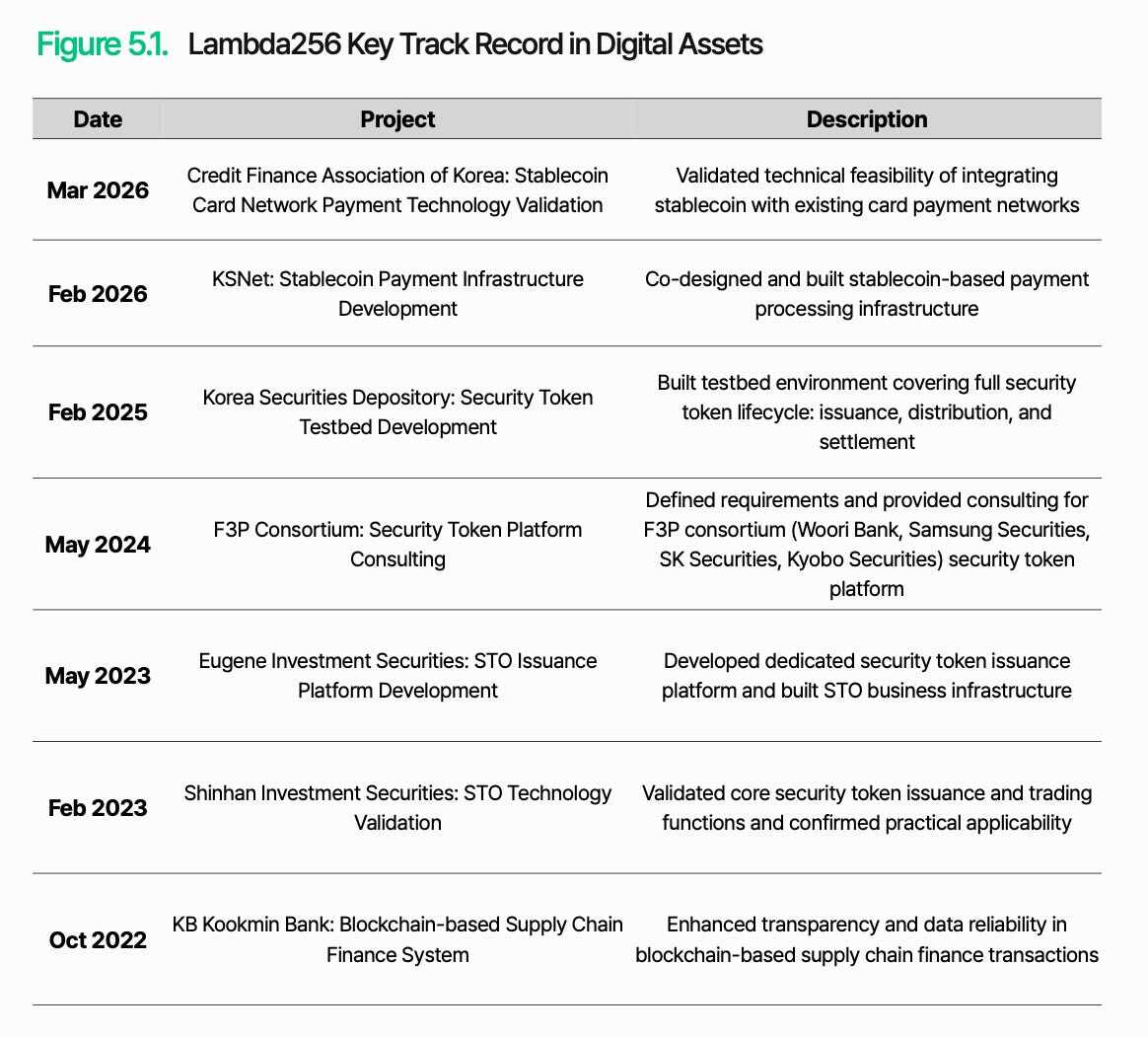
This framework is not the final solution for digital asset infrastructure. As regulations and markets evolve rapidly, regulatory coordination, system integration, and operational reliability must be continuously refined and validated through real-world applications. Nevertheless, collaboration with institutions such as the Korea Credit Finance Association and the Korea Securities Depository demonstrates that this approach is not theoretical—it is being reviewed and tested within actual financial environments.
Ultimately, the gap in digital asset infrastructure does not depend on who adopts new technologies first, but on who can design them into operable structures within the existing financial system and achieve a stable transition.