






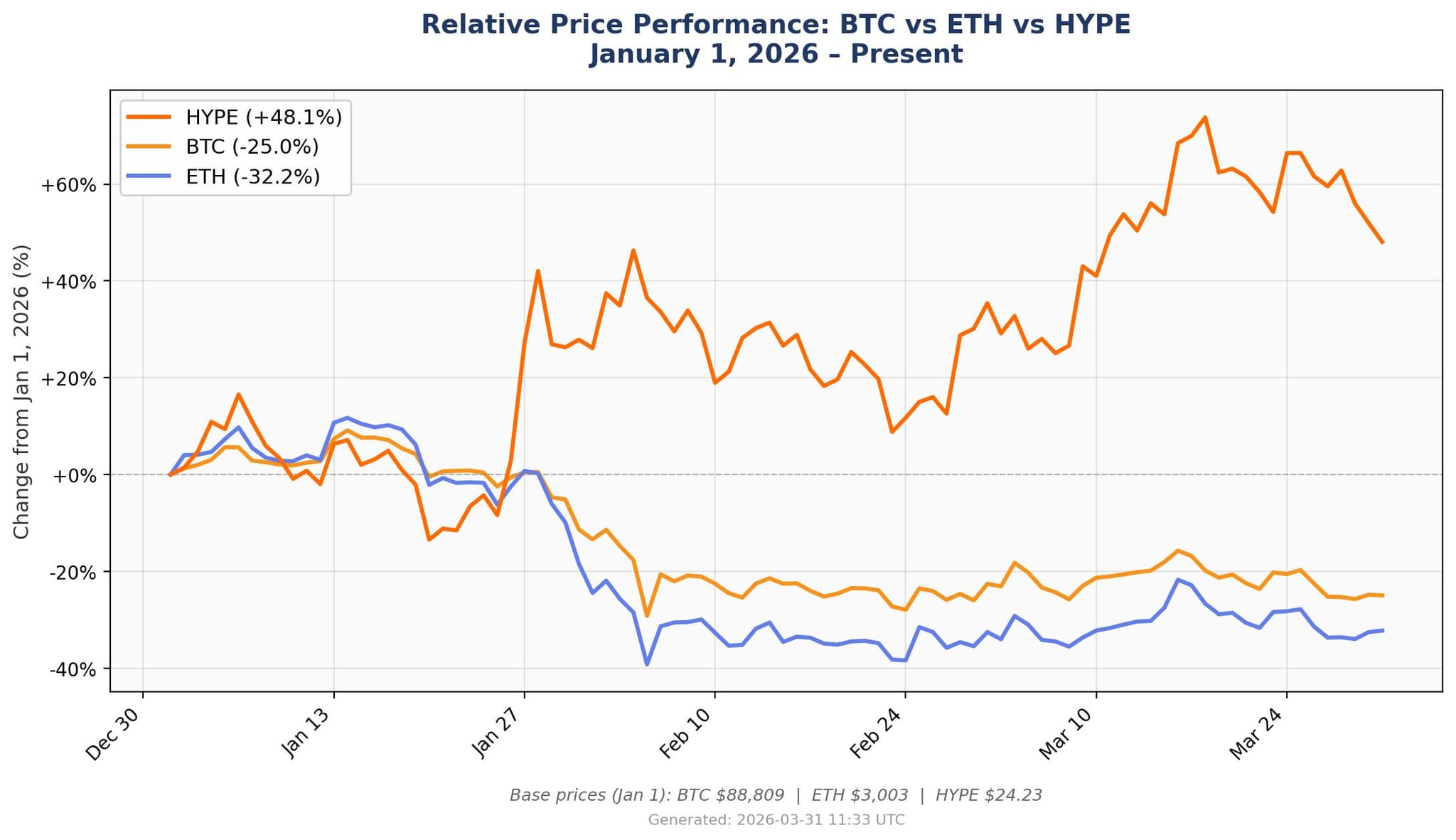
Hyperliquid’s HYPE has closed Q1 2026 with better investor returns compared to Bitcoin [BTC] and Ethereum [ETH]. The altcoin posted 48% quarterly gains, while BTC bled 25% and ETH plunged by 32% over the same period.
In other words, HYPE outperformed BTC by over 70%, underscoring it as a key outlier during the West Asia crisis. In fact, according to Hyperliquid Strategies CEO David Schamis, the outperformance could extend into Q2.
According to the exec, “Hyperliquid has finally been getting some more press recently, but no one is really talking about this massive outperformance vs the two biggest cryptos. It’s really amazing and will continue.”
Schamis was referring to JPMorgan and Bloomberg’s recent coverage of oil and gold traders opting for Hyperliquid to trade over the weekend during the West Asia crisis.
In fact, the crisis elevated trading of non-crypto assets (also known as HIP-3) on the platform. As we enter Q2, the growth of HIP-3 hasn’t subsided, and this could offer more bullish momentum for the altcoin if the broader market sentiment recovers.
HIP-3 daily OI crosses $2 billion
In late March, the HIP-3 market’s daily Open Interest (OI) crossed $2 billion for the first time. Interestingly, non-crypto assets traders have been sticking to the platform too, hitting a record 60% retention over the same period.
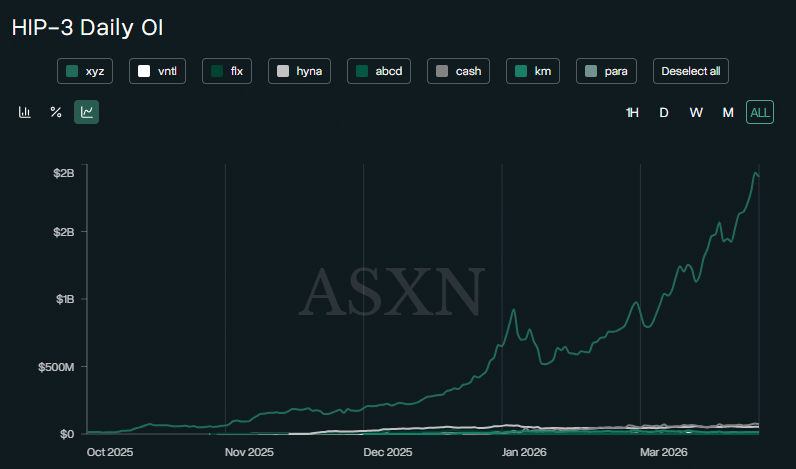
Thanks to such repeat traders, it is not surprising that the non-crypto trading segment on Hyperliquid continues to hit record highs. Here, it’s worth pointing out that HIP-3 daily volumes now average around 38%-48% of total Hyperliquid activity.
Put differently, HIP-3 adoption has become a key trading activity and by extension, a revenue driver.
Since most of Hyperliquid’s revenue ends up in aggressive HYPE buyback, HIP-3 growth has been net positive for the altcoin’s value.
In mid-February, the platform’s weekly revenue doubled from about $8M to $12M-$14M in March. This was after a whopping $68.8M monthly revenue in January. As illustrated by the chart, HYPE buyback (green bars) spiked in January, mid-February, and the first half of March.
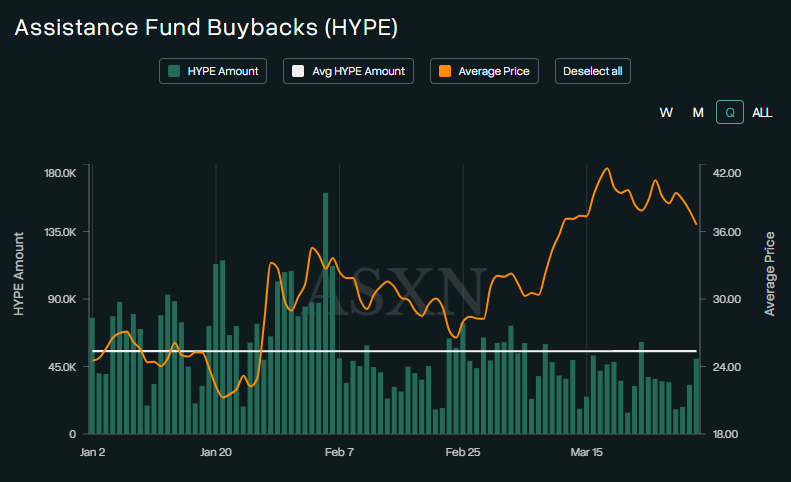
Unsurprisingly, the spikes in buyback coincided with HYPE’s uptrend momentum. In January, the altcoin jumped by 86% from $20 to $38. After a brief cool-off to $25, the next leg of the rally (in February and March) lifted HYPE to $42 – Marking another 72% surge.
As such, the recent pullback could be a buying opportunity if HIP-3 growth persists and broader market sentiment improves in the short-term.
Final Summary
- HYPE has outperformed ETH and BTC by over 70% in Q1, making it a key outlier and crucial part of the crypto watchlist into Q2.
- HIP-3 markets continue to attract traders and crossed $2B in daily OI and could boost buybacks and HYPE in the mid-term.