





On February 28, the U.S.-Israel coalition launched the "Epic Fury" operation, conducting airstrikes on over 2,000 targets, during which Supreme Leader Khamenei was killed.
This is the largest geopolitical event to occur in the Middle East in decades.
Global capital waited an entire weekend to test a question: Are the narratives that have been bet on for two years truly valid? Is gold a crisis-hard asset? Is Bitcoin digital gold? Is the debasement trade a real thesis or a narrative bubble?
The results are in.
Gold first rose to $5,400, then dropped over 4% alongside stocks. Silver plunged 8% in a single day. Bitcoin initially fell, then fluctuated, ultimately returning to its starting level. The U.S. Dollar Index rose 1.1%.
Narrative stress test
Over the past two years, a nearly flawless narrative has dominated the crypto and macro circles: U.S. debt is spiraling out of control, the dollar is undergoing long-term depreciation, and gold and BTC are hard assets hedging against currency dilution—collectively known as the "debasement trade." In 2025, the data supporting this narrative appears exceptionally strong—gold rose over 50% for the year, BTC peaked at $126,000, and the U.S. Dollar Index fell nearly 11%, marking its worst first half in 50 years. Ken Griffin of Citadel repeatedly mentioned this term in public appearances, and BlackRock’s BTC ETF has approached $100 billion in assets under management.
The core implicit assumption of this narrative is that when a real crisis arrives, people will abandon the dollar and turn to hard assets.
Last weekend, this assumption faced its first real-world stress test.
At Monday's open, gold initially rose—the London gold price reached as high as $5,418 during trading, nearly matching the January high. However, as oil prices continued to surge, inflation expectations reignited, and markets began repricing the Fed's rate cut path, the trend reversed. Gold closed lower on Monday and dropped further by over 4% on Tuesday, falling to its lowest level since February 20.
Silver fared even worse. On Monday, it surged past $96, then on Tuesday, its single-day decline nearly approached 8%.
The reason is not complicated. A sharp rise in oil prices means higher inflation expectations, which narrows the Fed’s room to cut interest rates. Narrower rate cut expectations lead to a stronger dollar, and a stronger dollar is a direct counterweight to gold and silver. Coupled with forced liquidations triggered by synchronized selling of risk assets, gold and silver became the most liquid and easiest positions to sell off precisely when they were expected to rise the most.
This isn’t the first time. When the Russia-Ukraine war began in 2022, BTC did not act as a safe haven and followed Nasdaq downward; gold initially rose but was later dumped by profit-taking—same script, greater intensity.
BTC is in an even more awkward position. During the weekend the war broke out, the crypto market was the only one still trading. BTC first dropped below $64,000 from around $66,000, then quickly rebounded and largely recovered its losses before traditional markets opened on Monday. On the surface, this looks like "resilience." But the truth is: institutional funds haven’t entered yet; the movement was driven solely by retail traders and arbitrageurs navigating the volatility. On Tuesday, as markets continued to decline, BTC came under pressure again, trading sideways near $68,000—neither rising as a "digital gold" should, nor falling sharply as a "risk asset" would—它只是……在那里晃。
Hormuz, chip, and a Korean holiday
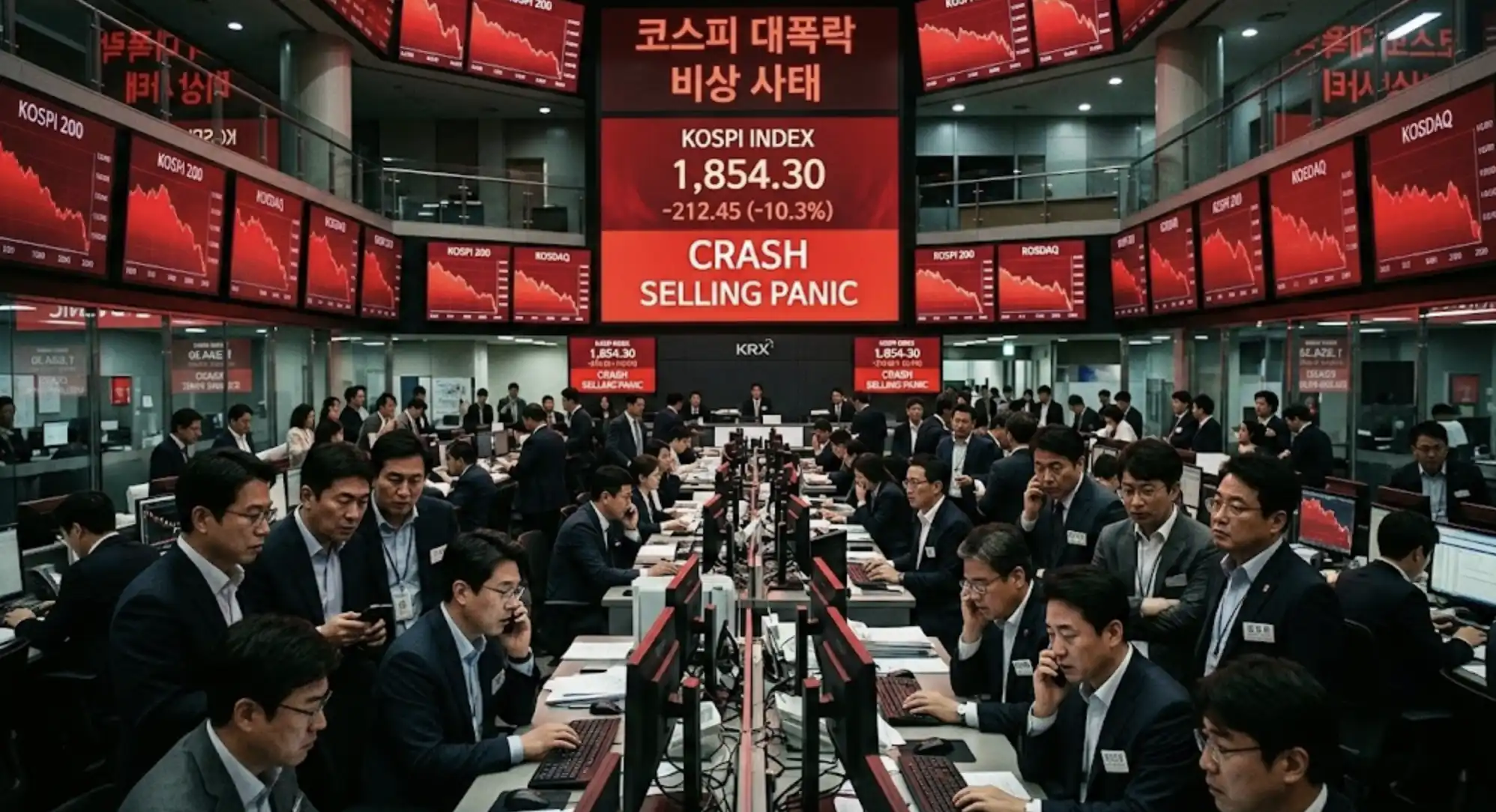
The crowd crush in Seoul was particularly severe due to a structural reason: Monday was March 1st Independence Movement Day, a national holiday in Korea when exchanges were closed.
Panic accumulated over the weekend with no outlet. At 9 a.m. on Tuesday, all the sell orders that had been unable to execute during the three-day holiday slammed down in the same second. The KOSPI opened directly triggering a circuit breaker alert, ultimately closing down 7.24%, wiping out approximately 377 billion Korean won in market value—equivalent to about $257 billion.
This is the largest single-day decline since the Japanese yen carry trade crisis in August 2024. That time, the KOSPI plunged 8.77% in a single day, triggered by a collapse in U.S. non-farm payrolls data combined with an unexpected interest rate hike by the Bank of Japan—a systemic unwinding at the level of financial leverage. This time, the immediate catalyst is geopolitics—but beneath it lies the same taut string, just made of different material.
Over the past year and a half, Korean retail investors experienced an epic FOMO. The KOSPI rose from 2,400 points at the end of 2024 to surpass 6,000 points by the end of February this year, a gain of nearly 150% in 14 months. Some brokers raised their target prices to 7,000 and even 8,000. The number of new brokerage accounts surpassed 100 million in January—meaning a country of 50 million people has 100 million stock accounts. The Korean government even included "KOSPI 5000" in its policy platform as a national objective.
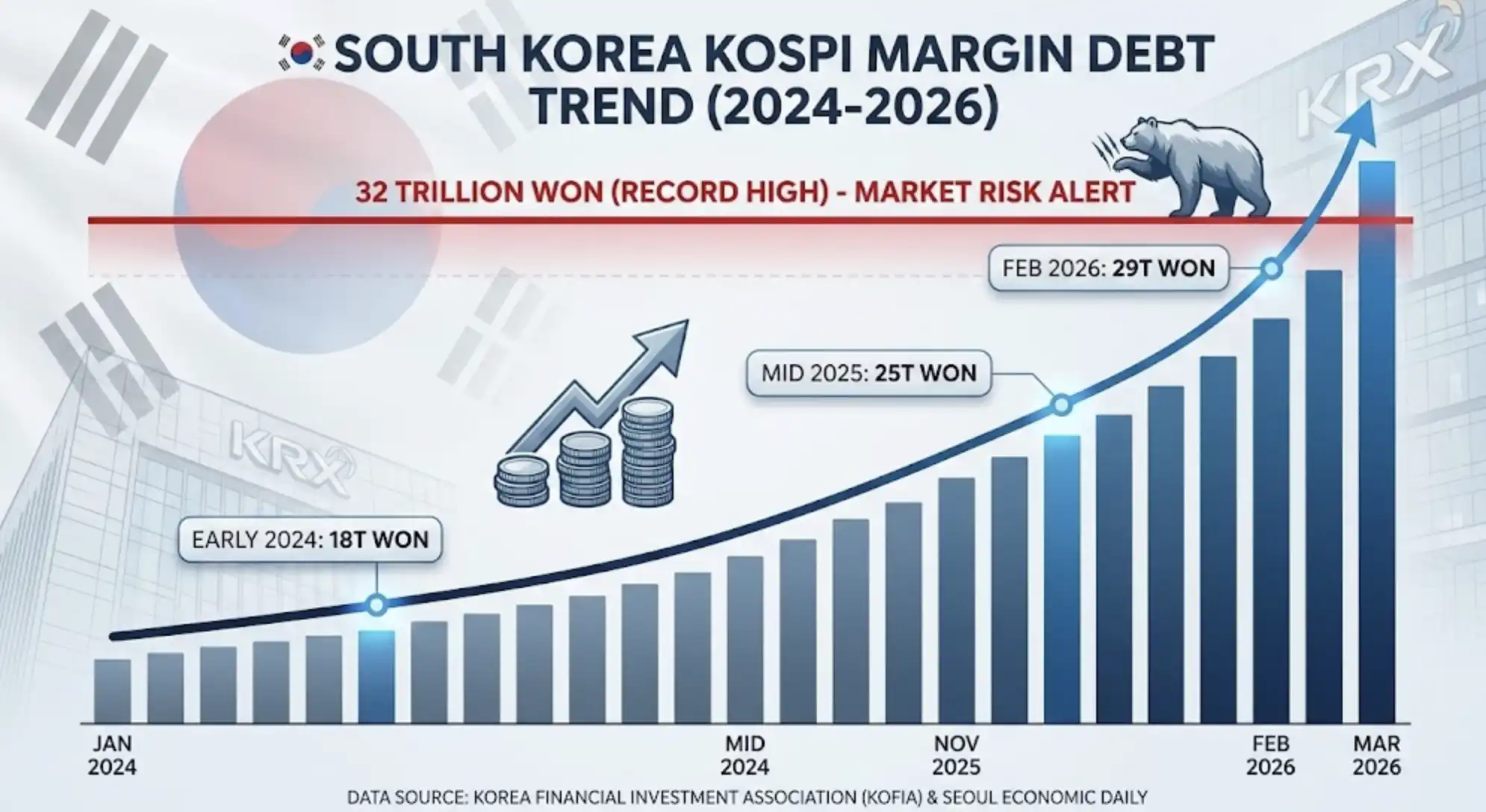
Meanwhile, margin loan balances were also surging. Before the incident, the outstanding balance of margin loans on the Korean exchange exceeded 32 trillion KRW, equivalent to approximately $22.4 billion—the highest level since 2021. Additionally, stock collateral loan balances stood at 26 trillion KRW, bringing the combined total close to $37 billion. The market fear index, VKOSPI, had already spiked to 54 by the end of February, more than double its "normal" level—while the market was hitting new highs, the fear gauge had already entered an extreme fear zone.
This structure is prone to textbook liquidity squeezes during acute shocks.
A decline in stock prices triggered margin calls, prompting brokers to initiate forced liquidations, which further depressed stock prices and triggered additional margin calls—a self-reinforcing feedback loop. Foreign investors net sold over 5.17 trillion Korean won, approximately $3.5 billion, the largest single-day net outflow this year. Retail investors did the opposite: buying the dip during the panic, continuing to add leverage to ETFs, betting on a rebound.
Other Asian markets also came under pressure. The Nikkei 225 fell 3% on the day, with Toyota down 5.5% and Sony down 4.3%. The Hong Kong Hang Seng dropped 2.1%, leading losses in the Asia-Pacific region. The Thai Stock Exchange announced a suspension of short selling for most securities. The entire MSCI Asia Pacific Index declined by approximately 2%.
But the most fundamental structural vulnerability remains in Seoul.
It’s not just stocks that have fallen—it’s the KOSPI, a market repeatedly framed as the premier proxy for the AI supercycle. Samsung Electronics dropped nearly 10%, breaking below the key psychological support level of 200,000 Korean won. SK Hynix fell 11.5%. Together, these two companies account for approximately 40% of the KOSPI’s market capitalization and are the two most critical nodes in the global AI chip supply chain—Samsung is the world’s largest manufacturer of DRAM and NAND flash memory, while SK Hynix is a core supplier of HBM (High Bandwidth Memory), the memory used in most of NVIDIA’s AI GPUs.
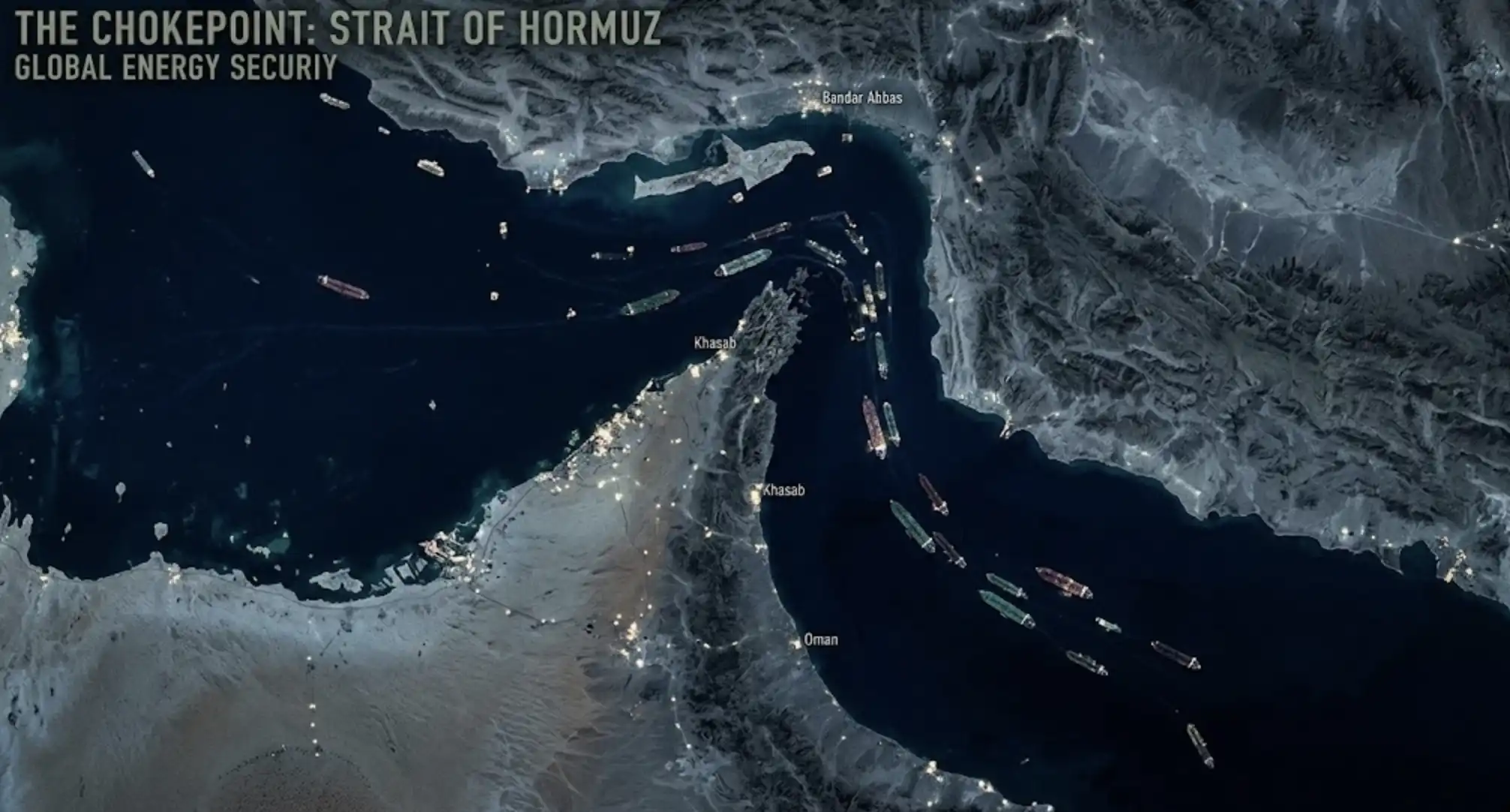
These factories are all in South Korea. South Korea imports 2.76 million barrels of oil per day, mostly from the Persian Gulf via the Strait of Hormuz.
Iran announced it would close the Strait of Hormuz, then retracted the statement. But insurers have unilaterally voted: war risk coverage has been suspended, and shipping companies have halted dispatches. A blockade, though not officially declared, is already in effect.
At the same time as market panic unfolded, another piece of news quietly emerged: Samsung’s semiconductor fab in Taylor, Texas, has once again delayed its mass production timeline, pushing it from 2026 to 2027. This factory, seen as a cornerstone asset in America’s “chip reshoring” strategy, is built in the Texas desert—but the oil it needs still comes from the Persian Gulf.
Dollars won, and everyone lost
Now, let’s address the most uncomfortable conclusion.
Throughout the cycle, "de-dollarization" has been one of the dominant macro narratives. The dollar’s share of global reserve currencies has fallen below 47%, central banks around the world are accumulating gold at record speeds, BRICS has built the mBridge cross-border settlement platform, and the total value of on-chain stablecoins has grown from $205 billion to over $300 billion. Almost everyone in the space is betting in some way that the dollar’s golden era is over, and the next era belongs to multipolarity, hard assets, and decentralization.
Then the war broke out, and the U.S. Dollar Index rose 1.1%, posting its largest single-day gain since May last year.
On this day, a synchronized sell-off occurred across the board: stocks fell, bonds fell, gold fell, silver fell, and commodities fell. The only direction of capital flow was the U.S. dollar.
This is the essence of a liquidity squeeze. It’s not because the dollar has become stronger, but because the dollar is the asset with the deepest liquidity in the global financial system. During acute crises, when everyone tries to exit at once, the dollar is the widest door. Liquidating leveraged positions requires dollars, meeting margin calls requires dollars, and the first step in fleeing cross-border assets is converting to dollars. No other asset class has this scale.
Iran provided the clearest illustration of this logic.
The Iranian rial has depreciated by over 30% since the beginning of the year. Nobitex, Iran’s largest cryptocurrency exchange, handles over 87% of Iran’s on-chain crypto activity. Within minutes of the airstrikes beginning, Nobitex’s withdrawal volume surged by 700% (Elliptic data). Chainalysis tracked the fund flows: significant outflows ended up at overseas exchanges historically receiving Iranian inflows, where the funds were further exchanged into USDT and USDC.
At the scene of a real currency crisis, people use crypto networks to flee into the dollar.
This does not mean that the debasement trade is a false premise. The structural pressures of U.S. debt, inflation, and the long-term erosion of the dollar’s purchasing power are real. The logic behind gold’s long-term outperformance has not been overturned by this stress test.
But this time it told us one thing: the debasement trade is a slow-moving narrative that requires time to unfold, while geopolitical shocks are rapid-moving events with only one timestamp—today.
Two time frames placed at the same moment, with the slower variable yielding.
The dollar wins. The next crisis will likely still be won by the dollar. Until one day, it doesn’t win—but that day is unlikely to begin with such a dramatic opening.

Click to learn about the open positions at BlockBeats
Welcome to the official BlockBeats community:
Telegram subscription group: https://t.me/theblockbeats
Telegram group: https://t.me/BlockBeats_App
Official Twitter account: https://twitter.com/BlockBeatsAsia