





Written by Maoske | DeepTide TechFlow
January 15, 2026, Shenzhen.
A civil lawsuit with a claim amount as high as 200 million yuan has been officially filed with the court. The name on the defendant's seat brings a sense of disbelief—Chen Lei, the former CEO of Xunlei. This man, who once caused Xunlei's stock price to surge fivefold within a month, is now the central figure accused of corruption and embezzlement.
Suspected of embezzling tens of millions of the company's funds to trade cryptocurrencies, and arranging for relatives to fabricate contracts within the company to siphon off company funds... according to Xunlei's statement, Chen Lei is "guilty of numerous offenses."
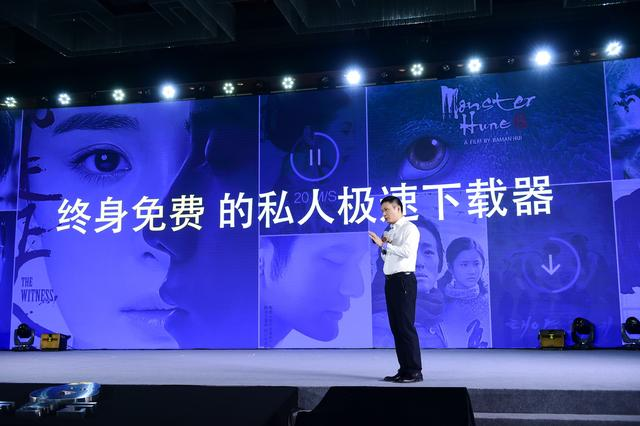
Time rewinds to October 31, 2017. Still in Shenzhen, the launch event venue of Xunlei Technology was brilliantly lit. Chen Lei, wearing his signature white shirt, stood on stage and announced in his distinctive tech-geek tone, "Xunlei will go All in on blockchain." The audience below erupted into thunderous applause.
From deifying to destroying a god, it only took a few short years.
This is the story of a once-celestial prodigy's fall from grace.
The Arrival of a Genius
"I met with Lei Jun in September 2014. He invited me to join Xunlei, and we talked until after 2 a.m." Many years later, Chen Lei recalled that night that changed his life.
At that time, Chen Lei was a star executive at Tencent Cloud, a seasoned professional with years of experience in the field of cloud computing. Meanwhile, Xunlei was a once-dominant download tool giant that had shown signs of decline in the mobile internet era, desperately in need of a technically knowledgeable and determined leader to drive its transformation.
Lei Jun convinced him by presenting two compelling reasons that he couldn't refuse: "You're doing quite well at Tencent, but in the end, is it you who is good, or is it Tencent? Can you do just as well if you leave Tencent?" The second question was: "Would you like to run a company where you have the final say?"
"I was deeply moved by Lei Jun's proposal. I felt that he could read my mind and express what I was thinking. At that time, I really admired Lei Jun."
Xunlei's founder, Zou Shenglong, offered very sincere terms: serving as CTO of Xunlei while also concurrently serving as CEO of newly established Wangxin Technology. The establishment of Wangxin Technology and Chen Lei's joining occurred almost simultaneously, which means he will have a relatively independent entrepreneurial platform.
Chen Lei's ambitions go far beyond establishing an ordinary cloud computing company. With the rise of the sharing economy model in 2014, Chen Lei keenly realized that reconstructing the overall architecture of cloud computing through sharing economy methods could lead to innovations in CDN technology. This approach, in particular, has the potential to address and improve the long-standing issues in the CDN industry—namely, its high cost, chaotic management, and poor service quality.
Chen Lei stated, "The core value of Wangxin Technology is to build an IDC (Internet Data Center) based on the sharing economy, reducing the society's computing costs through shared economic methods." He explained that through the smart hardware device "Zhenqianbao," ordinary users can earn income by sharing their unused bandwidth at home, while Wangxin Technology aggregates these resources to provide CDN (Content Delivery Network) services.
The speed at which ideas are transformed into reality is amazing.
In June 2015, NetDragon Technology launched StarDomain CDN, which was priced 75% lower than the prevailing market rates. It quickly established partnerships with outstanding companies such as Xiaomi, iQiyi, and Zhanqi.
At the end of 2015, Chen Lei was awarded the "Outstanding Figure of the Year in the Internet Industry" for leading NetDragon Technology in launching a groundbreaking CDN technology.
By 2017, Starry Cloud's shared computing model had over 1.5 million online nodes, with a reserved bandwidth of approximately 30T and reserved storage of about 1500PB. This unprecedented distributed computing network successfully connected households into a cloud computing network, achieved by Chen Lei.
The perfect combination of technological idealism and commercial success, he seems to have found the right way to change the world.
In July 2017, Chen Lei was officially promoted to CEO of Xunlei.
But beneath the shine of success, a complex situation was taking shape. "Old Zou (Zou Shenglong) wanted to do an MBO (management buyout), but there was a disagreement with the major shareholder. In the end, the conflict couldn't be resolved, so they brought me in as CEO. At the time, I was a bit scared, thinking this position might not be easy at all," Chen Lei later recalled.
But history would soon prove that this was merely a calm before the storm. A greater opportunity—or perhaps a temptation—was already beckoning him.
The Temptation of Issuing Tokens
In 2017, if you missed Bitcoin, you missed an era.
Across the ocean in the U.S. Silicon Valley, a wave of enthusiasm for cryptocurrency ICOs (Initial Coin Offerings) surged from March and April of 2017. Bitcoin regained its upward price momentum, rising from $968 at the beginning of the year to triple in value, reaching $3,000. Ethereum increased from $8.3 at the start of the year to over 20 times that amount, reaching $200.
All kinds of ICOs are emerging continuously. The booming market of virtual currencies inspired Chen Lei to find ideas in blockchain technology.
"Xunlei is essentially a decentralized internet company that originated from P2P technology. Genetically speaking, Xunlei has a better chance than others to succeed in shared computing," Chen Lei once stated. Unlike other companies' B2C approach, Xunlei hopes to leverage blockchain technology to forge a unique C2B path.
Under Chen Lei's promotion, the blockchain version of Xunlei's Profit Box, "Wanke Cloud," emerged.
PlayStation Cloud references the Bitcoin POW algorithm, allowing users to "mine" digital assets called Play Coins. The total supply is 1.5 billion, with the production halving every 365 days, and the annual mining output decreasing by half each year.
This design is堪称 "perfect," as it has physical hardware as its carrier and is tied to actual computing services. Wanxiang Coin is a native digital asset based on blockchain technology within the Wanxiang Cloud shared computing ecosystem. Its generation process is closely associated with Wanxiang Cloud smart hardware and the economic applications of shared CDN.
Chen Lei packaged this project as a technological innovation combining "shared computing and blockchain," rather than a simple issuance of virtual currency. This approach not only helps avoid the policy risks associated with ICOs but also allows it to benefit from the market advantages of the blockchain concept.
On October 31, 2017, PlayCloud was officially launched.
Chen Lei announced the opening of shared computing services to all individual users, officially launching Wanke Cloud's "Cloud Drive Mining" and the Wanke Rewards Program. Wanke Coins can be used throughout Xunlei's ecosystem to access more value-added services, such as expanded storage space, Xunlei membership, and over 200 other services.
The market's reaction exceeded everyone's expectations. At that time, the blockchain concept was extremely popular, and the price of PlayCoin soared rapidly. On some trading platforms, PlayCoin rose from an unofficial issue price of 0.1 RMB to 9 RMB, an increase of 90 times.
Wanxiang Cloud was regarded as a mining machine, with each unit's price being hyped from 338 RMB up to a peak of 3240 RMB. Wanxiang Cloud also caused Thunder's stock price to increase fivefold within one month. In October 2017, Thunder's stock price soared from $4.28 to $24.91, and later reached a high of $27.
"PlayCloud, 599 per unit, grab it and make a profit of 1500."
According to some player introductions, early participants in the Taobao crowdfunding campaign for the Wanke Cloud (Wanxiang Cloud) device made their first fortune in 2017. Some miners who had initially used order-snatching software or hired interns to stockpile large quantities of devices earned significant profits through Wanke Cloud. Additionally, some individual users who participated in the Wanke Rewards Program earned dozens of Wanke Coins per day through mining, with some even recouping their initial investment "within just a few days."
"Initially, it was because of Xunlei's PlayStation Cloud that I learned about Bitcoin and blockchain, opening the door to a new world," said Jack, a cryptocurrency professional based in Hong Kong, to DeepTide TechFlow.
This is the peak moment of Chen Lei's life, and also the most glorious period in Xunlei's history.
A group of technologically idealistic individuals successfully transformed a traditional download tool company into a trendy blockchain-related stock, increasing its market value several times over.
But beneath the glossy surface, crises are brewing unseen.
The popularity of PlayCoin has long deviated from the original vision of Chen Lei, evolving from a technological innovation into a pure speculative frenzy.
Crisis is coming
A crisis often begins from within.
On November 28, 2017, Xunlei Big Data Information Service Co., Ltd. in Shenzhen publicly stated that Xunlei's CEO Chen Lei had conducted an illegal Xunlei Cloud activity without using any blockchain technology, and had indirectly conducted an ICO through an illegal exchange.
This seemingly strange "self-reporting" essentially represents a direct conflict between the old and new factions within Xunlei.
Xunlei's internal conflict in October 2017 was actually initiated by Yu Fei (formerly Senior Vice President of Xunlei), and the core demand was to get me out," Chen Lei recalled later.
On November 3, the People's Bank of China (PBOC) believed that Wankebi (Wanke Coin) was a product of Xunlei's financial division and summoned Hu Jie, the responsible official, for a discussion. After explanations, they learned that it was actually a business of Wangxin Technology. Subsequently, Hu Jie submitted an email to senior executives of the Xunlei Group, pointing out that Wankebi was not based on real blockchain technology, had characteristics resembling an indirect ICO, and potentially involved inducing and supporting Wankebi transactions, which could pose risks of mass incidents.
On December 9, 2017, Wankuai Coin was renamed to Chain.
Before internal conflicts were resolved, heavy external regulatory measures have already been imposed.
In January 2018, the China Internet Finance Association issued a risk warning stating that virtual digital assets issued through IMO models such as Lianke are essentially financing activities and are a form of indirect ICO.
On the night when the Internet Finance Association named it, Xunlei Network's stock price plummeted 27.38% at the opening, and the price of LinkCoin immediately dropped.
On January 16 and 17, 2018, Xunlei consecutively issued announcements on its official website, stating that it would fully reintegrate the positioning of "ChainKe" (LinkCoin) as an internal points system within the Xunlei ecosystem. It decided that, starting from January 31, users would only be allowed to use ChainKe within Xunlei's own applications and those provided by Xunlei's partners, in an effort to clear suspicions of an ICO (Initial Coin Offering).
With the announcement from Xunlei, the price of LinkCoin (LKC) once dropped sharply from 4 yuan to 2.5 yuan.
Due to regulatory scrutiny, searching for "Wanxiang Cloud" on platforms like Xianyu shows violations and cannot be searched. As a result, sellers refer to the hardware cloud storage devices using terms like "wky" or "mother chicken."
On September 17, 2018, Thunder said that it would package and sell its blockchain businesses, including LinkKing, LinkKing Mall, and LinkKing Pocket, to a technology group.
At the end of 2018, the official retail price of Wanke Cloud was 599 RMB, but on second-hand platforms, a large number of Wanke Cloud devices were being resold at as low as 40 RMB. The huge price gap between the official and second-hand markets made it difficult to sustain the Wanke Cloud business model.
Investors were furious. "Wanke Cloud is the worst thing I've bought in the past five years," one person said. Some players even publicly demanded their rights online. The once golden egg-laying mining machines had turned into a pile of scrap metal overnight.
The once-celebrated star CEO has become a target of criticism, with the media that once adored him now questioning his motives and capabilities.
The myth of creating gods has been shattered, but the story of destroying gods is far from over.
God-destroying Moment
After the PlayCoin craze subsided, a company named "Xinghehe" quietly emerged. Established in 2018, this company ostensibly served as a bandwidth provider for Xunlei, but its actual controller was Chen Lei himself.
Chen Lei has his own explanation: "In February 2017, the Ministry of Industry and Information Technology issued a regulation to clean up non-compliant market transactions, explicitly stipulating that bandwidth could only be purchased from licensed companies. We directly shifted from buying bandwidth from home users to purchasing it from miners. To avoid the risks associated with NetHeart, we bought a shell company from Xinghehe. This company purchased hardware from NetHeart and then resold it to miners. In this way, we isolated the risks from NetHeart."
Chen Lei emphasized that the integration of business flows and financial flows is closely tied to Xunlei, and everything is done to serve Xunlei's interests.
However, according to Xunlei's investigation, the situation is not so simple. From January 2019 to early 2020, Wangxin cumulatively paid Xinghe United approximately 170 million yuan in resource node procurement fees.
The most dramatic plot occurred on March 31 to April 1, 2020. Chen Lei, using his final approval authority as CEO of Xunlei and CEO of Wangxin at that time, approved several consecutive payments from Wangxin to Xinghe Ronghe Company within just two days, totaling over 20 million yuan.
In the past two days, some payments were made before reaching the normal payment time, showing a rapid model of "order submission, approval, and fund transfer on the same day," which lacks a proper acceptance and settlement process.
On April 2, 24 hours later, Thunderbolt's board of directors officially issued a statement, removing Chen Lei from his position as CEO.
Chen Lei has a clear memory of the process of his dismissal: "On April 2nd, around 10:00 a.m., I was at home with a fever and didn't go to the company. However, my colleagues told me that a group of plainclothes security guards rushed into the office and ordered all the staff to stop all work. All of this happened without any communication with me. I had no idea about any of it beforehand."
In addition to the transfer of funds, Xunlei also accused Chen Lei of poaching staff before his dismissal.
In March 2020, Chen Lei arranged for Dong Yu and Liu Chao to meet with 35 core employees and organized their collective departure, transferring them to Xinghehe Company. This directly resulted in Wangxin paying over 9 million yuan in economic compensation and stock option repurchase fees.
Even more bizarre is the control structure behind the merger: Zhao Yuqin, the legal representative, is Liu Chao's mother; Tian Weihong, one of the shareholders of the controlling shareholder "Hong'en Technology," is Dong E's mother; Xu Yanling, the legal person, is Dong E's relative and the mother of Chen Lei's driver, Yao Bingwen; Chen Lei and Dong E have a son together, forming a close circle of interests.
In April 2020, not long after Chen Lei was removed from his position, he left China. On October 8 of the same year, Xunlei issued a public announcement stating that the company's former CEO, Chen Lei, was under investigation by the Shenzhen Public Security Bureau for alleged embezzlement of duties. The announcement urged Chen Lei to "return to China as soon as possible to cooperate with the investigation."
For the past six years, Xunlei's various debt recovery and rights protection actions have faced significant challenges in gathering evidence due to Chen Lei's location overseas. In the five cases involving Wangxin and Xinghe Merger, multiple announcements mentioned that "the defendant's whereabouts are unknown, and the court has adopted public notice for service of process."
At the end of 2022, due to objective limitations, the public security authorities had to close the case after initiating it, as they were unable to obtain sufficient evidence. The criminal prosecution was temporarily concluded, but the civil compensation process had just begun.
On January 15, 2026, after more than five years, ThunderSoft and its subsidiary Wanxin Technology have once again filed a civil lawsuit, seeking a compensation of up to 200 million yuan. The case has now been accepted and registered by a relevant court in Shenzhen.
The list of defendants is long: Chen Lei, Dong Yu, Liu Chao, Zhao Yuqin, as well as Xinghehe Company and its affiliated shareholders. The 200 million yuan in claims includes approximately 170 million yuan in funds spent on procurement from Xinghehe, plus an additional approximately 28 million yuan in other discrepancies.
Postscript
"I might have violated many taboos of professional managers and indeed offended some people,"
"Too naive,"
"You're asking if I regret moving from Tencent Cloud to Xunlei? How could I not regret it? I shouldn't have become CEO back in 2017, and that decision has caused conflicts with the old team."
This is a self-reflection written by Chen Lei in 2020.
But once power is obtained, it is very hard to give up. When technological innovation intertwines with capital speculation and personal ambition, the result is often disastrous.
Chen Lei's story serves as a mirror, reflecting the complexity and multifaceted nature of China's internet industry development. Technological innovation coexists with speculative hype, idealism clashes with realism, and regulatory lag collides with market fervor.
In this era of rapid change, everyone may become a beneficiary of the trends, or a victim of history. Chen Lei was once a lucky person chosen by the times, but in the end, he was also abandoned by them.
In the game of technology and capital, staying true to one's original aspirations is more difficult than achieving success. Maintaining that initial commitment might be the only way to navigate through cycles and avoid destruction.
The cycle of deification and destruction will continue, but I hope next time we can learn more from it.
Reference materials:
1. "A 5-Year-Old Case and a 200-Million-Yuan Pursuit: Xunlei Reopens Lawsuit, Alleging Former CEO Chen Lei Secretly Embezzled Company Funds," First Financial Daily
2. "The Inside Story of Chen Lei Being Ousted from Xunlei: White-Clothed Figures Suddenly Arrive; Lei Jun Knows Everything," Chief Figure Perspective