




Author: Chloe, ChainCatcher
Decentralized social protocol Farcaster announced today that Neynar, its primary infrastructure provider, will acquire Farcaster. Farcaster co-founder Dan Romero stated that over the next few weeks, the protocol's contracts, codebase, the Farcaster application, and the AI token issuance platform Clanker will be transferred to Neynar.
Romero said, "Rish, Manan, and the Neynar team have been building on Farcaster from the beginning. We believe they are the right people to take over leadership of Farcaster."
Meanwhile, Romero and co-founder Varun Srinivasan will step down from day-to-day operations to pursue new ventures. Both were former executives at Coinbase and launched the protocol in 2020.
Five-Year Social Prioritization Strategy Fails to Deliver Results
Initially positioned as the Twitter of the crypto industry, Farcaster allows users to control their own identities and data. According to RootData, in May 2024, Farcaster announced the completion of its Series A funding round, securing $150 million, with a valuation reaching $1 billion. The round was led by Paradigm, with participation from a16z, Union Square Ventures, and others, making it one of the largest funding deals of that year.
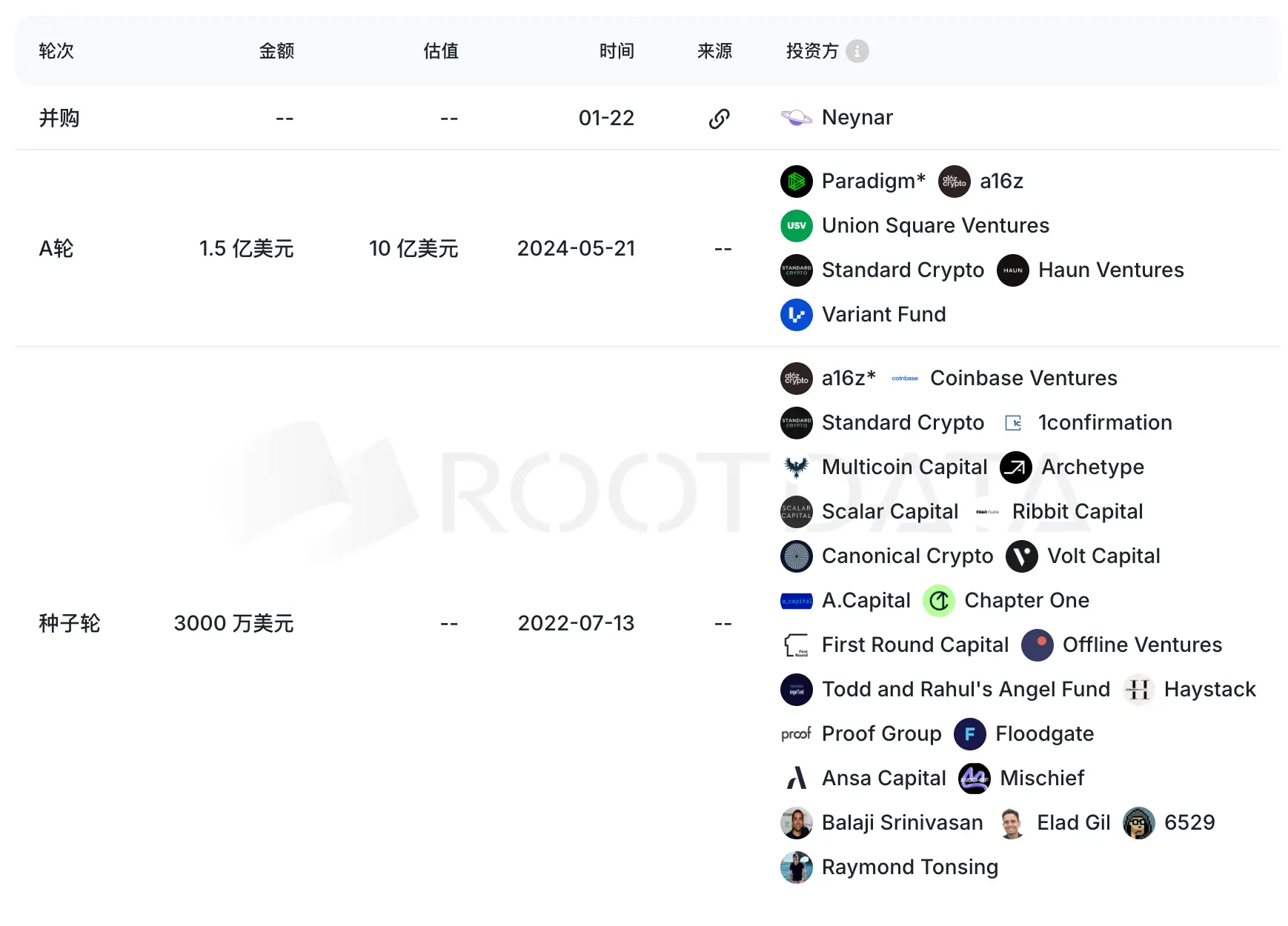
On the team side, key members include co-founders Dan Romero (Former VP of Operations at Coinbase) and Varun Srinivasan, as well as Linda Xie, who leads the developer ecosystem and was an early employee at Coinbase. All of them have deep backgrounds at Coinbase. Additionally, Coinbase Ventures participated in Farcaster's early seed round financing.
Romero also admitted that after nearly five years of development, the platform has still failed to find a sustainable growth mechanism for a Twitter-like social network. "We tried a social-first strategy for 4.5 years, and it didn't work for us," he said.
In December last year, Farcaster observed that the wallet feature previously introduced within its app experienced rapid adoption, becoming the module closest to achieving product-market fit in their five-year history. As a result, the team shifted its focus from the social network to in-app wallet and transaction features to enhance user engagement. Farcaster believes, "SocialFi is the combination of social and finance, and adding a wallet is where it truly begins."
The majority of services in the Farcaster ecosystem rely on the technical support of Neynar.
Neynar has provided infrastructure services for Farcaster since 2021 and currently serves over 1,000 customers. Nearly all major applications within the Farcaster ecosystem rely on Neynar for their operations. According to RootData, in May 2024, Neynar completed a $11 million Series A funding round. The investor Union Square Ventures noted at the time that the majority of services in the Farcaster ecosystem depend on Neynar's technological support.
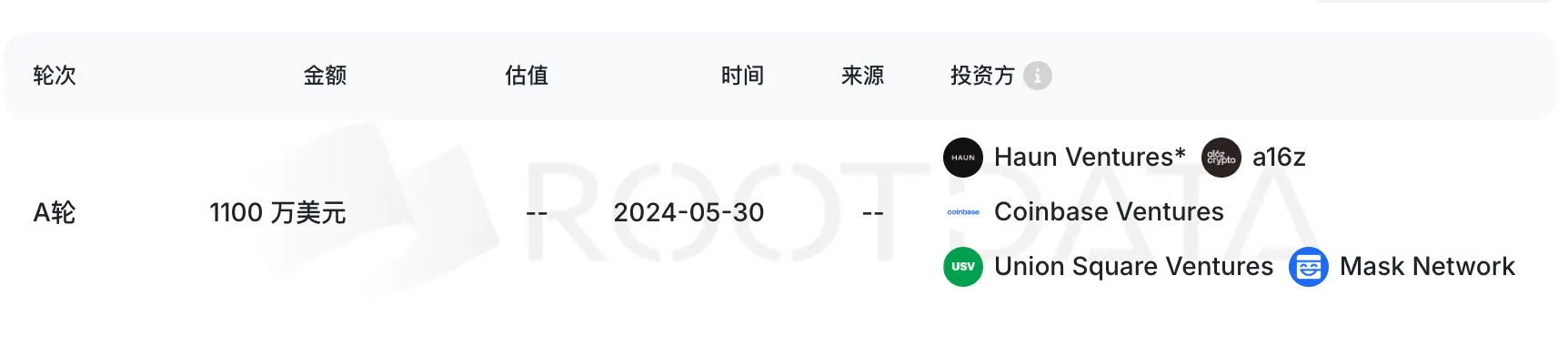
Moreover, Neynar founders Rishav Mukherji and Manan Patel, like the Farcaster founders, are former Coinbase employees, and Coinbase Ventures has simultaneously invested in both companies. Due to this connection, Farcaster's social features are deeply integrated into the Base app developed by Coinbase, serving as the social layer infrastructure for Base.
Base initially focused on social features, but by the end of 2025, it discovered that user demand for wallet and transaction functionalities far exceeded that for social interactions. As a result, the product's positioning was adjusted, shifting the focus toward transaction features. Nevertheless, Base's underlying social architecture is still built on Farcaster, whose infrastructure is controlled by Neynar. In this sense, Neynar effectively supports some of Base's core functionalities as well.
In addition, Clanker, the AI token issuance platform acquired by Farcaster last October, adds even stronger commercial returns to this transaction. Operating on the Base chain, Clanker is currently the fourth-highest earning protocol on the network, generating over $482,000 in weekly revenue through token deployments. Since its launch, it has accumulated more than $50 million in protocol fees.
Raised $180 million in financing, but cumulative contract revenue is only $2.8 million.
For users, there will be no immediate changes—Farcaster and Clanker will continue to operate as normal. For developers, the protocol contracts and code repositories will transition to Neynar's management, and future developer meetings will also be hosted by Neynar. Meanwhile, the Clanker team will join Neynar, while members of Merkle, the parent company behind Farcaster, will disperse to new companies or projects.
Although Farcaster has raised a total of $180 million in funding, its cumulative protocol revenue has only reached $2.8 million. In the fourth quarter of 2025, the protocol's total revenue was $1.84 million, representing an 85% annual decline. In contrast, Neynar's B2B SaaS model, which has over 1,000 paying customers, can provide a more stable economic foundation for the protocol.
Romero admitted, "This wasn't an easy decision. But after five years, it's clearly evident that Farcaster needs new approaches and leadership to fully realize its potential."
This acquisition took place the day after the Lens Protocol transferred its ownership to Mask Network. Suji Yan, founder of Mask Network, posted on X regarding Neynar's acquisition of Farcaster: "More robust competition is beneficial. I had indeed heard some rumors here and there earlier, but I never confirmed them with the Neynar team. We should strengthen collaboration, and I sincerely congratulate the Neynar team. To disclose, I am a small shareholder of Neynar, and we are currently using Neynar's software and technology. They are an exceptionally talented group of people."
In addition, Ethereum founder Vitalik Buterin also pledged yesterday to fully return to the decentralized social media track to support this struggling ecosystem.
This acquisition of Farcaster by Neynar is not merely a change in management, but a pivotal turning point indicating a shift toward practical operations in the decentralized social media sector. For supporters, it may seem like a straightforward technical handover, with a long-term infrastructure provider deeply rooted in the ecosystem's foundation taking over. This transition may present an opportunity to address the protocol's long-standing issue of stagnant growth.
However, under the financing achievements of $180 million and $110 million, this "small acquiring large" deal has also raised market doubts. Farcaster has yet to present a sustainable business model, while its founders have chosen to step down. Is this a strategic adjustment, or are investors seeking an exit route?