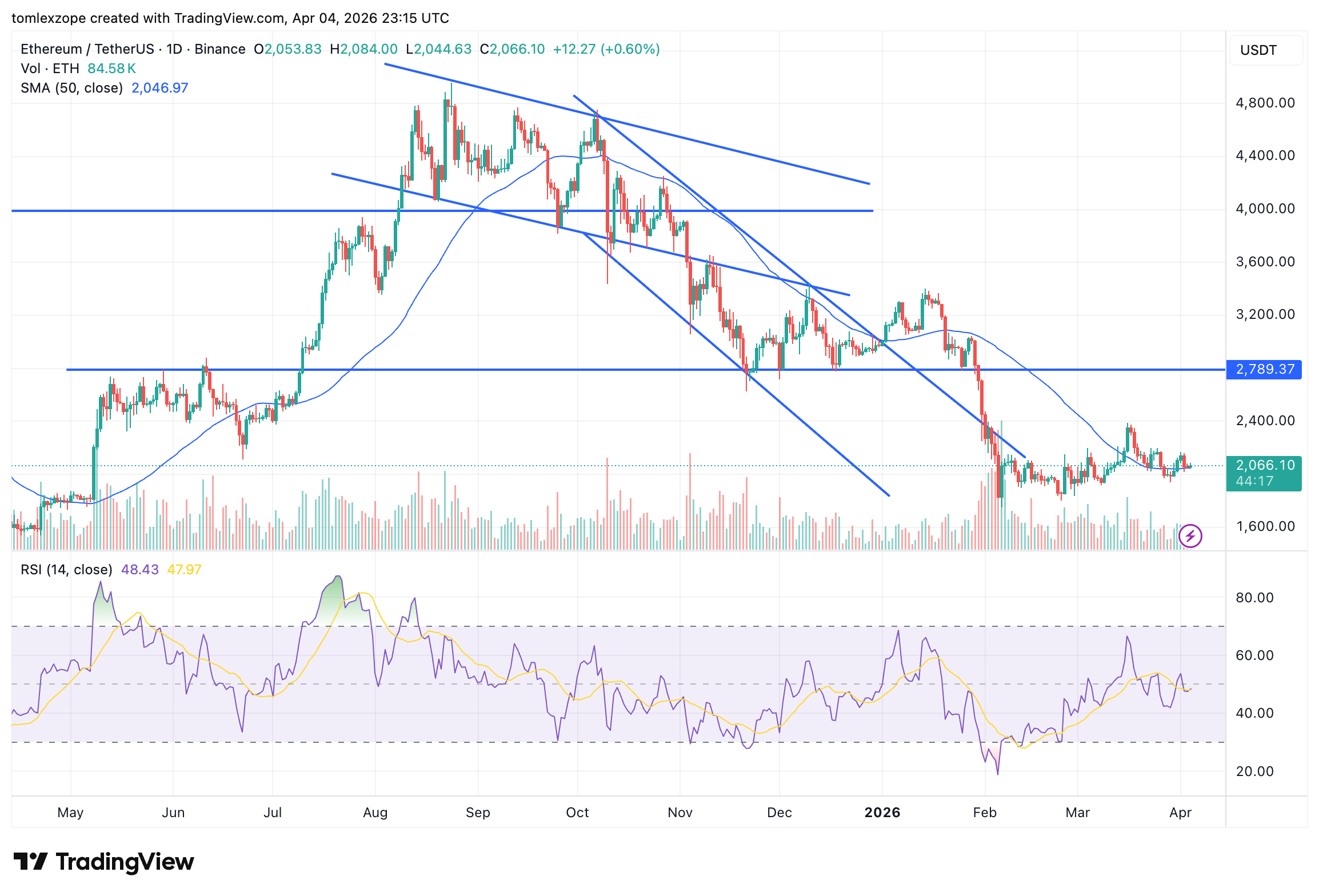


The price of Ethereum has been hovering around $2,000 for nearly a month, with the technical structure showing no clear path to recovery. According to the latest on-chain data, the “King of Altcoin” is witnessing a rare signal that could mean that it is at the beginning of a positive trend.
ETH Net Taker Volume Suggests Potential Bullish Price Trend
In an April 4 post on the social media platform, pseudonymous market analyst Darkfost revealed that the Ethereum derivatives market is experiencing a regime shift for the first time since the last bear phase. This market outlook revolves around the change in the Net Taker Volume metric in recent weeks.
The Net Taker Volume metric is an on-chain indicator that tracks the difference between the buying and selling volume of market orders in the derivatives market of a particular cryptocurrency (Ethereum, in this case). The metric is used to evaluate whether buying or selling pressure is the prevalent force in the market at a given time.
When the value of the Net Taker Volume metric rises and turns positive, it indicates that buying volume is more significant than the selling volume. On the flip side, a negative value suggests that sellers are overwhelming the buyers in the Ethereum derivatives market.

According to CryptoQuant data highlighted by Darkfost, volume from buyers appears to be prevailing in the Ethereum derivatives market, with a positive difference of over $104 million. This shift of the metric into the positive territory is happening for the first time in the past three years.
The crypto analyst noted that the price of Ethereum was under intense selling pressure even as it climbed to new all-time highs. However, the market regime seems to be changing for the second-largest cryptocurrency by market capitalization.
Darkfost mentioned that the positive buying pressure being experienced by Ethereum could contribute significantly to the formation of a strong bottom and potentially a foundation for a bullish market structure. “If this dynamic persists and the spot market and ETFs begin to support the move, Ethereum could potentially restart a positive trend,” the analyst concluded.
Ethereum ETFs Record Negative Outflow For Third Consecutive Week
The US-based Ethereum exchange-traded funds (ETFs) posted another period of negative performance over the past week. According to the latest market data, the spot Ethereum ETFs saw over $42.15 million withdrawn over the past week.
Notably, the crypto-linked investment products saw a total net outflow of more than $71.12 million on Thursday, April 3, reflecting the waning investor demand and appetite. As earlier inferred, the direction of the ETH ETFs’ capital flow needs to change if the price is to enjoy a sustained recovery.
As of this writing, the price of ETH stands at around $2,058, reflecting a 0.6% leap in the past 24 hours.