





Original author: Sleepy.md
April 28, 2026, U.S. District Court in Oakland, California.
No courtroom drama with slamming tables and shouting—just a cold list of evidence, impeccably dressed top lawyers, and an overwhelming sense of pressure.
Elon Musk, CEO of Tesla, and Sam Altman, CEO of OpenAI, sat on opposite sides of the courtroom. Musk, seated at the central table, clenched his jaw, pressed his tongue against the inside of his cheek, and flipped through his notes. Altman, seated in the front row of the gallery, sat with arms crossed tightly over his chest, his expression serious as he spoke quietly with his lawyer.
This is the world's richest man, attempting to use legal means to dismantle the world's largest AI unicorn.
The trial began with jury selection the day before.
In the San Francisco East Bay, a hub for tech professionals, it’s already difficult to find nine ordinary people who can remain completely neutral toward Musk and ChatGPT.
The candidates were each questioned: “Do you use ChatGPT often?” “Do you follow Musk on X?” “Have you bought shares in Tesla or SpaceX?”
After a five-hour back-and-forth, both sides exhausted their five peremptory challenges. Presiding judge Yvonne Gonzalez Rogers even remarked in court, “The truth is, many people really don’t like Musk.”
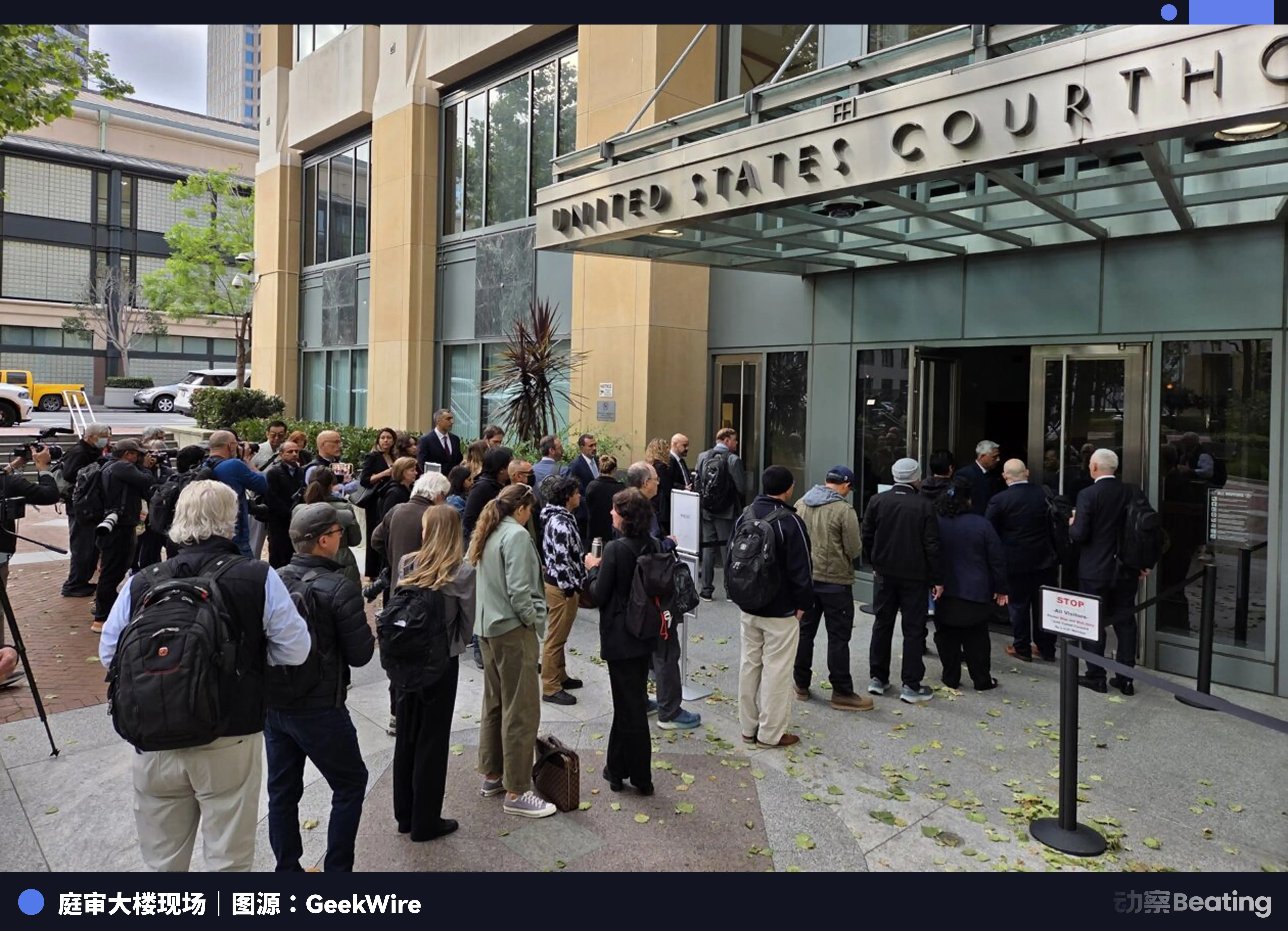
This lawsuit, dubbed by the media as the “trial of the century,” appears on the surface to be a legal battle over billions of dollars in damages and the classification of a nonprofit organization. But behind these dry legal terms lies a more fundamental question.
When an open-source project once championed as "for the benefit of all humanity" transforms into a $852 billion commercial empire, did its original idealists depart due to moral purism, or were they defeated in power struggles and filled with resentment? Is this a long-overdue reckoning—or the tantrum of a corporate giant denied its grapes?
Two narratives
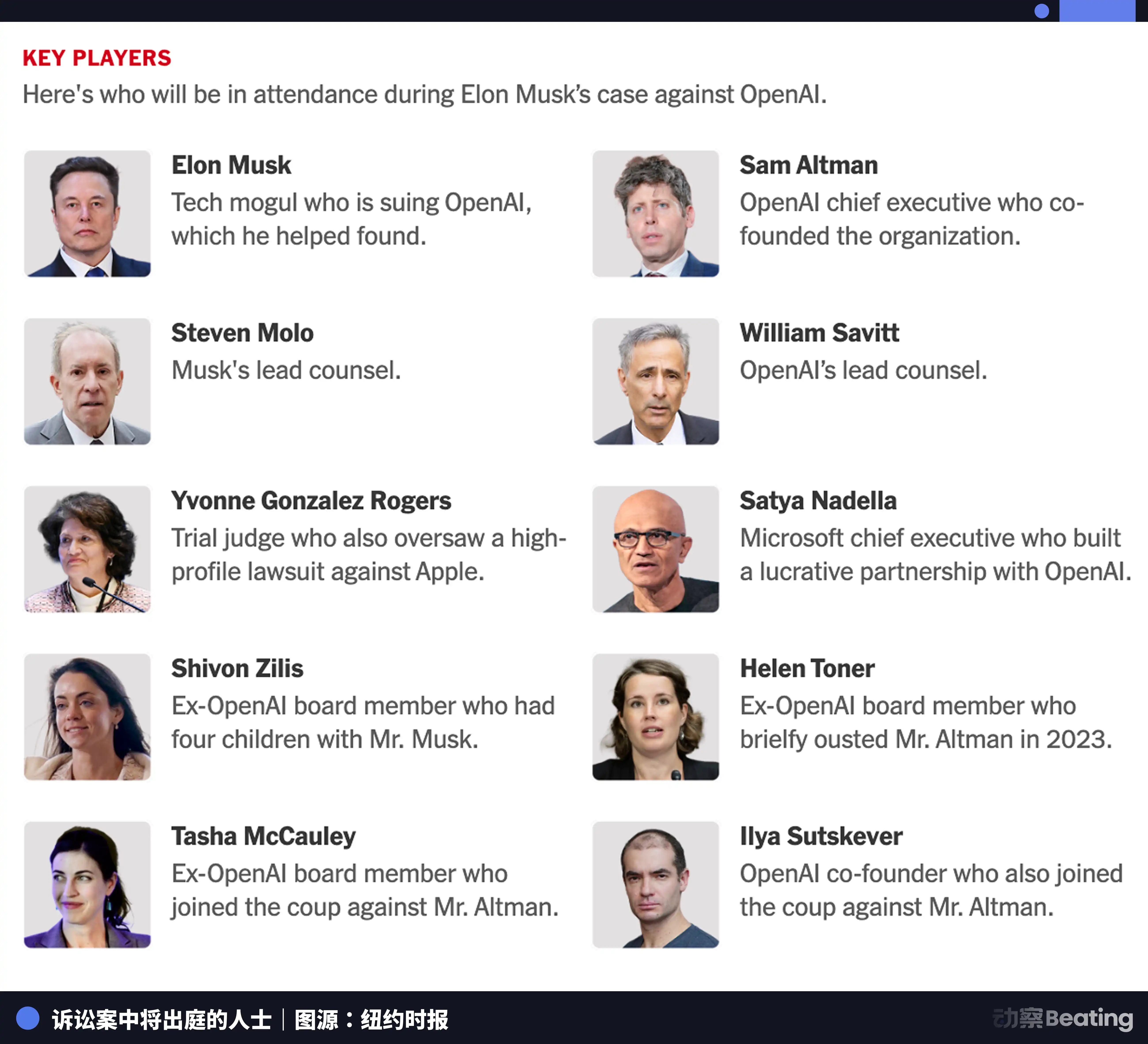
After the trial officially began, the lead attorneys for both sides delivered opening statements that presented the jury with two entirely different narratives.
In the narrative of Elon Musk’s chief counsel, Steven Molloy, this is a tale of a “knight of light battling greedy power brokers.”
Molotov deliberately avoided all obscure technical jargon, citing OpenAI’s 2015 founding charter to continually reinforce the idea that OpenAI’s original purpose was “to benefit humanity as a whole” and that it was “not a tool for making money.”
Moro alleged that Altman and President Greg Brockman "stole a charity." He pointed directly to Microsoft’s cumulative $13 billion investment in OpenAI, arguing that this moment completely shattered OpenAI’s promises to Musk and to the world.
To prove his innocence, Musk’s team even pledged that if they win the lawsuit and receive a $100 billion damages award, the entire amount will be donated to OpenAI’s nonprofit foundation, with not a single dollar going to Musk personally.
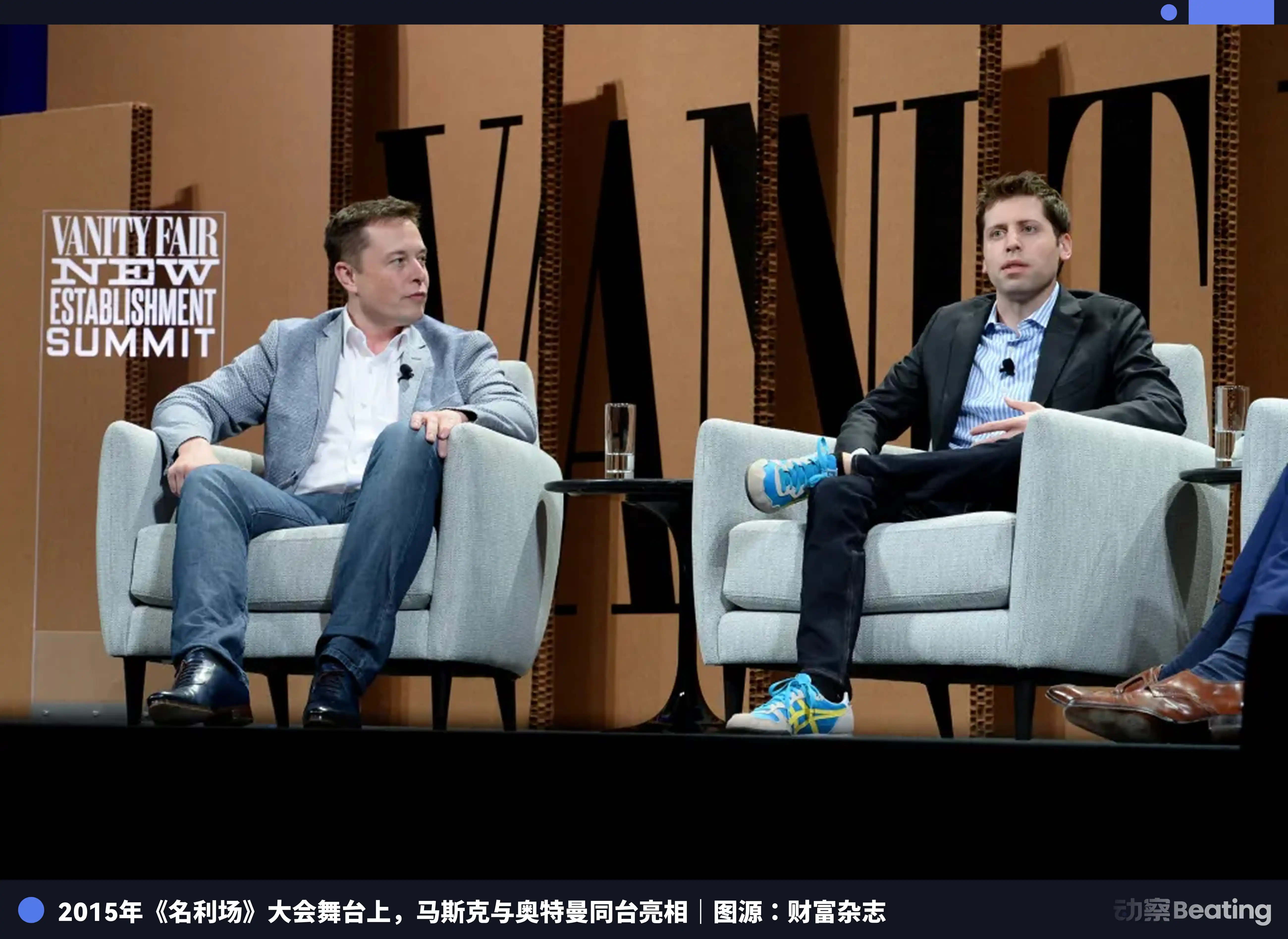
However, according to Bill Savitt, OpenAI’s chief counsel, it’s an entirely different story—no longer a moral crusade, but a business retaliation following the failure of a blatant power grab.
"We're here because Musk didn't get his way," Savit cut to the chase.
He told the jury that Musk was the one who truly smelled the opportunity and saw the commercial potential of AI, and tried to claim it for himself. Back then, Musk not only demanded absolute control over OpenAI but even proposed merging OpenAI directly into Tesla.
Saverin shattered Musk’s persona as an “AI safety advocate.” He pointed out that AI safety was never Musk’s true priority, and that he even mocked employees who were overly focused on AI safety. In Saverin’s view, Musk only sued OpenAI in 2023—after founding his own for-profit AI company, xAI—purely out of business competition.
"After my client parted ways with him, they continued to thrive and achieve success," said Saver. "Even if Musk is dissatisfied, he has no right to file a frivolous lawsuit."
More interestingly, there is Microsoft’s subtle stance as a third party. Microsoft’s lawyer, Russell Cohen, strongly distanced the company in court, claiming that Microsoft has always been a “responsible partner at every step” and has done nothing wrong.
But just before the trial, OpenAI suddenly announced updated terms of its partnership with Microsoft: Microsoft no longer holds exclusivity, and OpenAI’s products will be deployable on other cloud platforms. This move is not merely a defensive response to antitrust investigations—it resembles a carefully orchestrated public relations strategy, as OpenAI seeks to demonstrate to the court that it is not Microsoft’s puppet.
Under the banner of morality, both sides conceal profound commercial calculations.
Elon Musk's testimony
As the first high-profile witness to testify, Musk spent a full two hours on the witness stand.
In today’s climate of anti-elitist sentiment, Musk clearly knows how to connect with ordinary jurors. Instead of immediately diving into obscure discussions about AGI, he spent nearly half an hour recounting his own humble origins. He spoke of leaving South Africa at age 17, working as a lumberjack in Canada and doing manual labor on farms; he emphasized that he still works 80 to 100 hours per week, owns no vacation home, and has no yacht.
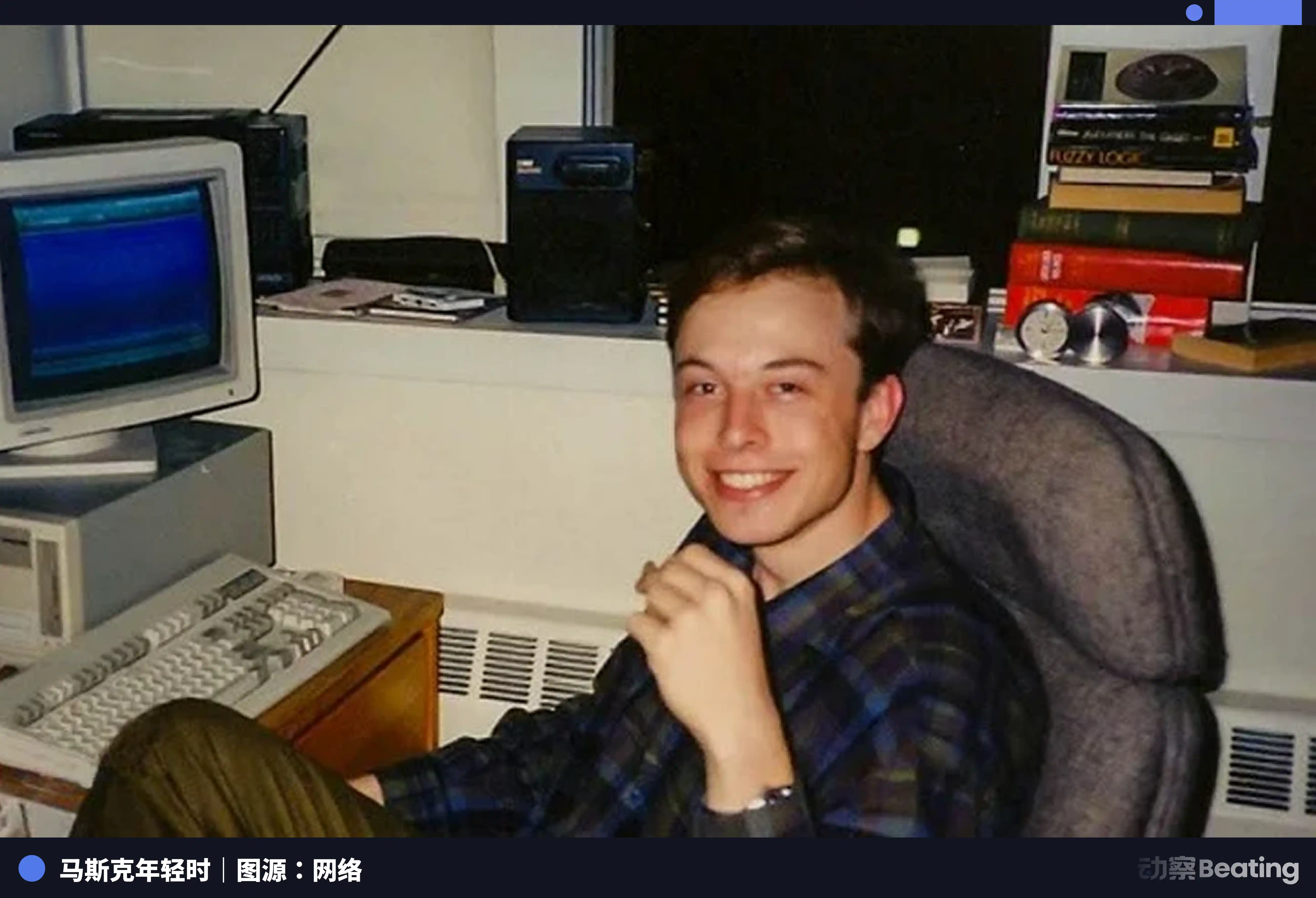
“I love working and solving problems that make people’s lives better,” Musk attempts to portray himself as a hardworking, pragmatic, down-to-earth doer who shuns luxury.
Then, he shifted gears and turned the topic to the chilling AI crisis.
Musk predicts that, as early as next year, AI will be smarter than any human. He compares developing AI to raising a "very smart child"—when the child grows up, you can no longer control them; you can only hope the values you instilled in them from the start will hold true.
“We don’t want the Terminator scenario,” Musk warned, his tone serious.
To prove that his original intentions for founding OpenAI were absolutely pure, Musk recounted his falling out with Google co-founder Larry Page.
Musk recalled that the two had once been close friends who frequently engaged in long conversations about the future of AI. But during one exchange, Musk discovered that Page was unconcerned about the risks of AI going out of control. When Musk insisted that human survival must be prioritized, Page retorted by accusing Musk of being a “speciesist.”
This term is extremely jarring in a Silicon Valley context. It implies that, in the eyes of tech enthusiasts like Page, silicon-based AI life is equal to, or even represents a more advanced evolutionary path than, carbon-based human life.
Musk told the jury that he thought Page was crazy. It was this extreme fear that Google might monopolize and abuse AI technology that motivated him to fund the creation of OpenAI as a "counterweight to Google."
This narrative logic is self-consistent and tragic, but not without flaws.
Musk sternly declared in court: “If we allow them to steal a charity, the entire foundation of American charitable giving will be destroyed.” However, the Musk Foundation, under his name, has been exposed for failing to meet the IRS’s minimum 5% charitable payout requirement for four consecutive years, with a funding shortfall of $421 million alone in 2023.
More paradoxically, a person deeply fearful that AI could destroy humanity swiftly assembled a team in 2023 to found xAI, a fully profit-driven venture, tightly integrated into their business empire.
Is Musk’s claim of “for the benefit of all humanity” genuine belief or merely a perfect excuse to undermine competitors? What do the private diaries and emails presented in court reveal about the inner worlds of Silicon Valley’s elite?
Diaries, Texts, and the Dark Side of Silicon Valley
If the opening statements were carefully crafted press releases from both sides, then the internal communications presented as evidence directly tore through Silicon Valley’s facade.
The countermove from Musk's team was a private journal entry written by OpenAI President Greg Brockman in 2017. The journal clearly stated: “Our plan: It would be great if we could make that money. We’ve been thinking we should just go for profit outright.”
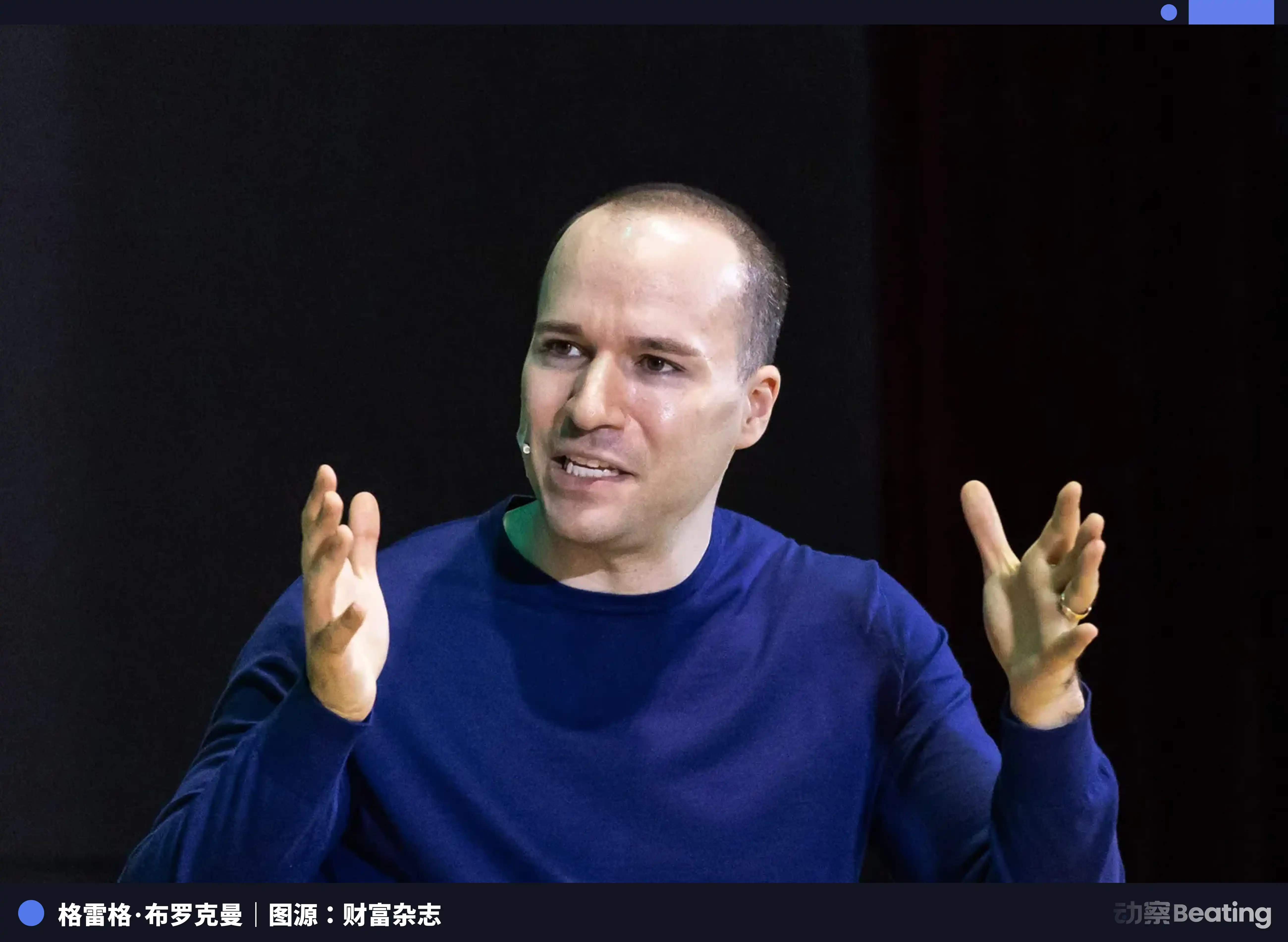
And a more blunt follow-up: "What can make me $1 billion financially?"
These documented records instantly shattered OpenAI’s early nonprofit image of being purely dedicated to scientific research without seeking financial gain. They reveal that, five years before ChatGPT’s rise to fame, OpenAI’s core leadership was already planning how to monetize the technology and position themselves among the billion-dollar club.
OpenAI's counterattack was equally devastating. They presented email records from Musk in 2017 demanding sole control. The records showed that Musk was never merely a generous donor who gave money without involvement—he demanded absolute control over any potential for-profit OpenAI.
When Altman and Brockman refused to relinquish control, Musk underwent a 180-degree shift in attitude. In a 2018 email, Musk pessimistically declared that OpenAI had zero chance of success. He then walked away, resigning from the board and halting further financial support.
OpenAI’s lawyers attempted to use this evidence to show the jury that Musk’s departure had nothing to do with moral scruples or ideological differences—it was simply because he believed the project was doomed and he couldn’t gain control, so he cut his losses.
In this back-and-forth brawl, one name stands out: Hyven Zilis.
She is a former member of OpenAI’s board, an executive at Elon Musk’s brain-computer interface company Neuralink, and the mother of Musk’s three children. Text messages disclosed during the trial revealed that Zillios had proactively asked Musk whether she should remain inside OpenAI to maintain information flow. Based on this, OpenAI accused her of being Musk’s insider while serving on the board.
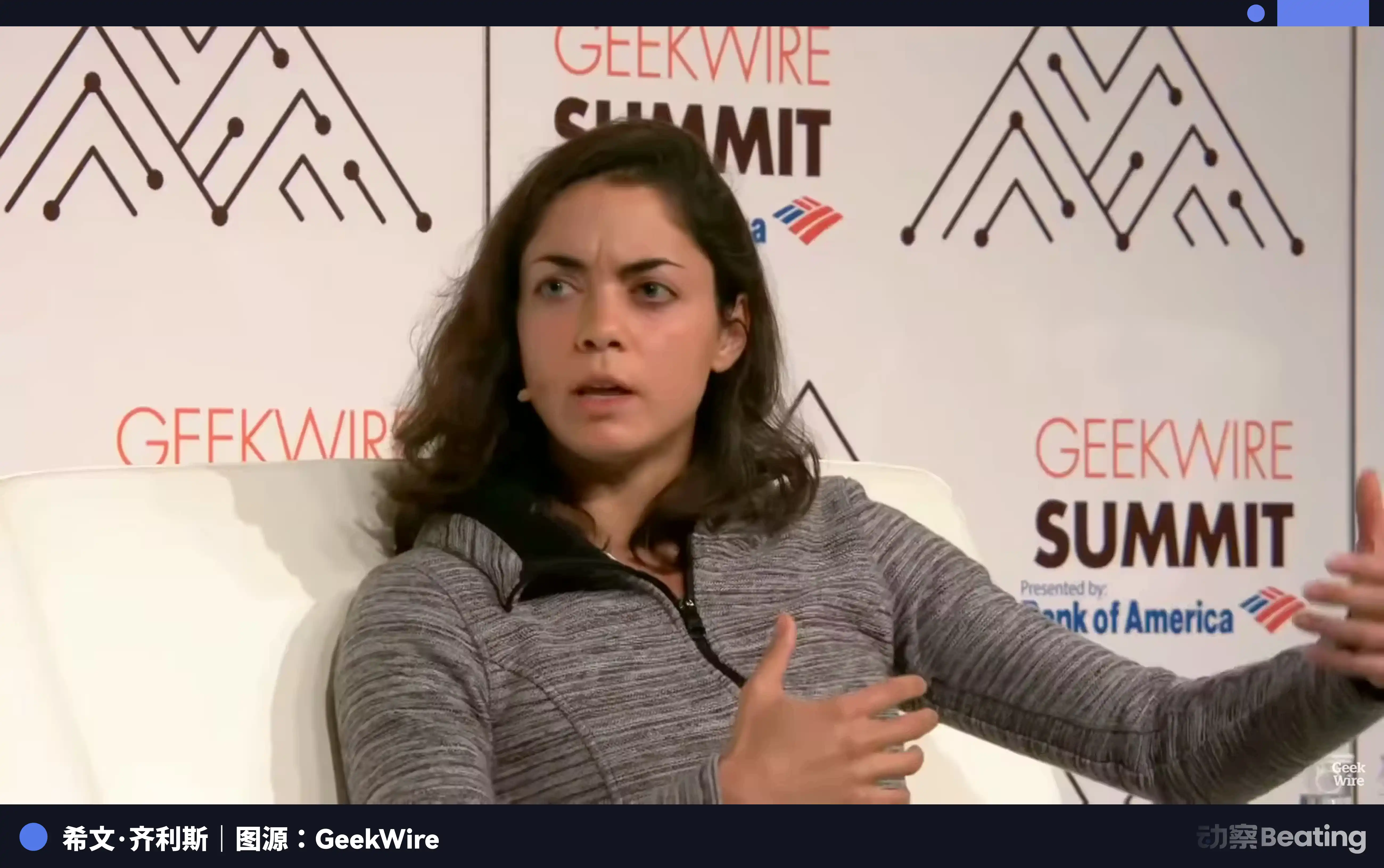
These intricate web of利益绑定, personnel infiltration, and emotional entanglements surge beneath lofty slogans meant to change the world, revealing a deep desire for money, power, and control.
As the idealistic facade is gradually peeled away by evidence presented in court, will the outcome of this lawsuit truly change the trajectory of the AI industry?
A mystery for the future
No matter what verdict the judge ultimately delivers, there are no true winners in this trial.
If Musk wins and OpenAI is forced to dismantle its complex profit cap structure and revert to a purely nonprofit organization, its $852 billion valuation and upcoming IPO plan set for late 2026 would vanish overnight. However, this would not stop capital from continuing to flood the AI sector—instead, Musk’s own xAI would lose one of its strongest competitors.
If OpenAI wins, the legal loophole allowing nonprofit organizations to transition to for-profit entities will be fully exposed. This means that future tech entrepreneurs could initially pose as nonprofits, leveraging tax exemptions and the moral prestige of nonprofit status to attract top talent and early funding at low cost, then, once a technological breakthrough is achieved, privatize and commercialize the venture through complex equity structures.
Viewed within the broader history of technological revolutions, this trial is merely another footnote in the story of business competition—much like the battle between Edison and Tesla over AC versus DC electricity at the end of the 19th century, or the browser wars between Microsoft and Netscape at the end of the 20th century. Giants clash in court, fighting over the rules of today’s利益分配.
Winning or losing in court cannot alter the objective laws of technological evolution. What truly determines humanity’s fate is not the meticulously prepared arguments of lawyers, but the GPU clusters humming day and night in data centers around the world, voraciously consuming power and data.
The scene returns to the courtroom in Auckland. Midway through the hearing, the courtroom’s microphone and display screens briefly experienced a technical glitch. Judge Rogers shrugged and joked, “What can I say? We’re federally funded.”
Laughter echoed in the courtroom. This self-deprecating moment stood in stark, absurd contrast to the Silicon Valley giants who routinely speak of billion-dollar claims, human survival, and Terminator-style crises. In this surreal reality, the wheel of AI is relentlessly crushing outdated business ethics and legal boundaries, hurtling toward a future even its creators cannot foresee.