





Dr. Jiang, drawing on his deep technical expertise and forward-looking financial experience, insightfully outlines how Web3 is transitioning from its "wild west" phase into an era of institutionalization and rule of law.
Article author and source: Yunfeng Financial
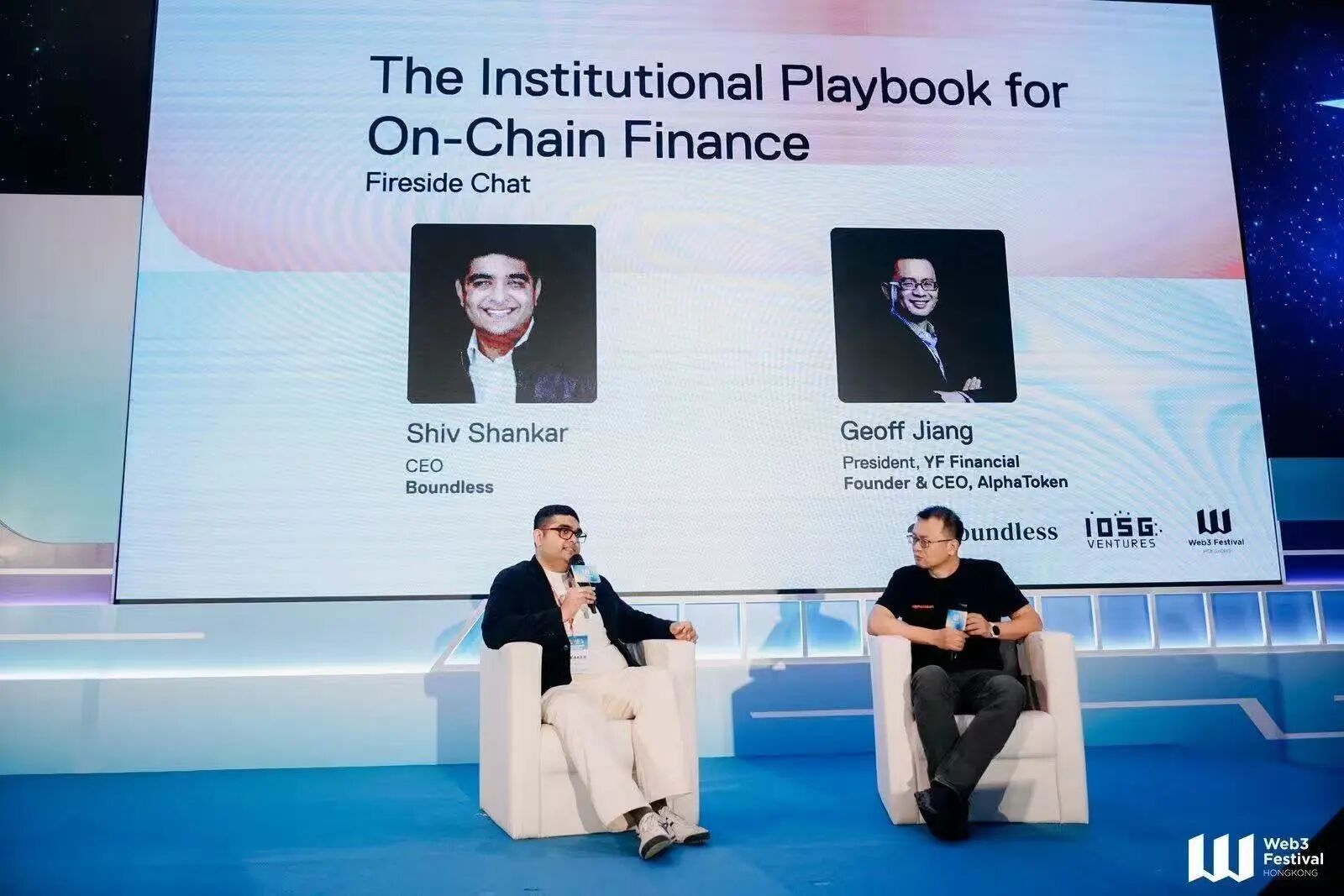
Recently, Dr. Geoff Jiang, President of Yunfeng Financial Group (Stock Code: 00376.HK) and founder of AlphaToken, was invited by the world-class venture capital firm IOSG Ventures to participate in the 2026 Hong Kong Web3 Carnival, where he engaged in an in-depth dialogue with industry leaders on the future of digital finance. Drawing on his profound technical expertise and forward-looking financial practices, Dr. Jiang insightfully outlined how Web3 is undergoing a paradigm shift from its “wild west” phase toward institutionalization and the rule of law.
This dialogue was not only a collision of technology and finance, but also a profound reflection by Yunfeng Financial on the future of asset management ecosystems. Both parties engaged in candid and insightful discussions on the commercial essence of RWA, the integration paradigm of AI and Web3, and the reconstruction of industry revenue models, jointly exploring how digital finance can evolve from speculation to long-term value creation.
From the "Wild West" to the "Age of Rule of Law": Compliance Is the Only Ticket for Institutional Entry
Host: At this year’s festival, the focus of discussion is no longer on “disrupting” infrastructure, but on “deep integration” with the traditional financial system. How do you perceive this paradigm shift?
Geoff: This feeling is profound. I believe Web3 is currently undergoing a transformative shift from the “Wild West” to the “Law and Order” era. In the early, lawless days, breaking norms may have been prioritized, but now in Hong Kong, the industry is entering a new phase of structure and regulation—like laying down “railroads” and introducing “police” to establish order and hierarchy in the Wild West. For Yunfeng Financial to truly thrive in this market, it must navigate an extremely complex four-layer architecture. The first layer is access control, involving compliance upgrades related to Hong Kong’s Type 1, 4, and 9 licenses in the digital asset space. The second layer is institutional integration, where we must address pain points around fund custody and account opening with traditional banking systems—often requiring months of rigorous due diligence.
In addition, we must address challenges at the technical compliance layer, including essential technologies such as KYC, AML, and KYT for transaction monitoring. Finally, there is the internal control and risk management layer, which involves security audits of asset flows across systems, organizational operations, and risk hedging. This transformation reflects a deep integration and alignment between the institutional rigor of Web2 and the native technological nature of Web3.
The "Golden Triangle" Architecture: How AI Engines Are Defining the Future of "Digital Finance"?
Moderator: You emphasized the role of AI in your discussion. How will AI, data, and Web3 collectively build the industry's "moat" in the next phase of digital finance?
Geoff: I firmly believe that the future of digital finance is supported by three pillars: data, AI, and Web3. Digital finance decisions rely on vast amounts of high-quality market data, which creates an "information gap"; AI handles analysis and decision-making, delivering a significant "cognitive gap"; and Web3 serves as the underlying programmable settlement infrastructure, enabling instant asset exchange through smart contracts, generating substantial "time gaps" during clearing and settlement.
When these three elements interact, we can realize a compelling vision: creating a personalized, AI-driven family office for every individual. Traditionally, family offices have been a privilege reserved for a select few, but in the future, AI engines will precisely filter through billions of assets globally, combined with Web3’s ultra-low-cost and highly efficient real-time settlement and clearing—making this professional-grade wealth management service truly accessible to all, empowering every ordinary person with institutional-level asset allocation capabilities.
The essence of RWA: A decentralized revolution in the financial industry
Host: Dr. Jiang, you once described RWA as the "Taobao model" of finance—an extremely vivid perspective in the industry. How do you believe it addresses the industry’s challenges with profit models?
Geoff: The logic of RWA is essentially a "direct-to-consumer revolution" in finance. In traditional financial chains, the distribution path for products is extremely long, with each intermediary taking a cut of the profit, resulting in inefficiency and high costs.
RWA, powered by Web3 technology, enables the disintermediation of financial products. It directly connects the source of assets with investors through technological means, much like buying vegetables directly from farmers on Taobao. This Web3-enabled “direct finance,” combined with AI’s asset selection and risk transparency capabilities, allows investors to capture greater returns from the underlying assets. This dramatic increase in efficiency is the core driver that enables the industry to generate sustainable profits and achieve long-term success.
Focus on substance over speculation: Return to core business fundamentals and move beyond the twilight of the wild west.
Moderator: For individuals or institutions preparing to enter this field, what is the most fundamental advice you would like to offer? Today’s productive dialogue between both sides has been highly beneficial to us—please summarize your key takeaways.
Geoff: My key takeaway is that the wild west era has definitively ended. The core focus now is on business fundamentals—what your product actually is, who your customers are, and whether your cash flow is sustainable. In Hong Kong’s stable regulatory environment, truly valuable business ecosystems are more likely to emerge.
In summary, the second half of Web3 is no longer about virtual games, but about deep integration with the real world. Don’t rely solely on short-term concept hype for profit—such models won’t last. The real challenge lies in whether you can leverage technology to solve genuine financial pain points within a compliant framework. Only those who can bridge the rigor of traditional finance, understand the regulatory landscape, and truly know how to use technological advantages to create real value will emerge victorious in the next race of digital finance. We’ve greatly enjoyed this conversation today and look forward to collaborating with industry partners to build a new, rule-bound, value-driven digital finance ecosystem.
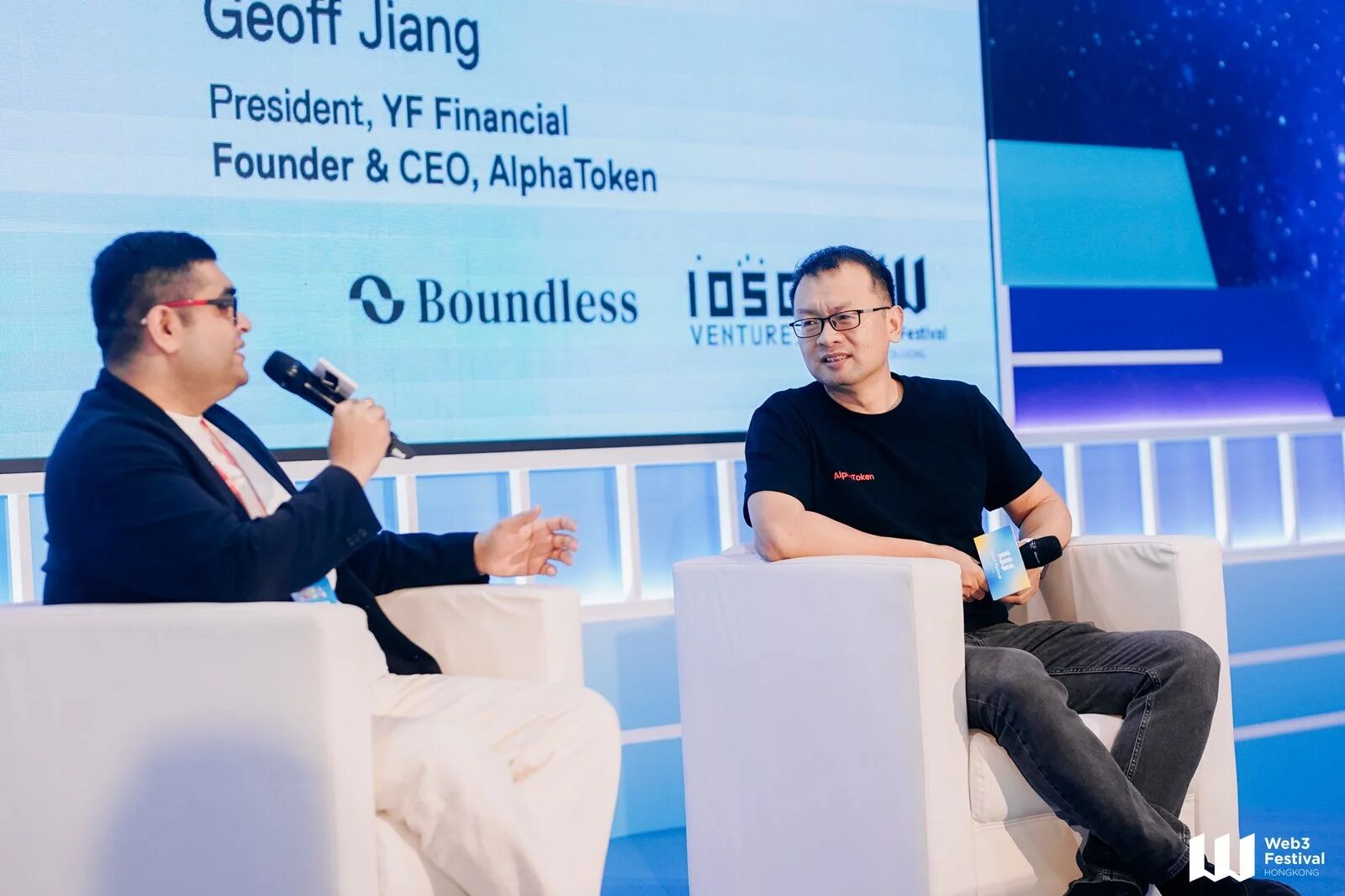
Dr. Jiang Guofei, President of Yunfeng Financial and Founder of AlphaToken (right)
About Yunfeng Financial
Yunfeng Financial Group Limited (Stock Code: 00376.HK) is an innovative fintech company whose major shareholders include Yunfeng Financial Holdings Limited and MetLife, Inc. (one of the top five life insurance companies in the United States). The company’s business spans insurance, securities brokerage, asset management, and fintech. Its subsidiaries hold Hong Kong SFC licenses for Type 1, Type 4, and Type 9 regulated activities, and through its controlling stake in MetLife Insurance, it possesses the Hong Kong Insurance Authority’s long-term insurance license and qualification as a Mandatory Provident Fund trustee. Looking ahead, the group will fully embrace and integrate AI and Web3 blockchain technologies, building upon its solid foundation in insurance and fintech developed during the Web 2 era and its deep ecosystem resources within Yunfeng Financial. With the vision of “Everything on Chain, Connected Globally,” the group aims to create a next-generation AI+Web3 financial services ecosystem.