





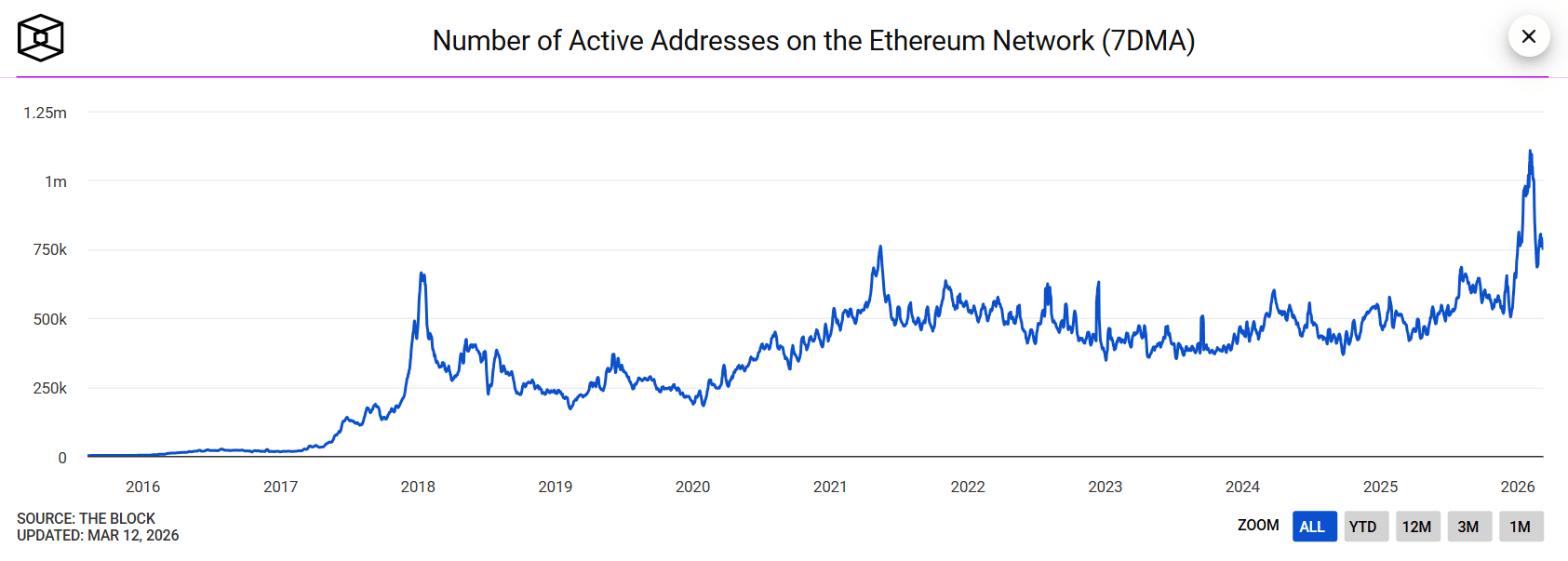
Network activity on Ethereum is climbing to record levels, yet the asset’s market value continues to struggle.
Analysts at CryptoQuant say this unusual disconnect could signal additional downside for ETH if broader market conditions remain weak. The research firm describes the trend as an “adoption paradox.” In simple terms, Ethereum usage is rising while investor demand weakens.
According to Julio Moreno, Ethereum could fall toward $1,500 if the current bear market continues. He noted that such a move could occur by the end of the third quarter or early in the fourth quarter this year unless capital flows improve.
As of this writing, Ethereum traded near $2,110, gaining more than 4% over the past 24 hours.
Key Points
- Ethereum usage continues to rise, with daily active addresses and smart contract activity reaching all-time highs.
- Despite growing on-chain activity, ETH has lost more than 50% from its most recent cycle high.
- CryptoQuant analysts warn that the divergence between network growth and price could indicate further downside, potentially toward $1,500 by late 2026.
Rising Network Activity Fails to Support Price
Recent blockchain data shows that Ethereum usage continues to expand. CryptoQuant reports that daily active addresses reached a new record last month, surpassing levels seen during the 2021 bull market.
Under typical market conditions, such growth would help support higher prices. However, Ethereum’s market performance has moved in the opposite direction. The asset has declined more than 50% from its latest cycle high.
Analysts say this divergence reflects the core of the adoption paradox: activity is increasing while price trends remain weak, suggesting that the historical relationship between network growth and asset value is weakening.
Smart Contracts Fuel Ecosystem Growth
The surge in activity is linked to automated blockchain processes. Smart contracts are generating a large share of transactions.
CryptoQuant reported that internal contract calls reached record levels last month. These calls occur when smart contracts automatically execute actions within decentralized applications.
Several expanding sectors are fueling this trend. These include decentralized finance platforms, stablecoins, and Layer-2 scaling networks built on Ethereum.
Even so, stronger usage has not translated into price momentum. In earlier cycles, increased smart contract activity often coincided with rising ETH prices.
Today, that link appears less reliable. According to CryptoQuant, the relationship between contract-driven activity and price growth has weakened noticeably.
Exchange Flows Offer Clearer Market Signals
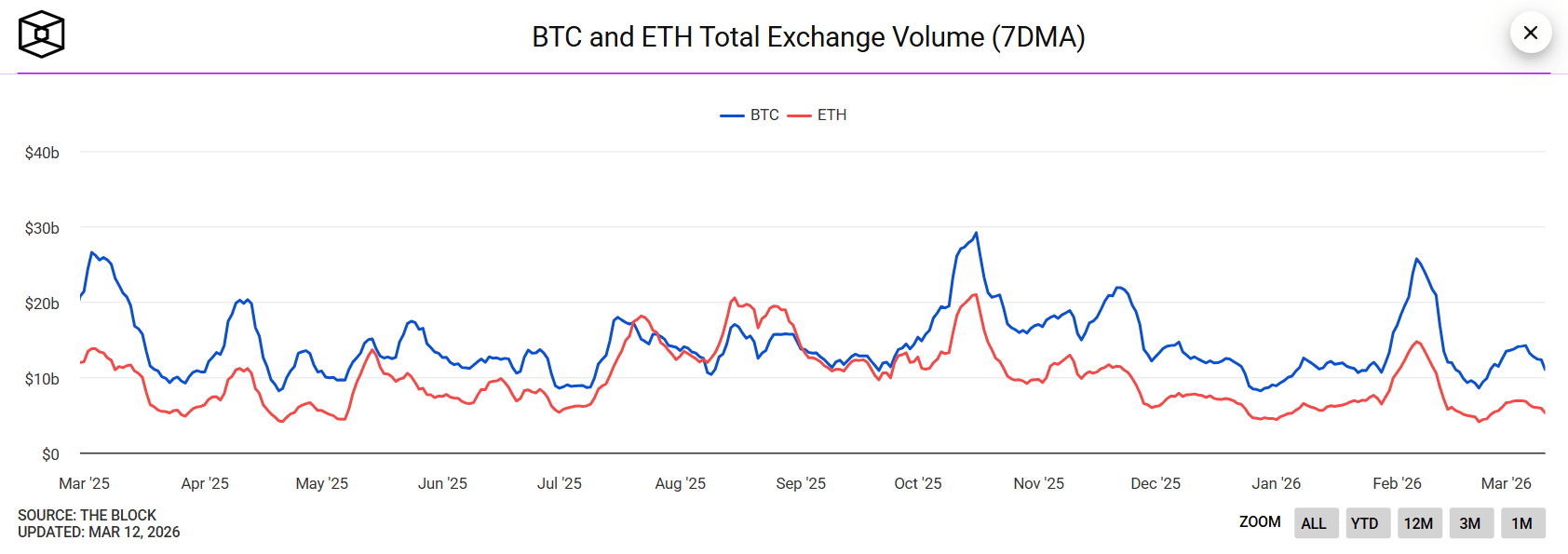
Because network metrics are no longer closely aligned with price trends, analysts are increasingly watching exchange flows for signs of market sentiment.
Exchange inflows represent assets moving to trading platforms, where they are more likely to be sold.
CryptoQuant data show that Ethereum’s exchange inflows remain relatively high compared with Bitcoin, suggesting stronger selling pressure on ETH. Consequently, this dynamic may help explain Ethereum’s recent underperformance against Bitcoin.
Capital Outflows Add to Bearish Pressure
Beyond exchange activity, investment flows also point to weakening demand.
CryptoQuant notes that the one-year change in Ethereum’s realized capitalization, a measure tracking net capital entering or leaving the network, has recently turned negative. Such readings indicate that capital is flowing out of the asset, a trend that can weigh on prices even as on-chain activity rises.
Moreno said Ethereum will need clear signs of renewed investment to reverse the current trend. Specifically, he highlighted two key conditions:
- First, capital inflows must return to the market.
- Second, exchange inflows should decline, reducing potential selling pressure.
Until those shifts occur, analysts warn that Ethereum could remain under pressure as the broader crypto bear market continues.
DisClamier: This content is informational and should not be considered financial advice. The views expressed in this article may include the author's personal opinions and do not reflect The Crypto Basic opinion. Readers are encouraged to do thorough research before making any investment decisions. The Crypto Basic is not responsible for any financial losses.