



Blockworks founder Michael Ippolito emphasized that the rapid growth in the number of crypto tokens exceeds the value it creates, posing an existential problem for the industry. While total market capitalization remains strong, token abundance is diluting value.
Explosion in Crypto Token Count and Existential Risks
In his analysis shared on the X platform, Ippolito stated that the explosion in token count is weakening the ecosystem. The average token value has declined by 50% from the 2021 peak since 2020. This increases the dominance of major assets like BTC detailed analysis, while marginalizing alt tokens. Technically, oversupply is disrupting tokenomic models: inflationary emissions, staking rewards, and airdrops can disperse liquidity.
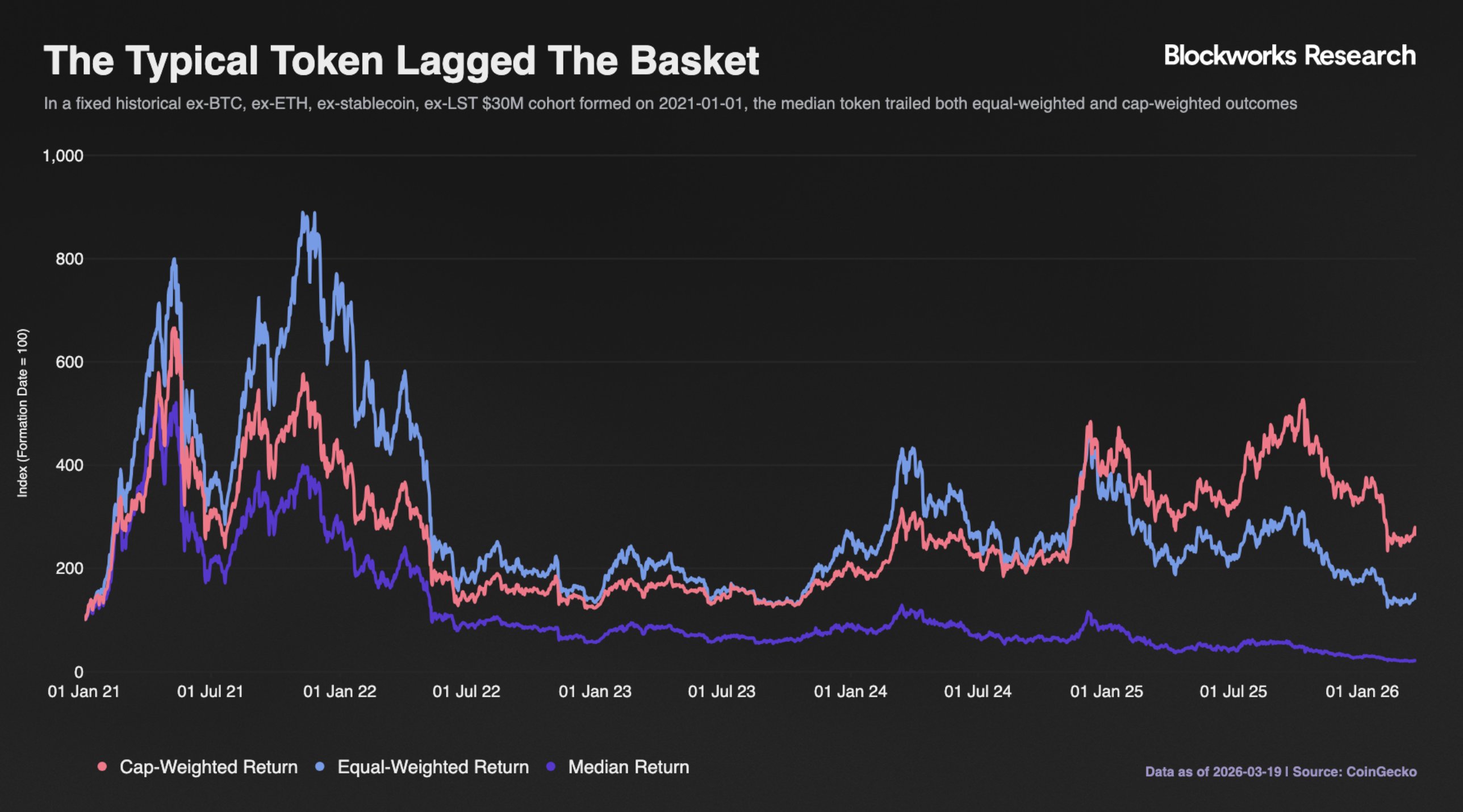
Media token returns drop. Source: Michael Ippolito
Average Token Value Declined 50%: Market Dynamics
While total market value is racing to records, the average token market value is near 2020 levels. This asymmetry reflects the Pareto principle: gains are concentrating in leaders like BTC and ETH. Median returns have fallen 80% from peaks; small tokens are melting in hype cycles.
| Metric | 2021 Peak | Current (2026) | Change |
|---|---|---|---|
| Average Token Value | High | 2020 Level | -50% |
| Median Returns | Peak | Low | -80% |
Token Supply Dilution: Protocol Revenues Not Affecting Price
Ippolito says protocol revenues are increasing but prices are not following. In technical analysis, the correlation between TVL (Total Value Locked) growth and price has weakened. Excessive token mints are reducing per-unit value; for example, yield farming tokens are eroding due to inflation. This is also observed in the ETH futures market.
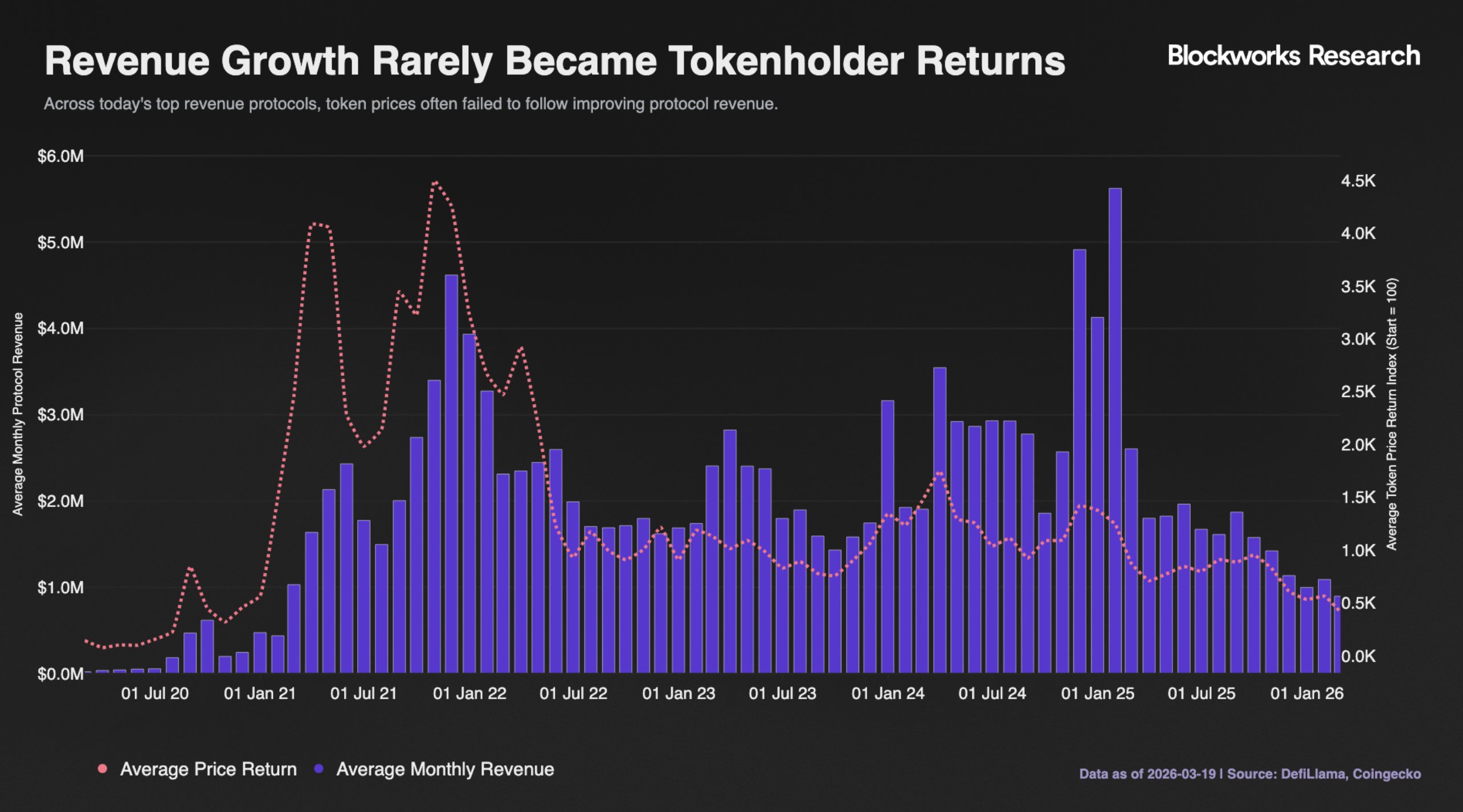
Fundamentals vs price. Source: Michael Ippolito
80% Failure of New Tokens: DWF Labs Data
According to DWF Labs research, 80% of new tokens trade below their Token Generation Event (TGE) price; they experience 50-70% losses in three months. Reasons: low liquidity, bot manipulations, and speculative pump-dump cycles. Post-TGE unlocks create selling pressure.
- 80% below TGE price
- 50-70% value loss in 3 months
- Capital flight to public companies
Urgent Solution Call from DeFiance Capital CEO Cheong
Arthur Cheong says if we don't solve the token problem, the market will narrow to BTC and ETH, and the ecosystem will lose relevance. Expert opinion: Quality-focused filtering (audits, utility) and regulation are essential. As BTC dominance increases, BTC detailed analysis is a safe haven for investors.
BTC-ETH Focused Future: Capital Shift Analysis
Capital is flowing from new tokens to public crypto companies (e.g., Coinbase, MicroStrategy). This is a maturation signal: BTC strengthening as store-of-value, ETH as DeFi infrastructure. Risk for investors: Liquidity trap in altcoins.