





Key Insights
- Armstrong seeks compromise at Davos, meeting banks to revive stalled Senate crypto bill negotiations.
- Stablecoins remain a central flashpoint, with banks opposing yields and Coinbase warning that rules harm innovation.
- Crypto community divided, lawmakers push compromise, highlighting digital assets’ shift from fringe to mainstream policy.
Coinbase CEO Brian Armstrong is using the World Economic Forum in Davos to push for compromise on U.S. crypto regulation. He is meeting with bank executives to discuss stablecoin rules and revive stalled Senate talks on the Digital Asset Market Clarity Act.
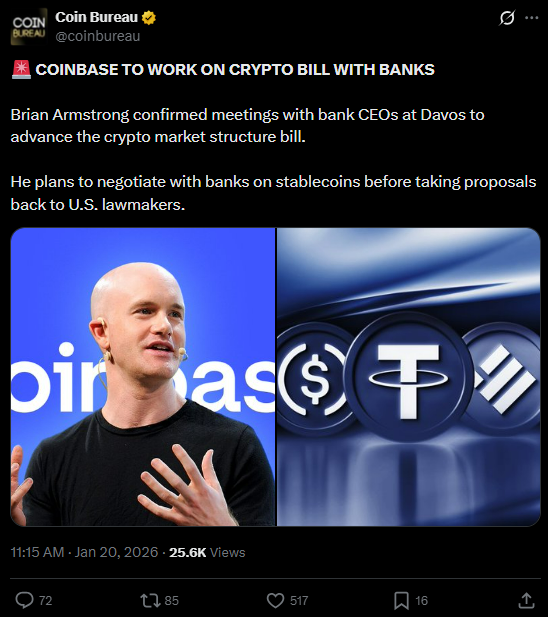
The bill, passed by the House in 2025, has faced delays in the Senate after Coinbase withdrew support. Armstrong now seeks common ground between crypto firms and banks, hoping to shape a framework that balances innovation with financial stability.
Stalled Bill and Senate Delays
The CLARITY Act is designed to define when crypto tokens qualify as securities, commodities, or other assets. It also divides oversight between the Securities and Exchange Commission (SEC) and the Commodity Futures Trading Commission (CFTC).
The House passed the bill in mid‑2025, but the Senate version has struggled. On January 15, the Senate Banking Committee postponed a markup hearing after Coinbase withdrew its support.
The hearing is now tentatively rescheduled for late January, with lawmakers stressing the need for bipartisan consensus. Armstrong explained his opposition clearly. He said the Senate draft could ban tokenized equities, restrict decentralized finance (DeFi), and curtail the CFTC’s authority.
He argued these changes would harm innovation and limit consumer choice. His withdrawal created a major setback. However, his Davos meetings aim to rebuild momentum and encourage compromise between crypto firms and traditional banks.
Stablecoins at the Center
Stablecoins are a major flashpoint. These digital assets are pegged to fiat currencies, such as the U.S. dollar. The bill bans interest payments on stablecoin holdings but allows “rewards” tied to activities, provided they are disclosed.
Coinbase offers yields on USDC through Circle. Armstrong argues the new rules would harm consumers and stifle innovation.
He said the draft is worse than the current status quo. Banks oppose unrestricted stablecoin yields, fearing deposit outflows. Similar limits appeared in the 2025 GENIUS Act.
Stablecoins have grown rapidly, with a market cap above $150 billion. Platforms like Solana and payment use cases drive adoption. Armstrong sees them as a way to modernize finance and support community banks.
At Davos, he stressed collaboration, saying stablecoins could create a level playing field for crypto firms and banks. His meetings aim to deliver proposals back to U.S. lawmakers and the White House. This expressed frustration over Coinbase’s withdrawal.
Mixed Reactions and Global Context
Senators from both parties, including Cynthia Lummis and Mark Warner, vow to revive the bill. Negotiations continue into February. The crypto community is divided.
Some users on X welcome Armstrong’s push as a step toward institutional adoption. Others warn that rules could overcomplicate stablecoins. Critics fear banks may impose restrictive terms, repeating past frictions with crypto.
Armstrong’s Davos diplomacy highlights crypto’s shift from fringe to mainstream policy. Global leaders, including a record-breaking U.S. delegation and President Trump, are in attendance.
Success could bring regulatory clarity and foster innovation. Failure may prolong uncertainty, risk fragmentation, or push activity offshore. For now, all eyes remain on these high‑stakes alpine talks.
The post Coinbase to Work With Banks on U.S. Crypto Market Structure Bill appeared first on The Market Periodical.