





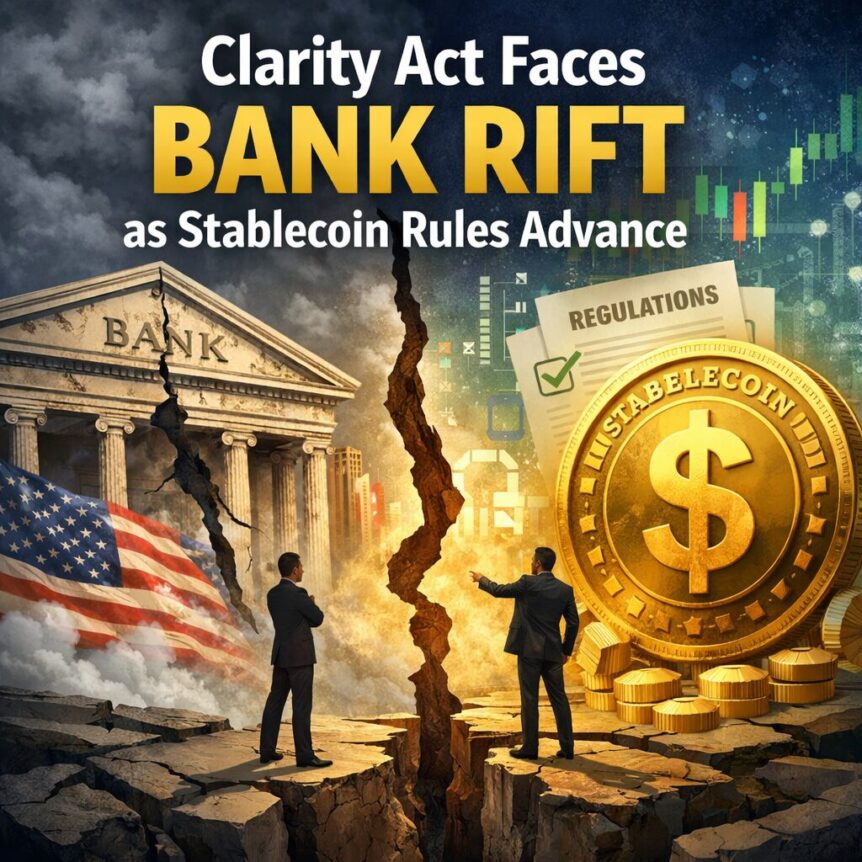
U.S. lawmakers are advancing the Clarity Act despite renewed disputes over stablecoin yield provisions and industry alignment. Banks remain divided, and lawmakers continue refining the bill while targeting approval timelines in mid-2026. Market sentiment stays firm, although political risks and regulatory differences continue shaping the debate.
Banks Clash Over Stablecoin Yield Provisions
Large U.S. banks are raising objections to revised stablecoin yield provisions within the Clarity Act. They argue the updated language still allows indirect yield mechanisms. As a result, they claim the measure does not fully address competitive concerns.
Meanwhile, smaller institutions and non-retail banks are showing broader acceptance of the revised framework. These firms see the changes as workable within current financial structures. However, divisions persist as community banks express mixed reactions.
The Independent Community Bankers of America has flagged risks tied to uneven regulatory treatment. Still, several smaller lenders support the compromise as a step forward. The disagreement highlights ongoing tension between innovation and traditional banking safeguards.
Lawmakers Push Forward Amid Industry Friction
Lawmakers continue advancing the Clarity Act despite growing industry debate over its provisions. Officials are preparing the bill for Senate markup as discussions intensify. At the same time, efforts focus on aligning different regulatory sections into one package.
Senator Bernie Moreno has indicated that progress is accelerating within congressional committees. He confirmed that lawmakers aim to finalize key elements quickly. Consequently, leadership expects movement toward a full Senate vote in the coming weeks.
Senate Banking Committee Chairman Tim Scott is working to secure unified Republican backing. This effort aims to strengthen negotiation power during bipartisan talks. Meanwhile, lawmakers continue balancing financial stability concerns with digital asset growth.
Political Risks and Market Sentiment Shape Outlook
Political dynamics remain a central factor influencing the Clarity Act’s trajectory in Washington. Analysts warn that shifts in Senate control could alter the bill’s priority status. Leadership changes within key committees may also impact their progress.
Some policymakers have historically taken a stricter stance on cryptocurrency regulation. Therefore, a shift in committee leadership could slow or redirect legislative focus. This possibility adds urgency to current efforts pushing the bill forward.
Despite these uncertainties, market sentiment remains positive toward the bill’s prospects. Prediction platforms indicate a strong likelihood of passage within the 2026 timeline. This optimism reflects confidence in continued bipartisan engagement and regulatory clarity goals.
The Clarity Act seeks to establish clear guidelines for digital asset markets and stablecoin operations. Lawmakers aim to reduce uncertainty while supporting financial innovation. At the same time, they are addressing systemic risks linked to digital currencies.
Stablecoin yield provisions remain a focal point due to their impact on competition and consumer protection. Banks argue that yield-bearing products could bypass traditional financial rules. Conversely, crypto firms view them as essential for product development and adoption.
The broader regulatory push follows increased scrutiny of digital assets in recent years. Authorities are working to integrate crypto into established financial systems. As a result, the Clarity Act represents a significant step toward comprehensive oversight.
Lawmakers continue refining the bill while managing competing interests across industries. Although disagreements persist, momentum behind the legislation remains steady. The coming weeks are expected to determine whether consensus can translate into formal approval.
This article was originally published as Clarity Act Faces Bank Rift as Stablecoin Rules Advance on Crypto Breaking News – your trusted source for crypto news, Bitcoin news, and blockchain updates.