





Original author: Curry, Shenchao TechFlow
You may have recently noticed that people are starting to discuss what tokens should be called.
Professor Yang Bin from Tsinghua University published an article titled "Determining the Chinese Translation of 'Token' Is Now Urgent"; on Zhihu, the related translation question has received 250,000 views, with the comment section flooded with suggestions.
Over the past two or three years, the domestic AI community has directly used the term "Token" without anyone finding it problematic. Why is there suddenly a need for a Chinese name?
The immediate reason may be that, after this year's Spring Festival, ordinary people first realized that tokens cost money.
OpenClaw turns AI from chatting into working—running a single task consumes hundreds of thousands of tokens, causing bills to skyrocket; cloud providers are also announcing price hikes, with tokens as the standard unit of measurement.
Meanwhile, tokens have begun appearing in places where they previously shouldn't have.
At the GTC conference, NVIDIA CEO Jensen Huang said that in Silicon Valley, some interviewers now ask, "How many tokens will I get from this job?" He suggested incorporating tokens into engineers' compensation.
OpenAI's founder Sam Altman went even further, suggesting that tokens will replace universal basic income, with everyone receiving not money, but computing power.
Data from the National Data Bureau shows that China’s daily token consumption rose from 100 billion at the beginning of 2024 to over 40 trillion by September 2025, reaching 180 trillion in February this year. At the start of the year, the People’s Daily published a dedicated article titled “A Brief Introduction to Tokens,” explaining the term to readers.
A technical term, once incorporated into cloud service bills, hiring compensation packages, and official statistical metrics, can no longer be called by its English name.
The question is, what is it called?
If this is just a translation issue, the answer has long existed. In 2021, China's academic community officially designated the term "Token" as "word element."
But no one cared, because at that time, "token" was just an internal term within the tech community.
It's different now.
The term "token" is itself a universal container; previously, crypto enthusiasts called it a "token," security professionals called it a "token," and AI practitioners called it a "token." The same English word, depending on which direction its Chinese translation leans, becomes the domain of that field.
Thus, a battle for token naming began.
Business requires a voice.
How to translate a single word is usually the domain of linguists. But this time, there were almost no linguists among those involved in the naming.
The most widely discussed name right now is “Zhiyuan.”
The most aggressive promoter is an AI media outlet called "Xinzhiyuan." If the Chinese name for the token is set as "Zhiyuan," the company’s brand name would coincide with the industry’s foundational term, effectively turning every article discussing the token into free advertising for them.
At the end of their promotional article, they wrote candidly: “We recommend translating 'Token' as the industry’s new consensus: Zhiyuan, leaving the word 'new' to us.”
According to the same article, Wang Xiaochuan, founder of Baichuan Intelligence, commented: “Zhiyuan is a good name.”
He works on large models, and calling the token "Zhiyuan" is excellent—each computation output by the model is no longer just a billing unit, but a "fundamental unit of intelligence."
Selling tokens is selling traffic; selling Zhiyuan is selling intelligence—the valuation narratives are entirely different.
Professor Yang Bin from Tsinghua University introduced the term "model element," where "model" refers to the model itself—those who own large models control the production rights of model elements. As the terminology shifts toward models, pricing power moves into the hands of model companies.
Some also advocate calling it "symbol unit," returning to the most fundamental definition in computer science: a token is a unit of symbolic processing, unrelated to intelligence or models.
Technically the cleanest, but the proposer is an independent technical author with no corporate backing or capital support, and thus has almost no voice in this discussion.
Where the name leans, the industry narrative follows, and money flows.
For a distant example, on the day Facebook renamed itself Meta, the term "metaverse" shifted from a science fiction concept to a corporate valuation story. For a recent example, China consumes 180 trillion tokens daily—the highest in the world—but there is still no consensus on what this term is called, how it should be defined, or who should define it...
The world's largest token-consuming country hasn't even decided what to call the things it consumes.
However, this term already had a Chinese name.
In 2021, Professor Qiu Xipeng from the School of Computer Science at Fudan University translated "Token" as "word element," a term that was adopted by academia and included in textbooks. At the time, no one discussed it, because tokens had no value then.
Tokens are valuable now.
It is the pricing unit for cloud services, the revenue source for large model companies, and the core metric used by governments to measure the scale of the AI industry. As a result, the media arrived, industry leaders arrived, professors arrived—each bringing their preferred term and the reasoning behind it.
Translation has never been the problem. The question is when this word started to have value.
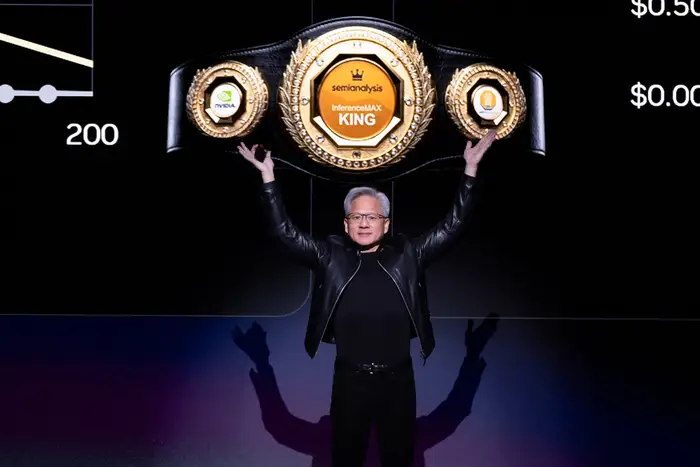
Huang did not participate in the discussion about Chinese naming at GTC. Instead, he did something simpler: he raised a championship belt bearing the words "Token King" and declared that data centers are token factories.
Who produces the token, who defines the token. The name doesn't matter to him.
Token, Land Grabbing, and Minting
So, what really deserves serious thought here is not which translation is better.
After the term "calorie" was established, the entire food industry built its pricing, labeling, and regulatory systems around it. After the term "data traffic" was defined in China's telecommunications industry, operators began charging based on data usage, competing based on data usage, and designing packages around data usage—entire business models revolved around these two words for over a decade.
The token is now on the same path.
It is already the billing unit for cloud services, the revenue metric for large model companies, and the core indicator used at the national level to measure the scale of the AI industry. Even in the VC community, there are discussions about whether investment payments can be made directly in tokens.
Once a word becomes a measure of value, naming it is not translation—it is minting.
Call it "Zhi Yuan": minting rights belong to AI narratives—those who tell the story of intelligence benefit. Call it "Mo Yuan": minting rights belong to model companies—those with large models print money. Call it "Fu Yuan": minting rights return to technology itself, but technology cannot speak for itself.
In 2021, the academic definition of "token" was ignored not because of poor translation, but because the asset wasn't valuable back then.
Now that it’s valuable, everyone wants to leave their mark on it.