




In a recent interview, Chainlink’s Adam Minehardt laid out the reason behind delay for the passage of the much-awaited CLARITY Act. According to him, traditional institutions have pushed “extremely hard” to block any crypto features that offer yield, especially on stablecoins like USDC.
“Definitely, the banks have pushed extremely hard to prevent anything that looks like yield or rewards from being paid by any exchange on platform,” he said.
He added, “It very much is a competitive issue for them, particularly for smaller banks that really chase deposits with interest rates and frankly don’t want to pay higher rates. It really would undercut their profitability.”
Banks vs Crypto: The Yield Battle
Minehardt says that this is ultimately a competitive issue. Smaller banks rely on attracting deposits through low interest payouts and don’t want to raise rates. If crypto exchanges begin offering higher yields on stablecoin balances, it would directly undercut bank profitability.
- First, the idea of banning yield on static USDC balances is “anti-competitive,” arguing it limits consumer benefits and slows innovation.
- Hence, in his view, banks have driven negotiations toward what many in the industry see as an “unreasonable endpoint.”
Critics Say It Favors Big Banks
The pushback doesn’t stop there. Critics across the crypto space argue the CLARITY Act may be leaning too heavily in favor of banking institutions.
Some claim it could block non-bank players from offering competitive yields, keeping traditional finance in control of stablecoin rails and liquidity flows. There’s also frustration that “safety” is being used as justification, despite crypto’s transparent and fully collateralized systems.
Moving with Clarity
The latest update around the CLARITY Act shows things picking up again as Senator Cynthia Lummis pushes for it to move forward, saying the U.S. needs to bring the digital asset industry back with clear rules in place. U.S. Senator Bill Hagerty confirms the CLARITY Act heads to the Senate Banking Committee next week.
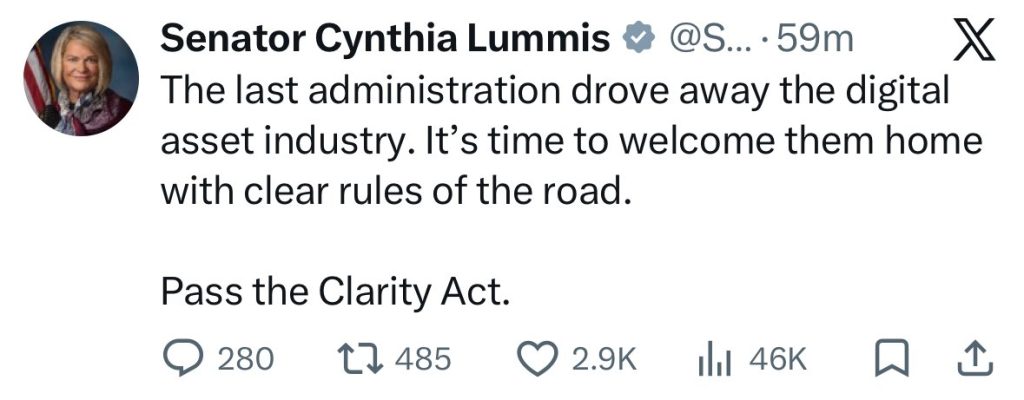
After weeks of back-and-forth discussions around market structure and stablecoin policies, Congress is now back from its break, and talks have officially resumed.
On the top, Crypto Twitter is hinting that the bill is basically ready, suggesting it could move ahead with support from both sides. There’s also growing chatter that it might be positioned as part of a broader national security push, which could help move things along faster.