





Author | Xu Shan and Zhou Yongliang, GeekPark
Editor | Zheng Xuan
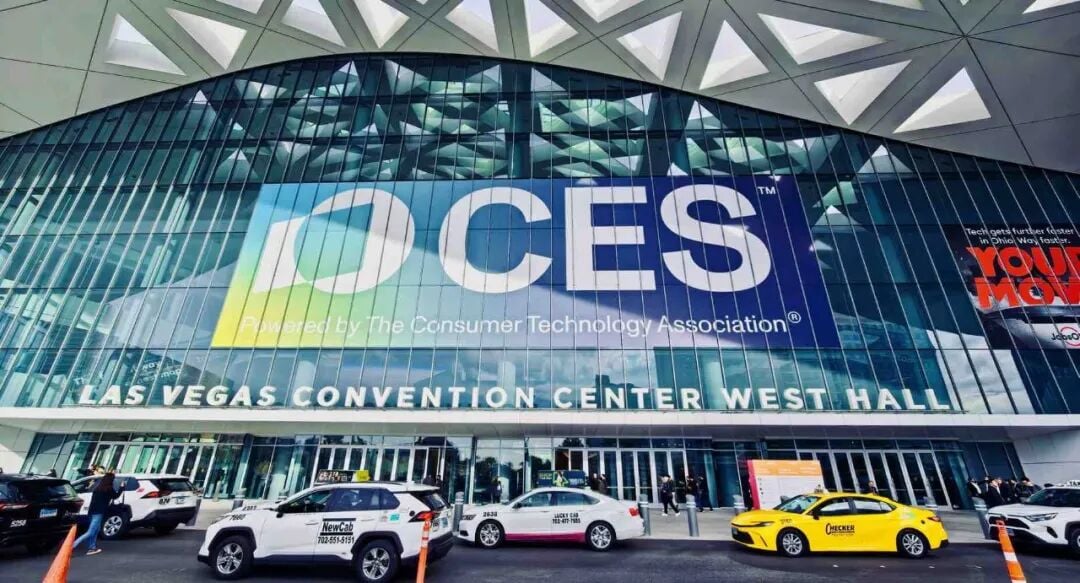
Some people say CES is like the "Spring Festival Gala of the tech world," a show to watch for fun; but in our eyes, it feels more like a massive, chaotic, yet vibrant "sketchbook of the future." This year, the clearest line in this sketchbook reads: AI is no longer just the "ChatGPT" trapped behind screens; it is beginning to take over the real "physical world."
CES this year can be described as a full recovery, with over 4,100 exhibitors and an expected audience exceeding 150,000. Beyond the numbers, an even more significant change is apparent: more and more hardware, spanning a variety of categories, is embracing AI. Through these hardware terminals, AI is beginning to interact with, learn from, and influence the real world, ultimately becoming ubiquitous.
This year, our team decisively narrowed the focus to four areas: "Robots and Embodied Intelligence," "Smart Cars," "AI Hardware," and "Fun Black Tech." This is not just because they occupy the largest exhibition spaces but because, in our view, these four areas represent the clearest "innovation variables" in the tech world this year.
From among the vast sea of more than 4,000 exhibits, we selected 25 innovative products. These include "revived" LEGO bricks, Boston Dynamics' new Atlas, Sweekar’s breathing AI pet, and Withings' blood-sugar-monitoring scale. These products are not just about "parameter upgrades." With the help of AI, they represent a dazzling moment of innovation in people’s lifestyles, entertainment, mobility, and education, rivaling the transformative power of electricity a century ago.
This is a sketch leading to the future, inviting you to explore it with us.
01 Robots/Embodied Intelligence
This year’s CES is destined to be a turning point for the robotics field. The organizers even designated a dedicated exhibition hall for embodied intelligence, sending a clear signal: robots are no longer just mascots in display windows—they’re here to roll up their sleeves and work. Visitors witnessed firsthand how AI-driven machines are being deployed in manufacturing, transportation, and healthcare. This leap from "showcasing skills" to "practical applications" is the moment hardware enthusiasts have long awaited.
If 2025 was a "trial phase" for Chinese robots, then 2026 will be an "all-out offensive." Just looking at the exhibitor list is thrilling: Chinese teams now make up over half of the embodied intelligence participants. Unitree Robotics showcased its latest interactions, and Fourier Intelligence brought its entire product line to directly face the North American market for the first time. Powerhouses like Vincross, CloudMinds, and Deep Robotics joined as well, marking a lineup of unprecedented scale.
More intriguingly, this "expedition" will face a heavyweight opponent. Boston Dynamics brought a live demonstration of its fully electric Atlas for the first time. On one side, you have a seasoned tech behemoth with deep foundations. On the other, you have rapidly iterating Chinese teams. This "head-to-head" competition will open a new chapter in the commercialization of embodied intelligence.
A decade-long "internet celebrity" becomes a "factory worker": Boston Dynamics' Atlas gets its first offer
On the CES 2026 stage, when the new generation of Boston Dynamics' Atlas walked out with light, human-like strides, the mixed atmosphere of awe and a hint of unease in the room captured the magic of technology. Looking back over the past decade, from its stumbling metal prototype to today’s streamlined industrial product, the evolution of Atlas announces a turning point in technological history—it’s no longer just there to shoot parkour videos.
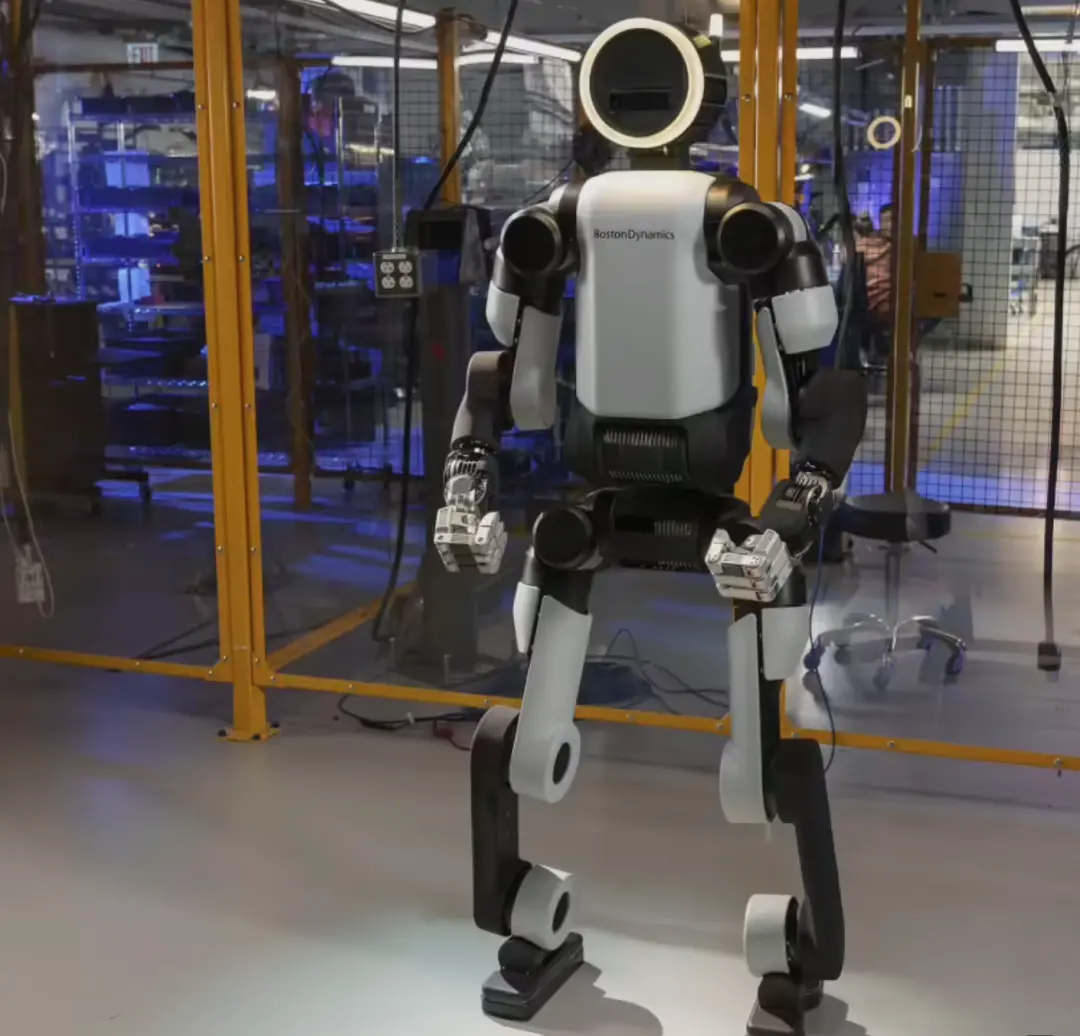
The new Atlas is clearly defined: it’s a "super worker bee" made for factory work. Its hardware boasts 56 degrees of freedom and fully rotational joints, granting it motion capabilities surpassing human limits. Its human-scale hands with sensory abilities are designed for complex material sorting and assembly tasks. More importantly, it’s no longer a machine executing rigid code but a general-purpose worker that can learn and adapt to new roles through AI.
Perhaps the most exciting detail is its "job offer": it will begin work directly on Hyundai’s assembly line in Georgia, taking on real manufacturing tasks. When robots finally step out of the lab to handle tedious, repetitive, or even dangerous work, this marks a genuine milestone in the journey from "demo" to "product" for humanoid robots.
Ushering in the consumer-grade embodied era! Vincross' Vbot could be the first truly "free-range" AI robot dog
At CES 2026, Vincross’ Vbot intelligent robot dog caught attention not because of how fast it runs but because it has completely ditched remote controls. This is perhaps the world’s first intelligent robot dog that dares to be "free-range" in complex environments.
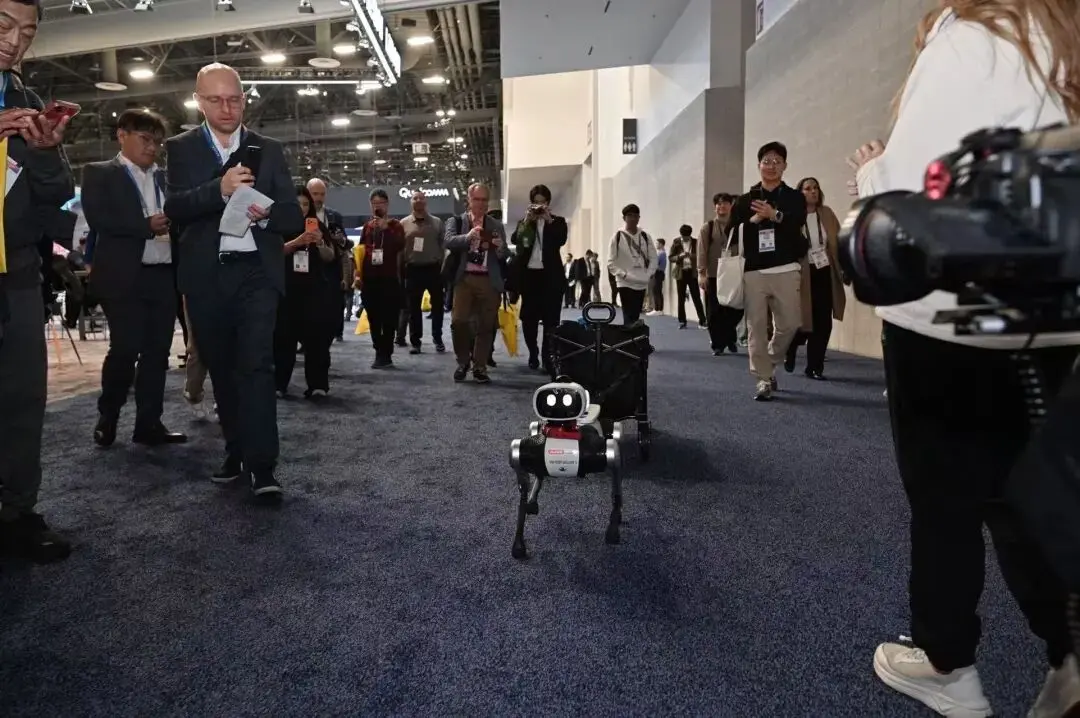
In the past, playing with robot dogs was essentially operating a fancy, expensive remote-controlled car. But Vbot, with its self-developed tri-layered intelligence architecture for its body, spatial recognition, and agent system, defines what embodied intelligence should look like. In CES' highly crowded and noisy environment, it can autonomously follow, navigate, carry items, and record video for users. This independence in decision-making, coupled with smooth English voice interactions, makes it feel more like a super-capable companion than a cold, command-following machine.
Its market performance reflects this appeal. In late 2025, Vbot secured 1,000 preorders in just 52 minutes, an astounding speed for a high-end intelligent hardware product.
The global version of Vbot is currently being prepared and is expected to launch in North America, Europe, and the Middle East in Q2 2026. Vbot truly demonstrates the tangible reality of robots entering daily life.
Real-life "WALL-E" cousin: Zeroth W1’s retro-futuristic charm
In a world where most robots strive to look "human," Zeroth’s W1 is a breath of fresh air—it brings everyone’s beloved WALL-E to life. Although it lacks Disney’s official yellow paint job, this $5,599 robot, with its iconic dual-track design, instantly tugs at the heartstrings of sci-fi enthusiasts. It’s not the kind of fragile device that can only glide on smooth floors; its tracks endow it with robust maneuverability over grass, gravel, and even slopes.
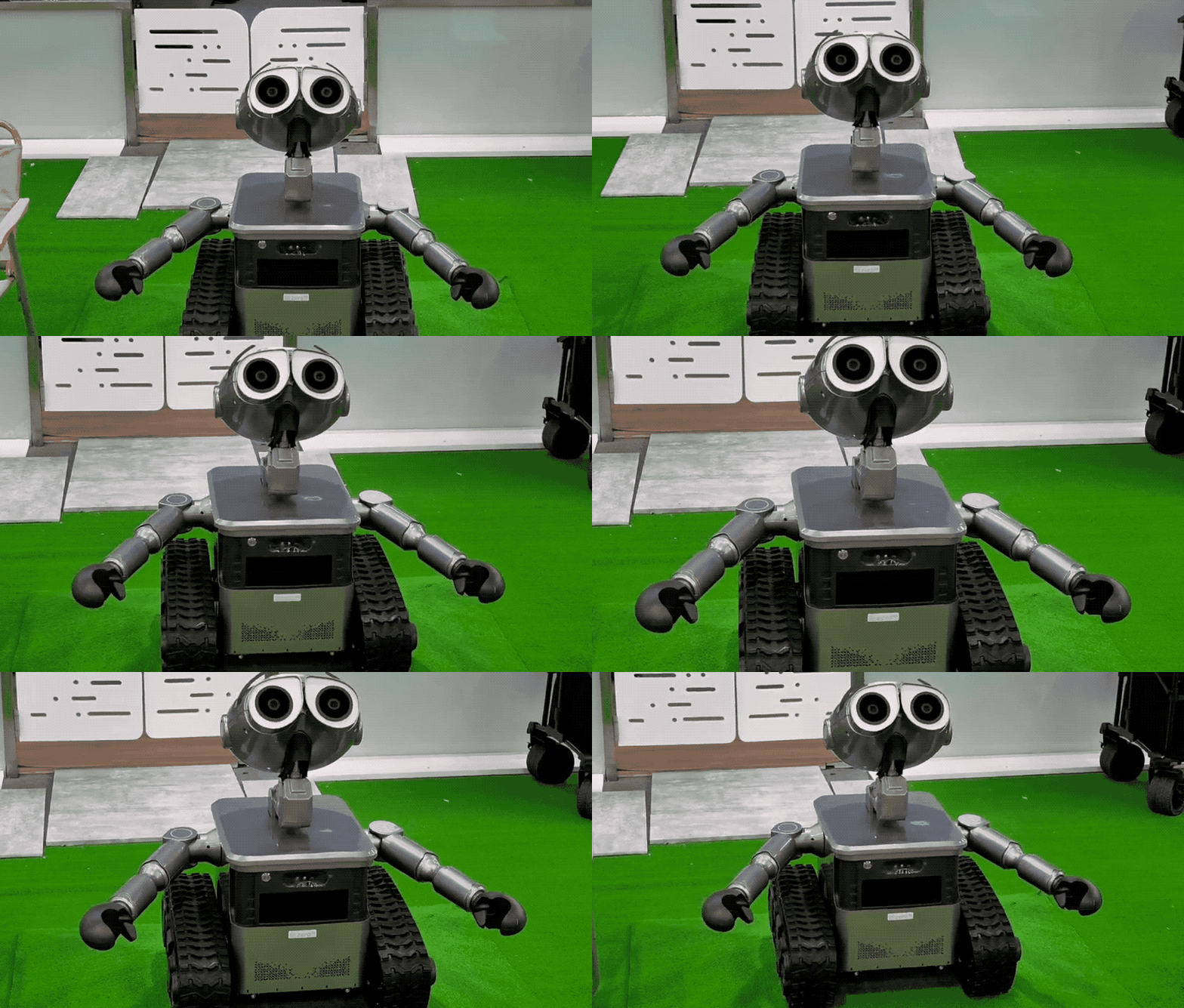
Image credit: GeekPark
From a hardware perspective, this little guy is a bona fide "powerhouse." Weighing only 20 kg, it can carry loads up to 50 kg, achieving a load ratio of over 2:1—an impressive figure for service robots. Equipped with lidar and RGB cameras, it can perceive its environment and follow its user like a shadow. Although its functionality currently feels like a "grab bag" of features—it’s part delivery worker, part photographer, and part expensive remote-controlled toy, with a maximum speed of just 0.5 m/s (adorably slow)—W1’s value lies in its ability to blur the lines between tool and pet. It prioritizes companionship over efficiency, providing emotional value as much as practical utility.
Your iPhone just got a "body": Loona DeskMate’s smart minimalism
In a CES 2026 filled with expensive, complex standalone AI robots, Loona’s DeskMate showcased brilliant minimalism. It looks like an ordinary desktop charging station with three USB-C and one USB-A port, but its MagSafe-equipped robotic arm is the real star. Once your iPhone is magnetically attached, it transforms from a simple charger into a moving AI desktop assistant.
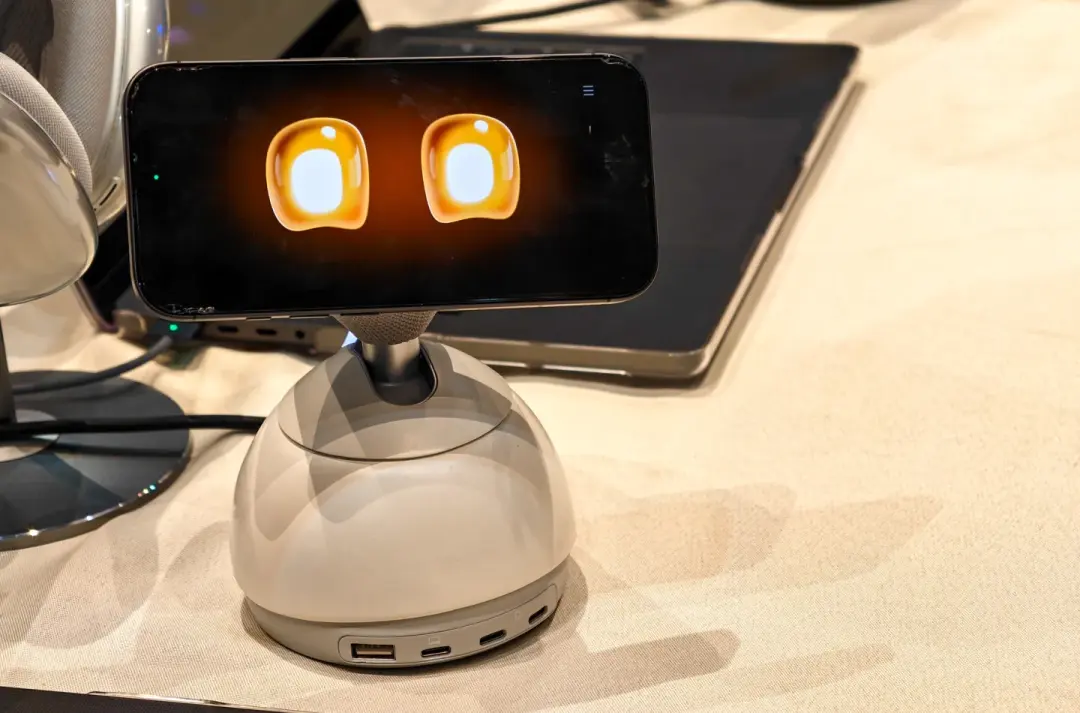
What makes DeskMate particularly appealing is its refusal to overcomplicate hardware. Most robots try to pack in their own screens, cameras, and computational chips, leading to high costs and subpar visuals. DeskMate takes the opposite route, "borrowing" the iPhone’s top-tier Retina display, high-sensitivity camera, and microphone. Why reinvent the wheel when the user already owns such a powerful device?
This design exemplifies practical brilliance: it starts as a high-performance charging hub you use daily and doubles as a robot assistant. It doesn’t add electronic clutter to your desk but instead turns your existing charger into a lively smart terminal. This approach—giving existing devices "bodies"—may be the least intrusive and smartest way for AI companions to enter mainstream homes.
Memes come to life? LGCLOiD, the "no bending over" desktop manager
LG’s CES 2026 debut of CLOiD feels wonderfully "friendly." Unlike cold industrial robots, CLOiD features a screen face that can make expressions and a wheeled base for roaming around your home. It’s a blend of emotional interaction and household assistance, with dexterous robotic arms that fold laundry, load dishwashers, and even control your smart home based on observed user habits.
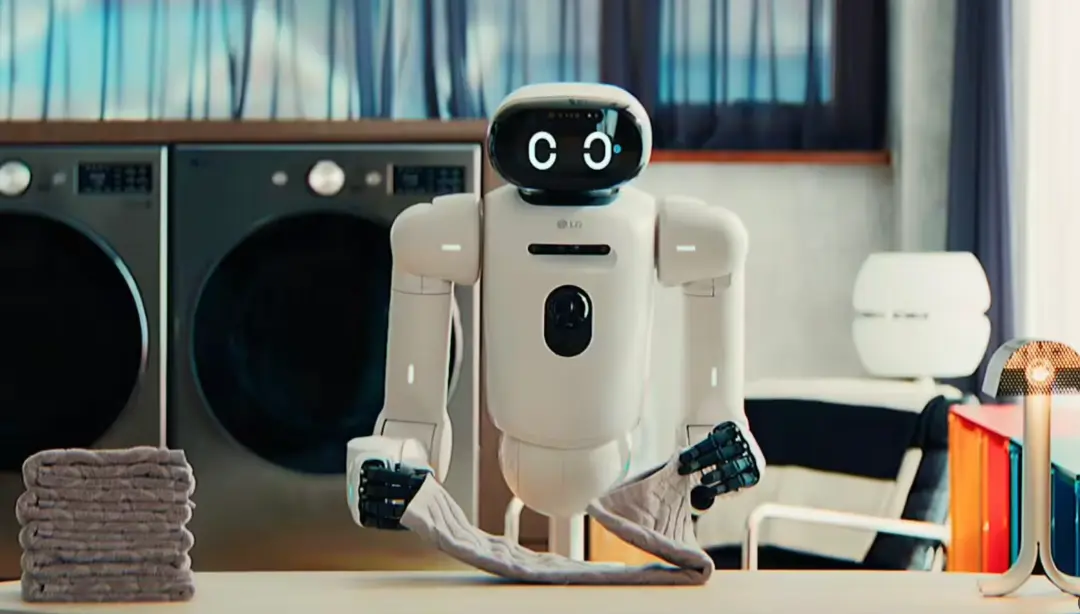
However, its most intriguing detail lies in its "waist management." While its fingers exhibit great dexterity for precise tasks, its wheeled structure limits it to handling items above knee height. This makes it an excellent "tabletop cleaning master," though it might struggle to pick up socks off the floor. This design compromise is typical: until bipedal walking technology fully matures, LG focuses on excelling in "upper-body" fine-tuned services, allowing robots to perform as competent "high-altitude" partners.
Sharpa’s "physical aimbot" teaches humans to play ping pong
Sharpa’s booth was undoubtedly a CES highlight, thanks to its autonomous ping-pong robot that felt like a "physical aimbot." The key lies in its ridiculous 0.02-second reaction time—this means it captures visuals and moves its mechanical arm with almost zero delay, surpassing human neural response limits.
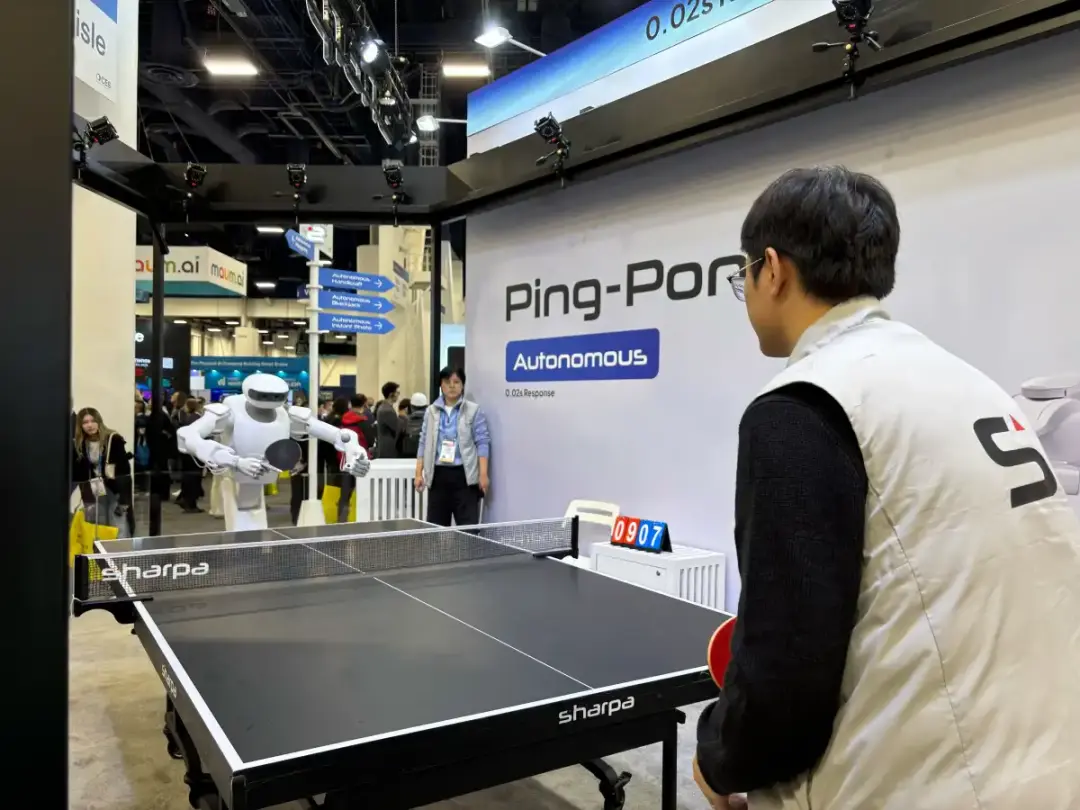
The matches were electric, with human opponents struggling to keep up. The robot wasn’t just an impenetrable "wall" on defense; it also had "ping-pong IQ," returning balls with precision and sometimes even executing tricky edge shots, leaving opponents scrambling. With its impeccable stroke technique and fluidity, the robot’s performance delighted the crowd, showcasing the perfect synergy of high-speed motion control and real-time AI decision-making.
Relax while lying down: RheoFit A1 turns foam rolling into "autonomous massage"
RheoFit’s A1 product is a brilliant "small but mighty" innovation that addresses an overlooked pain point. Traditional foam rolling for muscle relaxation requires significant effort—supporting your body weight while rolling can tire your arms before your muscles even relax. A1 automates the process, transforming the foam roller into an "autonomous massage therapist" priced at $380.
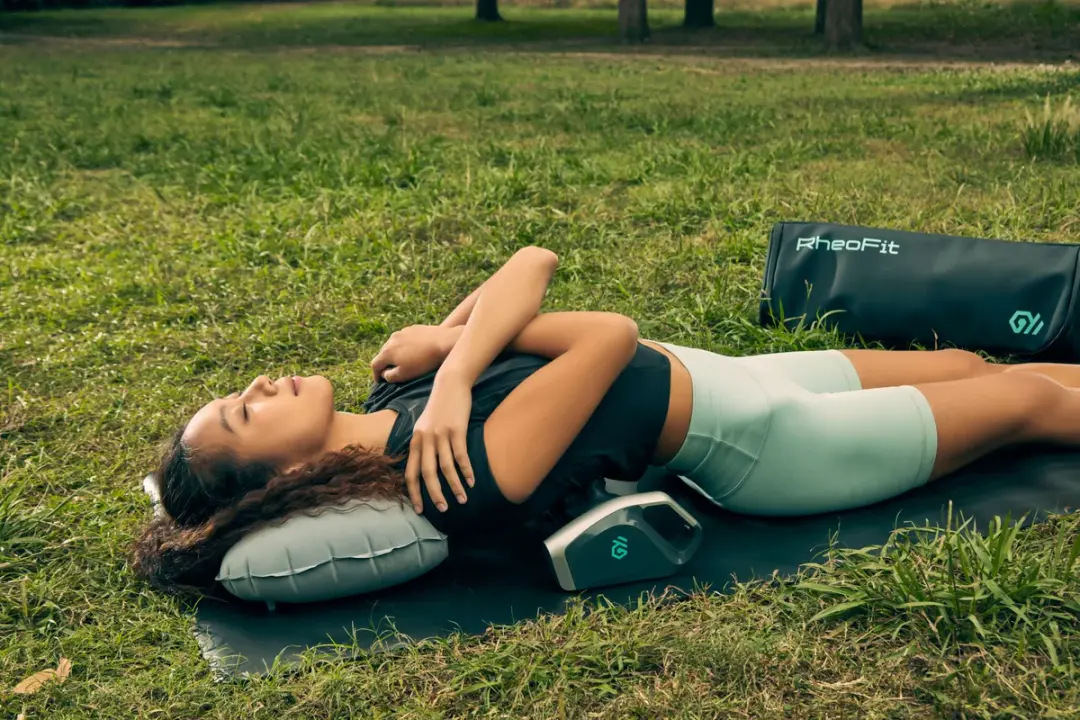
Its most fascinating feature is its autonomy. Using AI algorithms, it maps your body as you lay down relaxed. Like an obedient therapist, it positions itself beneath you and smoothly rolls from your shoulders to your toes, delivering a consistent massage.
The real genius lies in its simplicity: it condenses complex full-body massages into the press of a single button, freeing your hands entirely. This vision of integrating robotics into everyday recovery scenarios feels more practical and life-enhancing than ambitious, high-concept ideas.
02 AI Hardware
Walking through the AI hardware section at CES 2026, the most immediate impression is: AI has finally "stepped into the background," blending seamlessly into everything.
If 2025 was a year of anxiety over "what AI could do," then 2026 showcases hardware manufacturers who have confidently found their footing. The products we selected this year don’t necessarily feature the most extravagant specs but represent four core trends shaping AI hardware:
Everything can integrate AI, but "invisibility" is key. This year’s smart home devices go beyond simple automation. From smart locks to lighting, AI is "moving in" across the board. This trend reflects the maturity of lightweight models, capable of providing more precise decision-making without requiring immense computing power.
Companion products are entering niche stages. AI companion products are clearly defined this year: those for children emphasize character development, those for seniors focus on emotional monitoring, and those for adults target stress relief. AI companions are evolving entirely different interaction logics to suit various life stages.
Recording-related devices are becoming more competitive. This is a highly consistent market, with products ranging from card-shaped recording pens to smart rings and apps. Everyone is vying to become the "second brain" entry point. As competition remains fierce, companies like Plaud are branching out into highly specialized product lines to strengthen brand recognition.
Smart glasses face a "cool-down period." While long lines still form to test them, the initial excitement fueled by curiosity is fading. The market is saturated with homogeneous solutions, and the lack of innovative interaction or compelling demonstrations has left the sector feeling stagnant this year.
NotePin S: Creating a "flash capsule" for professionals, Plaud targets instantaneous memory
...
Sweekar: Cyber "Q-pet," a breathing AI companion
...
Even pandas have "mind-reading"? Anan: Adding warmth to AI
...
Smart feeding and hydration station AI-Tails: Understanding your cat’s health—everyone can become a vet
...
03 Smart Mobility
...
04 Fun & Whimsical Products
...
05 When "The Future" Exits the Sketchbook
...