


In its recent visit to China, Canada’s Prime Minister Mike Carney reached a series of agreements that seek to forge a commercial alliance between the two countries. Canada now seeks to increase its exports to China by 50%, preparing to face what Carney called a new world order.
Canada Completes Economic Agreements With China In Preparation For New World Order
Canada and China are tightening their ties in preparation for the future.
The North American nation, traditionally considered an ally of the U.S., is now turning to China as a reliable trade partner after relations with Washington soured due to Trump’s increased hostility and tariff threats.
In a four-day visit to China, Prime Minister Mike Carney stated that he is forging a new strategic partnership with China to “the benefit of both of our peoples.” According to a press release, this new partnership will focus on collaboration in the fields of energy, clean technology, and climate competitiveness.
The partnership includes a tariff reduction on Chinese EVs, which will now pay 6.1% – down from 100%- and the Canadian government will allow up to 49,000 cars to enter the country. Canada expects that this will lead to an influx of Chinese joint venture investments, bringing their production to the country to favor national workers.
In exchange, Canada hopes to enjoy 15% tariffs on Canadian canola seed, down from 85%. This would make China a viable market for Canadian canola seed, aiming to capture part of the $4 billion demand.
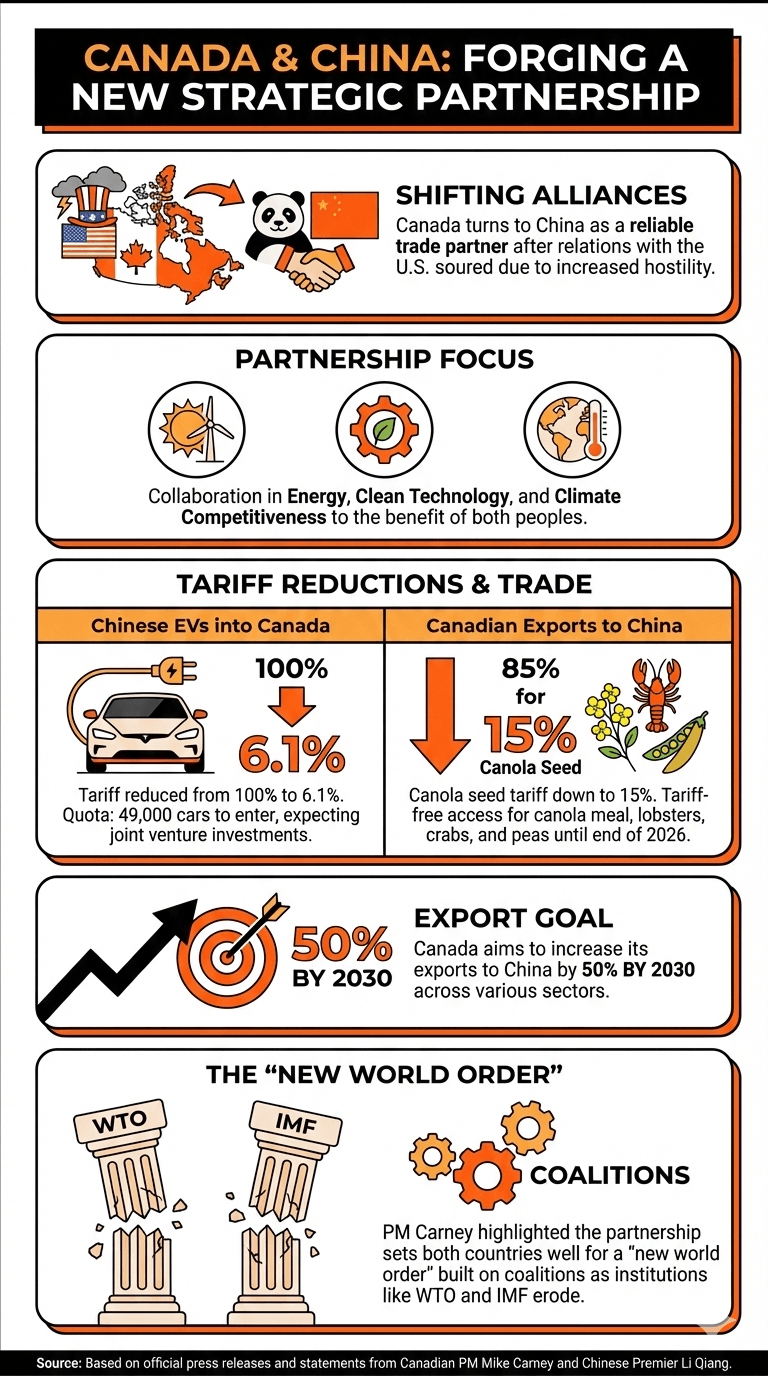
Also, Canadian canola meal, lobsters, crabs, and peas will not be subject to tariffs from March 1 to the end of 2026. Canada’s goal is to increase its exports to China by 50% by 2030, partnering in clean energy, technology, agri-food, wood, and other sectors.
This partnership transcends economic and trade aspects, as Canada declared in favor of multilateralism, vowing to deepen collaboration on “improved global governance.”
During a meeting with Chinese Premier Li Qiang, Carney highlighted that the progress reached in this partnership would set both countries well for what he called the “new world order.”
At a later interview, Carney stated that this world order referred to the soon-to-be-established relationships between countries, organizations, and coalitions that will rise, as established institutions, such as the World Trade Organization (WTO) and the International Monetary Fund (IMF), erode.
Carney assessed:
“The expectation is that, rather than these being developed necessarily through the IMF, WTO, and other multilateral organizations, it is going to be coalitions that develop them, not for the world, but for subsectors of the world.”
Read more:Trump Proposes Tariff-Free Trade for Canada in Exchange for Statehood, BTC Slides Below $80K
FAQ
Why is Canada shifting its focus towards China? Canada is forging closer ties with China as a reliable trade partner in response to increased tensions with the U.S. under Trump’s administration.
What key areas will the Canada-China partnership focus on? The new partnership will emphasize collaboration in energy, clean technology, and climate competitiveness.
What tariff reductions are included in the agreement? Chinese electric vehicles will see tariffs reduced from 100% to 6.1%, and Canada expects favorable tariffs on its agricultural exports, including a drop from 85% to 15% for canola seeds.
How does Canada envision its exports to China under this partnership? Canada aims to increase its exports to China by 50% by 2030, expanding collaboration across various sectors like clean energy, technology, and agri-food.