





Author: Sebastien Davies
Article compiled by:Block Unicorn
Preface
There are extremist views in the financial world. I’ve encountered extremists who firmly believe blockchain will destroy all existing financial institutions, while traditional finance circles equate Bitcoin with cryptocurrency and vice versa. Unfortunately, both sides lack the patience to understand the nuances.
I don’t agree with this binary either-or thinking. As we’ve seen, the two are likely to converge rather than collide. Visa and Mastercard are actively expanding partnerships in the blockchain payments space. Traditional financial giant Stripe has also launched a dedicated blockchain platform for processing payments. Our team publishes articles almost weekly exploring the convergence of these two financial domains.
In cryptocurrency reviews, I often see people treat the blockchain itself as a unique selling point (USP) because it enables fast and low-cost transactions. Yes, transferring funds via blockchain is indeed cheaper. But this alone is not the key factor driving blockchain adoption, as traditional fund transfer infrastructure, despite its relatively high costs, has endured for decades.
Enterprises do not switch banking partners overnight simply because another bank offers a few basis points lower fees for transaction processing. Financial habits are deeply entrenched; businesses need more than just cost savings—they need compelling reasons to change how they transfer, hold, and invest funds.
What matters here are measurable outcomes. For the general public to change how they move their funds, they need to understand how to optimize the entire flow of capital. Therefore, the focus should be on how blockchain integrates seamlessly with the platform, enabling users to easily hold, invest, and borrow funds.
In today’s featured column, Sebastien Davies, partner at Primal Capital, explores why cryptocurrency infrastructure has failed to achieve mass adoption and what it would take to make it happen.
Infrastructure illusion
For much of the past decade, the global financial community has been intensely focused on the concept of "orbits." Discussions around digital assets have almost entirely centered on the mechanical throughput of blockchains, the cryptographic security of decentralized applications, and the theoretical sophistication of smart contract logic. This was the infrastructure phase—a time defined by building the "containers." From 2020 to 2024, the entire industry raced to construct pipelines, vaults, and gateways aimed at modernizing the flow of value.
During this period, the development of the cryptocurrency market focused primarily on infrastructure, as participation cannot exist without it. We built enterprise-grade custody platforms, standardized exchange APIs, and on-chain compliance services to address five critical gaps: custody, trading, execution, stablecoin utility, and regulatory reporting.
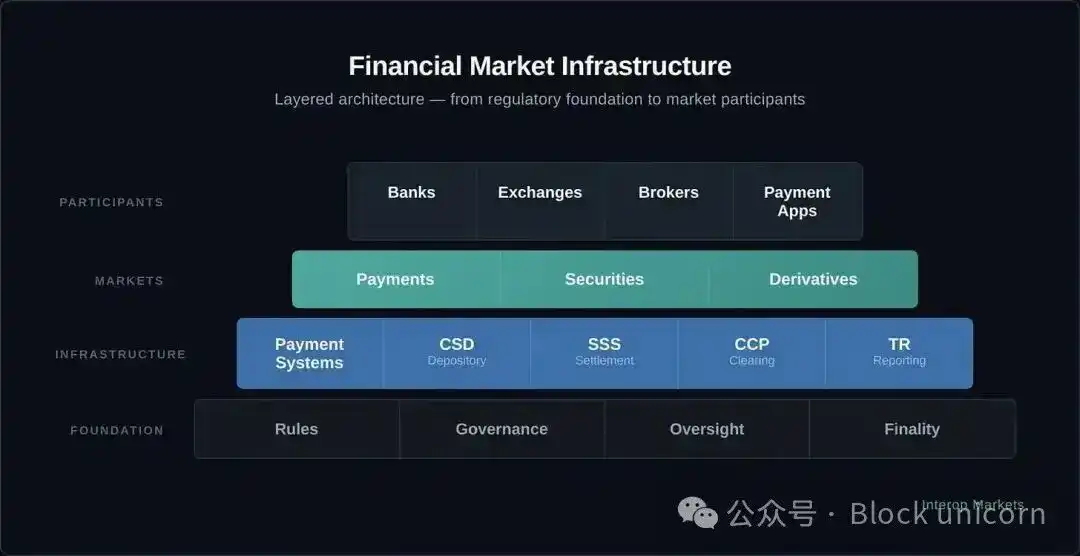
However, today the financial industry is confronting a fundamental truth of financial history: infrastructure is a necessary precondition for activity, but the balance sheet determines who captures economic value. Simply having a faster or more transparent track does not, by itself, shift the center of gravity of the market. Infrastructure addresses the mechanical question of how institutions participate, but it does nothing to answer the more critical question of who captures value. In an era of booming infrastructure development, the answer to the latter remains firmly entrenched in tradition.
Centralized market makers capture the spread, early holders benefit from appreciation, and validators earn transaction fees. This stage did not create a new balance sheet structure, nor did it change where deposits are held or fundamentally alter the structure of credit creation.
A common counterargument to this point holds that “infrastructure” is the primary driver of value, as it lowers barriers to entry, enables financial democratization, and naturally shifts economic power to marginalized groups. Supporters of this view argue that technology itself—due to its open-source and permissionless nature—is the force of change. While this is an compelling narrative for a retail-dominated “crypto-native” world, it does not withstand scrutiny under institutional realities.
In complex financial markets, cost efficiency is far less important than capital efficiency and risk-adjusted returns. An institution moves a billion dollars not because of lower transaction fees, but because its balance sheet can generate higher returns or more efficient collateral utilization. Infrastructure is a barrier to entry; the balance sheet is the strategic asset that determines the winner in the spread.
Financial history has repeatedly shown that infrastructure is not the key determinant of market power—balance sheets are. The rise of the Eurodollar market in the 1960s did not require new payment channels or financial technologies; it only required dollar deposits to be moved out of the U.S. banking system. Once these balance sheets shifted, a parallel dollar system emerged—vast in scale and largely free from domestic regulation.
We are now entering a new phase of institutional balance sheet restructuring, beginning in 2025, when the battlefield has shifted from the protocol level to the allocation of liquidity. The first phase focused on building platforms; the next phase will focus on the movements of participants and their capital flows.
In 2024, a chief financial officer evaluating cash storage options could theoretically use mature custodial infrastructure to hold USDC, but from an economic standpoint, traditional bank deposits remain more advantageous due to FDIC insurance and competitive interest rates. The infrastructure is in place, but balance sheets have not yet shifted. This realignment has become possible as the regulatory environment moves from abstract policy design to concrete implementation.
The next phase of cryptocurrency adoption will no longer be determined by infrastructure, but by the direction of balance sheets.
The Gate of Implementation
For much of the past decade, institutional participation in digital assets has been limited not by a lack of imagination or technology, but by structural barriers to integrating digital assets into regulated balance sheets. Institutions need more than just a fully functional wallet. Legal clarity, specific accounting treatments, and robust governance structures are fundamental requirements.
Due to the lack of a widely accepted definition of "custody" or a clear compliance pathway, the risk of balance sheet contamination is too high for any regulated entity to ignore. Banks and asset managers are waiting for a clear signal that they can deploy capital without exposing themselves to existential legal risks, causing the large-scale adoption of digital assets to fall into a "wait-and-see" stance.
The era of policy debate is finally coming to an end, giving way to the implementation phase. The GENIUS Act, passed in May 2025, played a decisive role by establishing a national regulatory framework for stablecoin payments and ultimately providing legal grounding for balance sheet allocation.
The bill transforms digital assets from speculative novelties into recognized financial instruments by establishing a federal licensing process and requiring 100% reserves backed by government-approved instruments. In August 2025, the U.S. Securities and Exchange Commission (SEC) concluded its long-running investigation into the Aave protocol without taking any enforcement action, further solidifying this shift and effectively removing the regulatory “barrier” that previously hindered institutional participation in decentralized finance (DeFi).
The focus has now shifted to regulators’ rulebooks. In February 2026, the U.S. Office of the Comptroller of the Currency (OCC) issued a comprehensive proposed rule to implement the GENIUS Act, establishing a framework for “Permitted Payment Stablecoin Issuers” (PPSIs). This is significant because it provides detailed prudential standards—covering reserve composition, capital adequacy, and operational resilience—that enable chief risk officers or asset-liability committees (ALCOs) to approve digital asset strategies. The passage of the GENIUS Act has integrated blockchain regulation into the governance structures of the world’s largest financial institutions.
However, to understand why this shift is happening now, it’s essential to recognize the “balance sheet inertia” that governs institutional behavior. Banks operate under strict regulatory capital adequacy requirements, where every dollar of risk-weighted assets must be backed by capital. If a bank’s deposits flow into stablecoins, it must proportionally reduce its lending to maintain these capital ratios. This is a painful and costly contraction that can trigger ripple effects across the entire economy. This also explains why the adoption of stablecoins has been so slow: full technological integration requires six to eighteen months, while governance cycles such as audits and board reviews take even longer to complete.
The current environment is characterized by "compound acceleration." As pioneers such as JPMorgan, Citibank, and U.S. Bank begin rolling out stablecoin settlement programs, they send a clear signal to the market: the risk of falling behind has replaced the risk of being first. We are now in a phase of competitive pressure, where participation by peer banks reduces adoption risk across the entire industry. As these institutional constraints ease, the path for liquidity to migrate from traditional systems to new, programmable containers of the digital era becomes increasingly open. This shift compels us to reconsider the nature of money itself and refocus our attention on the "containers" that will carry the next generation of global liquidity.
Where liquidity lies
To understand the scale of the transformation currently taking place, one must first recognize the historical stability of financial “containers.” In every monetary era, liquidity ultimately finds a home. This is merely a function of technological storage, yet it satisfies the long-standing global demand for safe, short-term assets. For centuries, this home has been significantly concentrated in a few well-defined structures: the balance sheets of commercial banks, central bank reserves, and money market funds. These traditional “containers” all serve as intermediaries, capturing the economic value generated by the capital they hold.
The mathematical principle of "reaping what you did not sow" shows that financial intermediaries exist to address mismatches in capital allocation. Specifically, the cash flows generated by the operation of the world exceed what is needed for short-term production purposes, resulting in a long-term surplus of liquidity that seeks safe havens. Traditionally, commercial banks convert this excess liquidity into deposits and invest it in long-term assets such as mortgage loans or corporate loans, earning a substantial spread in the process. The net interest margin (NIM) serves as a guiding light for commercial and retail bankers. Bank shareholders are the primary beneficiaries of this spread, while depositors receive a portion of the returns in exchange for liquidity and government guarantees.
Digital asset infrastructure has introduced a new type of “container” that directly competes for capital. These economic restructurings go far beyond mere technological upgrades. When liquidity shifts from banks to stablecoin reserve pools or tokenized treasury funds, the entities capturing yields undergo a fundamental change. For instance, in stablecoin reserve pools, issuers (such as Circle or Tether) capture the spread between the yield on underlying treasuries and the interest paid to token holders, which is often zero. This effectively transfers the economic benefits of “holding costs” from commercial banks to digital asset issuers.
In addition, these new containers offer transparency and programmability unmatched by traditional structures. Tokenized Treasury funds surpassed $11.5 billion in market capitalization by March 2026, representing a structural evolution in which the income from underlying assets directly accrues to holders. This creates powerful economic incentives.
Savvy financial officers no longer need to choose between the security of banks and the returns of funds; they can hold tokenized funds that serve both as yield-generating assets and as high-speed settlement instruments. By redefining the ownership of liquidity, digital infrastructure is not merely building new rails—it is creating a competitive market for the balance sheets that underpin the global economy.
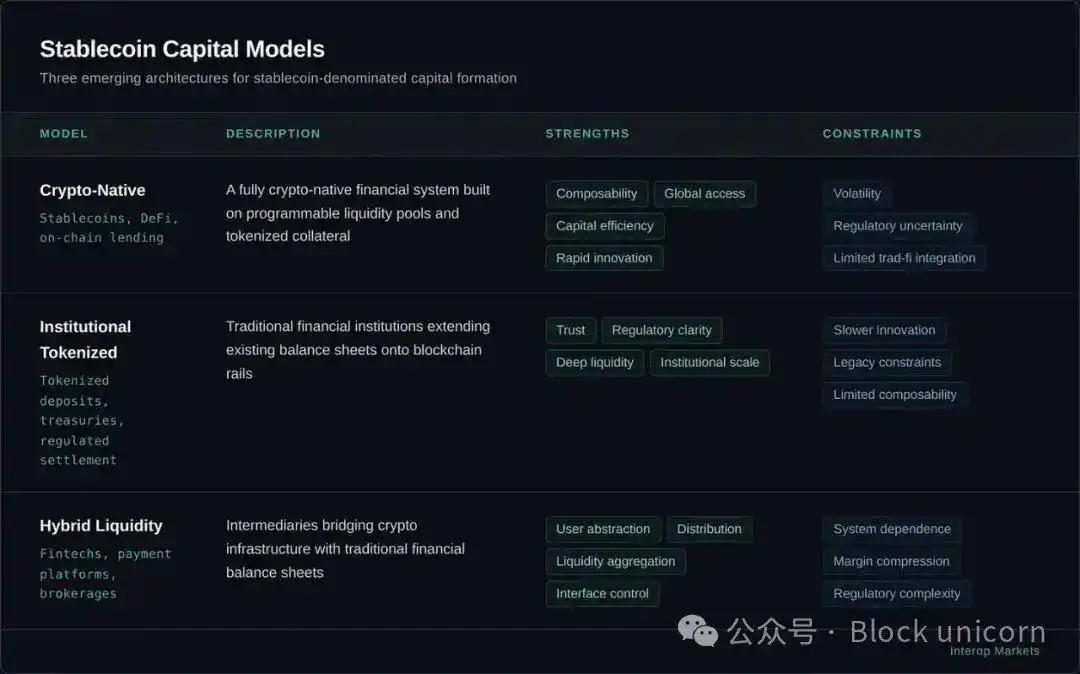
Stablecoins drive migration
Blockchain dollars represent the first large-scale migration of liquidity onto these new financial balance sheets, marking the transformation of digital currencies from a novelty into a core component of the financial system. The stablecoin market size has approached its historical high at $311 billion, with annual growth rates of 50% to 70%. This growth definitively refutes the notion that stablecoins are merely a speculative phenomenon. We are witnessing a tangible "shift" of the dollar from traditional banking infrastructure to programmable settlement systems.
The economic impact of this migration is most clearly reflected in deposit substitution. When a company or institutional investor shifts $100 billion from traditional bank deposits into a stablecoin such as USDC, the banking system suffers a significant loss in profitability. Under the traditional model, this $100 billion could support bank lending, generating approximately $3 billion in net interest margin annually. But when these funds are moved into the reserve holdings of a stablecoin issuer, those earnings are stripped away. Banks lose their deposits, lose their ability to lend, and the interest margin is captured by the stablecoin issuer.
This shift has profound implications for credit creation and financial stability.
A study released by Federal Reserve economists at the end of 2025 emphasized that the high adoption of stablecoins could lead to a reduction in bank deposits of $65 billion to $1.26 trillion. This decline has the potential to reshape the way credit is supplied in the economy. Regional banks that heavily rely on stable deposit bases for local lending are most vulnerable to this shift. As retail and corporate depositors seek the advantages of 24/7 settlement offered by stablecoins, the traditional “float” model—where banks earn spreads on pending payments—on which they have long depended is rapidly losing its appeal.
In response, the banking industry has shifted from skepticism to engagement.
JPMorgan Chase, Citibank, and U.S. Bank have announced plans to launch their own stablecoin settlement infrastructures by the end of 2025 and early 2026—not to disrupt their own businesses, but to maintain their critical role as liquidity containers. These institutions recognize that the future economic landscape favors issuers of digital containers. By becoming issuers, banks aim to capture reserve yields that would otherwise flow to new entrants. Of course, this first large-scale shift of capital is merely the序幕. As these new liquidity containers stabilize, competition is shifting toward more complex areas of collateral and leverage—the very foundation of global finance.
Programmable collateral
If the transfer of cash via stablecoins represents the first wave of this transformation, then the migration of collateral signifies a more fundamental restructuring of the core leverage mechanisms of the financial system. Modern financial markets are essentially a vast network of collateral. The U.S. repurchase market alone—responsible for the lending of securities—sees daily trading volumes ranging from $2 trillion to $4 trillion. Yet, this critical infrastructure remains constrained by traditional banks’ “discrete settlement windows.”
Under current conditions, collateral can only be transferred during banking hours, and fragmented custody means securities held by one bank cannot be immediately used to meet another bank’s margin requirements. This friction locks up capital, preventing its efficient use and hindering responsiveness to real-time market fluctuations.
Tokenization transforms collateral from static, geographically restricted assets into programmable, highly liquid instruments.
By converting U.S. Treasuries and other real-world assets (RWA) into on-chain tokens, institutions can transfer these assets and settle them atomically around the clock. The market has grown rapidly; as of April 1, 2026, the tokenized RWA market size reached approximately $28 billion, with tokenized Treasuries accounting for about half. This growth is primarily driven by institutional-grade products such as BlackRock’s BUIDL and Franklin Templeton’s BENJI, which enable holders to earn 5% yield from the underlying government bonds while maintaining the liquidity and deployability of the tokens themselves.
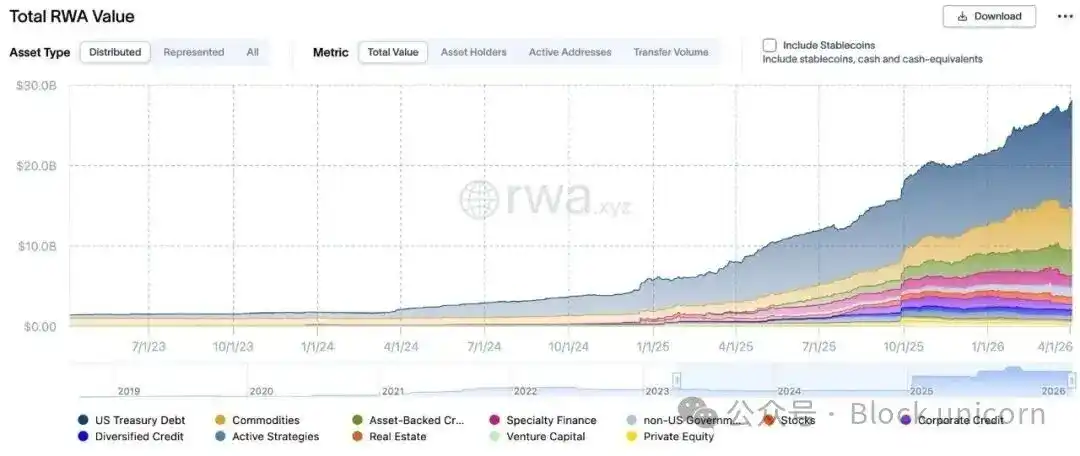
True innovation lies in "collateral efficiency."
In traditional repurchase transactions, investors may have to accept significant discounts or face delays of several days to unlock securities and transfer them between custodians. In contrast, tokenized collateral is “composable.” Institutional investors can hold $100 million worth of BUIDL tokens, deposit them into a protocol like Aave at a 95% loan-to-value (LTV) ratio, and immediately borrow stablecoins to seize investment opportunities. The collateral remains entirely in the digital environment, continuously revalued through automated price feeds, and any margin calls are handled via instant automatic liquidation.
This shift moves the economics of traders to the economics of the protocol.
In traditional repo markets, large trading banks act as intermediaries, earning a spread of about 50 basis points by borrowing at one rate and lending at another. In a tokenized ecosystem, collateral holders can self-match on DeFi lending markets, using software as the intermediary and capturing the entire spread. Although it may take years before widespread adoption, this shift could redirect billions of dollars in annual revenue from traditional dealers to protocol governance and asset holders.
To better understand the scale of the shift from cash to collateral, we must examine the institutional mechanisms that have historically governed these transitions. For decades, the global financial system has relied on a "T+X" settlement logic, where "T" stands for trade and "X" represents multi-day delays caused by manual reconciliation and interbank clearing cycles. In traditional repurchase markets, this delay amounts to an invisible tax on capital.
When dealer banks facilitate repurchase transactions, collateral must be physically transferred between custodians, typically requiring manual intervention to verify collateral haircuts and ownership. This creates a “liquidity moat” around the largest dealer banks, whose power stems not only from their strong balance sheets but also from their control over these proprietary settlement systems.
The mechanism of tokenized collateral removes this moat through atomic settlement. Within the step-by-step processes of institutional workflows, this transition unfolds as follows:
Tokenization: Moving high-quality liquid assets (HQLAs), such as U.S. Treasuries, into digital wrappers (e.g., BlackRock’s BUIDL) to make them continuously tradable tokens.
Instant settlement: The finance team can submit these tokenized collaterals to lending protocols or prime brokers as early as 10 PM on Sunday, eliminating the need to wait until Monday morning for wire transfers.
Real-time valuation: Smart contracts use decentralized oracles to market-value collateral every few seconds (instead of once per day), significantly increasing the loan-to-value ratio (LTV), as continuous monitoring reduces the risk of valuation "flash crash gaps."
Yield hedging: It is crucial that investors continue to earn the underlying treasury yield while their assets are used as collateral, creating a “yield on yield” opportunity that is cumbersome to achieve in traditional systems.
For corporate finance teams or asset managers, this shift represents a fundamental revaluation of their idle assets.
Under the traditional model, finance managers would maintain a cash "buffer" with minimal interest to cover unexpected margin calls or operational needs. With tokenized collateral, this "buffer" can instead be fully invested in yield-bearing Treasuries, as holders know these assets can be converted into liquidity within seconds rather than days. This eliminates the "liquidity discount" previously associated with holding assets long-term.
For the banking industry, the impact is equally profound.
Banks have long profited from the floating rates and intermediary spreads in the repurchase market. As collateral becomes programmable and capable of self-matching, this profit model will disappear. This is precisely why the emergence of institutional “pipeline systems”—such as Anchorage’s Atlas network or JPMorgan’s internal tokenization initiatives—is so critical. They represent financial institutions’ attempts to build new information silos before the old system faces competition. The shift from cash to collateral marks a transition in the financial system from a series of “discrete events” to “continuous flows,” and institutions that fail to adapt their balance sheets to this new speed will find their capital increasingly static—and therefore more expensive.
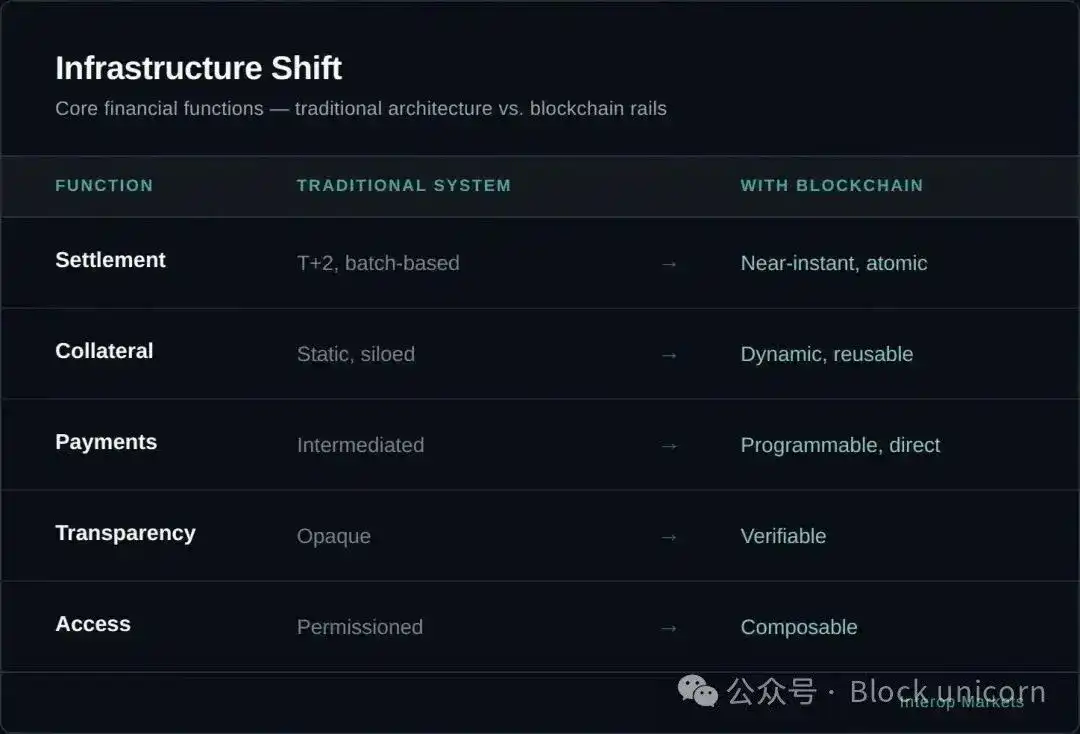
What appears on the surface to be merely an improvement in settlement speed is, in fact, a reallocation of capital deployment, valuation, and intermediation methods.
The S-curve of adoption
The migration of institutional balance sheets is not an overnight process, but rather a gradual absorption that eventually accelerates. This is the reality of the “Web 2.5” era, where blockchain technology is being integrated into existing financial architectures rather than replacing them. Currently, institutional adoption of blockchain technology is constrained by “balance sheet inertia,” with regulatory capital requirements, risk committee approvals, and legacy technology systems posing significant barriers. For example, banks cannot simply flip a switch to transfer assets. They must maintain strict Tier 1 capital adequacy ratios and ensure that any movement of deposits to digital platforms does not lead to costly contractions in their lending businesses.
Despite these challenges, the adoption of digital asset infrastructure is following a well-documented historical S-curve, similar to the decades-long rollout of credit cards and the internet.
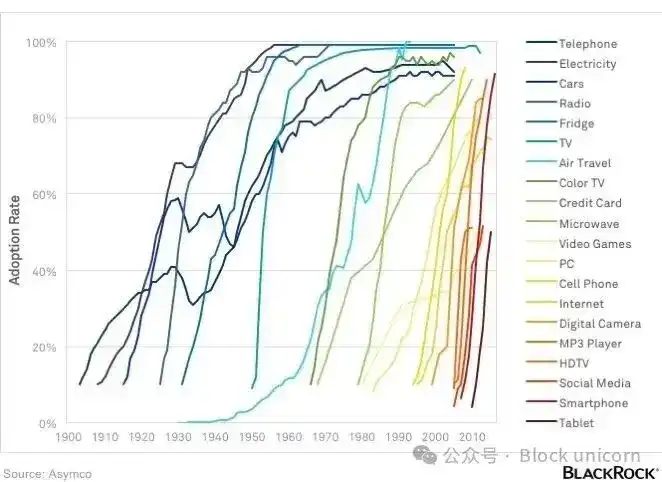
Between 2015 and 2024, the market was in a “trial phase” and a “regulatory chaos phase,” with growth constrained by uncertainty. Today, we have entered the “competitive pressure phase” (2025–2026), characterized by clearer regulation and more standardized infrastructure. In this stage, “you’re not the first, but you’re also not the last” has become the primary driver for institutional finance leaders. As more banks observe peers engaging in stablecoin settlement or tokenized treasury funds, the perceived risk of adoption will drop sharply.
The current market size lays the foundation for accelerated compound growth. Fireblocks secures over $5 trillion in digital asset transfers annually, and the institutional tokenized assets market is also growing rapidly, with the "underlying architecture" of new systems now production-ready. This infrastructure standardization enables banks to build upon mature systems without having to develop proprietary systems from scratch.
Looking ahead to 2027 and beyond, several policy levers remain that could further accelerate this migration. If stablecoin issuers gain direct access to Federal Reserve master accounts, or if interest restrictions on payment stablecoins under the GENIUS Act are relaxed through a consortium "incentive" mechanism, the pace of deposits shifting from traditional bank ledgers to digital containers could significantly increase.
The system is ready to form a feedback loop: greater stablecoin liquidity will attract more decentralized finance (DeFi) applications (likely permissioned ones), which in turn will draw in more institutional capital, ultimately leading to a restructured financial landscape where the race for dominance settles, and all focus shifts entirely to strategic balance sheet management.
The winner of NIM
The transition from the infrastructure stage to the balance sheet stage marks the shift of the discussion on "digital assets" from the technological periphery to the core of global macroeconomics. For years, the industry believed that building better infrastructure would inevitably lead to a more sophisticated system. Now we understand that infrastructure is merely an invitation.
Transformation only truly occurs when capital itself is transferred. The “infrastructure war” has already been won by standardized, institutional-grade custody of fiat payment hubs, tokenized Treasury funds, and federally regulated stablecoin frameworks. The new battle—one that will determine the financial landscape over the next decade—is for control of the balance sheets that hold global liquidity and collateral.
Looking ahead to 2027–2030, structural advantages will accrue to those enterprises that can most effectively manage these new “digital containers.” As depositors increasingly prioritize round-the-clock settlement and the higher utility of stablecoin yields, we expect commercial banks’ net interest margins (NIM) to continue narrowing. Large corporations and institutional investors are likely to shift their primary savings and treasury functions to DeFi and RWA markets, where protocol transparency minimizes intermediary spreads. This is not the end of traditional banking, but rather the end of banking’s era as a static, unchallenged warehouse of cheap capital.
In this new era, the winners will be “Web 2.5” hybrid firms—those that recognize they are no longer merely lenders, but programmable liquidity managers. By 2030, when the stablecoin market size approaches $2 trillion, the distinction between “crypto” and “finance” will largely disappear.
The entire system will fully integrate the efficiency of the轨道 into the stability of the balance sheet. In this restructured landscape, financial power will no longer belong to companies with the most innovative technologies, but to those that control the ultimate repositories of global liquidity and collateral. The battlefield has been set, and the economic order has become contestable for the first time.
Over the past decade, the focus of cryptocurrency development has been on building the infrastructure to enable institutional participation. The next decade will determine where institutions ultimately allocate their balance sheets.
That’s all for today’s content—see you in our next article.