





Author: Seed.eth
200 million U.S. dollars is the figure just announced.
BitMine Immersion Technologies (BMNR), chaired by renowned Wall Street analyst Tom Lee, has announced that it will invest in Beast Industries, the holding company behind global top influencer MrBeast. Meanwhile, Beast Industries stated in an official announcement that the company will explore ways to "integrate DeFi into its upcoming financial services platform" in the future.
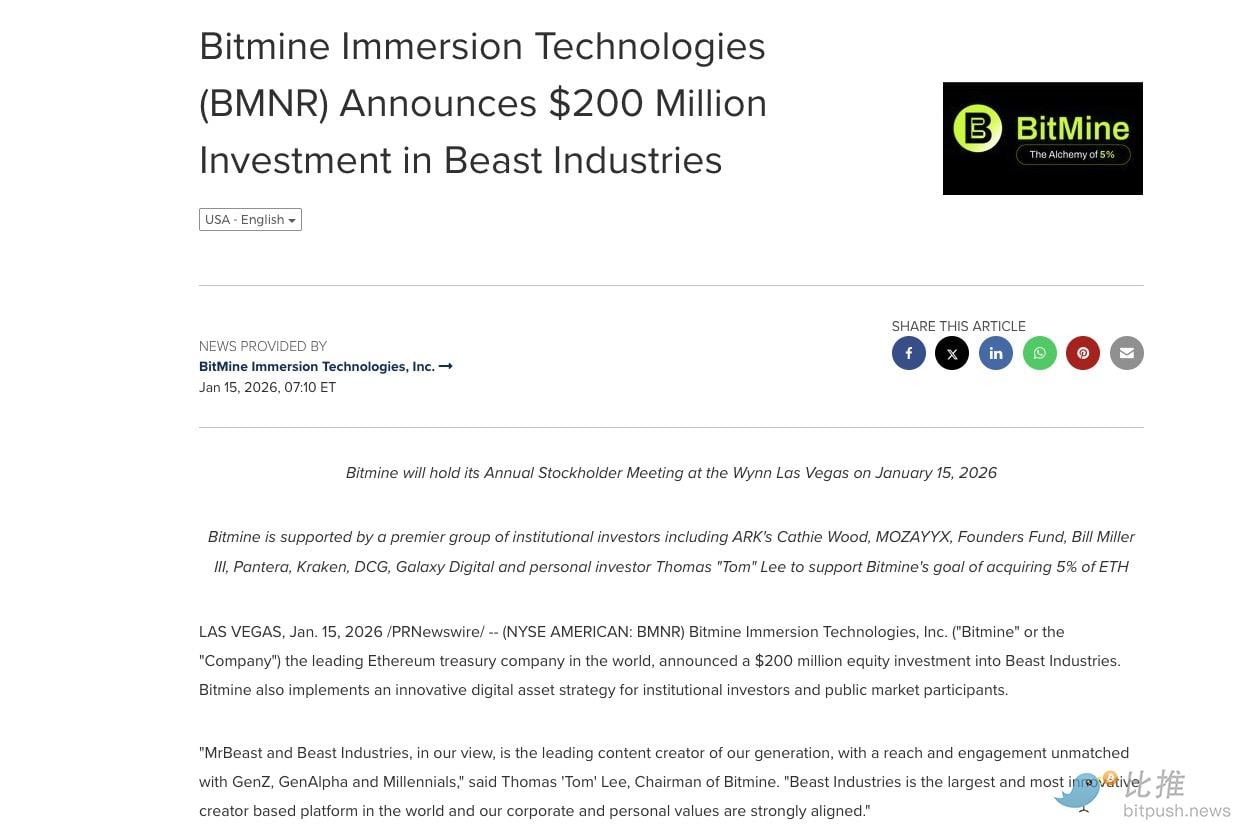
If you only look at the news, this seems like another familiar cross-industry collaboration: traditional finance, cryptocurrency, internet celebrities, and startups. On one side is the YouTube giant with a cumulative global subscriber count exceeding 400 million, where a single video can gain algorithmic weight and boost visibility automatically. On the other side is the top Wall Street analyst most skilled at narrating cryptocurrency stories, who excels at translating grand blockchain concepts into balance sheets. Everything seems perfectly logical.

Mr. Beast's Path to Success
Looking back at MrBeast's early videos, it's hard to connect them with today's Beast Industries, which is valued at $5 billion.
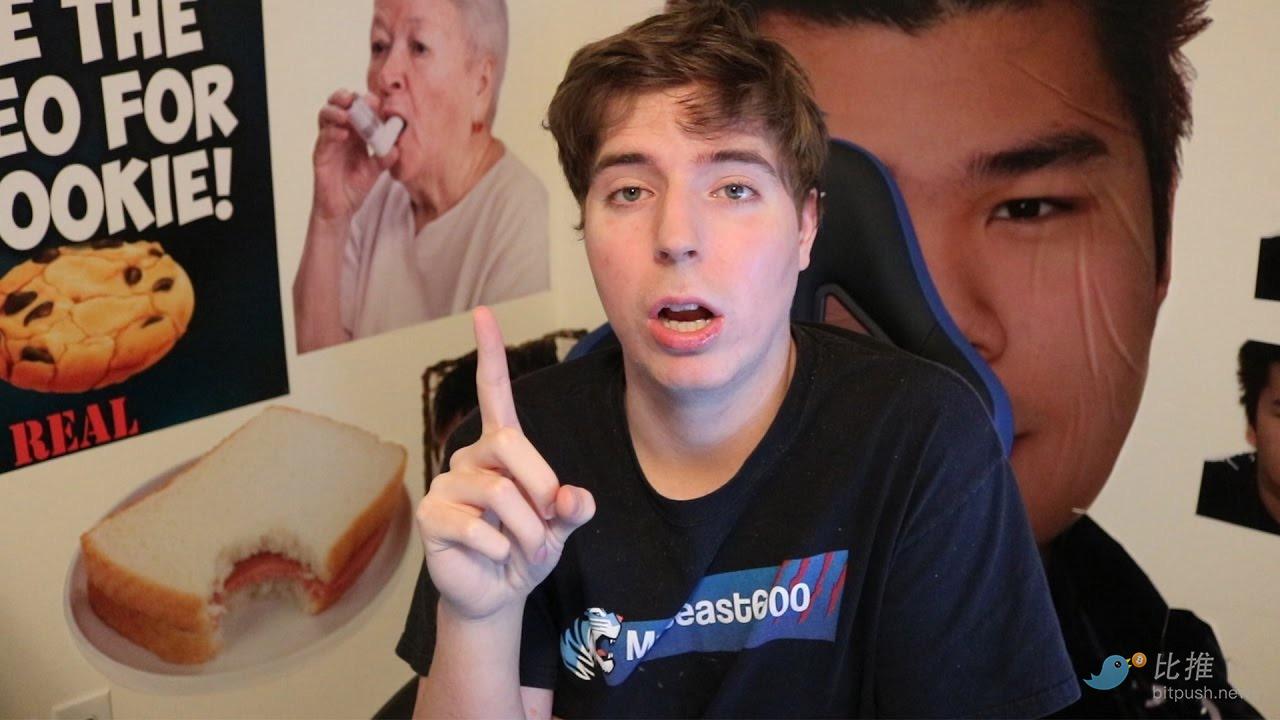
In 2017, shortly after graduating from high school, Jimmy Donaldson uploaded a video of himself counting continuously for 44 hours—titled "Challenge: Count to 100,000!"—which was so simple it seemed almost childish. It had no plot, no editing, just one person facing the camera, repeatedly saying numbers over and over. Yet, it became a turning point in his content creation career.
At that time, he was not yet 19 years old, and his channel had only about 13,000 subscribers. After the video was released, it quickly surpassed one million views, becoming the first global viral case.
Later, during an interview, he recalled a statement he made about that period of time:
"At that time, I wasn't actually trying to become popular. I just wanted to know—if I were willing to devote all my time to something that nobody else wanted to do, would the outcome be any different?"
Jimmy Donaldson's initial attempt at creating an online persona was successful, eventually transforming into the widely recognized Mr. Beast. But more importantly, from that moment on, he developed an almost obsessive belief: attention is not a gift from above, but something earned through investment and perseverance.
Running YouTube as a business, rather than a creative platform.
After gaining popularity, many creators choose to become "conservative": reducing risks, improving efficiency, and turning their content into a stable source of income.
MrBeast chose the opposite path.
He has repeatedly emphasized one thing in multiple interviews:
"The money I earn is basically spent on my next video."
This is the core of his business model.
By 2024, the subscription count of his main channel had exceeded 460 million, with cumulative video views surpassing 100 billion. However, behind this success lies extremely high costs:
- The production cost of a single headliner video has consistently ranged from $3 million to $5 million.
- Some large-scale challenges or public welfare projects can cost more than 10 million U.S. dollars;
- "Beast Games," Season 1 on Amazon Prime Video, was described by himself as "completely out of control in production," and he admitted in an interview that it resulted in losses amounting to tens of millions of dollars.
He said this without showing any regret:
"If I don't do this, the audience will watch someone else."
"At this level, you can't be frugal and still expect to win."
This sentence could almost serve as the key to understanding Beast Industries.
Beast Industries: $400 million in annual revenue, but thin profits.
In 2024, MrBeast consolidated all his businesses under the name Beast Industries.
From publicly available information, this company has long gone far beyond the scope of a "side job for creators":
- Annual revenue exceeds 400 million USD;
- The business spans content production, fast-moving consumer goods and retail, licensed merchandise, and utility products;
- After the latest round of funding, the market's general valuation expectation for it is around 5 billion US dollars.
But it's not easy.
Mr. Beast's main YouTube channel and Beast Games have brought massive exposure, but they have almost consumed all the profits.
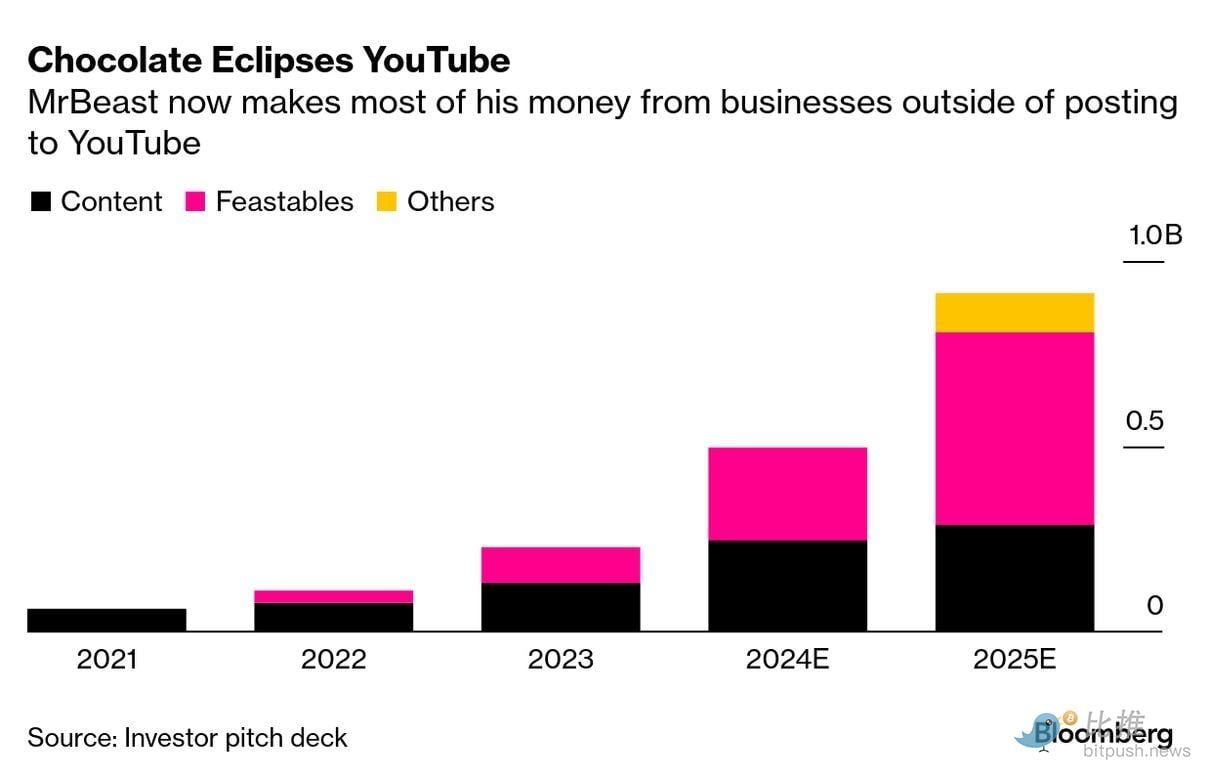
In sharp contrast to his content creation is his chocolate brand, Feastables. Public information shows that in 2024, Feastables generated approximately $250 million in sales and contributed over $20 million in profit. This marked the first time Beast Industries had a stable, replicable cash flow business. By the end of 2025, Feastables had entered over 30,000 physical retail stores across North America, including Walmart, Target, and 7-Eleven, covering the United States, Canada, and Mexico, significantly enhancing the brand's offline sales capabilities.
MrBeast has openly admitted on multiple occasions that the cost of video production is becoming increasingly high, to the point of being "harder and harder to recoup the investment." Nevertheless, he continues to invest heavily in content creation, because in his view, it's not just about paying for videos, but about purchasing traffic for the entire business ecosystem.
The core barrier in the chocolate business is not production, but the ability to reach consumers. While other brands must spend huge amounts of money to purchase ad exposure, he only needs to post a single video. Whether the video itself is profitable is no longer important; as long as Feastables continues to sell, this business loop can keep running.
"I'm actually broke."
In early 2026, MrBeast revealed in an interview with the Wall Street Journal that he is actually broke, sparking widespread discussion:
"I'm basically in a 'negative cash' situation now. Everyone says I'm a billionaire, but I don't actually have much money in my bank account."

This statement is not "Versailles," but rather a natural result of his business model.
MrBeast's wealth is highly concentrated in non-public equity. Although he holds slightly more than 50% of Beast Industries, the company continues to expand and rarely distributes dividends. Additionally, he personally deliberately avoids holding onto cash.
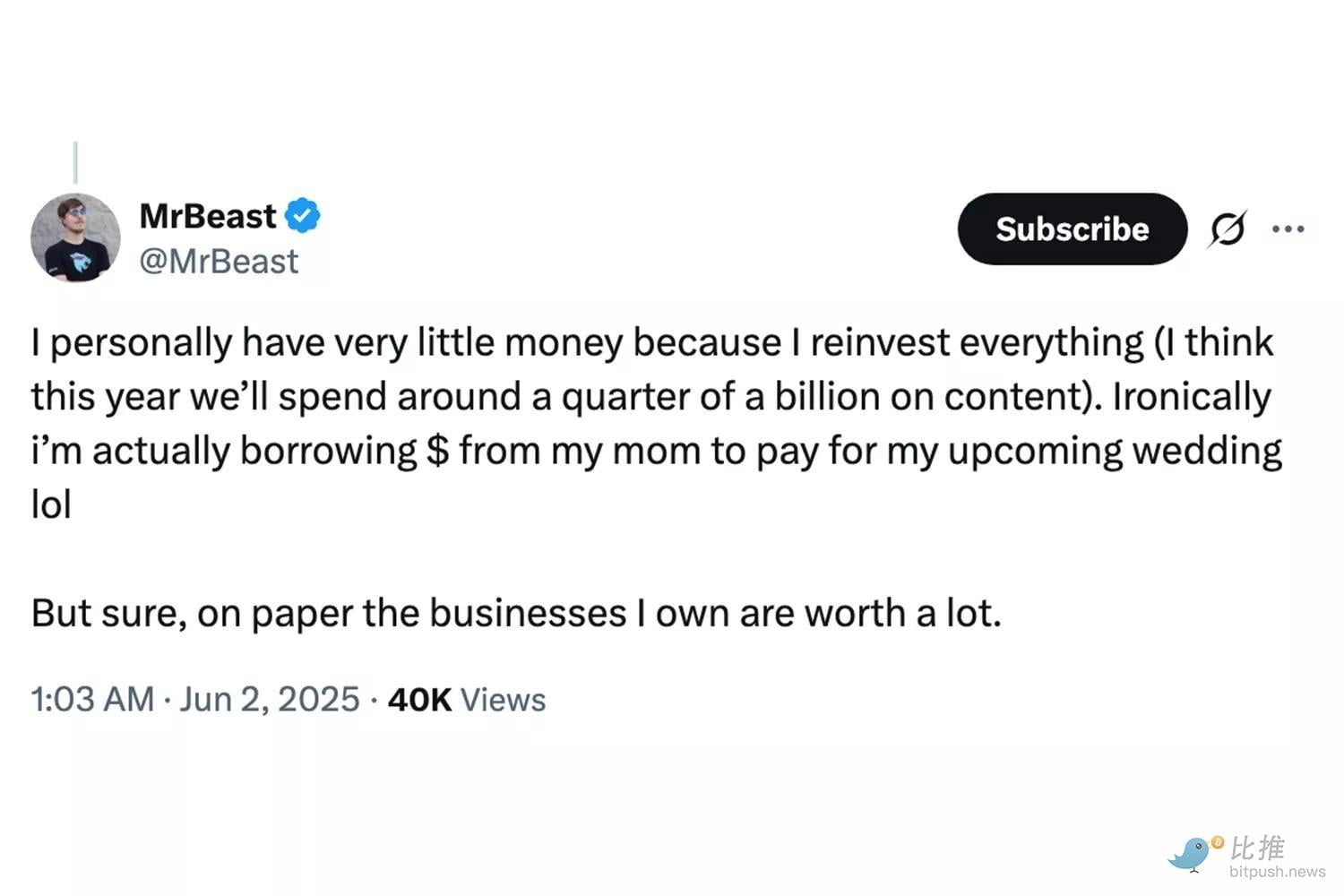
In June 2025, he confessed on social media that he had spent all his savings on video production and even had to borrow money from his mother to cover the wedding expenses.
As he later explained more bluntly:
"I don't look at my bank account balance—that would affect my decision-making."
And the industries he has invested in are no longer limited to content and consumer goods.
In fact, as early as the NFT craze in 2021, on-chain records showed that he had purchased and traded multiple CryptoPunks, some of which were sold at a price of 120 ETH each (equivalent to hundreds of thousands of dollars at the time).
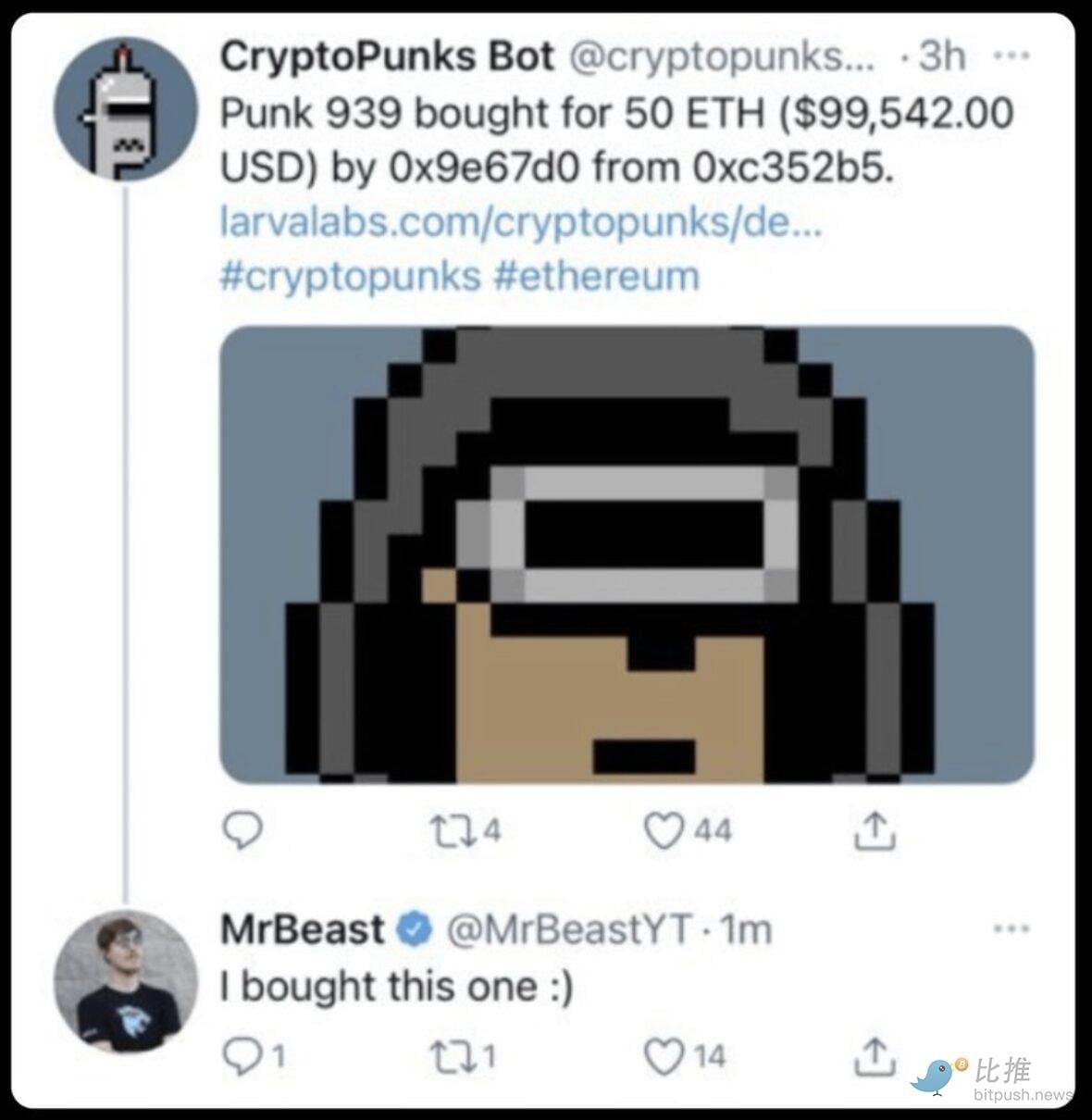
However, as the market entered a correction phase, his attitude became more cautious.
The real turning point lay in the fact that "Monsieur Beast's" own business model had reached a critical edge.
When an individual controls a top global traffic gateway, yet remains in a long-term state of high investment, cash constraints, and expansion reliant on financing, finance is no longer merely an investment option, but becomes an infrastructure that must be restructured.
In recent years, a recurring topic of discussion within Beast Industries has become increasingly clear: how can we move users beyond simply "consuming content and purchasing products" and instead engage them in a long-term, stable, and sustainable economic relationship?
This is precisely the direction traditional internet platforms have been striving toward for years: payment systems, user accounts, and credit systems. At this pivotal moment, the emergence of Tom Lee and BitMine Immersion (BMNR) is steering this path toward more structurally significant possibilities.
Join hands with Tom Lee to build the foundation of DeFi.
On Wall Street, Tom Lee has always played the role of a "narrative architect." From early on in explaining Bitcoin's value logic to emphasizing Ethereum's strategic significance on corporate balance sheets, he excels at translating technological trends into financial language. BMNR's investment in Beast Industries is not about chasing internet celebrity popularity, but rather betting on the programmable future of attention gateways.
So, what exactly does DeFi mean here?
Currently, the publicly available information is very restrained: no token issuance, no promises of returns, and no fan-exclusive financial products. However, the statement "integrating DeFi into a financial service platform" points to several possibilities:
- A payment and settlement layer with lower costs;
- A programmable account system for creators and fans;
- Asset records and rights structures based on a decentralized mechanism.
The imagination space is vast, but the real challenges are clearly visible. In today's market, whether it's native DeFi projects or traditional institutions exploring transformations, most have yet to truly establish a sustainable model. If a differentiated path cannot be found in this intense competition, the complexity of financial services might erode the core capital accumulated over the years: fan loyalty and trust. After all, he has publicly stated multiple times:
"If one day the things I do hurt the audience, I would rather do nothing at all."
This statement may be repeatedly tested in every future attempt at financialization.
So, when the world's most powerful attention machine starts seriously building financial infrastructure, will it become a new generation of platform, or an overly ambitious cross-industry move?
The answer will not be revealed soon.
But one thing was clear to him more than to anyone else: the greatest capital is not past glory, but the right to "start anew."
After all, he is only 27 years old.