





Bitcoin [BTC] has traded within a descending channel since its $126k peak in October 2025. Amid this prolonged downtrend, the king coin fell below the STH Realized Price, implying that all recent buyers were holding at a loss.
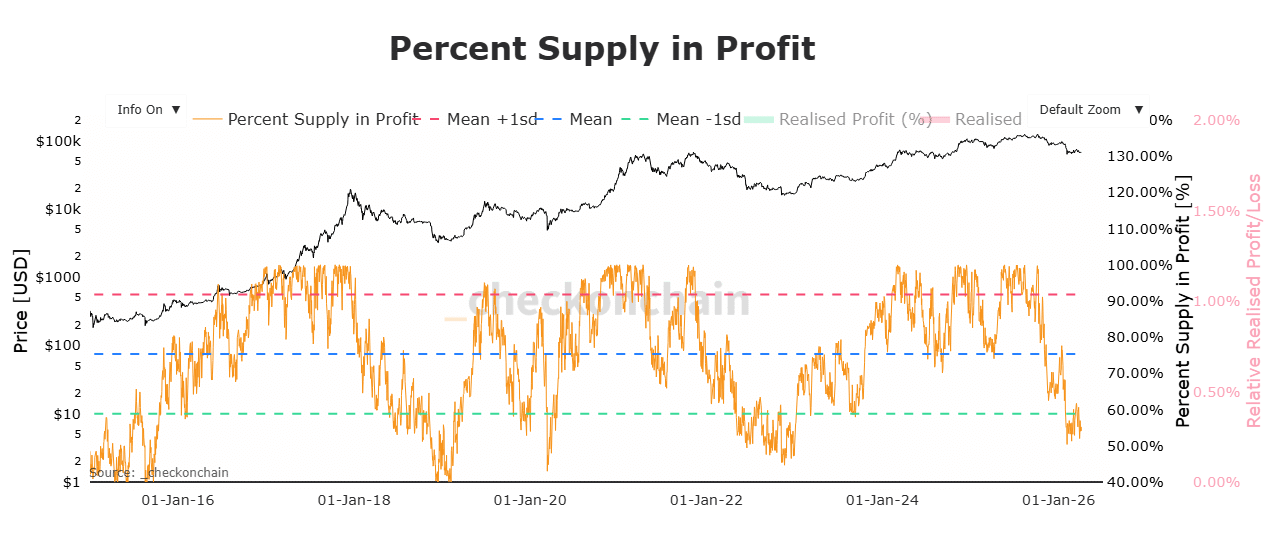
Checkonchain data showed that over 45.8% of the total supply currently sits at a loss, with only 54.12% in profit. Rising losses have pushed most market participants to capitulate, especially whales.
Bitcoin whales realize a $337 million loss in Q1
Investors holding 100 to 10,000 BTC have realized $30.9 billion in losses during the first quarter of 2026. Among these losses, whales have recorded the largest losses at $337 million per day, according to CryptoRover.
This marked the highest daily rate of losses since the 2022 bear market, signaling one of the most aggressive distribution cycles on record.
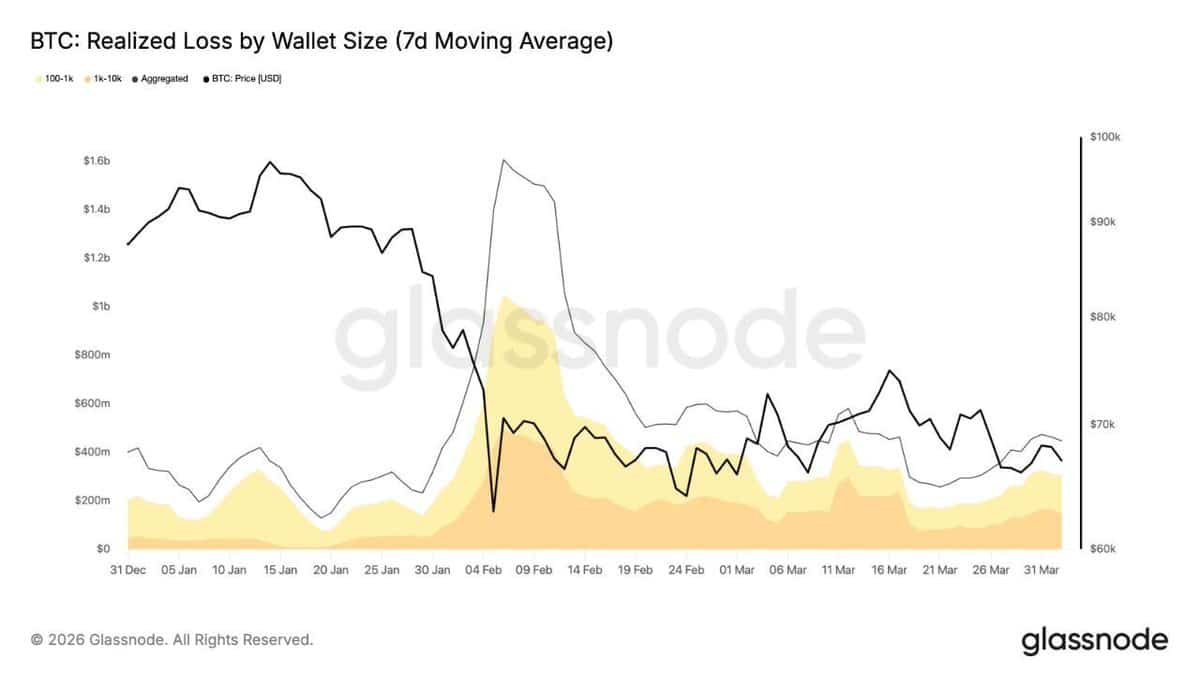
Bitcoin’s long-term holders contributed about $200 million daily. Historically, this kind of sustained loss realization has not marked cycle bottoms but emerged before deeper drawdowns.
During the previous cycles, lows formed as realized losses cooled, with an average of $25 million per day. At the current market rate, this market is still far from reaching such low levels.
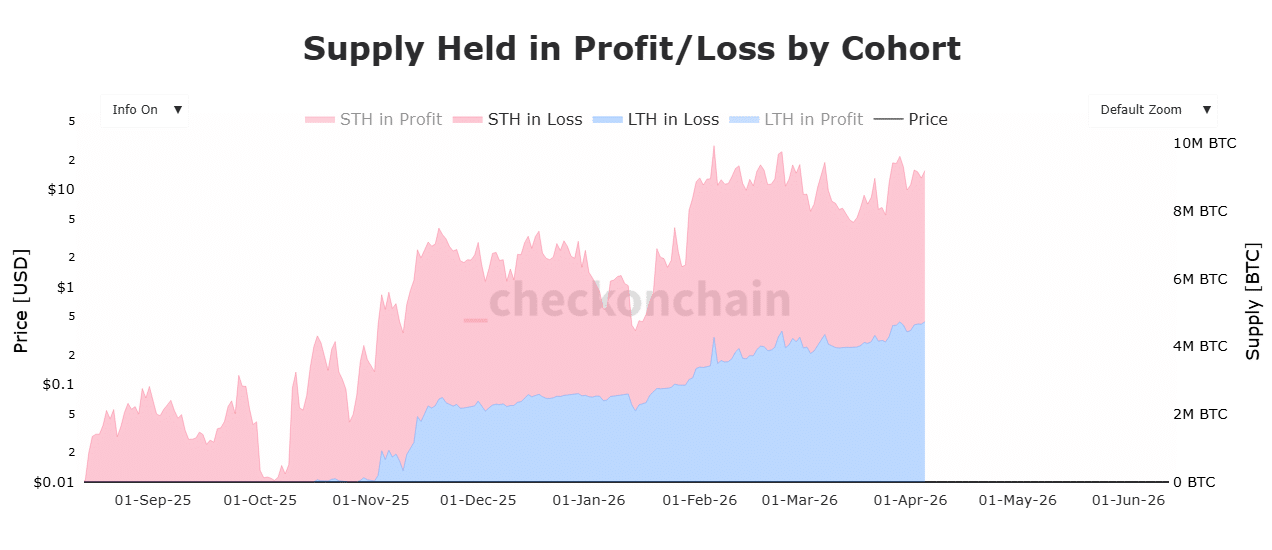
Coupled with that, LTH and STH supplies held at a loss have remained extremely elevated. According to Checkonchain data, LTHs and STHs supply held in losses has averaged 4k BTC daily from March to early April.
As supply at a loss continued to rise, investors have lost confidence and tried to cut losses, as evidenced by the recently realized losses.
What’s next for BTC?
Although recent market sentiment could signal strategic tax-loss harvesting, it also warns of intense external forces that are driving the market towards capital preservation.
Rising losses and loss realization have significantly stretched the market, increasing downside risk. Looking at the upside and downside volatility indicator, the market remains stuck in indecision.
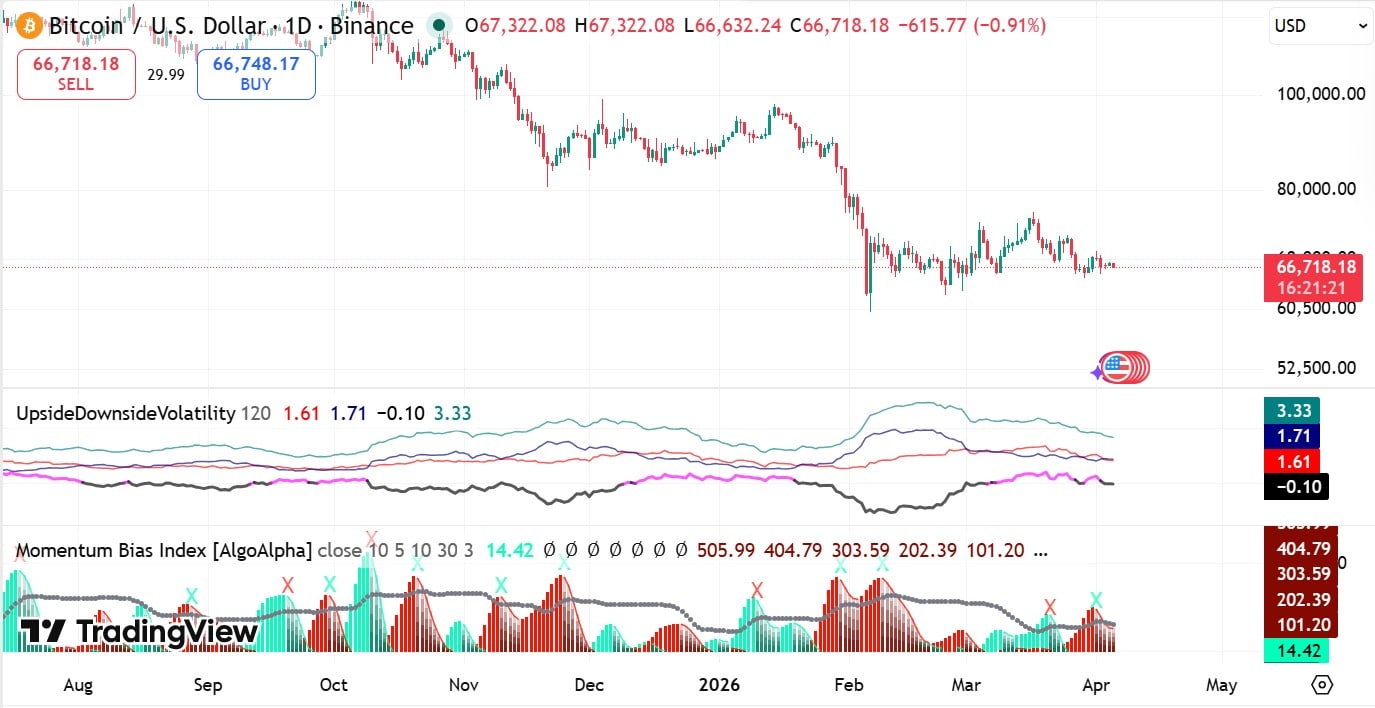
The upside volatility is 1.9, the downside volatility is 1.6, and the spread is -0.10, signaling slight bearishness. At the same time, the momentum bias showed weak momentum, with neither trend being strong.
Historically, such market conditions have preceded prolonged consolidation. If the prevailing sentiment persists, BTC could extend sideways movement between $70k and $65k
However, if the loss realization accelerates while demand weakens, the market could see another breakdown and likely fall to $62,500.
Final Summary
- Bitcoin’s realized losses hit $30.9 billion in Q1, with whale realized losses exceeding $337 million.
- BTC remains stuck in indecision with reduced volatility despite increased loss realization.