

Bitcoin’s price action is looking uncertain on the surface, but one crypto analyst believes the real story is playing out far from the charts that most traders are watching. According to crypto analyst Crypto Tice, all of that Bitcoin price noise obscures a single, quietly reliable signal that has accurately traced out every major Bitcoin cycle in history: the Purchasing Managers’ Index. In a post on X, Tice noted that the PMI cycle is the only one that matters, and right now, it is flashing.
The PMI Cycle Has Defined Every Bitcoin Bottom
The PMI is a monthly economic indicator that tracks business activity across manufacturing and services sectors. On the surface, this may seem disconnected from the crypto market. However, the analyst’s outlook on the PMI is grounded in historical repetition: Bitcoin tends to form its most important lows when PMI is contracting, not when optimism is high.
During these contraction phases, liquidity quietly grows in the background. The crypto market appears weak, sentiment turns negative, and price action stalls or drifts lower. But this is the exact period where long-term accumulation has always taken place for Bitcoin.
As shown in the chart below, each major Bitcoin cycle shows green zones forming during periods of PMI contraction, followed by strong upward expansions once conditions change. These conditions are based on previous market bottoms, with examples being the accumulation ranges before the 2017 and 2021 rallies.
Green-shaded zones labeled “scale out” periods consistently correspond with peak price phases across multiple cycles in 2013, 2017, and 2021. Red-shaded “scale in” zones, by contrast, highlight the accumulation floors.
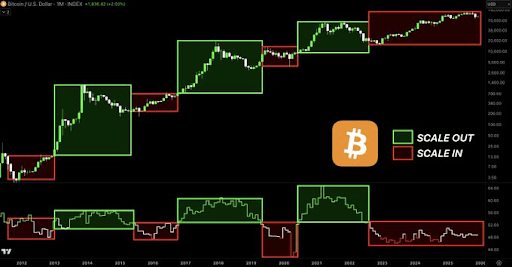
Bitcoin Price Chart. Source: @CryptoTice_ On X
What The PMI Indicator Is Saying Now
At the time of writing, the Purchasing Managers’ Index is sitting at a reading just above 48, which is bordering below the expansion signal reading of 50. What this means is that Bitcoin is currently sitting in the early phase of the PMI, which is the same structural zone that preceded each of the major rallies catalogued in the chart above.
The indicator on the chart is positioned in a red accumulation zone and is expected to resolve to the upside over the coming months. According to the analyst, Bitcoin is currently in the exact same zone that marked every major buy window in history. However, this current accumulation zone won’t be available much longer.
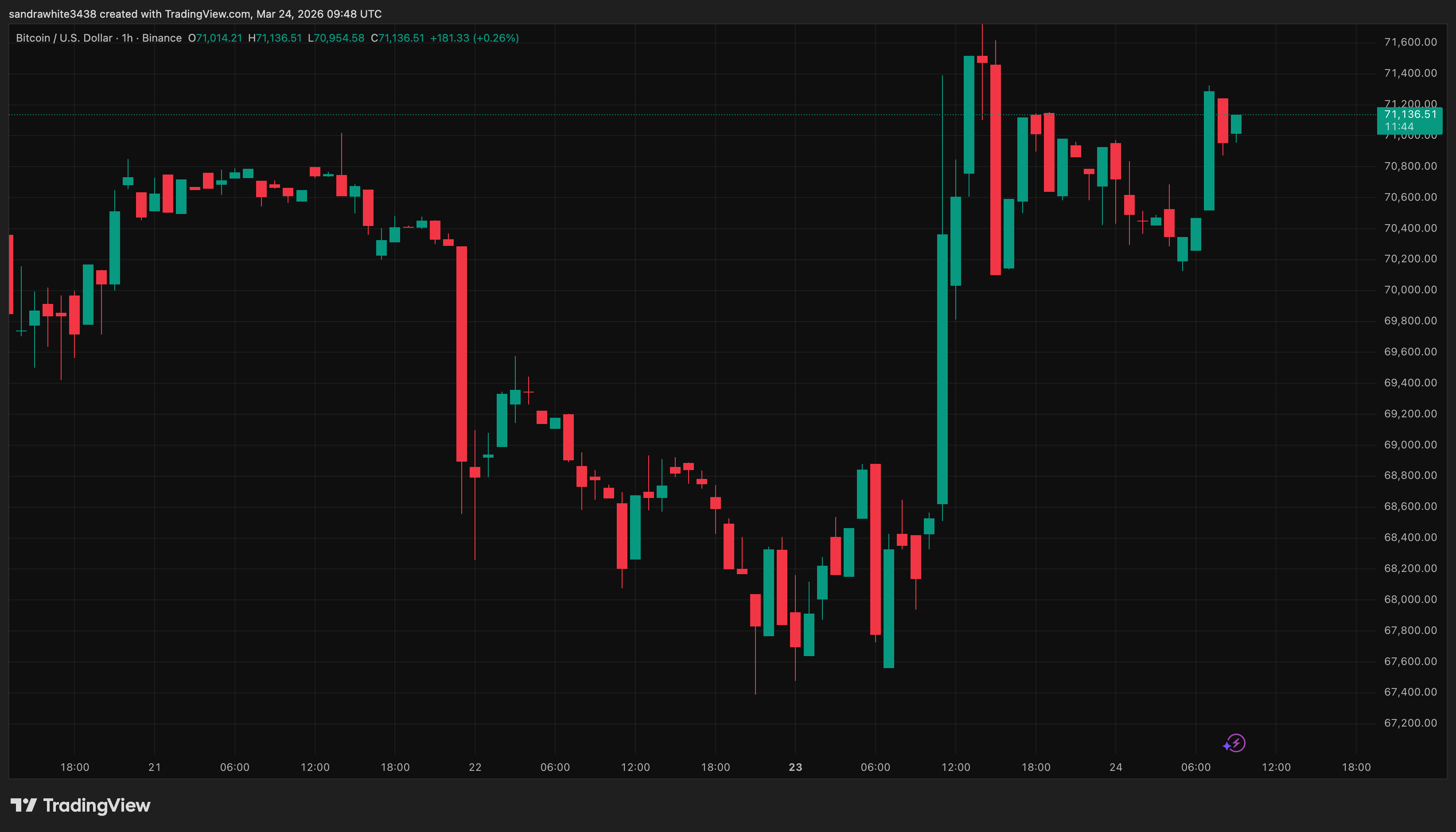
Bitcoin is currently trading at $71,070 with a 3.8% increase in the past 24 hours. It has spent quite a bit of time trading around $70,000, which is giving more credit to the idea that it has already bottomed. Notably, some analysts have begun pointing to this possibility. However, Bitcoin is still dealing with investor fear sentiment. Bitcoin sentiment is now back in fear, just days after showing signs of recovery.