





The Spot Bitcoin [BTC] Exchange Traded Funds (ETFs) had a great start to the month of May. On the 1st of May, BTC ETFs recorded inflows worth $629.8 million, wherein BlackRock’s IBIT recorded inflows worth $284.4 million. Following the trail was Fidelity’s FBTC, which recorded inflows worth $213.4 million.
Interestingly, while many asset managers saw zero flows, Morgan Stanley’s MSBT, which is fairly new to the game, recorded inflows worth $4.5 million. Going forward, almost similar patterns were seen on the 4th and 5th of May.
Bitcoin ETFs flipped from inflows to outflows
On the 6th of May, ETF inflows fell as cumulative inflows reached $46.2 million, driven by IBIT’s $134.6 million. However, heavy outflows from FBTC, Bitwise’s BITB, Franklin Templeton’s EZBC, and Grayscale’s GBTC offset most of the gains, leaving net inflows minimal.
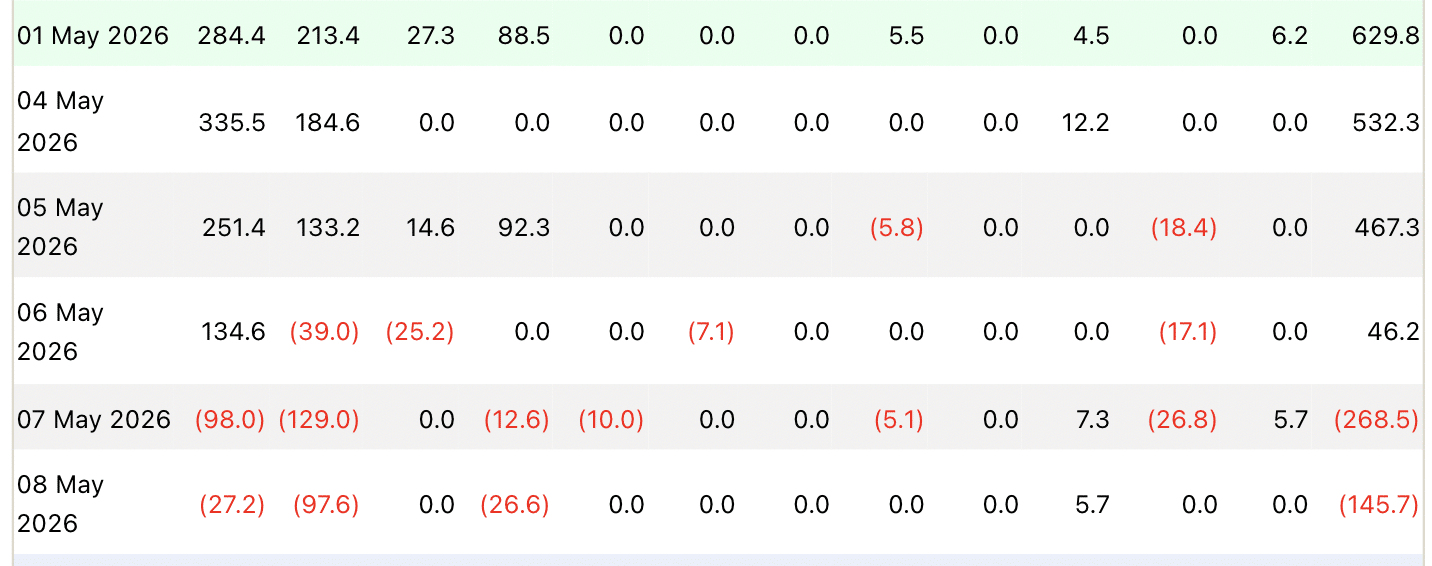
The actual plot twist happened on the 7th of May when the Spot Bitcoin ETF recorded outflows worth $268.5 million. FBTC led the list with maximum outflows worth $129 million, followed by IBIT’s $98 million.
Notably, MSBT, along with Grayscale’s BTC, recorded inflows worth $7.3 million and $5.7 million, respectively. Though outflows had dropped to $245.7 million by the end of the week, institutions were still cautious.
This is because big names like BlackRock, Fidelity, and Ark Invest all recorded outflows, whereas others recorded zero flows. Notably, it was only Morgan Stanley’s Bitcoin ETF that recorded inflows worth $5.7 million.
Did Bitcoin ETFs drive BTC’s price?
On the price front, the trend diverged from ETF performance. Instead of moving in line with inflows, Bitcoin’s price took the opposite path. On the 1st of May, when BTC ETFs recorded inflows, the asset was trading near $76,000.
Thereafter, on the 6th of May, when the BTC ETF saw very little inflow, the price of BTC increased to about $82,000. Additionally, despite the BTC ETF recording outflows on the 7th and 8th of May, the price action was changing hands around $80K.
Thus, examining the pattern shows that ETF flows drove the price spike rather than lagging it.
How did institutional and retail participation push Bitcoin?
Notably, Bitcoin’s exchange netflow analysis, according to CryptoQuant, showed minimal yet consistent outflows.
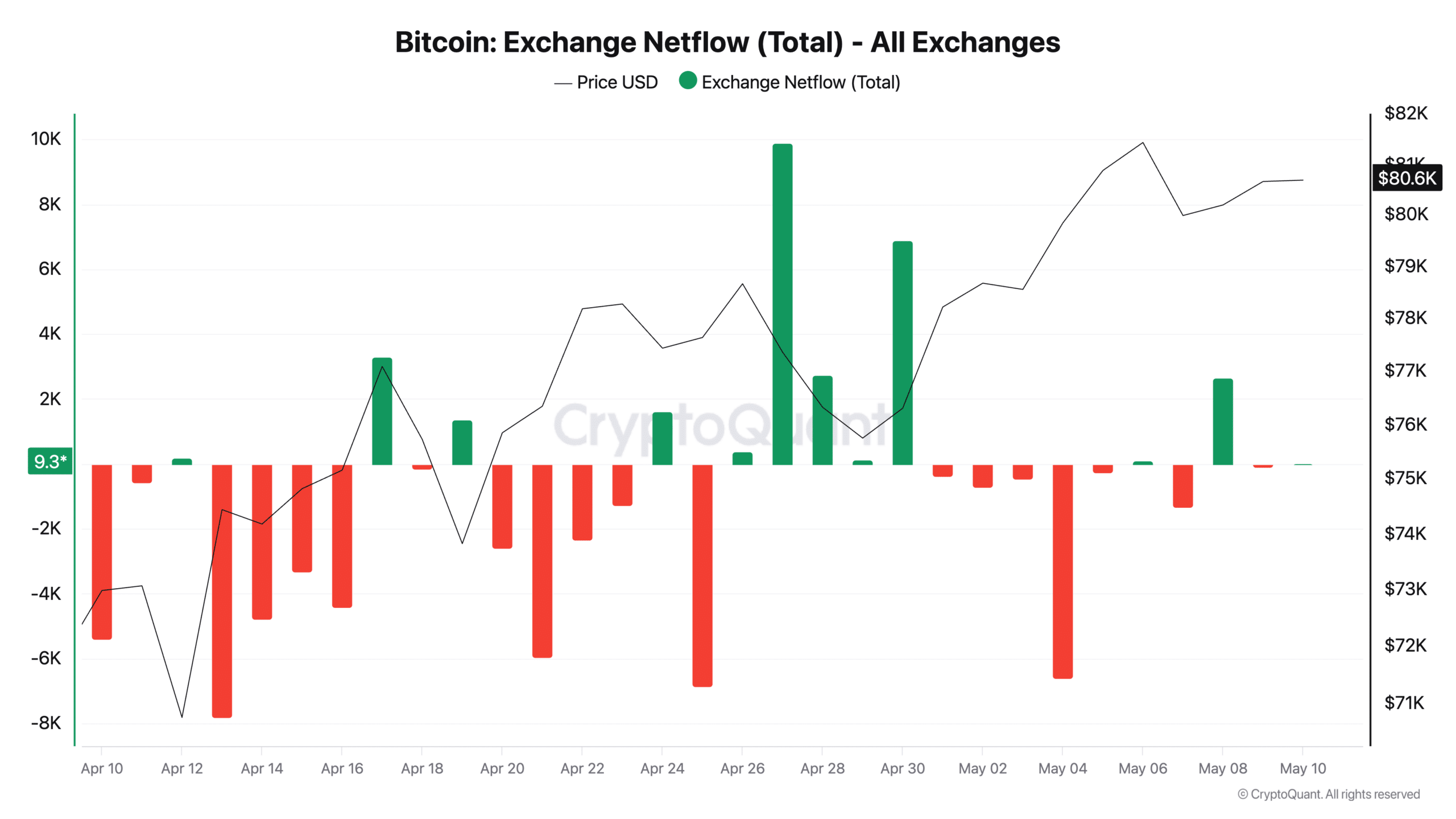
These withdrawals reduced the available BTC supply, signaling a bullish structure even as ETF flows remained erratic. As a result, Bitcoin’s price continued to rise and hold steady despite periods of ETF outflows.
Additionally, the rise in Active Addresses also confirmed that the market structure was strong.
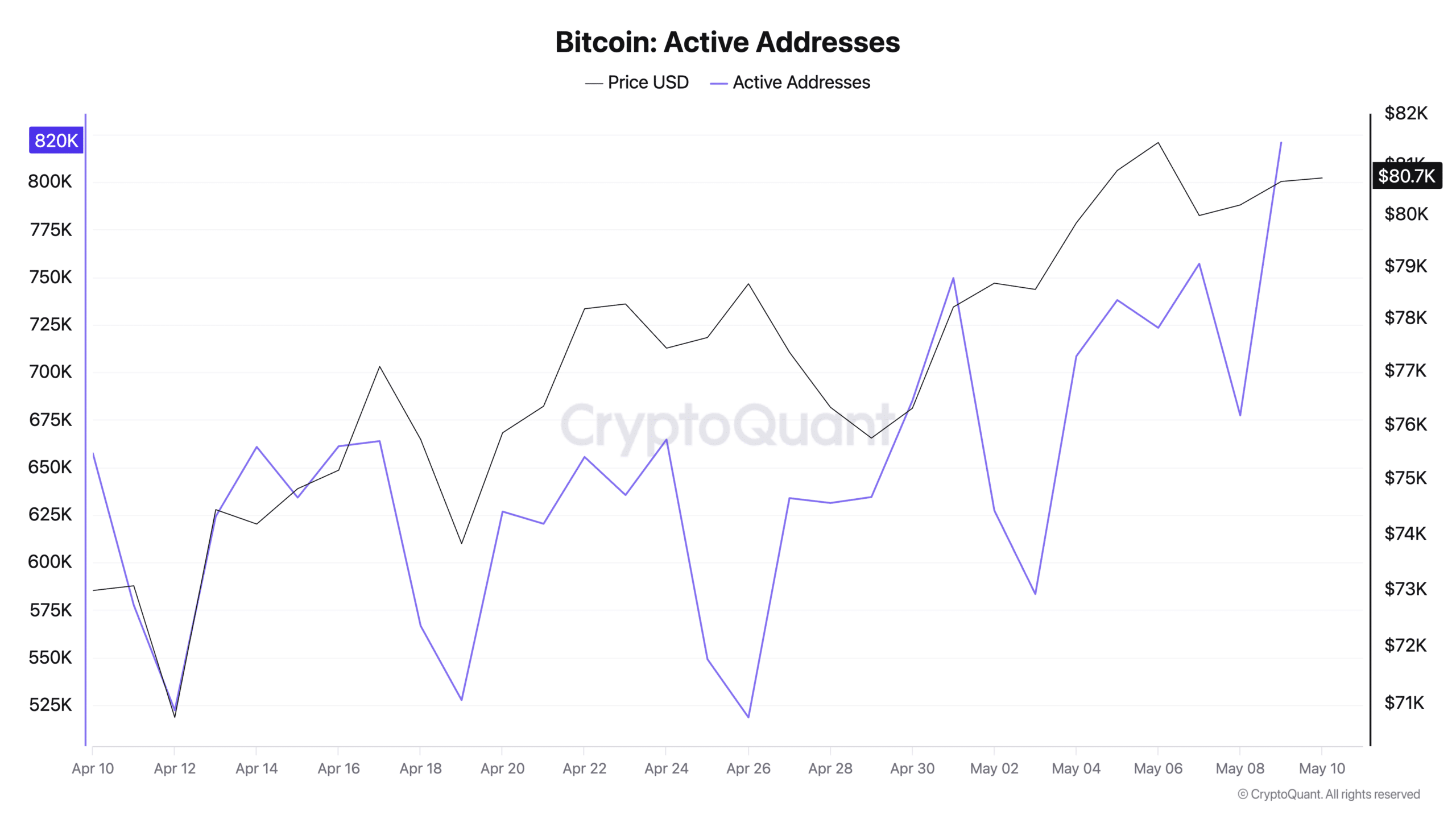
Simply put, institutions triggered Bitcoin’s price move, retail investors helped sustain it, and exchange outflows strengthened the rally by reducing sell pressure.
Final Summary
- Bitcoin ETFs started strong in May, but by the end of the first week, inflows changed to outflows.
- The Exchange Netflow and Active Addresses pushed the BTC price from $76k to $82k, indicating a bullish momentum in the market.