





The highly negative trading period for bitcoin, which lasted several consecutive months, ended in March and improved significantly in April as the asset posted its first double-digit price surge in almost a year.
With Ethereum also ending the month well in the green, the question is now whether the leading digital assets can maintain their run, or the old saying ‘sell in May and go away’ will come to fruition again.
BTC’s Best Month in a Year
Although 2025 was considered a bullish year, with the US regulatory landscape improving and BTC reaching a few all-time highs, including over $126,000 in early October, the cryptocurrency actually had only two months with double-digit price increases: April and May.
The last three months of the year were deep in the red (as were February, March, and August), and the first two of 2026 extended those losses. In fact, January and February 2026 ended with declines of 10.17% and 14.94%, respectively, which only intensified the bearish market structure.
The updated figures for March showed that the streak broke with a minor increase, even though this actually depends on the different time zones. However, since we are taking the data from CoinGlass, we can safely say that March was a green month, with a 1.81% increase.
The first meaningful recovery after the five-month slumber, though, came in April, as BTC surged 11.87%. This was its best month since April, when it added over 14% in value. The 2026 performance solidified April as one of bitcoin’s strongest months, with an average gain of 13% since 2013. It trails only October (19.92%) and November (41.12%).
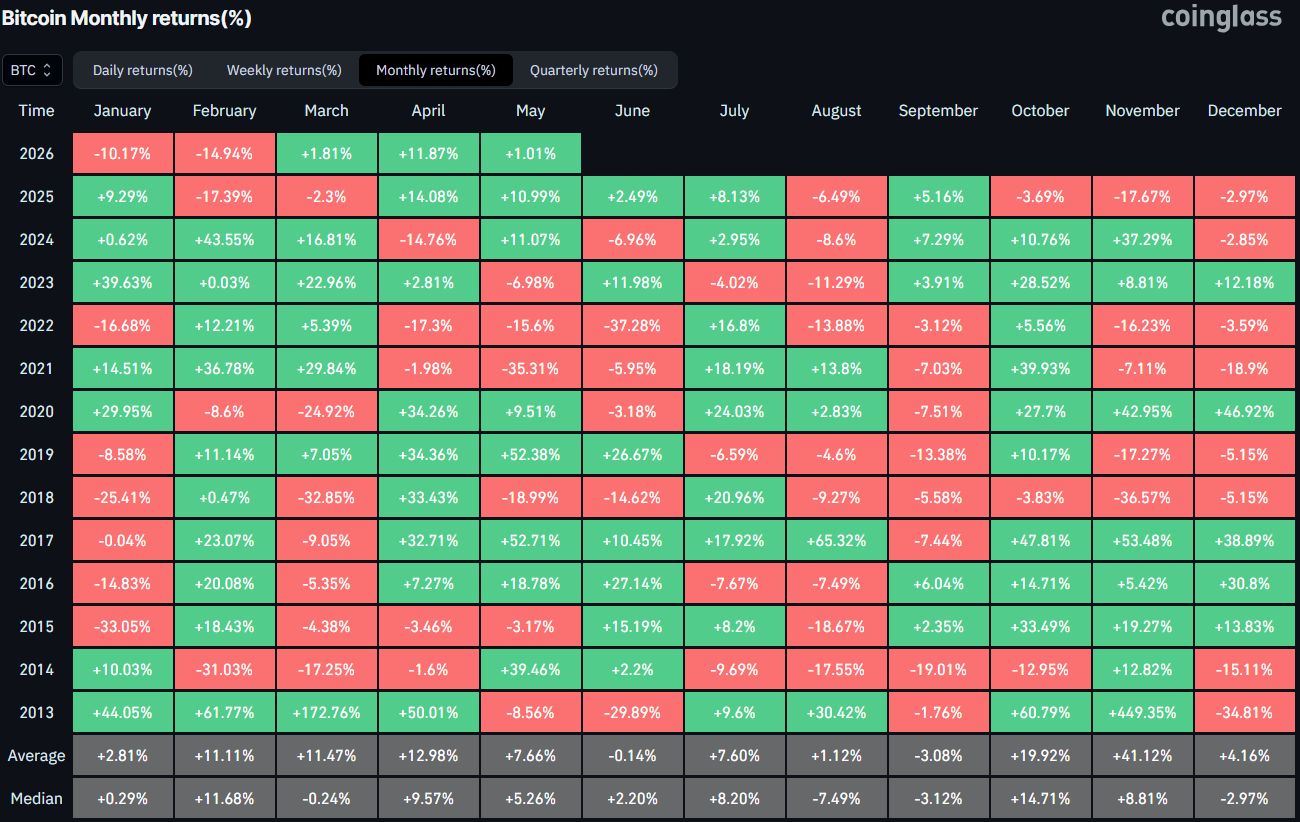
Historically speaking, May has also been a positive month for BTC, with an average increase of 7.66%. The past two brought double-digit gains, but the previous three were deep in the red – especially May 2021, when bitcoin plunged by over 35%, which is the asset’s worst month since November 2018.
ETH in the Green, Too
Ethereum actually had 9 red months in 2025, and was on a six-month negative streak that started in September and finally ended in March, with a 7% increase. April was slightly more impressive, bringing a 7.3% jump for the largest altcoin.
In fact, April is ETH’s second-best month since CoinGlass began tracking its data in 2016. The asset has gained almost 19% on average during that month. What’s even more bullish for the Ethereum fans is that May is the absolute leader in this regard, with an average gain of over 28.5%.
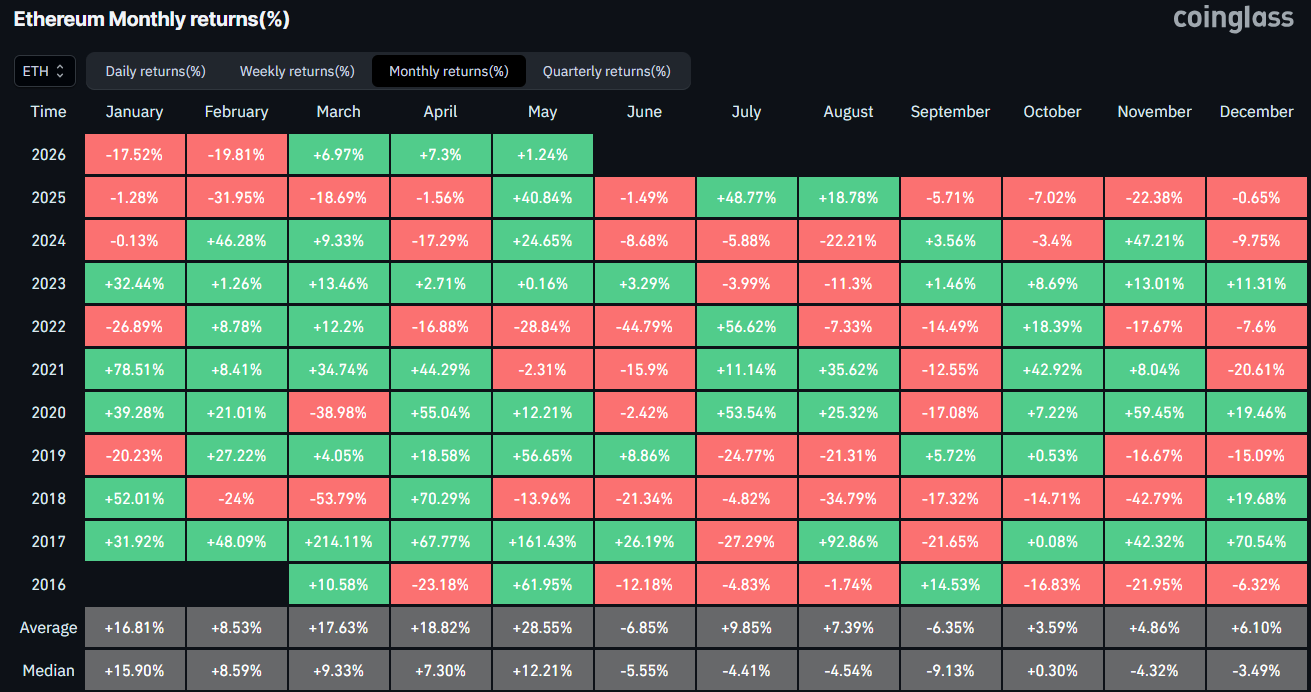
So, if history is any indication, May should be a good month for the two market leaders. However, we all know that historical performances do not necessarily translate into future moves, especially when global uncertainty remains as high as it is now.
The post Bitcoin Ended April With Biggest Monthly Gains in a Year: What’s Next? appeared first on CryptoPotato.